

The Trump administration has escalated its crackdown on the US foreign-worker system, suspending Microsoft, Adobe and several major IT companies from a programme that serves as a key step towards permanent residency for skilled foreign workers.
US officials announced on Thursday that the Department of Labour would stop accepting new and processing pending Permanent Labour Certification, or PERM, applications involving the targeted companies. Officials cited alleged fraud and said the move was aimed at ensuring American companies prioritise US workers.
The companies named include Microsoft, Adobe, Cognizant, Infosys, Tata, Wipro, HCL and Capgemini.
The development is particularly significant for Indian technology professionals because several of the companies targeted are major employers of Indian workers in the United States.
JD Vance delivers blunt message to Microsoft
Vice President JD Vance announced the action and directly criticised Microsoft over its employment practices.
“Our message to Microsoft is: You’re a great American company, but you’ve got to hire great American workers,” Vance said.
The administration has increasingly argued that companies should not lay off American employees and then use foreign-worker programmes to fill similar positions.
The US government has accused Microsoft and the other targeted companies of wrongdoing, but the announcement did not publicly provide detailed evidence establishing the alleged fraud. Microsoft had not immediately responded to a request for comment.
Labour Secretary Keith Sonderling said the government would not accept or process new or pending PERM applications involving the affected companies.
What is PERM and why does it matter?
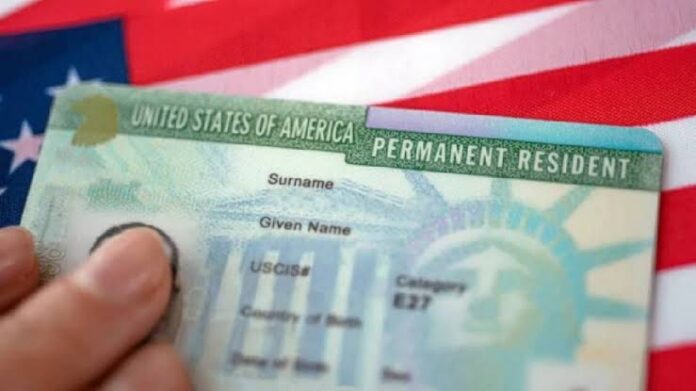
PERM, or Permanent Labour Certification, is an important part of the employment-based green-card process in the US.
Under the process, an employer generally has to establish that there is no qualified, willing and available American worker for the particular job and that hiring the foreign worker will not adversely affect US workers.
PERM is therefore different from the H-1B visa itself.
An H-1B allows a foreign professional to work legally in the US in a specialised occupation. PERM is generally one of the steps an employer takes when sponsoring that worker for permanent residency.
Consequently, the latest suspension does not automatically cancel the H-1B visas of employees working for Microsoft or other companies. However, it can disrupt their pathway towards employer-sponsored green cards.
For workers who have spent years in America waiting for permanent residency, any interruption to this process could create considerable uncertainty.
Indian IT companies caught in the crackdown
The inclusion of Infosys, Tata, Wipro, HCL and Cognizant makes the announcement especially important for India.
Indian professionals have historically represented a substantial share of the H-1B workforce, while Indian IT companies have been major participants in America’s technology and outsourcing sectors.
The action could therefore affect the long-term immigration plans of Indian employees whose employers are sponsoring, or were preparing to sponsor, their green-card applications.
It does not, however, mean that all Indian employees of the affected companies will immediately lose their jobs, H-1B status or right to remain in America.
The immediate impact is on the PERM process and the companies’ ability to move affected employees through that stage of employment-based immigration.
Universities also under scrutiny
The administration’s crackdown extends beyond technology companies.
Vance said nine universities, including Harvard, Yale and Stanford, would be investigated over allegations that international students were being brought into the US labour market in ways that could undercut American wages.
Labour Inspector General Anthony D’Esposito said subpoenas had already been served.
The investigation will also examine allegations involving foreign influence, improper financial relationships and potential visa abuse in federally funded research.
Taken together, the actions indicate that the administration is scrutinising multiple routes through which foreign talent enters the US, from international students and universities to H-1B employment and, ultimately, permanent residency.
What it means for Indian professionals
For Indian technology workers, the latest move highlights an increasingly important distinction: securing an H-1B job in America does not guarantee a straightforward path to permanent residency.
If the Trump administration continues targeting companies that lay off American workers while sponsoring foreign employees, employers may face greater scrutiny before seeking green cards for overseas talent.
That could make the US immigration landscape more uncertain for Indian IT professionals, particularly those employed by large technology and outsourcing firms.
The broader message from Washington is clear: companies can continue to employ global talent, but the administration intends to scrutinise whether foreign-worker programmes are being used at the expense of American workers.
For Microsoft, Infosys, Wipro, HCL, Tata, Cognizant and the other affected companies, that scrutiny could now extend directly into their ability to sponsor skilled foreign employees for permanent residency.
