

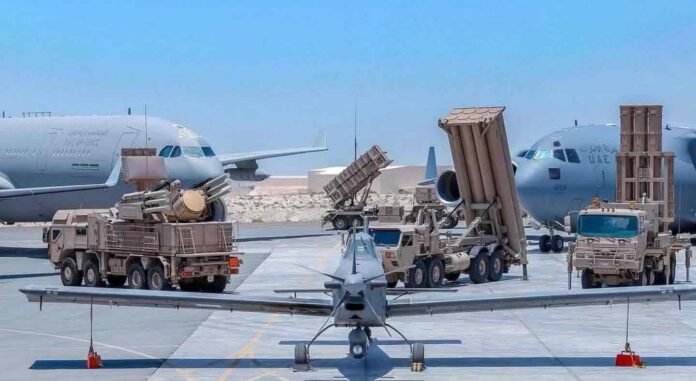
Iran has continued to launch missiles and drones targeting countries in the Gulf, even though its president said that they are stopping proactive attacks against their neighbours. The United Arab Emirates’ air defence systems on Saturday successfully intercepted the majority of a barrage of ballistic missiles and unmanned aerial vehicles (UAVs) launched by Iran.
According to an official statement from the UAE Ministry of Defence, air defences of the country detected 16 ballistic missiles, of which 15 were destroyed mid-flight, while one fell harmlessly into the sea. Additionally, 121 UAVs were spotted, out of which 119 were intercepted, while two drones impacted within the UAE territory. No casualties were reported from these two impacts.
UAE Defence Ministry’s comments came mere hours after Iranian President Masoud Pezeshkian publicly apologised to Gulf neighbours for targeting them and vowed to cease strikes unless provoked from their territories. The president had said, “The interim leadership council agreed yesterday that no more attacks will be made on neighbouring countries and no missiles will be fired unless an attack on Iran originates from those countries.”
UAE air defences intercept 15 ballistic missiles, 119 UAVs
— وزارة الدفاع |MOD UAE (@modgovae) March 7, 2026
UAE air defence systems detected today, Saturday 7th March 2026, 16 ballistic missiles, of which, 15 were intercepted and destroyed, while one ballistic missile fell into the sea.
Air defence systems also detected 121… pic.twitter.com/Ylt57exFcl
As per the UAE defence ministry, UAE forces have detected 221 ballistic missiles since the start of the war. Out of them, 205 were intercepted, 14 in the sea, and two fell on land. 1,305 UAVs were detected, out of which 1,229 were intercepted and 76 fell within the territory of the UAE. Additionally, eight cruise missiles were also detected and destroyed.
Three people died in the impacts, one each from Pakistan, Nepal and Bangladesh, and 112 people were injured. People who sustained injuries include Emirati, Egyptian, Ethiopian, Filipino, Pakistani, Iranian, Indian, Bangladeshi, Sri Lankan, Azerbaijani, Yemeni, Ugandan, Eritrean, Lebanese, Afghan, Bahraini, Comorian and Turkish nationalities.
“The Ministry of Defence affirmed that it remains fully prepared and ready to deal with any threats and will firmly confront any attempt to undermine the security of the state, ensuring the protection of its sovereignty, security and stability, and safeguarding its interests and national capabilities.” the statement read.
The UAE operates a layered air-defence network designed to intercept threats at different stages of flight. At the highest altitude sits by Lockheed Martin’s Terminal High Altitude Area Defense (THAAD) system, designed to intercept ballistic missiles during the final phase of their descent using a “hit-to-kill” method – destroying the target through direct impact rather than an explosive warhead.
On the other hand, Patriot missile-defence batteries, developed by Raytheon, provide another layer capable of intercepting missiles and other aerial threats at lower altitudes. Radar networks detect launches hundreds of kilometres away, allowing operators to calculate trajectories and launch interceptors within minutes.
Other countries in the Gulf also use similar air defence systems. They have been able to intercept the majority of missiles and drones launched from Iran, but some were missed and caused damage to US military bases and civilian areas.
