

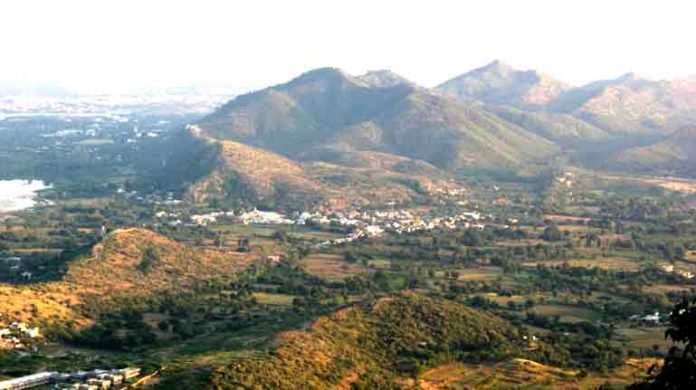
The Union Ministry of Environment, Forest and Climate Change (MoEF&CC) has issued a directive imposing a complete ban on granting any new mining leases across the entire Aravalli mountain range, which spans from Gujarat to the National Capital Region (NCR). A statement issued by the ministry on Wednesday said that the prohibition applies uniformly across the entire Aravalli landscape and is intended to preserve the integrity of the range.
This measure aims to preserve the Aravallis as a continuous geological ridge, halt unregulated mining, and safeguard its vital ecological functions, including preventing desertification, conserving biodiversity, recharging groundwater aquifers, and delivering essential environmental services to the region.
The ministry has also tasked the Indian Council of Forestry Research and Education (ICFRE) with identifying additional ecologically sensitive zones where mining should be prohibited, beyond those already restricted. ICFRE is also required to formulate a comprehensive, science-based Management Plan for Sustainable Mining (MPSM) for the entire Aravalli landscape.
This plan will assess cumulative environmental impacts, evaluate ecological carrying capacity, identify areas critical for conservation, and recommend restoration and rehabilitation strategies, with a draft to be released for public consultation. Existing mines must adhere strictly to environmental safeguards and Supreme Court directives, facing further restrictions to ensure sustainable operations.
The Government of India has reaffirmed its dedication to the long-term conservation of the Aravalli ecosystem, underscoring its role in combating desertification and maintaining regional environmental stability.
The mining ban came amid protests following the new definition of the Aravalli hills and ranges announced recently. In a landmark order on November 20, 2025, the Supreme Court adopted a uniform definition of the Aravalli Hills and Ranges, classifying any landform rising at least 100 meters above local terrain as an “Aravalli Hill,” with clusters within 500 meters forming an “Aravalli Range.”
The Supreme Court also froze new mining leases until the Management Plan for Sustainable Mining (MPSM) is finalised, while permitting existing legal operations under strict oversight. This ruling sought to resolve inconsistencies in state-level definitions and enable regulated, sustainable mining, rejecting total bans that often fuel illegal activities.
However, the height-based definition has sparked intense controversy and widespread protests. Environmentalists, activists, opposition parties, and local communities argue that it excludes lower hillocks and ridges, estimated to comprise over 90% of the range, from full protection, potentially exposing them to mining, construction, and further degradation. These lower formations are crucial for ecological connectivity, groundwater recharge, and acting as a barrier against the Thar Desert’s advance, the protesters claim. Protests erupted across Rajasthan and Haryana in recent days, with demonstrators, including farmers, tribal groups, and citizens, rallying against the perceived weakening of safeguards.
The December 24 directive of the government directly implements the Supreme Court’s framework, expanding prohibitions and emphasizing science-driven management. States including Gujarat, Rajasthan, Haryana, and Delhi are required to align their policies accordingly.
