

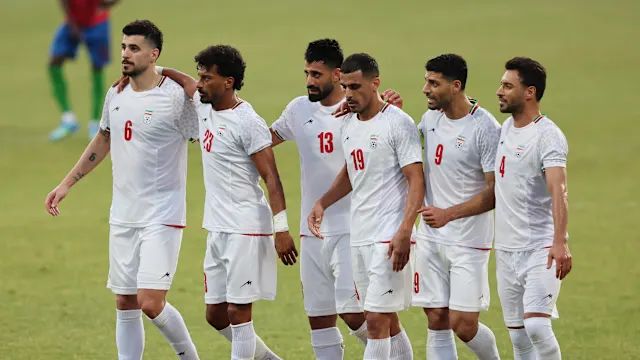
A fresh diplomatic row has erupted ahead of the 2026 FIFA World Cup after Iran accused the United States of denying entry visas to several members of its football delegation, despite clearing the country’s players to participate in the tournament.
The controversy surfaced just days before Iran’s opening World Cup fixture in Los Angeles, with Tehran alleging that Washington had selectively approved travel documents for players while excluding a number of senior officials and technical personnel considered vital to the team’s operations.
US authorities confirmed that visas had been issued to Iranian players and what they described as “necessary support staff.” However, American officials also made it clear that the visa process would not be used to facilitate the entry of individuals deemed to pose security concerns. The statement came amid heightened scrutiny over possible links between some members of the Iranian delegation and the Islamic Revolutionary Guard Corps (IRGC), a powerful military organisation that remains under US sanctions.
Iran strongly rejected the US position, accusing Washington of injecting politics into an international sporting event. In a sharply worded statement, Iranian diplomats described the move as discriminatory and alleged that a significant section of the team’s managerial, executive and advisory personnel had been denied permission to travel.
According to Iranian officials, the restrictions go far beyond routine security screening and amount to deliberate interference with the country’s participation in the tournament. Tehran has urged FIFA to examine the issue, arguing that all qualified teams should be allowed to compete on equal terms without political obstacles.
Reports carried by Iranian state-linked media claimed that senior football federation officials, including the federation president and his deputy, were among those reportedly denied entry visas. Independent confirmation of those claims has not yet emerged.
The dispute adds another layer of complexity to what is already one of the most politically sensitive editions of the FIFA World Cup. The 2026 tournament, jointly hosted by the United States, Canada and Mexico, marks the first time a host nation will welcome a team representing a country with which it is effectively in a state of military confrontation.
Iran had secured qualification for the World Cup long before the current conflict escalated, finishing atop its qualifying group in March 2025. However, deteriorating relations between Tehran and Washington have since cast a shadow over logistical arrangements surrounding the team’s participation.
In anticipation of potential complications, Iran recently shifted its World Cup training base from Arizona to Mexico. The decision came amid growing uncertainty over travel approvals and diplomatic tensions between the two countries.
US Secretary of State Marco Rubio had earlier indicated that members of the Iranian delegation with links to the IRGC would face additional scrutiny and could be denied entry. The issue remains particularly sensitive because several Iranian footballers have completed mandatory military service associated with the organisation, although no allegations have been made against the players themselves.
Despite the controversy, Iran remains scheduled to begin its campaign in Los Angeles before facing Belgium in California and Egypt in Seattle during the group stage.
As the countdown to the World Cup enters its final days, the visa dispute threatens to overshadow preparations for one of football’s biggest events, raising difficult questions about the intersection of geopolitics, national security and international sport.
