

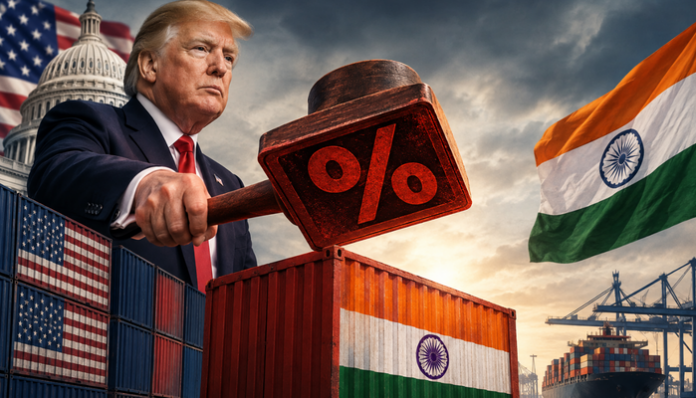
The US House of Representatives is set to vote on a bill that will empower US President Donald Trump to levy 100% tariffs on Russian trade partners, including India. The Lindsey O. Graham Sanctioning Russia and Iran Act of 2026, which has been facing fierce opposition at home, was moved by the House Rules Committee on Monday (September 14, 2026).
The bill was passed by an 86-11 margin in the US Senate last month, but it faced challenges in the House of Representatives. On Tuesday (September 15, 2026), the bill overcame a procedural hurdle after two Democratic lawmakers voted with Republicans, and it was advanced with 214-211 votes. It will face a final vote in the House on Wednesday (September 16, 2026).
The bill, co-authored by late Senator Lindsay O. Graham, was opposed by Democratic Congressman Gregory Meeks, the ranking member of the House Foreign Affairs Committee, after being moved in the House on Monday. Meeks said that the bill, if passed, would grant President Trump unchecked power to impose tariffs.
The bill includes provisions that would authorise Trump to impose 100% tariffs on the top oil trading partners of Russia, which include India and China. Besides, it seeks to impose sanctions on Russian officials, the country’s energy sector, and banks.
It also proposes sanctions on Russia’s ‘shadow fleet’ of vessels that carry out Russian oil deliveries, Russian financial institutions, including the Central Bank of the Russian Federation, and on Russia’s largest state-owned energy projects, including Yamal LNG and Arctic LNG 1, 2 and 3. The bill does not name Russia’s trading partners; however, it refers to the five largest importers of oil and gas by volume.
After being passed in the House of Representatives, the bill will go to President Trump for final signature, after which it will become law. Notably, the Trump administration had earlier imposed punitive tariffs on countries, including India, that bought Russian oil. Trump justified the sanctions, claiming that countries that bought Russian oil were helping fund the Russia-Ukraine war.
