

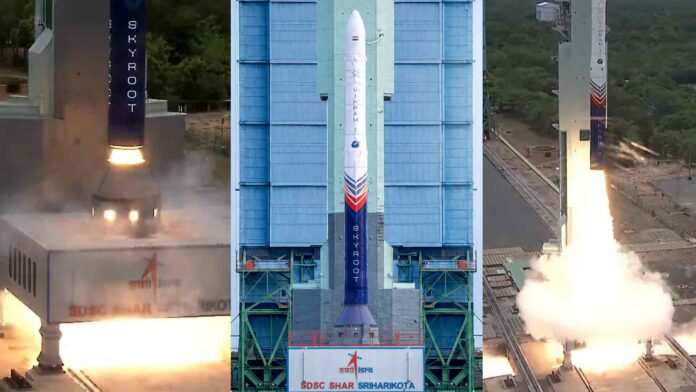
In a landmark achievement for India’s space sector, Hyderabad-based Skyroot Aerospace successfully launched its Vikram-1 rocket from the Satish Dhawan Space Centre in Sriharikota, Andhra Pradesh, on July 18, 2026. The maiden orbital test flight, named Mission Aagaman, lifted off from the First Launch Pad and reached its intended orbit, injecting payloads into a low Earth orbit at approximately 450 km altitude. This marks India’s first privately developed orbital-class rocket to successfully complete its mission, opening a new chapter in the country’s space programme, dominated so far by government agencies like ISRO. This also makes India the third country in the world with private orbital launch capability, after the USA and New Zealand.
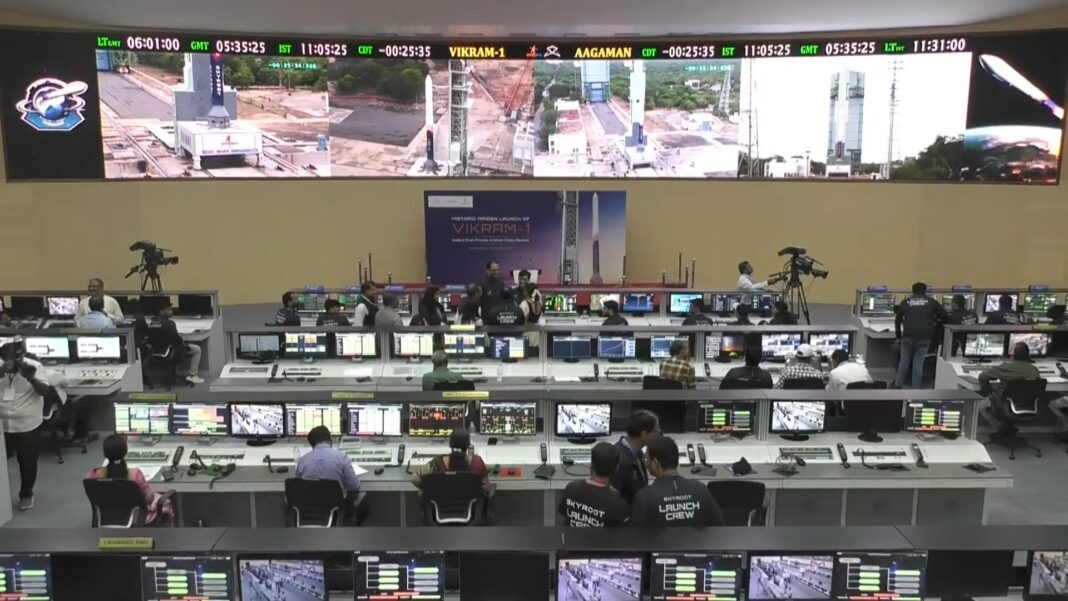
The launch unfolded smoothly with a series of precise milestones. Vikram-1 lifted off at around 12:06 IST, clearing the launch tower safely within seconds. The powerful Kalam-1200 solid first stage propelled the rocket through the dense lower atmosphere before separating cleanly. This was followed by payload fairing separation, allowing the satellites to experience space for the first time after the protective shell that shielded its payloads through the atmosphere was jettisoned.
ORBIT ACHIEVED. 🚀
— Skyroot Aerospace (@SkyrootA) July 18, 2026
Vikram-1 Test Flight-1 has reached orbit. India's first privately developed orbital rocket has completed its final burn and injected its payloads into a ~450 km orbit, making India the third country in the world with private orbital launch capability.…
The Kalam-250 second stage completed its burn next and separated on schedule, paving the way for the smaller Kalam-100 third stage to ignite and provide the next boost to reach space. After third-stage separation, the liquid-fuelled Orbital Adjustment Module (OAM), featuring a 3D-printed engine, ignited for the critical final push to orbit. This final module can be turned on and off on flight, allowing the vehicle to launch satellites at various altitudes.
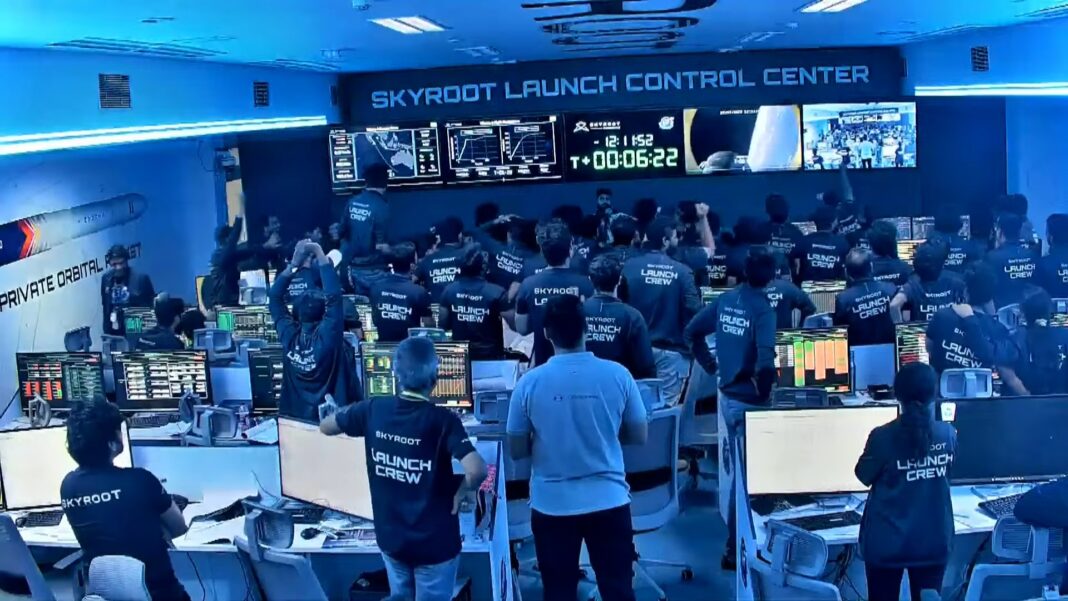
By approximately 12:22 IST, Skyroot Aerospace confirmed that orbit had been achieved, with all payloads successfully deployed into a ~450 km orbit. Skyroot Aerospace posted on X, “Hello space, we have arrived! Vikram-1’s Test Flight-1 has completed it’s mission. The first ever Indian private sector launch has been successfully completed.”
Vikram-1 stands about 20 to 24 metres tall and is constructed primarily from lightweight carbon-composite materials. It features a four-stage configuration, three solid-propellant lower stages named after Dr A.P.J. Abdul Kalam and a liquid upper stage for precise orbital adjustments. The rocket is designed to carry up to 350 kg of payload to low Earth orbit and supports rapid, on-demand launches for small satellites.
This test flight validated critical systems including propulsion, stage separation, guidance, navigation and control. Skyroot had earlier demonstrated suborbital capability with its Vikram-S rocket in November 2022. The company, founded in 2018 by former ISRO engineers Pawan Kumar Chandana and Naga Bharath Daka, received necessary authorisations from IN-SPACe for this mission.
The rocket carried a mix of commercial and symbolic payloads. These included Skyroot’s own SCOPE satellite, Grahaa Space’s SOLARAS S3, Cosmoserve Space’s Embrace robotic arm for orbital debris collection, and a technology demonstrator from Germany’s DCUBED. Symbolic items featured a lab-grown “Diamond Lotus” or Cosmic Bloom artwork from Bengaluru-based Cosmos Diamonds, along with a miniature 18-karat gold rocket model crafted by artist Ajay Kumar Mattewada honouring space pioneers Dr Vikram Sarabhai, Sir C.V. Raman and Dr A.P.J. Abdul Kalam. A handwritten postcard from Prime Minister Narendra Modi bearing “Vande Mataram” and messages from the Skyroot team, investors and well-wishers were also part of the payload.
Prime Minister Narendra Modi extended his best wishes to the team ahead of the launch, describing it as “a historic new frontier for India’s space journey.” He noted that the four-stage rocket is designed for rapid and on-demand launch services and highlighted how space-sector reforms are unlocking opportunities for innovation and enterprise. He urged young Indians to follow the mission and join in wishing Team Skyroot success under the hashtag #IndiaWithVikram1.
A historic new frontier for India’s space journey!
— Narendra Modi (@narendramodi) July 18, 2026
At 11:30 AM today, Skyroot Aerospace will undertake the maiden orbital launch of Vikram-1, India’s first privately developed launch vehicle.
This four-stage rocket is designed to provide rapid and on-demand launch services.… pic.twitter.com/1qFVTwNOuZ
This successful mission makes India the third country in the world with private orbital launch capability. The achievement underscores the entrepreneurial spirit of India’s youth and the growing role of private players in the space domain. With this flight, Skyroot has taken a major step towards establishing dedicated commercial launch services from Indian soil, potentially increasing launch cadence and supporting the global small satellite market. The company plans further test flights to fully qualify the vehicle for regular commercial operations in the coming years.
