

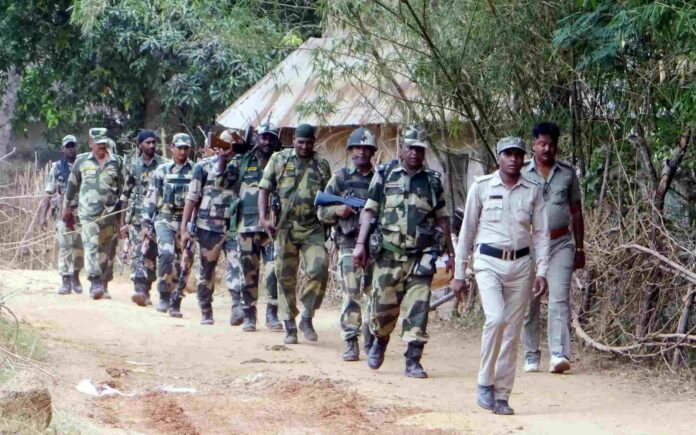
In a significant move to bolster security ahead of the upcoming West Bengal assembly elections, the Election Commission of India (ECI) has authorised the initial deployment of 480 companies of Central Armed Police Forces (CAPF) in the state. This decision, announced on 20 February, aims to ensure area domination, confidence-building measures, and the smooth conduct of poll-related activities, including guarding Electronic Voting Machines (EVMs), strong rooms, and counting centres.
The deployment will occur in two phases. By 1 March, 240 companies will arrive, comprising 110 from the Central Reserve Police Force (CRPF), 55 from the Border Security Force (BSF), 21 from the Central Industrial Security Force (CISF), 27 from the Indo-Tibetan Border Police (ITBP), and 27 from the Sashastra Seema Bal (SSB). A further 240 companies will follow by 10 March, including 120 from the CRPF, 65 from the BSF, 16 from the CISF, 20 from the ITBP, and 19 from the SSB.
The Ministry of Home Affairs has sanctioned this mobilisation, while CRPF will coordinate the movement and placement of forces.
This early induction comes amid ongoing preparations for the elections, expected to be announced in the second week of March alongside polls in Kerala, Tamil Nadu, Assam, and Puducherry. The state government has been directed to develop a detailed deployment plan in consultation with the CAPFs and the Chief Force Coordinator. Each company consists of nine sections, with eight allocated for polling stations and one reserved for Quick Reaction Teams (QRTs) and supervisory duties.
The Commission had sent instructions to each district to identify sensitive and ultra-sensitive booths and areas. The districts were asked to identify sensitive areas based on the history of violence during the elections and the daily law and order situation. The commission has considered seven districts of the state as highly sensitive after reviewing the past violence. They are Cooch Behar, North Dinajpur, North 24 Parganas, South 24 Parganas, Malda, Murshidabad and Birbhum.
The decision comes ahead of the release of the voter list after Special Intensive Revision (SIR) on 28 February, a process marred by disputes between the Mamata Banerjee-led government and the ECI. On 20 February, the Supreme Court intervened, ordering the deployment of judicial officers to resolve electoral roll issues due to a “trust deficit” and “unfortunate blame-game” that threatened to stall proceedings. The court has tasked the Calcutta High Court Chief Justice with coordinating this effort, involving state officials to address complaints from lakhs of voters missing from the draft rolls.
West Bengal’s history of election-related violence is the reason for such large deployment of central forces. Records from seven polls since 2014, including police station-wise reports of incidents, will determine the final CAPF distribution and focus on sensitive pockets. In the 2021 assembly elections, 1,100 companies were deployed across eight phases. This time, the state Chief Electoral Officer’s office is pushing for a single-phase or maximally two-phase poll to ensure fairness, though this would require substantially more forces, potentially up to 2,000 companies. The number of phases will ultimately depend on CAPF availability.
Additional deployments may be considered following SIR hearings, as the ECI assesses ground realities.
