

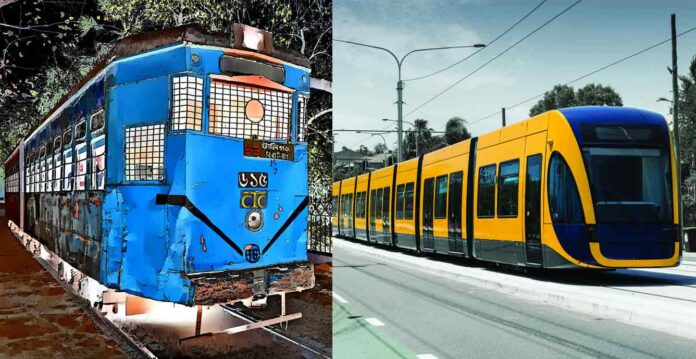
The newly formed BJP government in West Bengal under Chief Minister Suvendu Adhikari has announced plans to revive Kolkata’s historic tram network by deploying modern, advanced tram cars, nearly two years after the previous Trinamool Congress administration had decided to largely discontinue the service. The move aims to restore and upgrade Asia’s oldest operating tram system, transforming it from a fading heritage relic into an efficient, sustainable component of the city’s public transport infrastructure.
The decision comes against the backdrop of years of gradual curtailment of tram operations under the Mamata Banerjee-led TMC government. Successive route closures, conversion of several tram depots into bus facilities, and restrictions on bridges had already shrunk the once-extensive network to just a handful of active lines by the early 2020s. In 2024, the state transport department formally announced plans to shut down nearly all remaining services, retaining only a short heritage loop between Maidan and Esplanade for tourism purposes. Officials at the time cited chronic traffic congestion caused by the slow-moving trams on Kolkata’s narrow and overcrowded roads, along with the potential to redevelop valuable depot land for other uses.
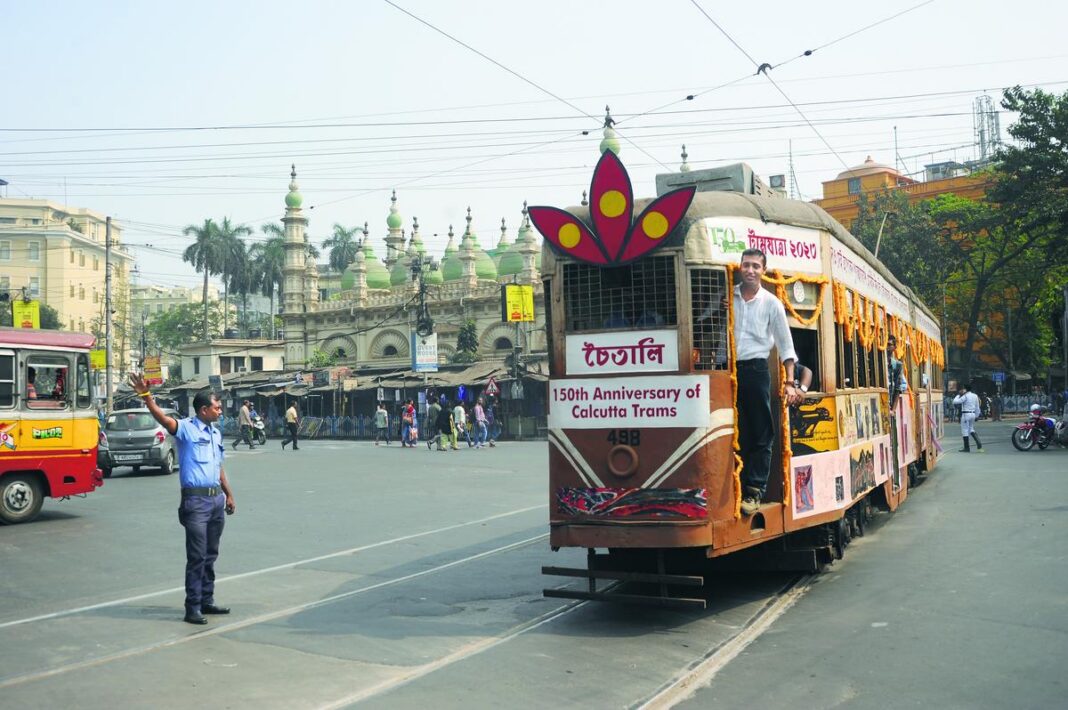
The TMC government’s 2024 closure decision sparked immediate and widespread public backlash from heritage enthusiasts, environmental groups, and regular commuters who regarded the trams as both a cultural icon and an eco-friendly transport option. Multiple petitions were filed in the Calcutta High Court seeking to block the shutdown. The court constituted an advisory committee to explore options for restoring and maintaining the tramway, and the matter remained pending in judicial proceedings, effectively stalling full implementation of the phase-out while activists continued campaigning for preservation. The High Court last year ordered the restoration of tram tracks which were buried under bitumen layers.
The Suvendu Adhikari government has now moved decisively to revive the system. Current plans focus on importing lightweight, energy-efficient modern tram cars modelled on successful designs operating in several European countries and Australia. These new vehicles are expected to incorporate advanced technology for improved passenger comfort, enhanced accessibility for persons with disabilities, better safety features, and greater operational efficiency that allows smoother integration with contemporary urban traffic.
Transport Minister Arjun Singh said that the possibility of putting modern trams on the roads of Kolkata on the model of Australia is being explored. Along with this, a study will also be conducted to explore the possibility of resuming various tram routes that have been closed or limited in the last few years. The minister made it clear that there is no question of shutting down tram services in Kolkata, as decided by the TMC govt.
The minister said that some proposals have come from Australia and that the model will be discussed with experts. According to the Transport Department, the old trams lying in the depots have become obsolete due to long-term neglect and lack of maintenance. Repairing them will cost a huge amount of money. Therefore, the import of new-generation light and modern trams from abroad is being considered. These trams will be energy-efficient, environment-friendly and completely pollution-free.
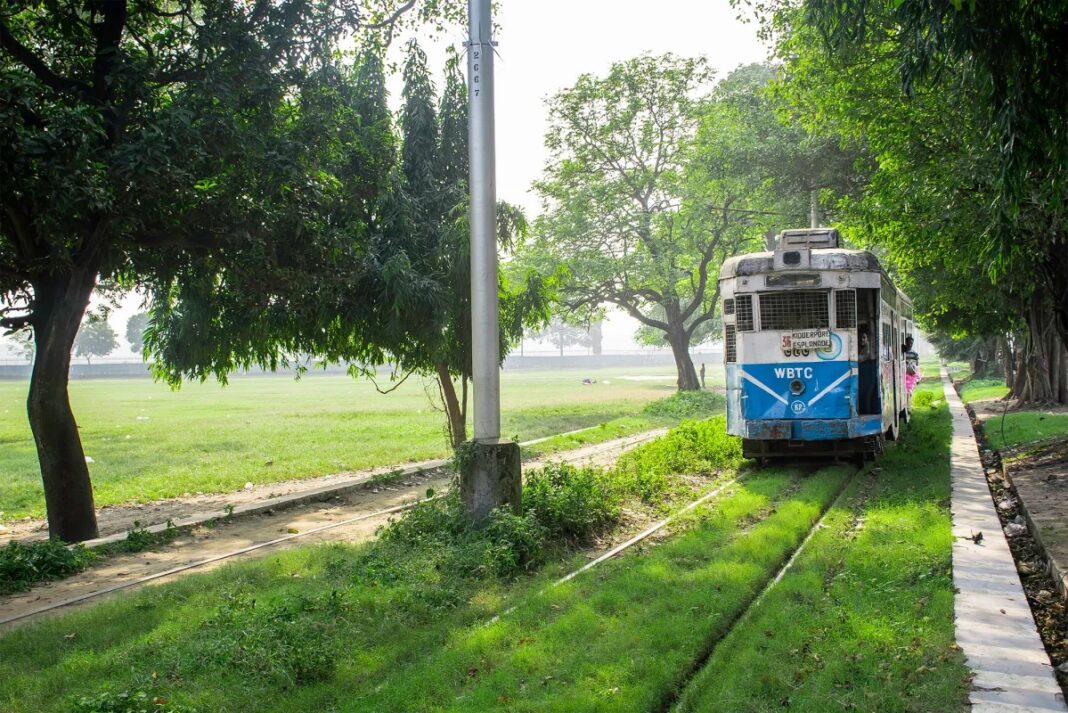
Trams are currently operating on only two routes in the city. A detailed study will be conducted to determine which routes would be feasible to operate trams in the future. The historic Esplanade-Khidirpur tram route is on the government’s priority list. This route, which runs through the green surroundings of the Maidan, has long been popular with locals and tourists. It also has a deep connection with the city’s tram heritage.
The administration has also indicated interest in upgrading tracks and depots while exploring integration with Kolkata’s expanding metro network to create a cohesive multi-modal public transport system.
Kolkata’s tram service, which began operating in 1873, is the oldest operating tram network in Asia. The over 150-year-old system was once one of the city’s main modes of public transport. Currently, trams operate on a limited basis only on the Esplanade-Shyama Bazar and Esplanade-Gariahat routes.
The revival effort is being positioned as a balanced approach that honours Kolkata’s rich tram heritage while adapting it for 21st-century needs, offering residents a low-emission, nostalgic yet practical alternative amid growing concerns over urban congestion and pollution.
