

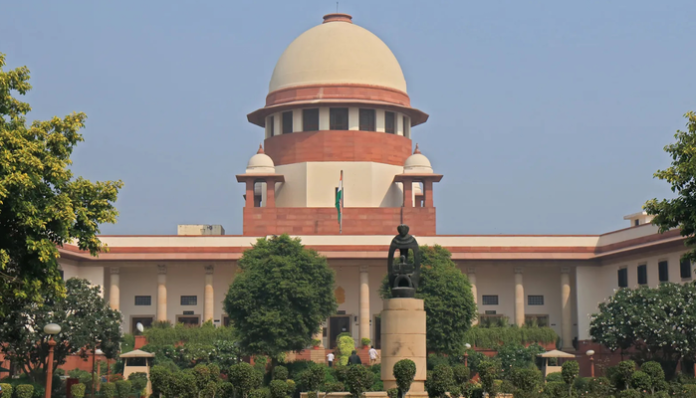
Supreme Court on Thursday, 19th February, delivered one of its strongest remarks yet against what is often called the country’s growing “freebies” culture. The court warned that giving out benefits and subsidies to everyone without checking who actually needs them could damage the country’s work culture and slow down long-term economic growth. The bench said that while welfare schemes for the poor are justified, blindly offering free services to all citizens, including those who can afford to pay, raises serious concerns.
Hearing the matter, the judges questioned whether such policies were financially sustainable, especially when many states are already struggling with revenue shortages. “Most of the states in the country are revenue-deficient states, and yet they are offering such freebies,” the bench observed, pointing out that development work often gets sidelined in the process.
The Supreme Court has strongly criticised the distribution of “freebies” by political parties of all states and expressed concern over its impact on public finances.
— ANI (@ANI) February 19, 2026
The Court has said that instead of distributing resources by freebie schemes, the political parties should come… pic.twitter.com/VdoC1p4XbE
“What kind of culture are we developing?”
The bench, headed by Chief Justice Surya Kant and comprising Justices Joymalya Bagchi and Vipul M Pancholi, drew a clear line between targeted welfare and blanket giveaways. The court said it understood the need to support people who genuinely cannot afford basic services like electricity. However, it questioned why governments fail to distinguish between those who are poor and those who are financially stable.
“What kind of culture are we developing in India? It is understandable that as part of the welfare measure you want to provide to those who are incapable of paying the electricity charges,” the bench remarked. It further asked, “But without distinguishing between those who can afford and those who cannot, you start distributing. Will it not amount to an appeasing policy?”
STORY | SC slams freebies culture, says states should open avenues for employment
— Press Trust of India (@PTI_News) February 19, 2026
The Supreme Court on Thursday slammed the freebies culture, saying it was high time to revisit such policies that hamper the country's economic development.
Taking note of the Tamil Nadu Power… pic.twitter.com/9TBvPIFgkK
The court also raised concerns about the impact of such policies on the country’s work culture. “The states should work to open avenues for employment. If you start giving free food from morning to evening, then free cycle, then free electricity, then who will work, and then what will happen to the work culture?” the Chief Justice said.
“The economic development of the nation will be hampered with this kind of largesse distribution Yes, it is the State’s duty to provide. But the ones who are enjoying freebies.. is it not something that should be looked at?” Chief Justice of India Surya Kant verbally observed.
The CJI further observed, “States are running into deficit but still giving freebies. See, 25 percent of revenue you collect in a year, why it cannot be used for development of the State?”
According to the bench, many states are spending a large part of their budgets on salaries and subsidies instead of investing in development projects that generate jobs and boost economic growth.
The case before the court
These remarks came while the Supreme Court was hearing a plea related to Tamil Nadu’s state-run power distribution company, Tamil Nadu Power Distribution Corporation Ltd. The company has proposed to provide free electricity to all consumers, regardless of their income levels. It has also challenged certain provisions of the Electricity Amendment Rules, 2024.
The court issued notice to the Centre and other parties on the petition. At the same time, it questioned the timing of the state utility’s decision to expand free electricity benefits, especially after electricity tariffs had already been notified.
What is the ‘Freebies’ culture?
The term “freebies culture” is often used to describe the practice of political parties promising or distributing free goods and services like electricity, water, food, laptops, bicycles or cash transfers to large sections of the population, sometimes without income-based targeting.
Supporters argue that such measures provide immediate relief and improve living standards. Critics, however, say that universal subsidies put pressure on state finances, reduce funds available for infrastructure and job creation, and may weaken incentives to work.
