

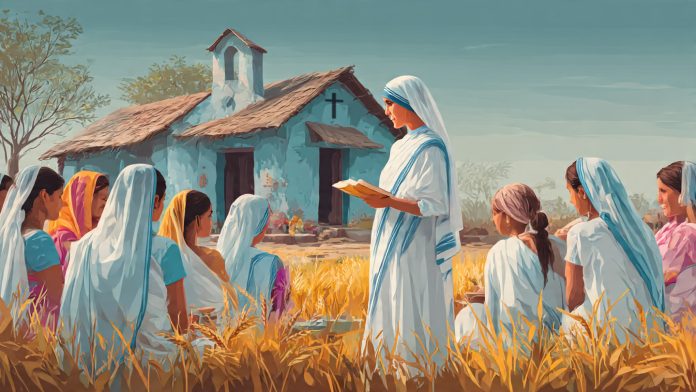
A new pattern of religious conversion has been uncovered in several parts of Chhattisgarh, where missionaries are reportedly using a subtle approach to target poor and vulnerable women. According to recent investigations in districts like Korba and Janjgir, women preachers, often referred to as “lady missionaries”, are now concealing their real identity while spreading Christianity under the guise of friendship and spiritual healing.
Friendship, trust, and the path to ‘Healing prayers’
These women begin by befriending others, especially those struggling with illness, poverty, or family problems. They first win their trust by lending a sympathetic ear and then invite them to attend so-called “Changai Sabhas” (healing prayer meetings), promising relief from their troubles. Investigations have revealed that during these gatherings, emotional appeals and spiritual rituals are used to convince women and young girls to adopt Christianity.
Most of these converts are not formally becoming nuns or adopting Christian names. Instead, they continue to live in their communities under their original Hindu names and identities while secretly working to spread the faith. This covert strategy allows them to avoid social suspicion and retain access to government benefits such as caste-based reservations.
How the conversion network operates
Missionaries mostly target poor women, daily wage workers, and widows. They tell these women that prayer is the only solution to their suffering and gradually introduce them to church activities. At the churches, women are asked to fill out forms pledging to attend Sunday prayers regularly, with the assurance that their problems and illnesses will be cured through divine grace.
Though modern medicines are often used in these cases, the preachers credit “the Lord’s blessings” for any improvement in health. Investigations have shown that nearly 90% of women who attend these healing sessions end up converting, while the rest, about 10%, walk away after seeing no change in their condition.
Young girls being drawn in too
The operation reportedly extends to young girls as well. Children between the ages of 3 and 14 are being taken to church-run hostels under the pretext of education. While they do receive schooling, they are also trained in Bible reading and Christian teachings. Every Sunday, these girls recite Bible verses during church gatherings, slowly becoming part of the missionary network.
According to a report by Dainik Bhaskar, in Korba district, a pastor named Babulal Miri says, “heals all diseases, witchcraft, and misfortunes through the grace of God.” He even claimed that “with prayer, the dead can be brought back to life.” A large church has been built near his house, which he says was constructed with donations from devotees. Similar, underground churches are reportedly operating in Phanda and Bhojpur, where gatherings take place every Sunday. Women are given “holy water” and told that it will rid them of all suffering.
Another growing trend is that new converts are no longer being asked to change their names or surnames after conversion. This allows them to appear as Hindus in official records while continuing to avail benefits like reservation. Even some pastors have started using Hindu-sounding names while carrying out missionary activities to avoid drawing attention.
Government response: New anti-conversion law soon
Taking note of these developments, Chhattisgarh Deputy Chief Minister and Home Minister Vijay Sharma has announced on Wednesday, 15th October, that the government will soon bring in a stronger law to deal with forced or deceitful conversions. “In the next assembly session, we will introduce a new legislation that will go a step beyond all existing anti-conversion laws in the country,” Sharma said.
He added that “changai sabha”, which are often used as tools to mislead and convert people, will be specifically addressed in this new law. “There must be a provision in the legislation to stop such deceptive activities,” he said, emphasizing that the government will not tolerate exploitation of people’s faith and suffering for conversion purposes.
