

Lord Ganesha, the beloved elephant-headed Hindu deity of beginnings, is prayed to before any significant event and is considered the remover of obstacles. His name holds profound significance – both as the “Lord of the People” and as the “Lord of the Ganas,” Lord Shiva’s attendants.
Ganesha symbolises strength and determination and is the deity of knowledge. His followers celebrate him every year with great zeal on Ganesh Chaturthi.
This year, Ganesh Chaturthi is being observed from 27th August, with Ganesh Visarjan to be conducted on 6th September. In every corner of the country, roads, temples, and houses are aglow with music, prayers, and stunningly decorated idols of Ganesha.
However, it is rather a little-known fact that a prehistoric giant that roamed in the Indian subcontinent thousands of years ago, is named after the beloved Ganpati Bappa, Stegodon ganesa.
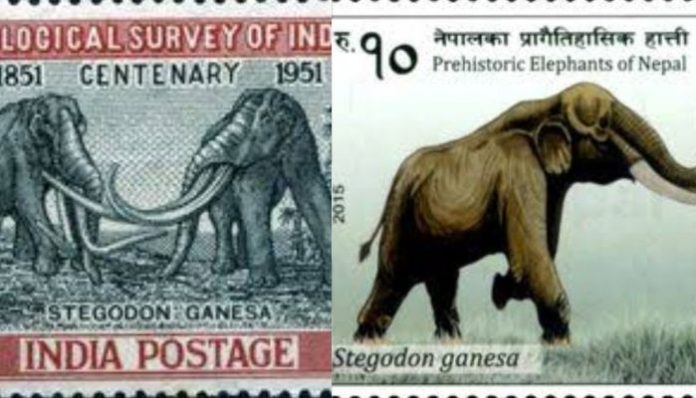
This ancient mastodon, usually considered a relative of the modern elephants, and part of the Stegodontidae family, roamed South Asia close to 25,000 years ago. So unique was it that India and Nepal both released stamps in its memory. Actually, as early as the year 1951, India had issued a commemorative postage stamp with an image of the Stegodon as part of the centenary celebrations of the Geological Survey of India. Later, Nepal also released its own version in 2015.
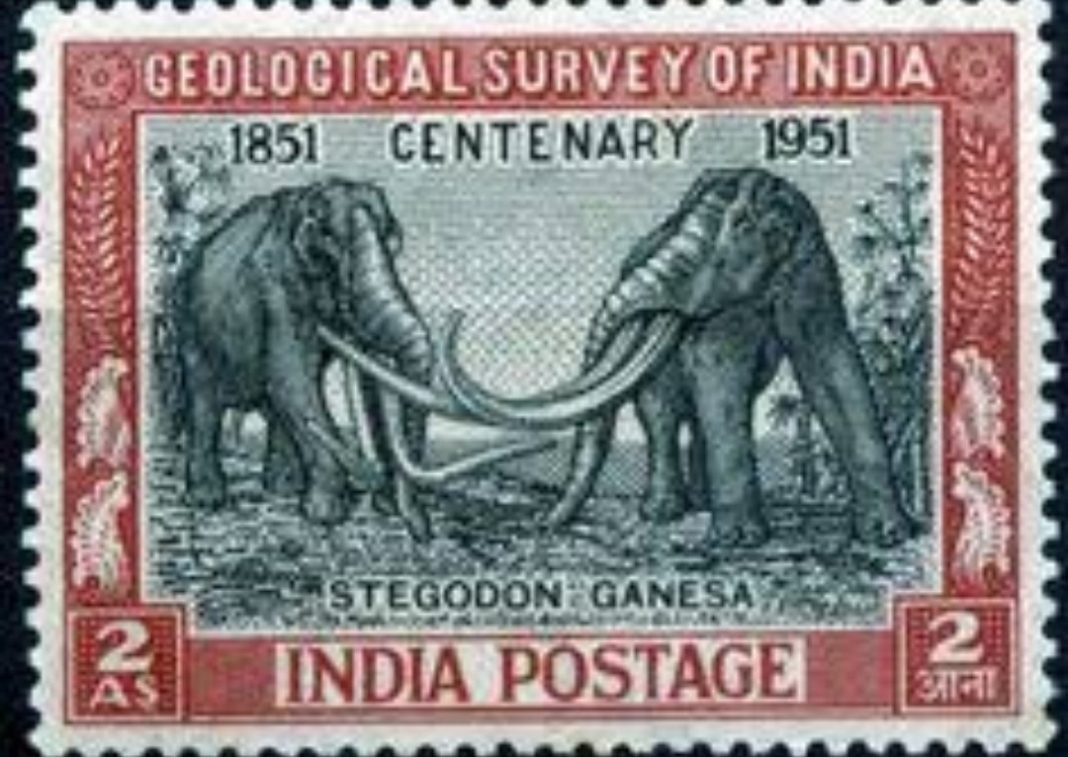
The Stegodon ganesa was one of the largest proboscideans that ever existed. It was some 3 to 4 metres tall at the shoulder and nearly 8 metres in length, larger than even existing African elephants. Its tusks were its most distinguishing feature, long immensely heavy and sometimes overlapping on each other. One specimen that has been discovered in India was 3.89 metres long and had a mass of about 140 kilograms, far larger than the tusks on living elephants today.
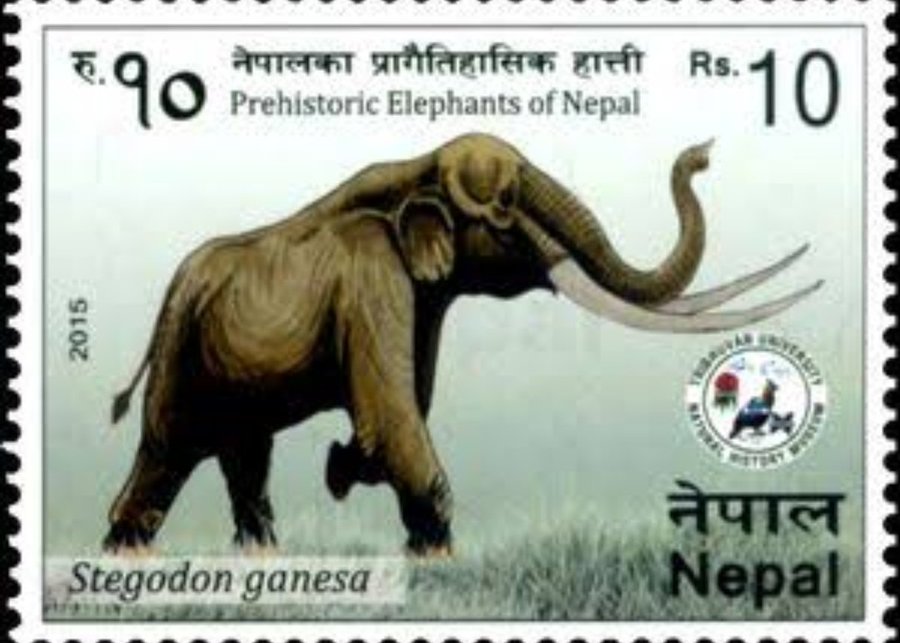
This giant animal once inhabited tropical forests and savannas of the Siwalik Hills and elsewhere in South Asia. The presence in India has been confirmed by fossil finds, one of which is quite important – a 3-metre tusk that was discovered in 1928 by Dr. D.N. Wadia, today housed at Jammu University.
Even in 2025, further fossil remains have been discovered alongside the Wardha and Penganga rivers in Chandrapur, Maharashtra, contributing to the records of its extensive presence in the subcontinent.
While previously thought to be a direct elephant ancestor, scientists now consider Stegodon to be a side branch of the extinct proboscideans. Later research has placed the huge tuskers in the family Stegodontidae, which is more closely related to modern elephants (family Elephantidae) than to mastodons.
Surprisingly, research indicates it could have lived alongside early humans, at least as recently as 4,100 years ago. This leaves open the possibility of it even playing a cultural or symbolic role within ancient civilisation.
Different species of the genus Stegodon reportedly roamed in India, China, the greater South East Asian region and even Japan.
From the divine form of present-day Ganesha worship to the massive Stegodon ganesa, which roamed this planet, the bond between elephants and human imagination is deep. On this Ganesh Puja, recalling both lends a deeper layer of awe to the festivities, one based on belief, and the other on the amazing history of life on our planet.


