

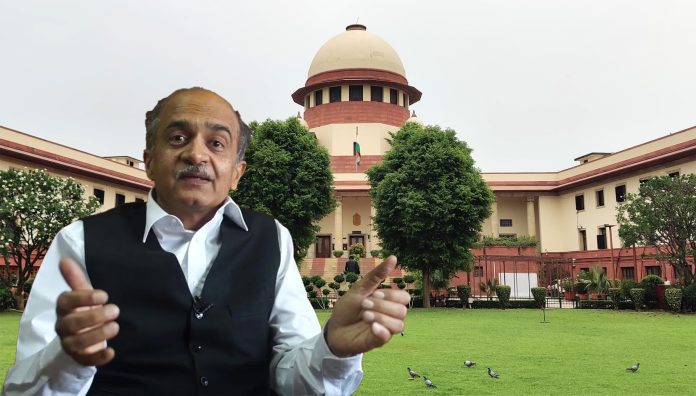
In a sharp exchange during hearings on the Bihar Special Intensive Revision (SIR) of electoral rolls, the Supreme Court of India expressed strong displeasure with senior advocate Prashant Bhushan for submitting an affidavit from a petitioner that allegedly contained false information. The apex court accused the activist-lawyer of failing to verify documents before presenting them to the court.
The incident took place on Thursday before a bench comprising Justices Surya Kant and Joymalya Bagchi, as they were addressing ongoing concerns over alleged exclusions from Bihar’s final voters’ list. The affidavit, filed by the Association for Democratic Reforms (ADR) represented by Bhushan claimed that an individual’s name, present in the draft electoral roll, had been illegally deleted in the final list. However, senior advocate Rakesh Dwivedi, appearing for the Election Commission of India (ECI), vehemently refuted the claim, asserting that the person was never included in the draft list because the required enumeration form was not submitted.
Dwivedi further labelled the submission a “false affidavit,” saying that it constituted perjury and urged the court to hold the organization accountable. “The organisation must satisfy itself of the affidavit before throwing it on the Court,” he remarked, highlighting the gravity of presenting unverified material in judicial proceedings.
Justice Surya Kant directly addressed Bhushan, stating, “The person should have disclosed correct information… we do not appreciate this.” Justice Bagchi echoed the sentiment, emphasising the responsibility involved in tendering documents with the court, saying that when a document was handed over across the bar, there should have been more responsibility.
In response, Bhushan defended his actions, claiming that the affidavit had been provided by a “responsible person” and suggested that the Legal Services Authority could verify its genuineness. He also claimed to have affidavits from 20 other affected individuals ready for submission. However, Justice Bagchi remained sceptical about other affidavits, saying, “After our experience with this affidavit, we don’t know how authentic the others will be.” The judge further criticized ADR for not cross-checking whether the person’s name appeared in the draft list before filing.
The controversy emerged amid arguments in the Bihar SIR petition, where petitioners have alleged mass exclusions, allegedly affecting over 65 lakh voters. ECI counsel Dwivedi countered by pointing out that a five-day window remains for excluded persons to file appeals and encouraged petitioners and political parties to assist rather than escalate unverified claims.
Despite the false affidavit issue, the bench proceeded to pass an interim order directing the Bihar State Legal Services Authority to mobilize paralegal volunteers and free legal aid counsel to help excluded voters file appeals urgently. The order extends to those absent from even the draft list, aiming to mitigate the time crunch as Bihar gears up for elections. Justice Kant also said that the court can ensure free legal aid by the Legal Services Authority for those who want to file appeals.
However, the apex court declined to issue any blanket order in the issue, given the discrepancies in the affidavits submitted by the petitioners. The court added that it will not be possible for the court to examine each and every such case and hence, the affected voters should file appeals before the relevant authority.
