

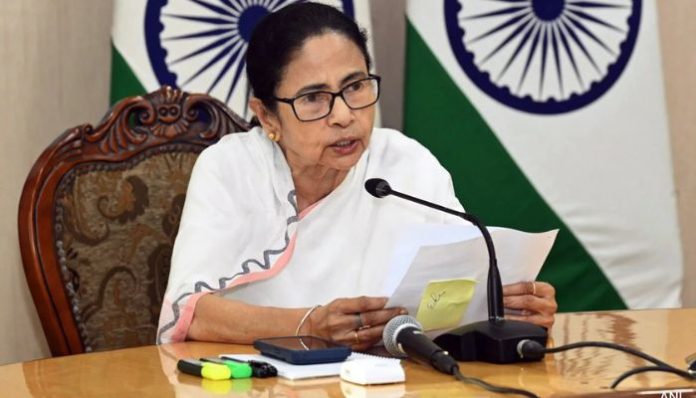
West Bengal Chief Minister Mamata Banerjee’s remarks on the Durgapur gangrape case have triggered a political storm across the state, with opposition parties and women’s rights groups accusing her of “victim-blaming.” Speaking on Sunday (12th October) about the horrific incident, Banerjee said that girls should avoid stepping out of their college premises at night for their own safety.
Speaking to reporters at Kolkata airport, the Chief Minister said, “The girls should not be allowed to go outside (college) at night. They have to protect themselves also.”
#WATCH | Kolkata, WB: On the alleged gangrape of an MBBS student in Durgapur, CM Mamata Banerjee says, "… The girls should not be allowed to go outside (college) at night. They have to protect themselves also. There is a forest area. Police are searching all the people. Nobody… https://t.co/9cck7wwxcn pic.twitter.com/OnuFiFSIAz
— ANI (@ANI) October 12, 2025
Durgapur gangrape case
The Chief Minister’s comment comes just days after the shocking gangrape of a second-year MBBS student in West Bengal’s Durgapur, which has shaken the public and triggered outrage across the state. On Sunday, 12th October, three men, Apu Bauri (21), Firdos Sekh (23), and Sekh Reajuddin (31), were arrested by West Bengal Police in connection with the crime. Another individual, Sheikh Sofiqul, has been taken into custody for questioning.
The crime was committed late on Friday evening (10th October) in a jungle close to IQ City Medical College Hospital in Shobhapur, where the victim is a Medical student. As per reports, the 20-year-old student from Jaleswar in Odisha had gone out with her friend Wasif Ali at 8:30 PM. The two were walking along Mohanbaghan Avenue, a dark road close to Durgapur Government College, when they were confronted by five unknown men.
The incident has drawn comparisons with the previous RG Kar Hospital case in Kolkata, where a female physician was raped and killed, triggering statewide protests regarding the security of medical students and professionals in West Bengal.
Mamata Banerjee and TMC’s history of downplaying rape cases
Mamata Banerjee’s recent comments have once again brought attention to her controversial record of making remarks that appear to downplay sexual assault cases. Over the years, both Banerjee and senior members of her Trinamool Congress (TMC) have faced criticism for their insensitive responses to rape incidents.
One of the most infamous cases was the 2012 Park Street gangrape case. An Anglo-Indian woman, Suzette Jordan, was raped in a moving car by five men on February 6, 2012, when she was returning home from Park Street in Kolkata.
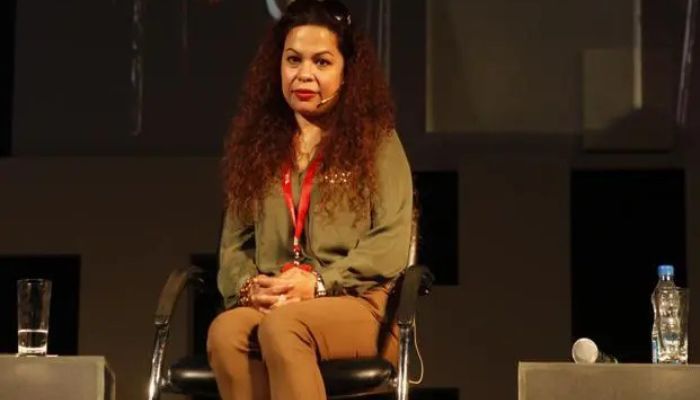
Soon after the news surfaced, TMC supremo Mamata Banerjee absolved the accused of all charges. She had dubbed the incident as ‘shajano ghotona‘ (concocted incident), which was allegedly ‘designed to malign the government.’
Recall the infamous Park Street Rape Case of 2012
— OpIndia.com (@OpIndia_com) April 28, 2023
Soon after the news surfaced, Mamata Banerjee dubbed the incident as ‘shajano ghotona‘ (concocted incident), which was allegedly ‘designed to malign the government.’
(6/n) pic.twitter.com/hIWJVGBfiO
Her party leaders, including TMC MP Kakoli Ghosh Dastidar, publicly questioned the victim’s character, calling the incident a “misunderstanding between a lady and her client.” Years later, in 2015, a Kolkata court convicted three of the accused, proving the assault had indeed taken place.
In 2013, during a debate in the West Bengal legislative assembly about the rising cases of rapes in the State, the CM had insinuated that it was due to an increase in the population of the State. She had also blamed modernisation, an increase in shopping malls and multiplexes for rising rape cases.
During a debate in the West Bengal Vidhan Sabha in 2013 about the rising cases of rapes in the State, Mamata Banerjee had insinuated that it was due to the rise in population.
— OpIndia.com (@OpIndia_com) April 28, 2023
She also blamed the heinous crime on increase in modernisaion, shopping malls and multiplexes.
(9/n) pic.twitter.com/QQpZlGe4Lw
That same year, after reports of a rape in Katwa, Burdwan, Banerjee again dismissed the allegations before the investigation had even concluded. She accused the opposition of staging the incident to tarnish Bengal’s image, saying, “A political party is doing all this, shouting rape. They are staging a drama to defame Bengal.”
In one rape case in Burdwan’s Katwa in 2012, Mamata Banerjee dismissed the allegations even before the investigation was concluded.
— OpIndia.com (@OpIndia_com) April 28, 2023
“Harmad-der diye natok shajachhe jatey Banglar naam kharap hochhe"#Translation: They are staging an act to give a bad name to West Bengal.
10/n pic.twitter.com/UGx8EOiAiJ
In April 2022, Mamata Banerjee courted controversy after she tried to downplay allegations of the brutal rape and murder of a 14-year-old girl as a ‘love affair’ gone wrong. The victim was from the Hanskhali, Nadia district.
In April 2022, Mamata Banerjee again tried to downplay allegations of brutal rape and murder of a 14-year-old girl as a ‘love affair’ gone wrong.
— OpIndia.com (@OpIndia_com) April 28, 2023
The accused was identified as one Brajgopal, the son of Trinamool Congress (TMC) Gajna Gram Panchayat member Samar Gowla.
(11/n) pic.twitter.com/jrcYnFalXX
The accused has been identified as one Brajgopal, the son of Trinamool Congress (TMC) Gajna Gram Panchayat member Samar Gowla.
Instead of promising justice, while speaking at the inauguration of the revamped Milan Mela on 11th April 2022, she claimed, “As a layman, I am saying, where would someone get the evidence whether the girl was actually raped or pregnant. Or was there any other reason, like someone beat her up or she died of some illness?”
“There was a love affair for sure, her family knew about it, and their neighbours also knew about it. Now if a girl and a boy love each other, I cannot punish them”, alleged Mamata Banerjee.
Even in 2023, during the case of a 17-year-old Dalit girl found dead in Kaliagunj, Uttar Dinajpur, Banerjee again played down the incident, suggesting it was suicide caused by a romantic relationship. “We have seen WhatsApp messages… There was a love affair,” she said, even before the police investigation had been completed.
The body of a 17-year-old Dalit girl was discovered in a canal in Kaliaganj on the morning of April 21.
— OpIndia.com (@OpIndia_com) April 28, 2023
In a viral video, the police were seen dragging the lifeless body of the victim along the ground.
The incident had drawn the ire of the locals in the area.
(2/n) pic.twitter.com/zW2Cogqx6O
A pattern of victim-blaming
From Park Street to Durgapur, Banerjee’s statements have often sparked outrage for shifting blame onto victims rather than addressing systemic failures in policing and women’s safety. Opposition parties and women’s organisations say her repeated remarks reflect a “dangerous culture of denial” that discourages victims from coming forward.
As the Durgapur investigation continues, Mamata Banerjee’s words have reignited an uncomfortable debate, not just about one horrific crime, but about the mindset of those in power who continue to treat women’s safety as their own responsibility, rather than the state’s.
