

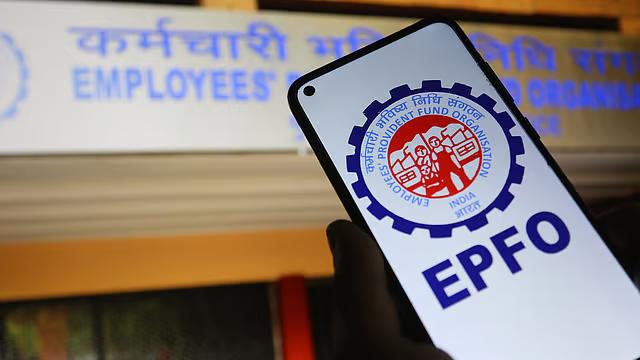
The Employees’ Provident Fund Organisation (EPFO) has introduced a sweeping set of reforms to simplify and modernise its withdrawal process, allowing members to access up to 100 per cent of their EPF balance. The move is expected to benefit more than seven crore subscribers by making it easier to utilise their savings when needed while ensuring continued financial security for retirement. The decision was approved during the 238th meeting of the Central Board of Trustees (CBT), chaired by Union Labour and Employment Minister Mansukh Mandaviya.
Under the revamped framework, EPFO has merged 13 separate withdrawal provisions into a single, streamlined system. Withdrawals have now been categorised into three broad heads: Essential Needs (covering illness, education, and marriage), Housing Needs, and Special Circumstances. Members will now be able to withdraw the entire EPF balance, including both employee and employer contributions, subject to certain conditions. The new rules also bring greater flexibility, education withdrawals can now be made up to 10 times and marriage-related withdrawals up to five times, compared to the earlier combined limit of three. Additionally, the minimum service period required for any partial withdrawal has been reduced to just 12 months.
In a major relief for members, EPFO has done away with the requirement of providing reasons under the “Special Circumstances” category, making the process more user-friendly. At the same time, to safeguard members’ long-term savings, EPFO has mandated that 25 per cent of the total balance must remain in the account, allowing subscribers to continue earning the 8.25 per cent annual interest and maintain a healthy retirement corpus. The entire withdrawal process is being automated, with claims set to be settled without the need for supporting documents, signalling a major step toward a paperless and faster system. However, the organisation has also increased the waiting period for final withdrawals, from two months to 12 months for EPF and from two months to 36 months for pension withdrawals, to discourage premature encashments.
Alongside the withdrawal reforms, EPFO has launched the ‘Vishwas Scheme’, aimed at resolving long-pending disputes related to delayed provident fund payments. At present, penal damages worth ₹2,406 crore are tied up across 6,000 court cases, with an additional 21,000 cases pending under e-proceedings. The Vishwas Scheme seeks to provide relief by reducing penal charges — 1 per cent per month as a standard rate, with lower rates for shorter delays (0.25 per cent for delays up to two months and 0.5 per cent for up to four months). The scheme will initially run for six months, with the possibility of extension for another six months. It will apply to all ongoing and pending cases under Section 14B of the EPF Act, and once dues are cleared, all related cases will be automatically closed.
EPFO has also announced a new facility for pensioners under the Employees’ Pension Scheme (EPS-95) in collaboration with India Post Payments Bank (IPPB). The initiative will enable pensioners to obtain their Digital Life Certificates (DLCs) at their doorstep. Each DLC will cost ₹50, but the expense will be borne entirely by EPFO, making the service free for beneficiaries and more accessible for elderly pensioners.
Taking a major digital leap, EPFO has also launched EPFO 3.0, a comprehensive technology upgrade that introduces a Core Banking Solution and cloud-based systems to enhance service delivery. The new platform will support instant claim settlements, multilingual self-service options, and payroll-linked automatic contributions. This transformation is expected to significantly boost efficiency and data security, helping EPFO serve its expanding base of over 30 crore members more effectively.
