

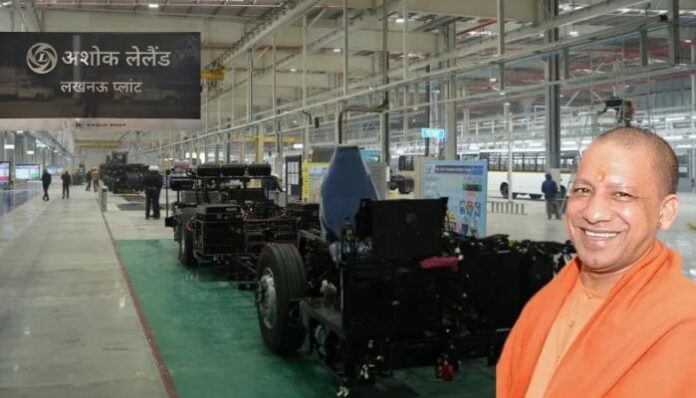
In Lucknow’s Sarojini Nagar, a place once known for producing Lambretta scooters, is now driving India’s clean transport future. The land, which was earlier occupied by the Scooter India factory, has been transformed into a modern electric bus manufacturing unit by Ashok Leyland. Uttar Pradesh Chief Minister Yogi Adityanath is set to inaugurate the smart electric bus plant on 9th January.
#WATCH | UP | Visuals from the Ashok Leyland's Lucknow Plant, which CM Yogi Adityanath will inaugurate on 9 January. (06.01) pic.twitter.com/TUiwAMZvIs
— ANI (@ANI) January 6, 2026
The project has drawn attention not only for its size but also for the speed at which it was completed. The entire facility was built in just 16 months, which is rare for a large manufacturing plant.
A factory built at unusual speed
S.K. Chadha, President of Corporate and Sales at the Hinduja Group, said such plants usually take around 38 to 40 months to complete. Finishing the Lucknow unit in 16 months, he said, was possible because of strong support from the state government and clear direction from the Chief Minister.
Chadha recalled that nearly two years ago, the idea of setting up an Ashok Leyland plant in Uttar Pradesh was only a plan. Today, that plan has taken shape on the ground. He credited the state’s industrial push and consistent follow-up for turning the proposal into reality.
How the project took shape
Ashok Leyland signed a Memorandum of Understanding with the Uttar Pradesh government on 15th September. Soon after, the company was allotted 70 acres of land in Sarojini Nagar. This land earlier belonged to Scooter India and had remained unused after the factory shut down.
To encourage investment, the state government offered the land with a 75% subsidy. Construction work began with a foundation ceremony in February 2024. Completing the project within 16 months, Chadha said, marked a milestone for the company and the Hinduja Group.
First Ashok Leyland plant in UP
This Lucknow unit is Ashok Leyland’s first manufacturing plant in Uttar Pradesh. Chadha said that earlier, companies were cautious about setting up factories in the state due to concerns about delays and uncertainty.
After reviewing recent development work, improved infrastructure, and the handling of large events like the Prayagraj Kumbh, the company decided to move ahead with its investment.
In the first phase, the plant will produce 2,500 electric buses each year. Over time, this capacity will be expanded to 5,000 and later to 10,000 buses.
Training and opportunities for Women
One of the key features of the plant is the “Nalanda” skill development centre, which focuses on training women. Chadha said the centre reflects the government’s focus on women empowerment and aims to help women gain technical skills for modern manufacturing jobs.
The company believes this initiative will help local women become part of the growing electric vehicle sector.
₹1,000 Crore investment and job creation
Ashok Leyland plans to invest around ₹1,000 crore in the Lucknow plant. In the initial phase, about 1,000 workers will be required to manufacture 2,500 buses annually. As production increases, total employment, including direct and indirect jobs, is expected to reach nearly 10,000.
Plant Head Shakti Singh Yadav said suppliers, transporters and other support services linked to the plant will also benefit, creating a wider economic impact in the region.
Clean transport as the main goal
Shakti Singh pointed out that Uttar Pradesh accounts for over 30% of India’s population and has a clear aim to promote pollution-free transport. The Lucknow plant will focus on electric buses and, in the future, vehicles running on alternative fuels and hydrogen technology.
He said replacing diesel buses with electric ones will help reduce pollution and improve daily public transport.
Faster approvals made it possible
According to Shakti Singh, the state’s single-window clearance system, Invest Mitra, played a major role in speeding up the project. Through this online system, approvals from around 45 departments are handled digitally, cutting down delays that earlier slowed large projects.
He said the process has made it much easier for companies to set up and operate in Uttar Pradesh.
Uttar Pradesh moving towards EV leadership
Before Ashok Leyland, Tata Motors had started electric vehicle manufacturing in Lucknow in 2019. With Ashok Leyland joining in, Uttar Pradesh is steadily emerging as a hub for electric and smart mobility.
Industry observers say the Lucknow EV plant shows how projects in the state are now moving quickly from planning to execution. With supportive policies, better infrastructure and a push for clean transport, more companies are expected to look at Uttar Pradesh as a preferred destination for future investments.
