

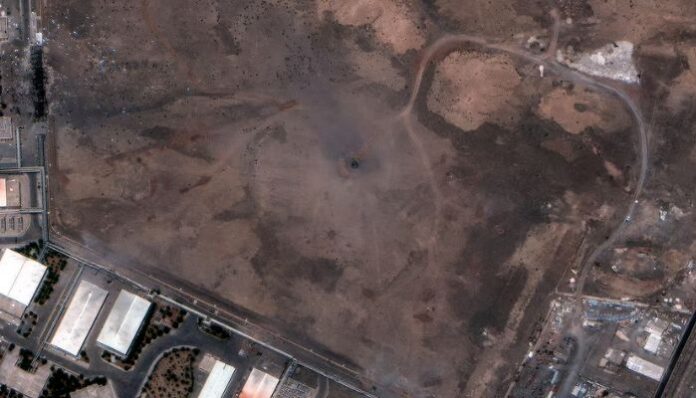
The International Atomic Energy Agency (IAEA) has confirmed fresh damage at Iran’s Natanz nuclear site as the United States and Israel continue their joint air campaign against Iranian targets. The agency said satellite images show that entrance buildings to the underground Natanz Fuel Enrichment Plant (FEP) were hit.
Based on the latest available satellite imagery, IAEA can now confirm some recent damage to entrance buildings of Iran’s underground Natanz Fuel Enrichment Plant (FEP). No radiological consequence expected and no additional impact detected at FEP itself, which was severely… pic.twitter.com/7CS7BRZo1s
— IAEA – International Atomic Energy Agency ⚛️ (@iaeaorg) March 3, 2026
In a post on X on the 3rd of March, the IAEA said the damage was limited to the entry points of the underground site and that no radiation leak or new impact inside the main enrichment plant had been detected. The site had previously been severely damaged during the 12-day conflict between Israel and Iran in June. The conflict was later escalated to include the US joining the war with Iran.
Iran’s envoy to the UN nuclear watchdog, Reza Najafi, told reporters at a board meeting in Vienna that Natanz was again targeted during the latest US and Israeli military operations. He said Iran’s peaceful nuclear facilities were targeted.
Citing satellite images reviewed by the Washington-based Institute for Science and International Security, reported that two impact points were visible near entrances to the underground uranium enrichment complex.
David Albright, a former UN nuclear inspector and head of the Institute for Science and International Security, said the strikes “appeared to have taken place between Sunday afternoon and early Monday morning.” It is still unclear whether US or Israeli forces carried out the specific attack.
The new strikes come as tensions rise across the region following coordinated US-Israeli operations and Iran’s retaliatory moves.
