

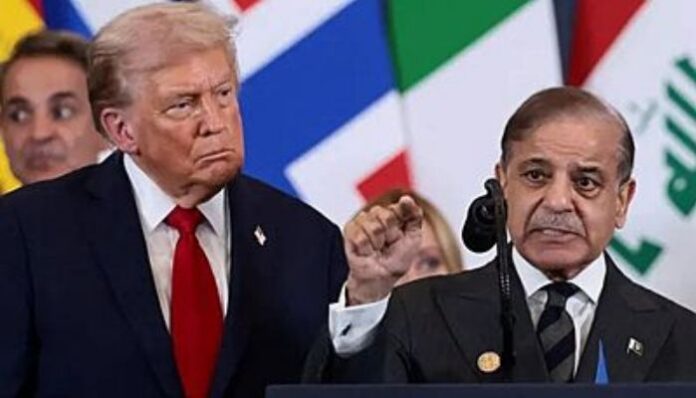
In a surprising turn during the ongoing US-Iran standoff, Pakistan has opened six trade routes to Iran, offering a major workaround to the naval blockade in the Strait of Hormuz ordered by Donald Trump. The move comes as thousands of containers meant for Iran remain stuck at Pakistani ports, creating pressure to find an alternative route.
Trump admin, you have a problem. Your good friend Pakistan appears to have just opened six overland links to Iran, helping the regime bypass your counter-blockade in the Strait of Hormuz. This will help Iran continue to resist US pressure. Islamabad double deals America…AGAIN! pic.twitter.com/gbNZeuQy0G
— Derek J. Grossman (@DerekJGrossman) April 29, 2026
Blockade pressure meets Pakistan’s counter move
Since mid-April, US naval action in the Strait of Hormuz has choked Iran’s sea trade, targeting ships linked to Iranian ports and restricting both exports and imports. The blockade has disrupted a key global shipping lane that usually carries around 20% of the world’s oil. Iran even shut the Strait completely on 18th April, warning ships against passing through.
With maritime routes becoming risky and expensive due to soaring insurance costs, over 3,000 containers piled up at Karachi and Port Qasim. To ease this crisis, Pakistan’s Ministry of Commerce stepped in with a new order that allows goods from third countries to move into Iran through Pakistani land routes.
Six new transit routes opened
Pakistan has now officially activated six corridors connecting its ports to the Iranian border:
- Gwadar – Gabd
- Karachi/Port Qasim – Lyari – Ormara – Pasni – Gabd
- Karachi/Port Qasim – Khuzdar – Dalbandin – Taftan
- Gwadar – Turbat – Hoshab – Panjgur – Nagg – Besima – Quetta/Lakpass – Taftan
- Gwadar – Lyari – Khuzdar – Quetta/Lakpass – Taftan
- Karachi/Port Qasim – Gwadar – Gabd
These routes link key ports like Gwadar and Port Qasim to border crossings such as Taftan and Gabd, giving Iran direct land access through Pakistan’s 900 km shared border. The Gwadar-Gabd route, in particular, is expected to cut travel time from 18 hours to just about 3 hours.
How Pakistan undercut its US ally
What makes this move more striking is that Pakistan is considered a long-time partner of the United States, especially on security and regional matters. Despite that, Islamabad has now created a system that directly weakens the impact of Washington’s blockade on Iran. By allowing third-country goods to legally pass through its territory into Iran, Pakistan has effectively reduced the pressure the US was trying to build.
Analysts say this looks like Pakistan playing both sides, staying diplomatically aligned with the US on one hand, while quietly helping Iran keep its supply lines open on the other. Comments by experts like Himanshu Jain and Richa Dwivedi suggest that this step has “punched a legal hole” in the blockade, raising questions about how firmly Pakistan is backing the US strategy in the region.
Strict rules, strategic gains
The new system works under a legal framework where traders must provide encashable bank guarantees equal to Pakistan’s import duties. Goods can also be shifted from containers to trucks under customs supervision, a process known as cross-stuffing, monitored by Pakistan’s Federal Board of Revenue.
This setup is based on a 2008 Pakistan-Iran road transport agreement, now being used at a much larger scale. While the routes pass through sensitive areas of Balochistan, security has been tightened with increased patrols.
At the same time, Pakistan gains economically by clearing port congestion and boosting Gwadar’s importance as a regional trade hub, especially under China-backed infrastructure projects. With Afghan routes also facing disruptions, this move strengthens Pakistan’s position as a key transit corridor in the region.
For Iran, these land routes are not a full replacement for sea trade, but they are a crucial lifeline in a time when maritime access remains uncertain.
