

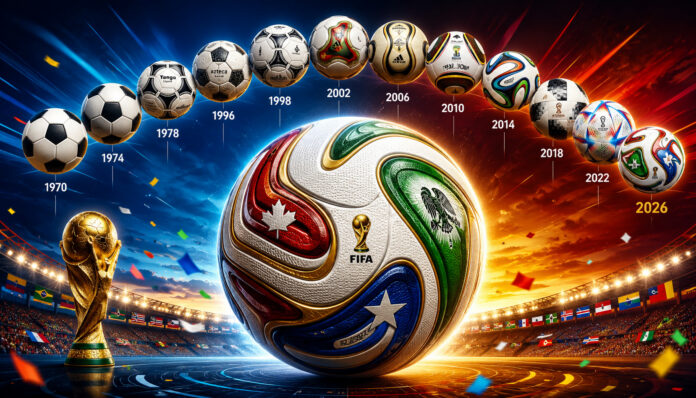
When watching the final whistle of a group stage match or holding their breath during a penalty shootout, almost no one takes into account this detail, every single moment of brilliance, every knuckling free kick that bends around a wall, every goalkeeper’s desperate dive, and every striker’s celebration that lights up a stadium, all of it is carried by the same object, which is about 22 centimetres across and weighs no more than 450 grams, travelling at speeds that would be too quick for most people’s eyes.
The ball is the real star of the game, the one constant in a competition played in many cities, climates, altitudes, and cultural contexts. However, for the majority of football’s history, the ball had no stable identity at all. There wasn’t a single official FIFA World Cup match ball prior to 1970. Within the same event, different vendors, matches, and specifications may exist. Any farmer will tell you that leather absorbs water rapidly, which is why early balls were made almost entirely out of leather.
In the days of leather and water, heading the ball was not only painful to the body but also a small-scale version of roulette. In 1970, FIFA awarded Adidas a contract that would alter football’s history and create some of the most fascinating chapters in the history of sport, science, and culture that the modern world has ever witnessed against this backdrop of stunning but delightfully inconsistent chaos.
Telstar: Born from a satellite, designed for a black and white screen
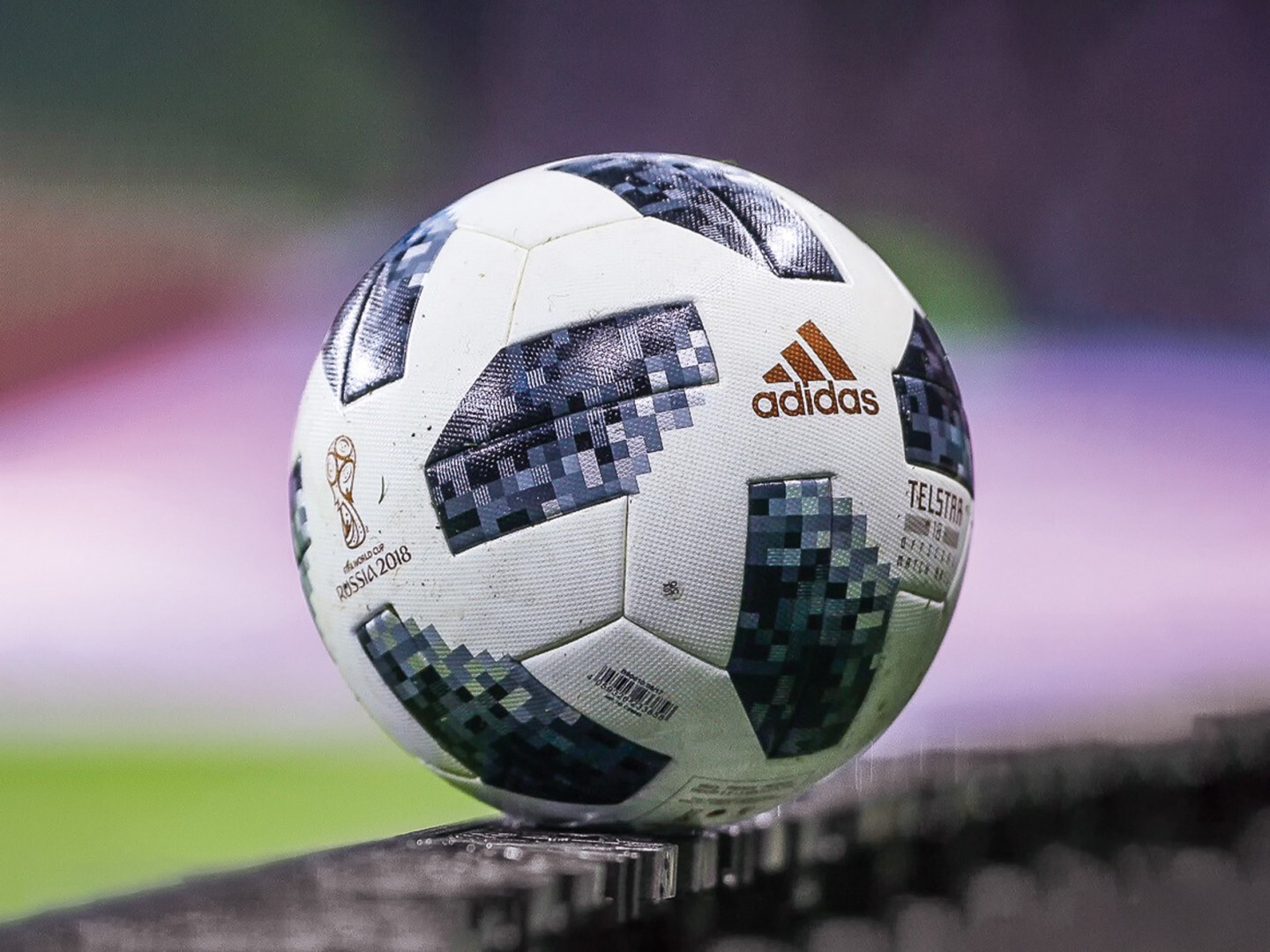
By all accounts, the 1970 World Cup in Mexico marked a turning point for football as a worldwide spectacle because, for the first time, the competition aired live to viewers across continents. Not only that, but the majority of the broadcasts were black and white, making it impossible to tell the difference between the traditional brown leather ball and the green grass of the field. In response to this challenge, Adidas came up with a design choice that has been the universal shorthand for the concept of football for more than fifty years, thirty-two panels arranged in a truncated icosahedron, consisting of twelve black pentagons and twenty white hexagons, that produced stark, high contrast visibility even on the grainiest monochrome screen.
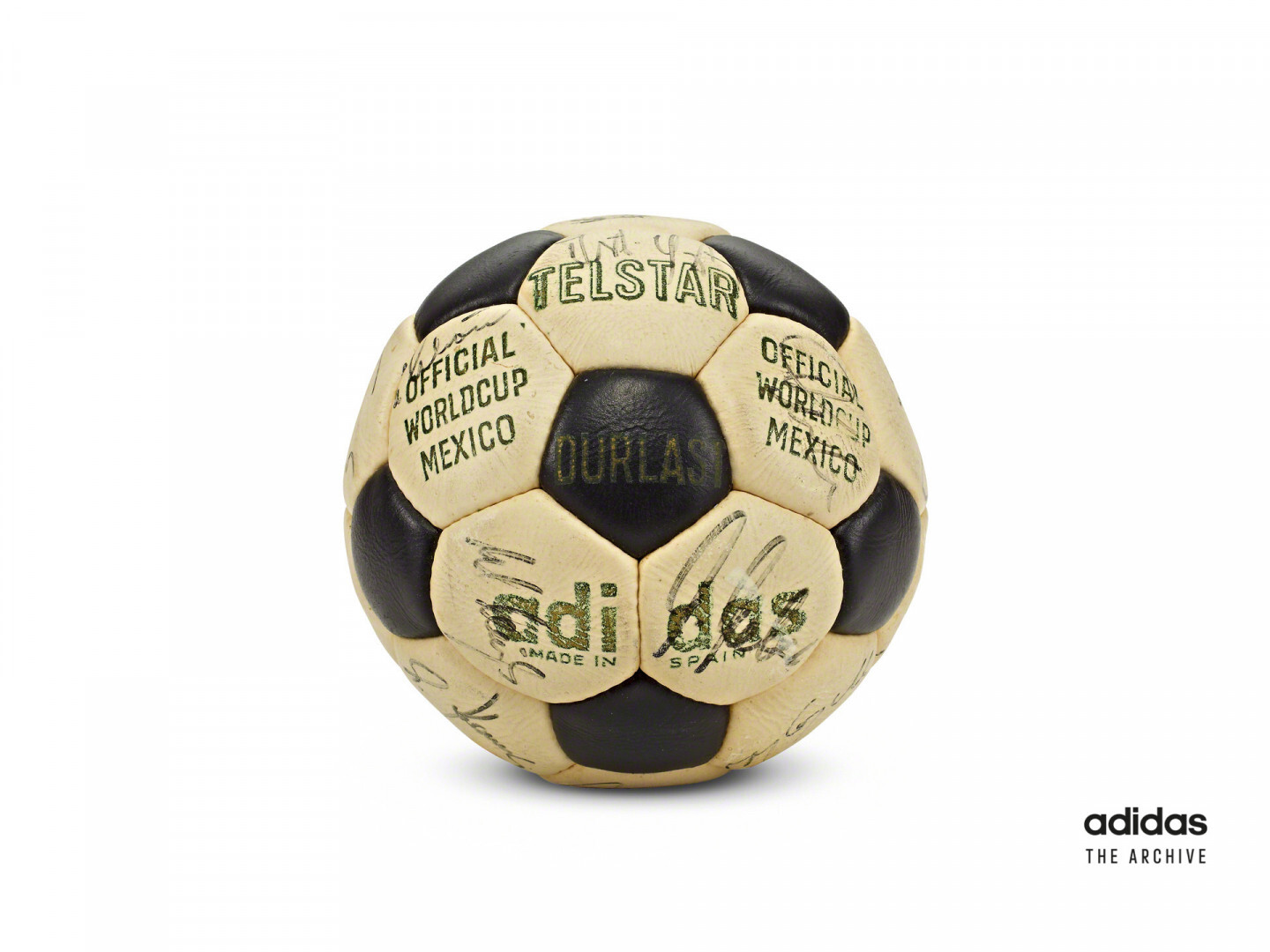
The ball’s name, Telstar, originated from the word combination ‘Television Star,’ according to NASA science archives. However, both its name and its unique patterning style were similar to those of the Telstar communications satellite, which NASA had deployed in 1962. The solar panel hull of the first operational commercial communications satellite in space bore a striking visual resemblance to the chequered geometry of the ball. This coincidence was so poetic that no one has been engaged in debating whether it was a coincidence, either back then or now.
The Durlast polyurethane coating, a thin plastic layer added to the leather panels that significantly increased durability and water resistance, was first used on the Telstar. It was produced using a 32-panel truncated icosahedron construction with an interior latex rubber bladder instead of the traditional animal tissue alternatives. It was taken from the mathematical field of geodesic geometry, where it was known as a Buckminster Fullerene-style structure long before it was known as a football shape. According to the Adidas Group’s history, it became the nearly universal visual symbol for a football across all subsequent art, cartoons, and signage, regardless of whether actual footballs maintained that design.
The Tango years: Elegance, waterproofing and the design that refused to leave
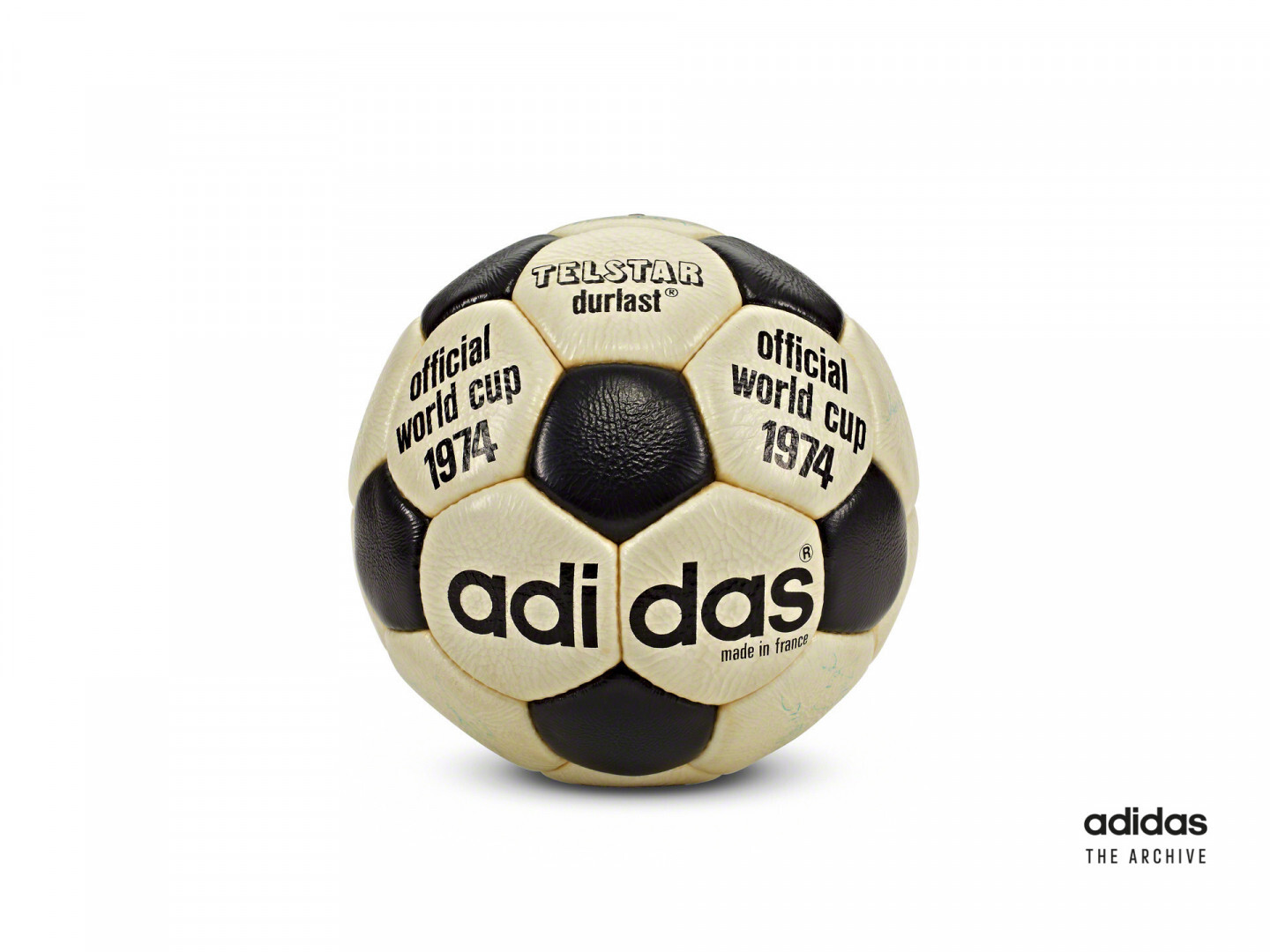
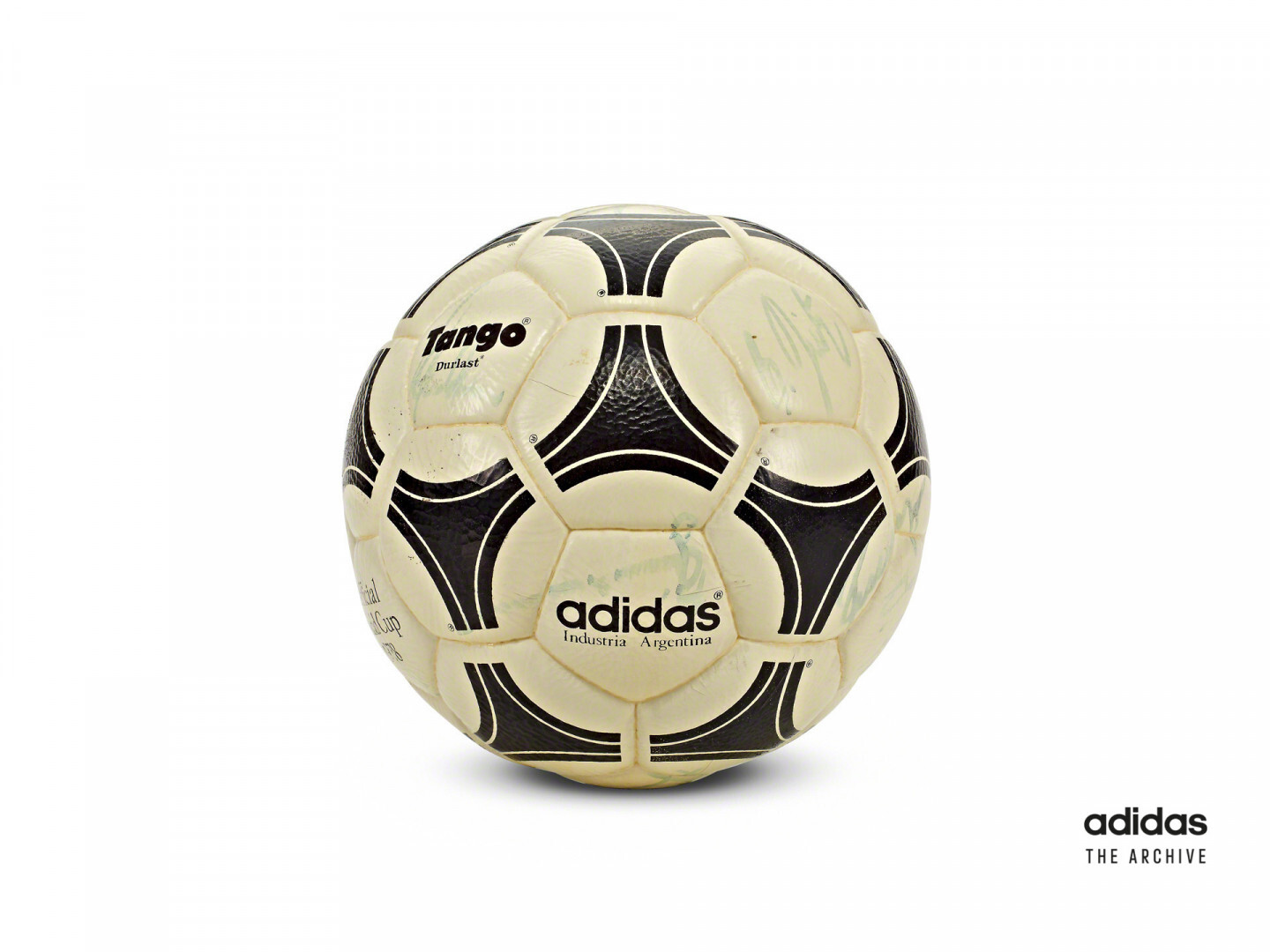
Adidas created the Telstar Durlast for the 1974 World Cup in West Germany, improving the polyurethane coating and introducing significant advancements in seam technology. In addition, 1974 was noteworthy because, according to the Adidas archive, it was the first World Cup where match balls were allowed to display names and logos, a minor modification that represented football’s expanding commercial machinery. Adidas debuted the Tango in 1978, when Argentina was hosting a Globe Cup amid political unrest and intense football passion that the globe could not ignore.
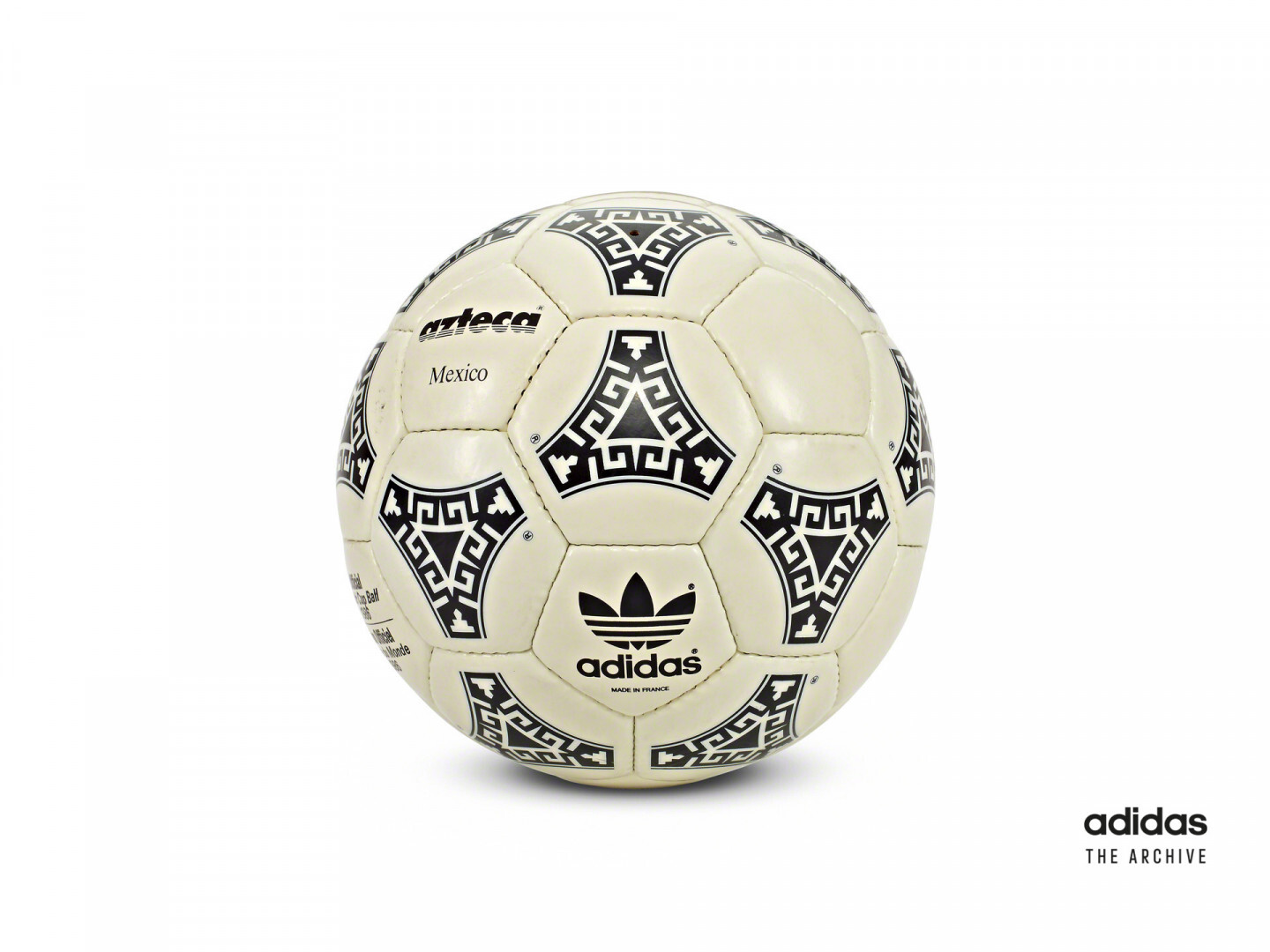
Named for the dance most closely connected with the Argentine spirit, the ball’s visual design consists of twenty similar panels, each with a curving triad pattern that, when combined, generates twelve apparent circles over the surface. The pattern is both rhythmic and graceful. It was so popular that it was used in five World Cups in a row, with each successive version maintaining that unique look while enhancing seam quality, water resistance, and synthetic content. A true manufacturing evolution, the Tango España of 1982 included rubber lining over seams to stop water infiltration while keeping a large number of leather components. Made for Mexico’s second World Cup in 1986, the Azteca was the first ball made completely of synthetic materials, doing away with leather completely and symbolising the shift from traditional craft to material-based technology.
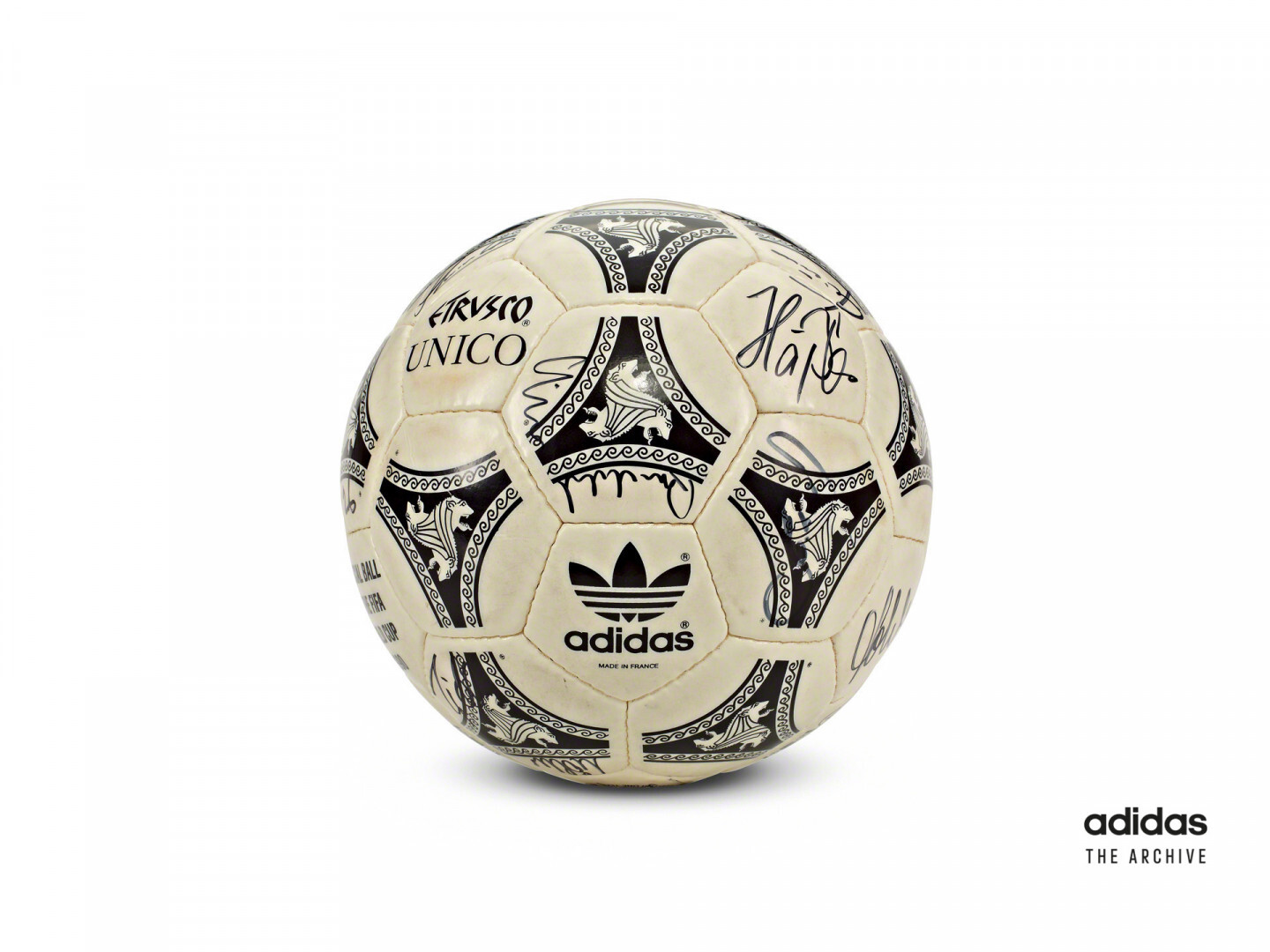
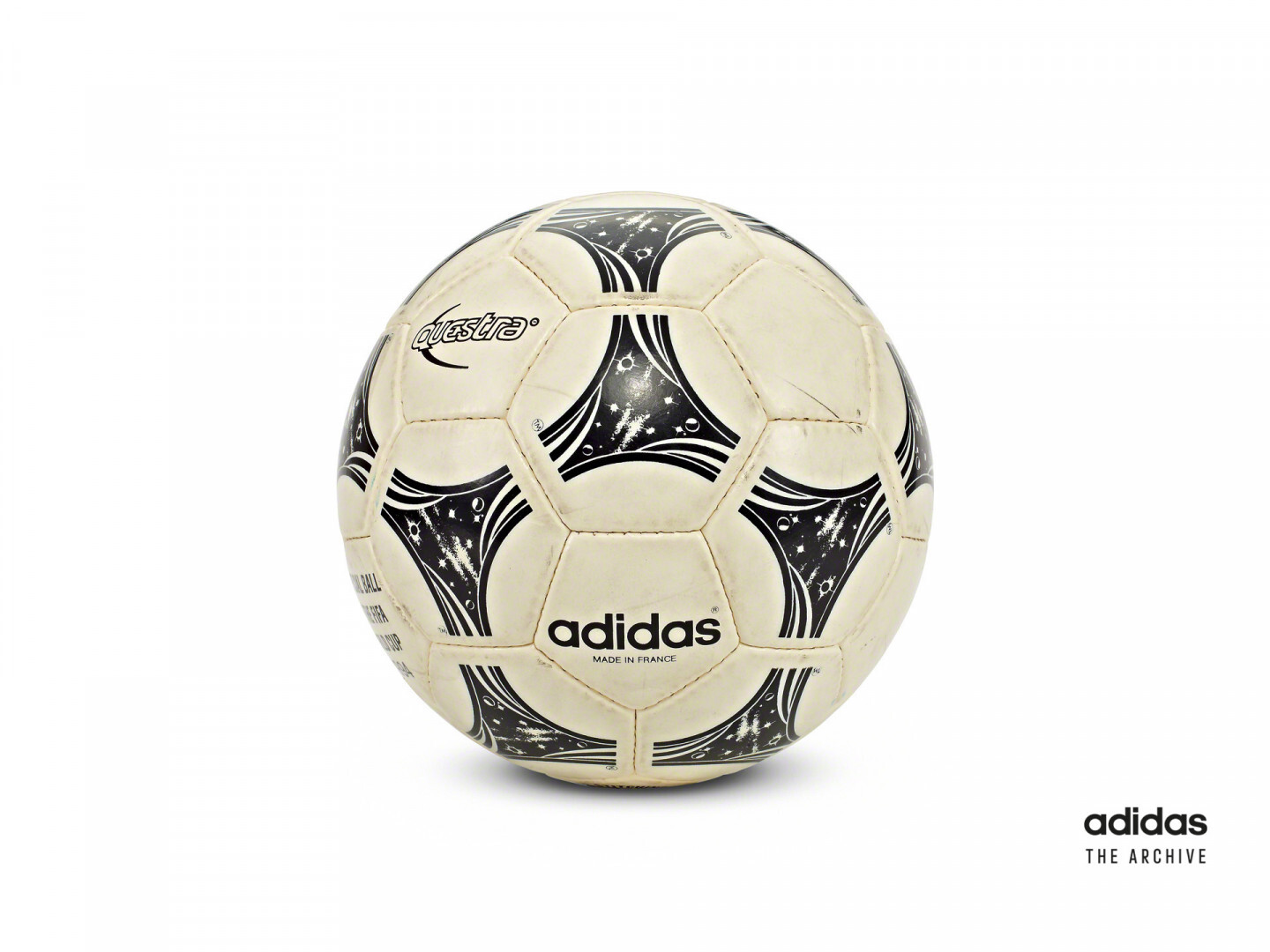
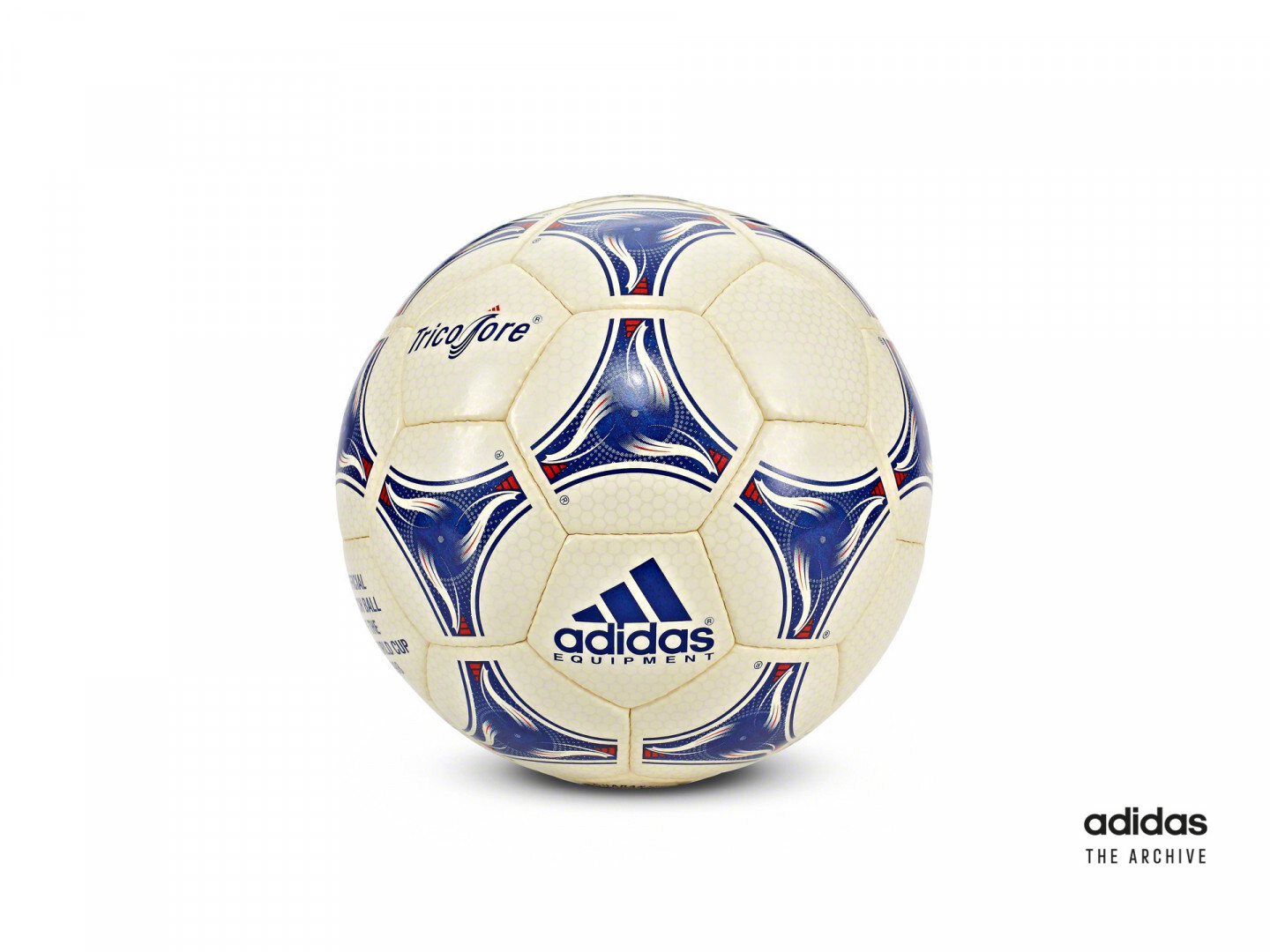
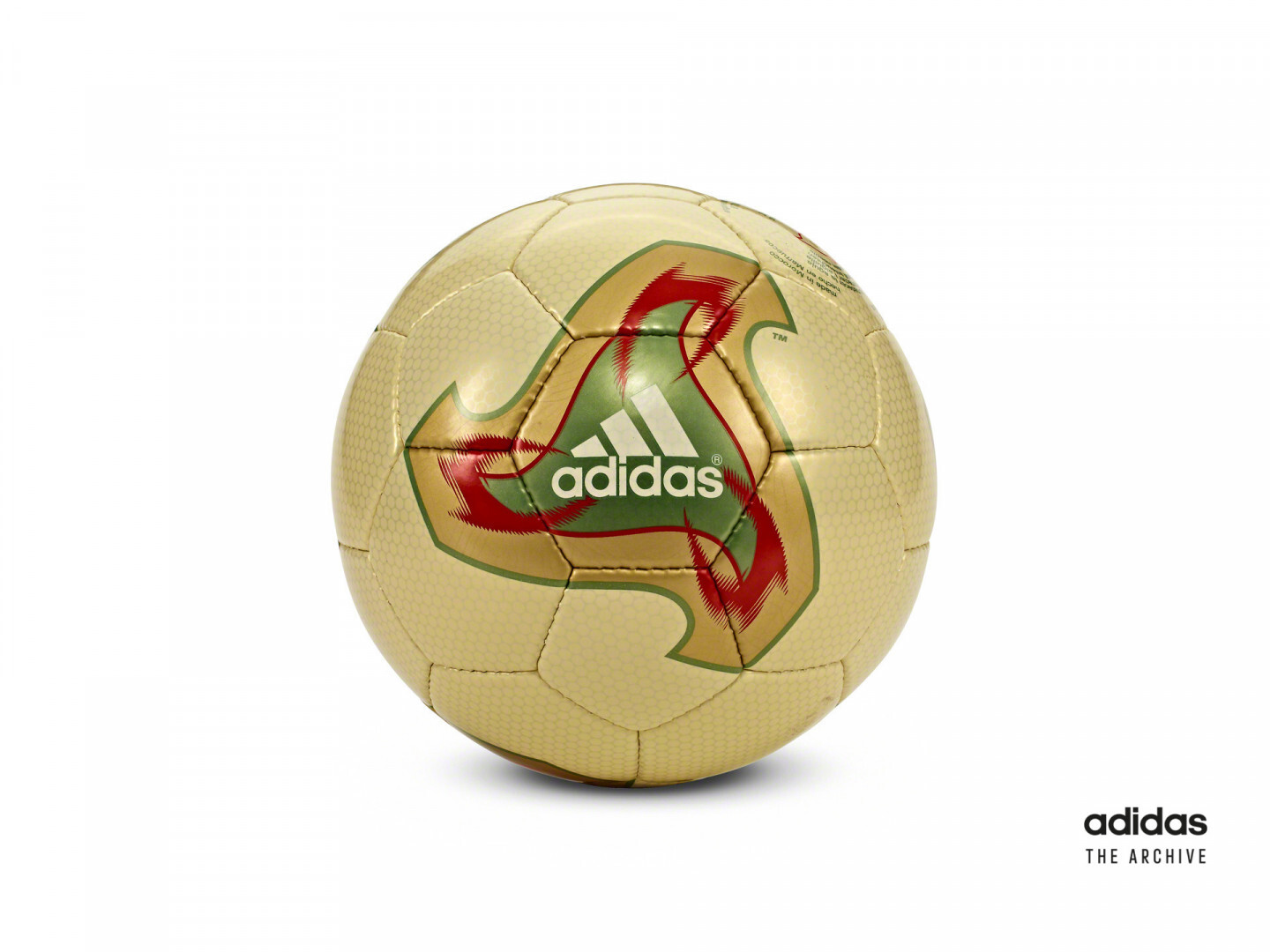
Balls like the Etrusco Unico, Questra, Tricolore, and Fevernova all made significant advancements during the 1990s. The Questra added layers of polyurethane foam to improve energy transfer and shock absorption, which meant that a kicked ball returned more of its kinetic energy during impact. The Tricolore of 1998 was one of the first official match balls to be prominently multicoloured, subtly inspired by the French tricolour for the tournament held in France. The Fevernova of 2002 introduced vibrant triangular shape design elements and became the first ball that players heavily criticised for its uneven flight. Despite their incremental genius, none of these was getting football ready for what was about to happen in 2006.
Teamgeist: The day they threw thirty panels and reinvented the sphere
A materials engineer will almost certainly tell you that sphericity, the degree to which the ball resembles a perfect sphere, is the most significant structural feature of a football. If you ask them what the biggest obstacle to sphericity in a traditional hand-stitched football is, they will probably answer seams. Each stitched seam creates a ridge, which is a disruption in the surface geometry. A conventional 32-panel ball had 60 thread edges that met to create these ridges, each of which slightly impacted the airflow around the ball while it was in flight. Adidas recognised this and created the Teamgeist, which translates to ‘Team Spirit,’ for the 2006 World Cup in Germany.
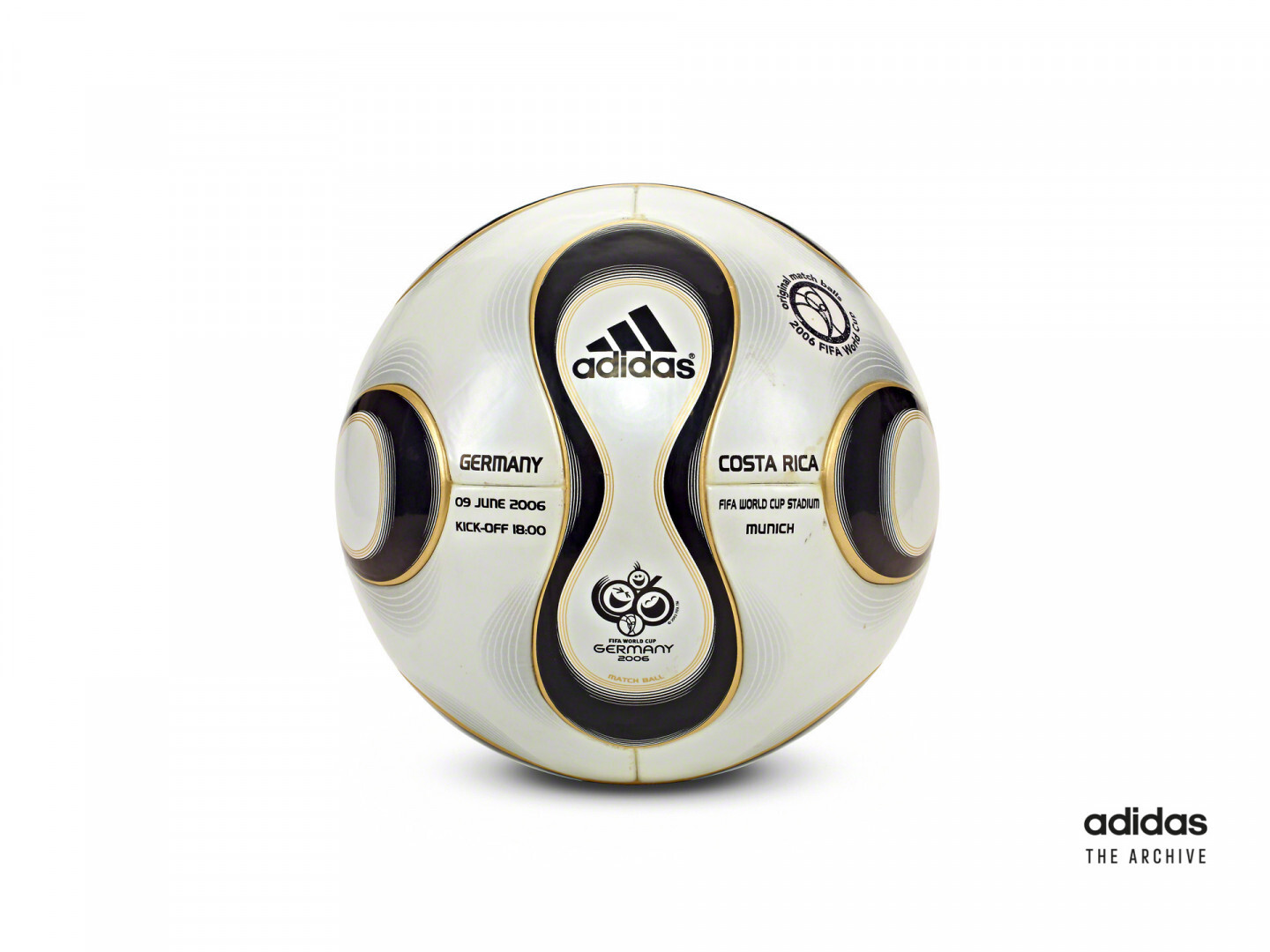
Only fourteen panels were used, and instead of being stitched together with thread, they were thermally bonded together using heat and pressure, resulting in far smoother, fewer, and less aerodynamically consequential seams. The result was a ball that held its shape more consistently, absorbed nearly no water, and flew with noticeably more predictable trajectories than its predecessors, thanks to thermal bonding, which fuses the polyurethane panel edges directly together without the use of raised thread, creating a surface that was closer to seamless than anything football had ever seen. A feature that appeals to football fans was added to the 2006 Teamgeist; each official match ball used in the competition was uniquely printed with the date, venue, and participating teams of that particular match.
This meant that each Teamgeist used in a World Cup match was a special, one-of-a-kind item, a printed record of its own historical moment, distinct from every sporting spectacle it took part in. A lovely piece of symbolic unity, its gold accents were a purposeful visual echo of the FIFA World Cup Trophy itself. Fourteen thermally bonded panels represented a structural leap that was truly historic, but it was also only the beginning of a journey that would take four more years, several universities, a space agency, and a humble lesson in the difference between theoretical perfection and practical reality, as Adidas was about to discover in the most embarrassing and public way possible.
The Jabulani affair: The most scientifically scrutinised sports ball in human history
The Jabulani, an isiZulu word meaning ‘to celebrate,’ was the name of the ball that Adidas unveiled for the 2010 World Cup in South Africa. It had only eight thermally bonded panels, which further reduced the number of panels from the Teamgeist’s fourteen. It also had a textured surface pattern called the Grip’n’Groove profile, which was created at Loughborough University after what Adidas described as six years of wind tunnel development. All eleven of its colours represented South Africa’s eleven official languages, eleven different communities, and the eleven players on each side of the pitch at the same time.
It makes it one of the most culturally significant athletic artefacts in history. Also, a unique gold variant known as the Jo’bulani was only used during the final game. According to Loughborough University’s own pre-tournament statement, the ball was designed to be the most aerodynamically consistent football ever made based on the measurements available to its designers at the time, and the Grip’n’Groove surface was meant to provide exceptional stability and grip under all conditions. One of sport’s greatest cautionary tales about the difference between being almost perfectly round and exactly round is what followed next.
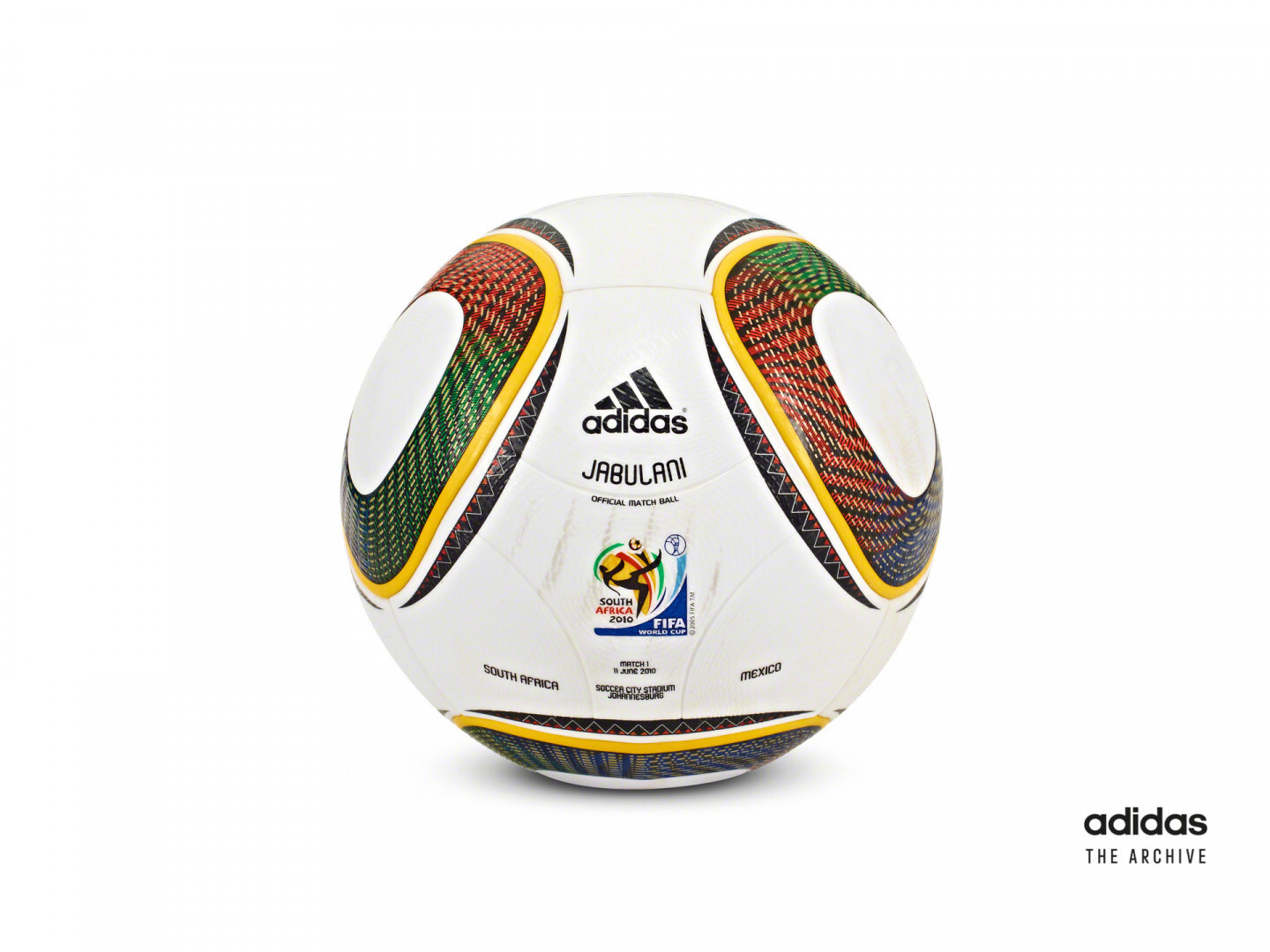
The Jabulani’s problem was that, as researchers would later discover, it was too smooth. In the exact speed range at which World Cup players most frequently strike a ball, roughly 80 km per hour, the average velocity of a free kick close to the goal, the reduced seams and nearly spherical profile created a phenomenon that goalkeepers worldwide found difficult to explain in terms other than the terminology of supernatural events. Rabi Mehta, an aerospace engineer at NASA’s Fluid Mechanics Laboratory, provided a precise explanation of the effect: when a smooth ball flies through the air with little spin, the air near its surface is asymmetrically disrupted by the seams.
The Jabulani experienced the knuckling effect at a speed of between 72 and 80 kilometres per hour due to the asymmetric airflow it develops, which in turn produces a sideways force. This is how fast a free kick headed for the goal would go. Simultaneously, the ball’s shallow grooves and textured surface produced a turbulent to smooth airflow change that was significantly different from the transition experienced with a traditional 32-panel ball.
From a football player’s perspective, this translated directly into a ball that abruptly changed its mind mid-flight, according to engineers at the California Institute of Technology who tested an official Jabulani in the Lucas Adaptive Wall Wind Tunnel. Derek Leinweber of Adelaide University, an Australian scientist, used computer simulations to show that a rounder ball travels faster and more unpredictably than one with deeper grooves, capturing the counterintuitive essence of the Jabulani problem. Adidas had inadvertently created a physics anomaly in its quest to create the perfect ball.
The goalkeeping community reacted with fury rather than scientific research. The finest goalkeeper of his generation, Iker Casillas, publicly said that it was nearly impossible to read the ball. Júlio César described it as ‘a disgrace to the World Cup’ and ‘shameful.’ The unpredictable nature of the ball was used by England’s Robert Green to explain his fumble against the United States, which turned into one of the most reviewed goalkeeping errors in the tournament’s history. At the time, this explanation was met with some doubt, but later scientific research gave it significant support. Quietly, strikers flourished, especially those who were familiar with the non-spinning long-range attempt. Using robot kickers in a wind tunnel, physicists Sungchan Hong and Takeshi Asai of Japan’s University of Tsukuba tested all of the major World Cup balls. They discovered that the Jabulani performed arguably the worst of all those examined, with the 32-panel standard ball coming in second after the Brazuca.
In retrospect, the Jabulani story is truly remarkable, not because the ball was poorly designed, in many ways, it was incredibly advanced, but rather because its designers were so focused on achieving a certain level of perfection that they went beyond precise to unpredictable. The Jabulani’s knuckling effect reached its maximum intensity at a speed that was exactly at the free kick range of about 80 kph, according to NASA’s Rabi Mehta. This is why the 2010 World Cup players saw the effect so frequently and so dramatically.
Brazuca and the redemption arc: Six panels, a million votes, and the science of listening
The ball that Adidas created for Brazil 2014 started its journey in the democratic chaos of a public vote rather than in a materials lab or a wind tunnel. This fact alone represents a dramatic shift from the corporate assurance that had resulted in the Jabulani. Millions of voters took part in a poll designed specifically to allow the Brazilian public to name their own World Cup ball, and the result was ‘Brazuca,’ which reflects Brazilian slang for national pride and the Brazilian way of life. It became the first FIFA World Cup ball to be named by public vote. The vibrant woven wish ribbons, or fitas, that are customary in Brazilian culture and are tied around wrists at the Senhor do Bonfim church in Salvador, Bahia, served as the visual inspiration. Each colour represents a distinct prayer or goal. However, the Brazuca’s true significance lay beyond its visual appeal.
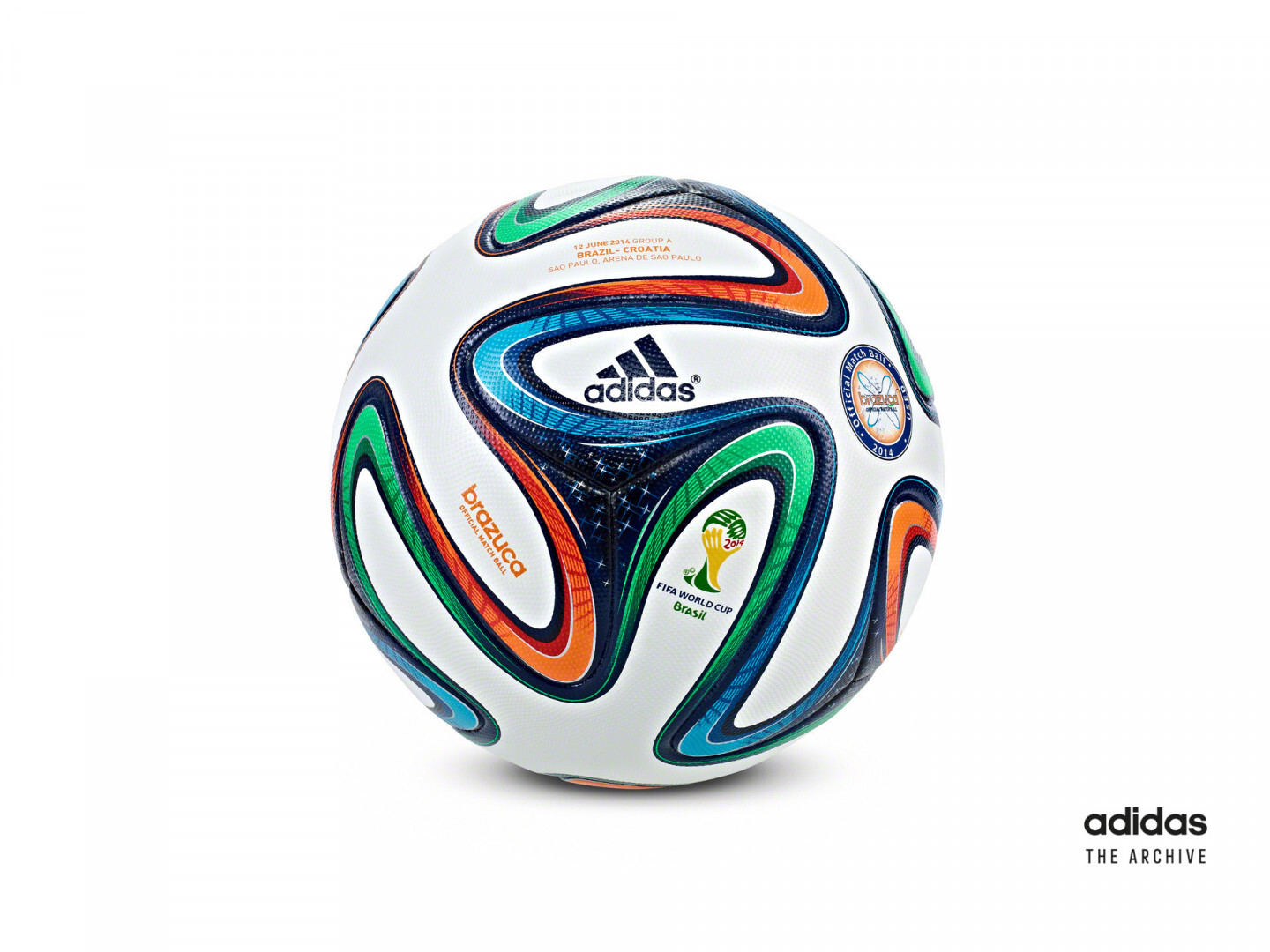
In an effort to reduce the critical knuckling threshold speed from the problematic 80 kph range to about 48 kph, Adidas worked with hundreds of active professionals during the Brazuca’s development. This resulted in the Brazuca’s flight being fundamentally more predictable at typical World Cup striking speeds without sacrificing the quality of genuine aerodynamic interest that makes free kicks worth watching. Adidas ultimately decided on six large thermally bonded panels, which are fewer than the traditional 32 but more than the Jabulani’s eight.
After testing the Brazuca at the Ames Research Centre using wind tunnels, water channels, lasers, and fluorescent dye to visualise airflow patterns, NASA’s Rabi Mehta verified this computation and concluded that players should be pleased with the new design because it would produce a more predictable flight path at typical striking speeds. Players and goalkeepers praised the Brazuca almost universally; it was considered one of the best-performing tournament balls in modern football history, and it gave rise to a limited ‘Brazuca Final Rio’ variant that was used in the final, something that has since become common.
Every succeeding World Cup ball has been conceptually based on the interlocking six-panel design, which resolved the knuckling issue by offering enough surface texture to anchor the boundary layer of air flowing around the ball without producing the smooth-to-turbulent transition anomaly that had impacted the Jabulani.
Telstar 18: The classic returns, this time with a silicon chip inside
Built directly on the Brazuca’s structural language, the 2018 Telstar 18 pays homage to the 1970 original with pixelated metallic graphics that reinterpret the classic black and white pattern for a modern digital aesthetic. It also features an embedded NFC chip that fans can scan with their smartphones to access exclusive content, which is a first for any official match ball and a reminder that football equipment increasingly exists at the intersection of sport and technology platforms. With its name derived from the Russian term for dream or ambition, the Telstar Mechta, which was utilised for the knockout stages in 2018, added another level of linguistic and cultural narrative to the custom.
Al Rihla: Qatari dhow sails, water based ink, and a sensor that rewrote VAR forever
The 2022 Al Rihla, or ‘The Journey’ in Arabic, was perhaps the most technologically and culturally innovative ball in the entire Adidas era. Its graphical design was inspired by Qatari architecture, traditional art, the colours of the national flag, and the unique triangular sail geometry of the Dhow, the country’s famous traditional wooden boat, as a symbolic nod to the cross-cultural and cross-generational journeys that football takes. Its CRT-CORE technology, a novel carcass construction, enhanced speed retention, form stability, and rebound consistency beyond any prior ball, and its Speedshell surface included both macro and micro texturing patterns that operated at multiple scales to control airflow.
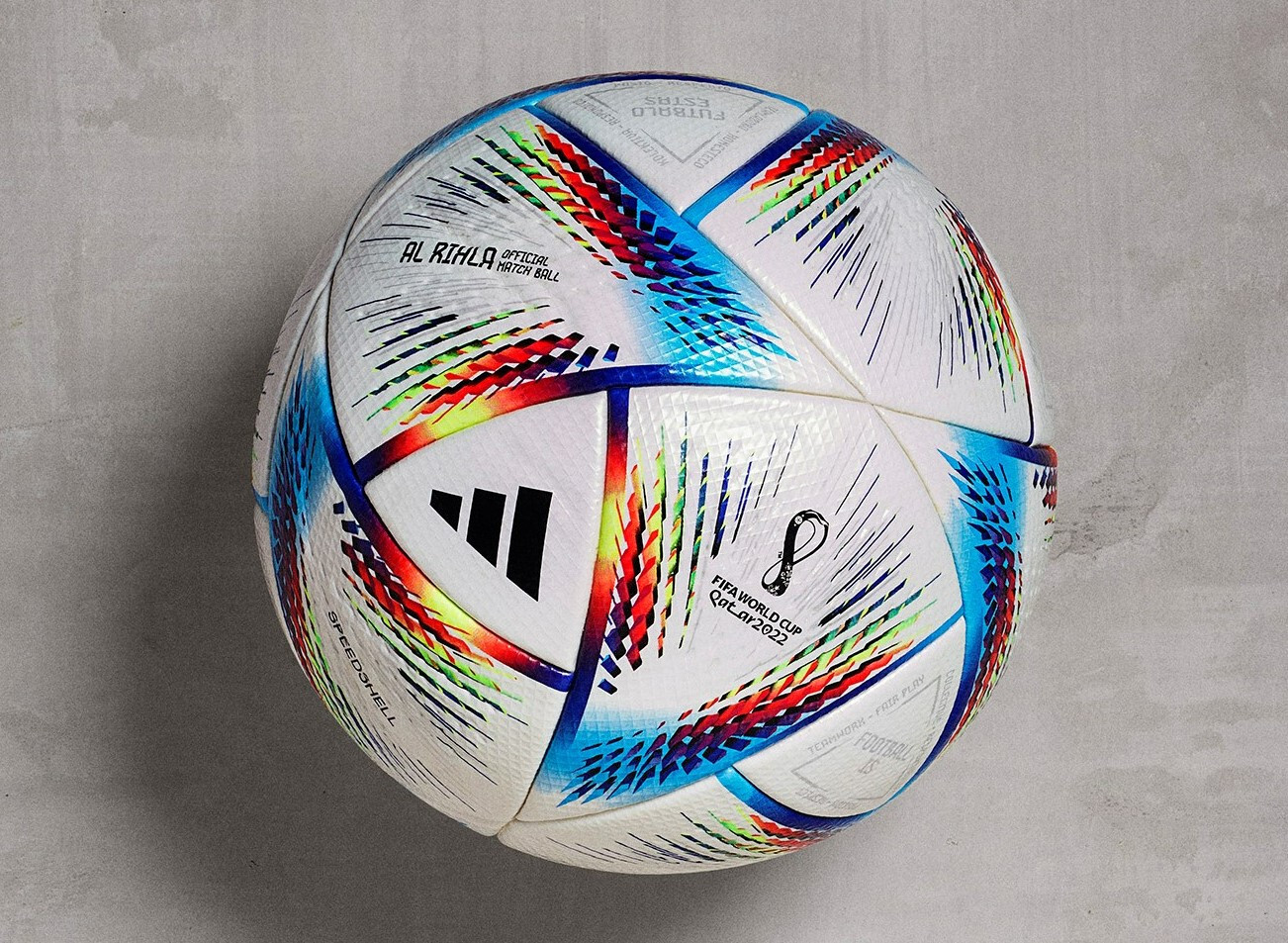
The VAR, Video Assistant Referee is a system in which a team of officials in a distant control room analyse match deciding situations (goals, penalties, red cards, and offsides) on video replay in real time and warns the on-field referee if an obvious error has occurred, decisions in Qatar were significantly quicker and more accurate than in any previous tournament thanks to an embedded sensor unit that operated at 500 measurements per second in several versions of the Al Rihla used in later stages of the competition. This sensor unit provided real time positional data to the semi automated offside technology. Most notably, the Al Rihla was the first FIFA World Cup ball made entirely of water based inks and water based glues, doing away with the solvent based chemicals that had been used for decades in ball production. This was a real step toward environmental responsibility in sports equipment manufacturing, something that would have seemed almost luxuriously irrelevant to the engineers who were just trying to keep the Telstar dry in 1970.
Trionda: Three nations, four panels, and the ghost of Jabulani finally laid to rest
Then, for 2026, Adidas did something that would have looked almost stupid to any engineer who remembered the Jabulani, they lowered the panel count once more, all the way down to four, which is less than any official match ball in World Cup history. This number is so low that it sounds like an error until you understand the approach to design that justifies it, which is nearly the exact opposite of what led to the 2010 disaster. The ball, known as the Trionda, was unveiled in New York in October 2025. Its name, which combines the Spanish words tri (three) and onda (wave), serves as both a description of the wave geometry that flows across the ball’s surface, which is inspired by La Ola, the rippling Mexican wave of stadium crowds, the human gesture of collective celebration made physical in the very object the celebration is about, and a tribute to the three co-host nations of a tournament, the first World Cup ever shared by the United States, Canada, and Mexico.
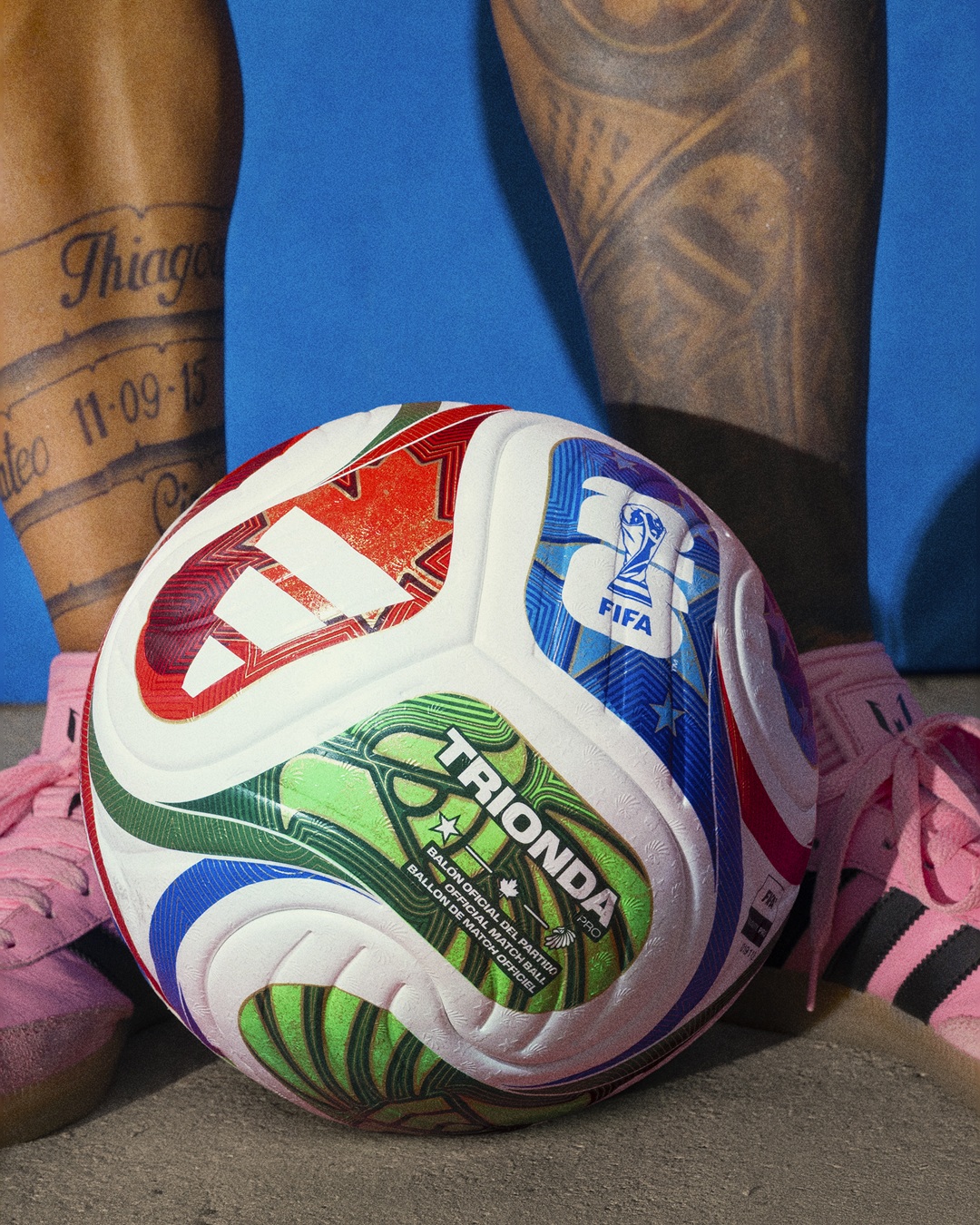
The national colours of each of the host countries, red for Canada, green for Mexico, and blue for the United States, converge at the centre of each panel in a triangular motif that represents three nations coming together as one. A gold finish runs throughout the design as a recurrent reference to the FIFA World Cup Trophy, a custom that the Teamgeist started back in 2006 and has since evolved into a kind of visual language for the entire Adidas era. A maple leaf for Canada, an eagle for Mexico, and a star for the United States are representations of the host nation iconography that is not just printed but embossed into the ball’s surface. These raised icons serve as both identity markers and grip-enhancing texture elements that help players maintain control in the wet and humid conditions that a multi-climate tournament spanning North America is bound to produce.
Adidas has intentionally added texture and aerodynamic resistance to a ball with the fewest panels ever, basically taking lessons from the Jabulani, with the objective is to control and distribute the boundary layer’s influence symmetrically so the ball responds consistently across all strike and speed positions. In a subtle sense, the entire post 2010 philosophical lesson is condensed into a design, fewer panels with deeper, purposefully built seams that perform a dependable job, rather than fewer seams for a smoother appearance.
The Trionda’s Connected Ball Technology has also been redesigned structurally for 2026. Instead of being a centre-mounted system held in suspension, the 500Hz inertial measurement unit motion sensor chip now sits inside a specially designed layer within one of the four panels itself. This is a truly innovative engineering solution that calls for counterweights arranged across the remaining three panels to maintain the flight balance that a lopsided internal mass would otherwise destroy. The problem sounds almost unremarkable until you realise that engineers were asked to place a piece of precision electronics inside an inflated sphere that is repeatedly struck at 80 km per hour and still travels straight ahead. The sensor records contact point, ball speed, spin rate, trajectory, and direction 500 times per second. This data is sent in real time to the VAR system, where it is combined with AI and player positioning data to produce offside decisions more quickly and accurately than any past tournament. It can also determine whether a handball originated from a header or an intentional touch in an occupied part of the field.
Why reinvent a sphere every four years?
Each new ball is a marketing event, a collector’s item, and a cultural product that produces cash much beyond the sale of match balls themselves; thus, the answer is partially commercial. However, the commercial reasoning is actually the least attractive. The deeper explanation is that manufacturing technology, surface engineering, and materials science truly advance between competitions in ways that make earlier balls significantly inferior to what can now be accomplished. Each host nation’s culture deserves a ball that speaks its unique visual and linguistic language in a way that a generic, good-enough design could never.
As the switch to water-based inks and glues in Al Rihla showed, the drive toward environmental sustainability in manufacturing calls for changing the entire production process. Additionally, football is a sport whose competitive margin is narrow enough that small improvements in a ball’s consistency, rebound accuracy, and flight predictability have real performance implications for players at the highest level of the sport. However, there is another factor that is more difficult to measure but impossible to ignore: the relationship between the ball and the competition is almost symbolic, and a World Cup with a ball that has its own name, story, colours, and cultural significance produces a richer, more memorable event than one that merely uses the design from the previous cycle.
No individual who watched the 2010 World Cup has forgotten the controversy surrounding the Jabulani, and the scientific community’s reaction to it, university wind tunnels, NASA researchers, peer-reviewed papers on boundary layer behaviour, a Japanese physics team with a kicking robot, represents a level of institutional attention that very few sporting materials have ever received. The Brazuca was the result of that controversy.
Conclusion: The ball that carries the world dreams
The sport of football is a straightforward game played with a round object and a set of rules that children in every single country on the globe understand naturally. However, the object at the centre of this simplicity has evolved into an incredibly complex engineering challenge, a cultural artefact, a political symbol, a scientific subject, and a means through which the aspirations of billions of people flow every four years during the world’s greatest sporting event.
Every one of those moments, Pelé playing with a Telstar, Maradona’s Hand of God arriving via a leather ancestor, Zidane’s 2006 penalty kick in final off a Teamgeist, Iker Casillas’s gaze tracking a Jabulani through difficult space, and Messi curling an Al Rihla in Lusail, was made a reality, crafted, and in some cases defined by the specific physical properties of the ball in that exact moment. The balls were the result of years of work by engineers, designers, players, and factory workers in Sialkot and elsewhere, as well as scientists who chose to dedicate their professional time to consider what happens when leather, air, and polyurethane meet the human foot at a substantial speed.
The next time you see a goalkeeper make a save that appears to ignore physics or watch a free kick bend over a wall and dip into the far corner, stop for a moment before the celebration takes over and think about the unspoken central character spinning through the air, carrying all of that history, all of those hands and all of that accumulated knowledge, but still just a sphere, which remains simply a football, the most essential thing in arguably the most majestic sport.


