

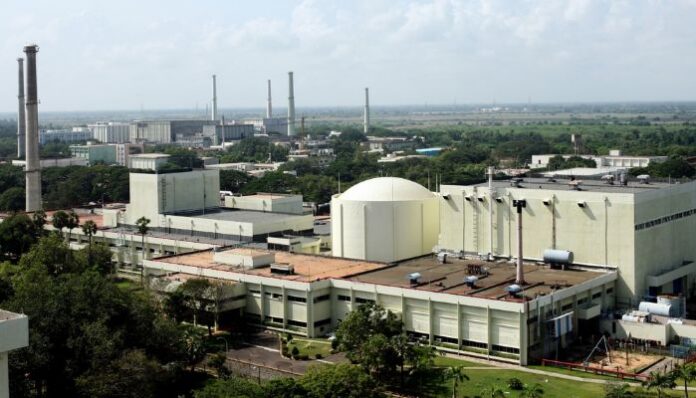
India has taken a major step in clean energy by setting up the world’s first hydrogen production plant that uses nuclear process heat. The technology demonstration plant has been established at the Indira Gandhi Centre for Atomic Research (IGCAR) in Kalpakkam, Tamil Nadu by the Department of Atomic Energy (DAE) on Friday, 26th June.
The project is expected to help India move towards large-scale production of clean hydrogen while supporting the country’s advanced nuclear technology programme.
Plant to test indigenous Copper-Chlorine process
The new facility has been built to demonstrate hydrogen production through the Copper-Chlorine thermochemical process, a technology developed by the Bhabha Atomic Research Centre (BARC), Mumbai. This process uses heat generated from nuclear reactors instead of fossil fuels, making hydrogen production free from carbon emissions.
Scientists believe the Copper-Chlorine cycle is one of the most promising methods being developed across the world because it works at relatively lower temperatures and offers better energy efficiency than many other hydrogen production technologies.
Years of research led to the project
The hydrogen production plant is the result of years of joint work by BARC and IGCAR. The two organisations carried out research, process development, engineering design, equipment fabrication, installation, testing and final commissioning before the facility became operational.
The plant will now provide practical experience in operating the technology. It will also help researchers improve the Copper-Cl process further and support future efforts to scale up nuclear-assisted hydrogen production for commercial use.
Important milestone for future energy needs
According to IGCAR, combining nuclear process heat with hydrogen production is a major technological breakthrough. The successful integration opens the way for producing large quantities of carbon-free hydrogen using advanced nuclear reactors.
Hydrogen is widely seen as one of the fuels of the future because it can play a key role in reducing carbon emissions and supporting cleaner energy systems. Using nuclear heat for hydrogen production also reduces dependence on fossil fuels and avoids greenhouse gas emissions linked to conventional methods.
Inauguration and official remarks
The facility was inaugurated by Ajit Kumar Mohanty, Secretary, Department of Atomic Energy, and Chairman of the Atomic Energy Commission, in the presence of IGCAR Director Sreekumar G. Pillai.
Speaking at the event, Mohanty said that bringing together nuclear energy and clean technologies like hydrogen production is an important step towards a sustainable future. He said nuclear power can provide both carbon-free electricity and high-temperature process heat, making it well suited for large-scale hydrogen production. According to him, this will strengthen India’s energy security, support its decarbonisation goals and contribute to long-term sustainable development.
The newly commissioned plant will continue to serve as a technology demonstration facility while supporting further research and development for wider adoption of nuclear-based hydrogen production in the future.
