

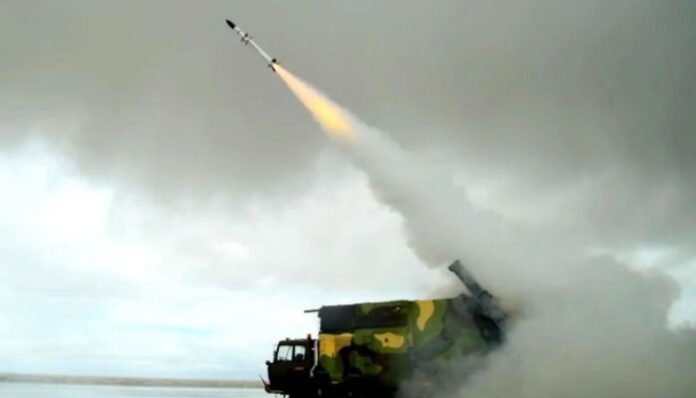
In a major overhaul of India’s defence manufacturing policy, the Central government is preparing to allow private Indian companies to manufacture and develop missiles, an area that has so far remained largely under government-controlled defence organisations.
The move comes at a time when countries such as Indonesia have shown interest in buying India’s indigenously developed Astra missile, while New Delhi is looking to increase production capacity and expand defence exports.
Over the past few years, India has already opened sectors such as aircraft manufacturing, drones, artillery systems and naval platforms to private companies. Allowing private participation in missile production would be one of the biggest reforms in the defence sector, as missile manufacturing has traditionally been considered highly strategic and tightly controlled.
🚨Centre set to open missile sector to private Indian firms to meet surging domestic and international demand:
— Indian Infra Report (@Indianinfoguide) July 12, 2026
(Hindustan times) pic.twitter.com/SnLKTXVMk4
Private firms likely to build Astra Mark 2 missiles
According to a report by Hindustan Times, the Defence Ministry is expected to soon issue a Request for Proposal (RFP) inviting private companies to manufacture the Astra Mark 2 beyond-visual-range air-to-air missile. Several major Indian companies, including ICOMM, Adani Group, Bharat Forge, Tata Group and Mahindra Group, are expected to participate in the process.
The decision comes as demand for the missile from the Indian armed forces and friendly foreign nations has increased beyond what state-run Bharat Dynamics Limited can currently supply. Developed by the Defence Research and Development Organisation (DRDO), the Astra Mark 2 missile has a strike range of around 180 to 200 kilometres. The missile was designed to counter China’s PL-15E long-range air-to-air missile, which Pakistan reportedly received before Operation Sindoor last year.
The missile is expected to be integrated with Tejas Mark 1-A, MiG-29, Su-30 MKI and Rafale Marine fighter aircraft.
Pralay missile may be next
People familiar with the matter say the next missile system likely to be opened to private companies for both development and manufacturing is the Pralay tactical ballistic missile.
Pralay has a range of around 500 kilometres and can travel at nearly six times the speed of sound. It is part of India’s Integrated Rocket Forces, which also include the Long-Range Land Attack Cruise Missile, the next-generation BrahMos missile and the extended-range Pinaka rocket system capable of striking targets up to 300 kilometres away.
Push gains momentum after Operation Sindoor
The government’s latest push comes after Operation Sindoor highlighted the growing importance of long-range stand-off weapons in modern warfare in the region.
According to the report, the government wants to rapidly strengthen India’s missile and rocket capabilities to improve deterrence against potential adversaries. The focus is not only on offensive weapons but also on defensive systems capable of intercepting incoming missiles.
Recent conflicts, including the Iran-US confrontation, have also demonstrated the damage missile attacks can cause to critical infrastructure, increasing the urgency for stronger air defence systems.
India expanding its air defence shield
At the same time, India is continuing to strengthen its air defence network. India and Israel are jointly developing a long-range surface-to-air missile system for naval warships.
The country is also building a layered anti-missile and anti-drone defence network to deal with threats ranging from low-cost drones to long-range rockets and ballistic missiles.
India is expected to receive its fifth S-400 air defence system from Russia in November. The government is also planning to approve the purchase of five additional S-400 systems to further strengthen the country’s air defence capabilities.
