

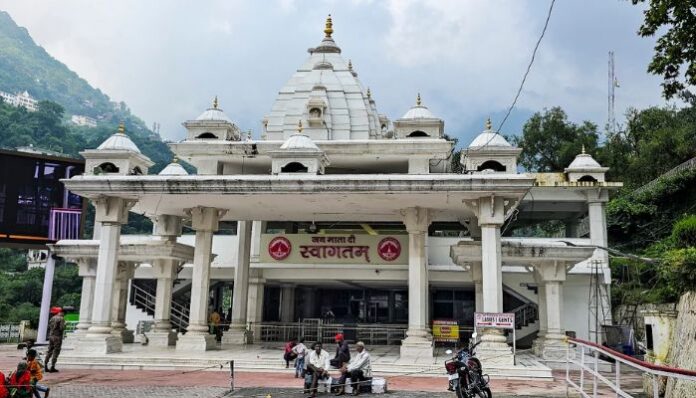
A Jammu court has asked the J&K Police Crime Branch to produce all records related to the reported “fake silver” offerings at the Shri Mata Vaishno Devi Shrine. Chief Judicial Magistrate (CJM) Munish Kumar Manhas has also directed the Inquiry Officer handling the matter to appear personally before the court on 29th July with the complete file.
The direction came during the hearing of a petition filed by advocate Deepak Sharma, who has sought an FIR and a detailed investigation into the reported replacement and misuse of silver offerings made by devotees at the shrine.
Testing of the shrine silver triggered the case
The matter surfaced after the Shri Mata Vaishno Devi Shrine Board sent nearly 20 tonnes of silver offerings to a government mint in May last year for standard testing, melting and storage. The silver was believed to be worth around Rs 550 crore.
However, laboratory tests reportedly found that only about 5-6% of the material was genuine silver. The remaining 95% mainly contained cadmium and iron, bringing the estimated value down to nearly Rs 30 crore.
Questions over what happened to the original offerings
Initially, there were suggestions that devotees may have unknowingly offered fake silver. Sharma, however, questioned this claim in a complaint submitted on 9th May to the Inspector General of Police, Crime Branch, Jammu, and the Senior Superintendent of Police of the Economic Offences Wing.
He argued that the real issue is whether genuine silver offered by devotees was replaced at some stage after it reached the shrine. His complaint refers to criminal conspiracy, cheating, criminal breach of trust, misappropriation and manipulation of official records. It also calls for an investigation into the source and supply of the cadmium-containing material.
Lawyer seeks protection of key evidence
The petition has asked investigators to preserve all records linked to the case. These include CCTV footage, documents related to the collection, storage and transportation of the silver, assay reports, electronic records and all evidence connected with the testing and melting process.
Sharma has also requested an investigation into whether fake silver items were sold to devotees by vendors and jewellers or whether genuine offerings were switched after being received by the shrine authorities.
Court examines the Crime Branch’s response
In its status report, the Crime Branch informed the court that the complaint had been forwarded to the Crime Headquarters in Srinagar for approval and was later sent to the Zonal Police Headquarters in Jammu for further action.
The petitioner argued that this did not fulfil the legal responsibility of the Crime Branch. He told the court that the Economic Offences Wing is a notified police station under the Bharatiya Nagrik Suraksha Sanhita (BNSS), 2023, and should have acted directly on the complaint.
Every year, more than nine million pilgrims visit the Mata Vaishno Devi shrine in the Trikuta Hills near Katra, with many making offerings of gold and silver. Sharma said it is hard to believe that devotees would knowingly donate fake silver and stressed that only a detailed investigation can establish whether the silver was fake from the beginning or whether genuine offerings were replaced later.
