

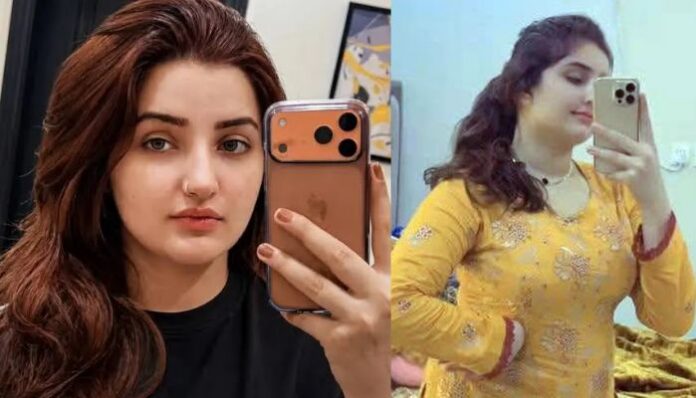
Popular Pakistani TikTok creator Shamso Bibi, also known online as Ayesha Gilamana, was shot dead on Friday, 14th August, in Taxila, near Islamabad. She was 28. Her killing has once again raised serious questions about the safety of women who are publicly visible on social media in Pakistan.
According to media reports, Bibi received a phone call from a man identified as Kashif Kashi, who asked her to come outside her house. She then left in a car with her brother Naimatullah and her 15-year-old sister, Asmiya, also identified in some reports as Aseema.
In an exclusive interview with Voicepk, Niamatullah, the brother of the murdered TikToker Shamso Bibi (known online as Ayesha), revealed that police have failed to make any arrests following his sister's fatal shooting in Taxila. Demanding immediate intervention from the Punjab… pic.twitter.com/cs1cb7nUGN
— Voicepk.net (@voicepkdotnet) August 17, 2026
The family was travelling near the Taxila Bypass and a petrol pump when two unidentified men on a motorcycle stopped their vehicle and opened fire. Bibi was shot twice in the neck and died at the spot. The gunfire caused the vehicle to lose control before it crashed into a dump truck. Her teenage sister was seriously injured, while her brother was also hurt.
Bibi had more than 1.3 million followers on TikTok and a growing audience on YouTube. Her TikTok account was made private after her death. Police are investigating several possible motives, including a financial dispute. However, the targeted nature of the attack has once again brought attention to violence against women with a strong presence on social media.
Sana Yousaf: 17-year-old TikTok star shot dead
Shamso Bibi’s killing comes after several other cases involving female digital creators in Pakistan. One of the most widely reported cases was the murder of 17-year-old TikTok influencer Sana Yousaf in Islamabad in June 2025.
Sana, who belonged to Upper Chitral in Khyber Pakhtunkhwa, had built a large following on TikTok and Instagram. On 2nd June, 2025, she was shot dead inside her home. Police investigated several possible motives, including an honour-killing angle.
According to reports, the accused was her cousin, who had come to visit her. After a brief conversation, he reportedly shot Sana at close range before fleeing. A police spokesperson said, “The assailant entered the residence, fired multiple shots, and fled immediately.”
Sana’s death triggered widespread outrage, with many social media users questioning the mindset that treats a woman’s independence, clothing, relationships or online presence as a matter of family honour. Her murder was also compared with the 2016 killing of Pakistani social media celebrity Qandeel Baloch, who was strangled by her brother in an alleged honour killing.
Hira Anwar killed over TikTok videos
Another disturbing case involved 15-year-old Hira Anwar from Quetta. She was shot dead by her father and maternal uncle after they objected to her posting videos on TikTok.
According to reports, Hira’s father had returned from the US and was angry over her continued use of the platform. He and Hira’s maternal uncle killed her after she refused to stop making TikTok videos. Both men reportedly confessed to the crime and were taken into police custody.
The case once again highlighted the restrictions faced by young women who use social media to express themselves or build an audience.
A society at war with its women?
The repeated killings have sparked a wider debate about the safety and freedom of women in Pakistan. Social media has given young women a platform to earn money, build careers and express themselves, but their visibility can also make them targets of harassment, stalking, family pressure and violence.
The cases of Shamso Bibi, Sana Yousaf and Hira Anwar are different, and investigators will have to establish the exact motives behind each killing. Yet, taken together, they raise an uncomfortable question: why does a woman’s decision to be visible, independent or active online continue to provoke such hostility?
For many women in Pakistan, social media has become more than entertainment. It is a space for work, self-expression and financial independence. The growing number of violent incidents involving female creators shows that protecting women online cannot be separated from protecting them offline.
