

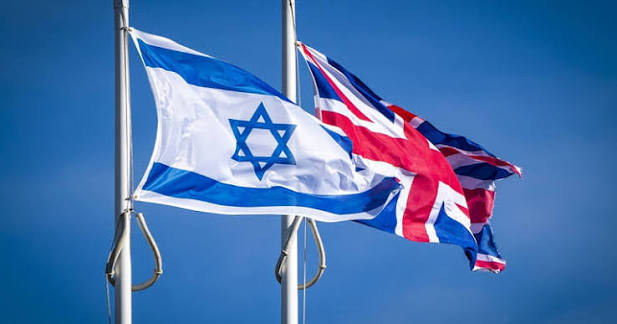
Israel has announced a fresh set of retaliatory measures against the United Kingdom, sharply escalating an already growing diplomatic confrontation over Israeli settlements and settler violence in the occupied West Bank.
Israeli Foreign Minister Gideon Saar announced on Tuesday that Israel would bar 12 British nationals from entering the country and move to close Britain’s consulate in East Jerusalem. He also said the UK would be excluded from a US-led coordination mechanism dealing with Gaza.
The measures come after Britain joined a wider group of Western countries in imposing sanctions targeting economic activity linked to Israeli settlements in the West Bank. The move has further strained relations between London and Jerusalem at a politically sensitive moment, with Israel’s October 27 election approaching.
Israel accuses UK of electoral interference
Saar launched a fierce attack on the British government, particularly Foreign Secretary Ed Miliband, after Miliband accused Israeli settlers of engaging in what he described as “ethnic cleansing” in the West Bank.
Reacting to the remarks, Saar accused the British government of spreading what he called “outrageous lies” and interfering in Israel’s domestic affairs.
He described the British sanctions as an attempt to interfere in the affairs of a sovereign country and alleged that London was also seeking to influence Israel’s electoral process.
The diplomatic confrontation is unfolding as Prime Minister Benjamin Netanyahu campaigns ahead of the October 27 election while continuing to defend Israel’s settlement policy in the West Bank.
Jeremy Corbyn among those banned
The Israeli government’s entry ban affects 12 British nationals, most of whom are members of the UK Parliament or prominent political figures associated with the pro-Palestinian movement.
Among those named is former Labour Party leader Jeremy Corbyn, one of the most prominent British political figures to have consistently criticised Israeli policies towards the Palestinians.
Zarah Sultana, who recently departed from the Labour Party along with Corbyn to help establish the left-wing Your Party, is also among those barred from entering Israel.
The decision marks a significant escalation because the Israeli government has now extended its response beyond criticism of the British government to include individual British politicians who have been vocal on the Israeli-Palestinian conflict.
UK consulate in East Jerusalem to be closed
Saar also announced that Israel would shut down the British consulate in East Jerusalem.
The consulate has traditionally handled diplomatic and consular affairs concerning the Palestinians and maintains relations with the Palestinian Authority. Its closure would therefore carry considerable diplomatic significance beyond the immediate dispute over sanctions.
Israel has also decided to remove Britain from the US-led coordination mechanism for Gaza, according to Saar.
The move comes amid continuing international efforts to coordinate humanitarian and security-related issues surrounding Gaza, making Britain’s exclusion another sign of the rapidly deteriorating relationship between the two countries.
Western pressure mounts over West Bank settlements
The Israeli measures follow a coordinated push by several Western countries to increase economic pressure over Israeli settlement activity in the occupied West Bank.
Twelve countries, including the UK, Canada and France, have announced measures targeting trade associated with Israeli settlements following a reported increase in attacks by Israeli settlers against Palestinians in the territory.
Western governments have increasingly criticised settlement expansion and violence in the West Bank, arguing that such actions undermine prospects for a negotiated settlement of the Israeli-Palestinian conflict.
Israel, however, has strongly rejected what it considers unilateral pressure from foreign governments and has repeatedly defended its position on settlements and its security policies.
The latest confrontation therefore reflects a broader disagreement between Israel and several of its traditional Western partners over how the conflict should be addressed.
Diplomatic tensions intensify ahead of Israeli election
The timing of the confrontation is also politically significant.
With Israelis heading towards the October 27 election, Netanyahu has made his support for Jewish settlements and Israel’s broader security agenda central to his political messaging.
The government’s response to Britain’s sanctions allows Jerusalem to frame the dispute not merely as a disagreement over foreign policy, but as an issue of national sovereignty and alleged foreign interference in Israel’s domestic political affairs.
For Britain and other Western governments, however, sanctions related to settlements and settler violence are part of a broader effort to pressure Israel over its policies in the occupied Palestinian territories.
The latest Israeli measures could consequently deepen the diplomatic divide at a time when Western governments are already under increasing pressure to adopt tougher positions on the Israeli-Palestinian conflict.
The expulsion of British participation from the Gaza coordination mechanism, the planned closure of the consulate and the entry bans against British political figures collectively signal that relations between London and Jerusalem have entered a significantly more confrontational phase.
