

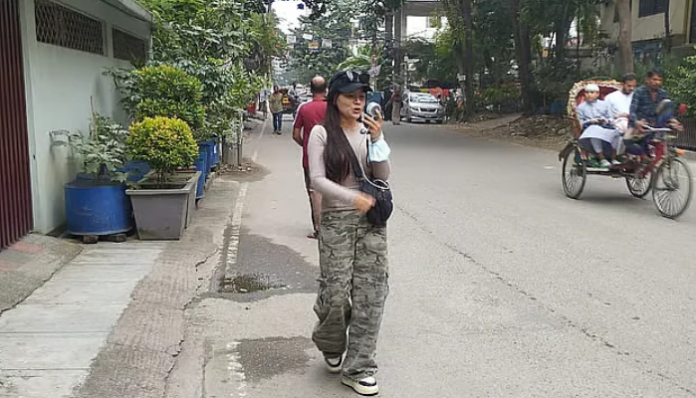
Prothom Alo, a leading Bangladeshi newspaper, has reported that about 150 Chinese influencers have been stationed in Bangladesh for the past two months, producing content that falsely portrays slums in Dhaka as neighbourhoods in Delhi and promotes claims about tea made from cow urine.
Chinese influencers and streamers showcasing Dhaka slums as those of Delhi
According to reports, the Chinese influencers have been active on short-video platforms and social media, using local footage from Bangladesh, particularly its capital, slums in Dhaka, while labelling it as visuals from India’s Delhi.
In one purported example, images of Dhaka’s densely populated informal settlements are presented as Delhi slums, apparently to reinforce negative stereotypes about urban poverty in India. Other posts repeat unverified claims about cow-urine tea, a narrative that has circulated in previous online disinformation campaigns.
150 Chinese influencers have been stationed in Bangladesh for the past two months. They are portraying Dhaka’s slums as slums in Delhi and even spreading claims about tea made from cow urine. What is really going on? @pujaranaa reports. https://t.co/WWm71k07mX
— OpIndia.com (@OpIndia_com) November 8, 2026
Researchers who track coordinated online activity say the pattern of foreign creators, localised footage, and inflammatory claims suggests an attempt to amplify anti-India sentiment while obscuring the content’s origins. They caution, however, that the scale and sponsorship of the alleged operation remain unclear.
Neither Bangladesh’s information ministry nor the Chinese embassy in Dhaka has publicly confirmed the reports, and platform companies have not issued statements on the specific accounts.
Bangladeshi newspaper Prothom Alo has raised questions about why foreign influencers would focus on slum imagery and culturally sensitive food claims. Some analysts note that Bangladesh and India share complex political and media ties, and that unverified content can spread quickly during periods of regional tension.
Local Bangladeshi residents object to the Chinese nationals’ activities. They claim that, despite complaints, the police are not monitoring their operations. Officers at the local station say they have seen Chinese nationals making such videos in various parts of Uttara but do not know why they are filming. Attempts to find out more have been hindered by language barriers and the Chinese nationals’ apparent irritation, prompting the police to avoid pursuing the matter further.
The Indian government should take note of these apparent concerted efforts by China, either at the behest of the Chinese government or by Chinese influencers independently, to tarnish India’s image globally by passing off slums and squalor of another country as that of India.
