

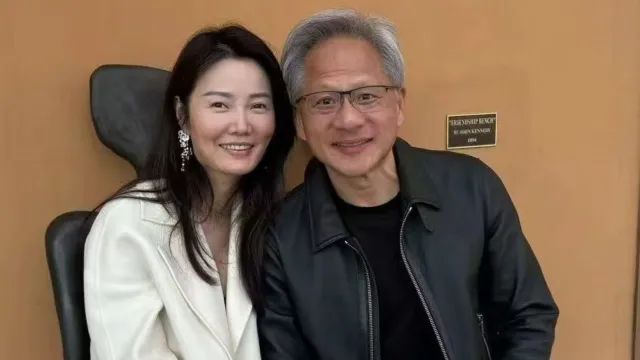
US Secretary of State Marco Rubio oversaw the drafting of a classified intelligence memo in 2025 warning senior officials in the Donald Trump administration about Nvidia CEO Jensen Huang’s relationship with a Chinese woman suspected of having links to Beijing’s spy agency.
According to a report by The New York Times published on November 8, 2026, the memo concerned Alice Huang, a Chinese citizen and senior executive at Singapore-based company Megaspeed. US intelligence officials suspected that she had been recruited by China’s Ministry of State Security (MSS) to gather information about Jensen Huang. The two are not related.
The intelligence assessment was based on classified information collected through electronic surveillance of Alice Huang. The document warned that her relationship with the Nvidia chief could potentially be part of a Chinese intelligence operation targeting one of the most influential figures in the global artificial intelligence industry.
The development is significant given Nvidia’s central role in the global AI race. Its advanced graphics processing units (GPUs) power some of the world’s most sophisticated AI systems, making its leadership and technology strategically important to Washington.
Rubio’s memo circulated ahead of Trump’s China visit
The classified document was circulated among senior Trump administration officials with high-level security clearances ahead of Trump’s visit to China in May 2026.
Interestingly, despite leading one of America’s most valuable technology companies, Jensen Huang was initially excluded from the list of business and technology executives invited to accompany the US President.
It remains unclear whether the intelligence concerns influenced that decision.
Trump subsequently asked Huang to join the delegation after media reports highlighted his absence. The Nvidia CEO reportedly met Air Force One during its stopover in Alaska before travelling to China.
The New York Times had previously reported that Trump was briefed approximately a year earlier about US intelligence surveillance of Alice Huang and her suspected connections with Chinese intelligence.
When officials sought permission to identify the American citizen communicating with her, the name that emerged was Jensen Huang.
Jensen Huang admits infidelity, apologises to his family
The revelations have also drawn attention to Huang’s personal relationship with Alice Huang.
The Nvidia chief recently acknowledged being unfaithful to his wife and apologised to his family.
“I was unfaithful to my wife,” he reportedly said, admitting that his actions had hurt his wife and children. He added that there was no excuse for his conduct and expressed deep regret.
The admission has brought renewed scrutiny to the relationship, particularly in light of the allegations surrounding Alice Huang’s suspected intelligence connections.
Asked whether he regretted allowing Huang to join the presidential delegation, Trump said he did not. He also defended the Nvidia CEO, describing him as an “honourable guy”, and backed his continued leadership of the company.
Alice Huang’s company purchased $2 billion worth of Nvidia products
Perhaps the most consequential aspect of the controversy concerns Megaspeed’s business dealings with Nvidia.
According to the report, Megaspeed began purchasing advanced Nvidia AI chips worth billions of dollars in 2024, around the same time Alice Huang and Jensen Huang were photographed together at a gathering in Taipei.
The company purchased approximately $2 billion worth of Nvidia products.
Megaspeed builds data centres across Southeast Asia and rents computing capacity to Chinese technology giant Alibaba. US officials suspect that this arrangement may have helped restricted Nvidia chips reach China indirectly.
Alice Huang also maintained connections with senior executives across the AI semiconductor industry, including leaders at Gigabyte, a major assembler of Nvidia-powered supercomputers.
These connections have raised questions about the extent of her access to the global AI hardware ecosystem and the potential intelligence value of her professional network.
Jensen Huang has consistently opposed tighter restrictions on AI chip exports to China
The controversy has also brought renewed attention to Jensen Huang’s position on America’s semiconductor export policy.
The Nvidia CEO has repeatedly argued against tighter restrictions on advanced AI chip exports to China, maintaining that American companies should be allowed to compete in the Chinese market.
Huang has argued that restricting American companies could simply hand the market to Chinese competitors.
However, critics have warned that allowing Beijing access to advanced American computing technology could undermine Washington’s efforts to maintain its technological advantage over China.
The latest revelations have added another dimension to this debate, raising questions about whether personal and business relationships involving influential American technology executives could create potential vulnerabilities for national security.
Nvidia has reportedly launched an internal investigation but said it had no reason to believe that national security information or company secrets had been compromised.
China dismisses espionage allegations
China’s embassy in Washington has rejected the allegations, dismissing the intelligence reports as unsubstantiated and describing them as a smear campaign against Beijing. Alice Huang has not publicly responded.
The controversy comes amid intensifying technological competition between Washington and Beijing, with advanced semiconductors and artificial intelligence emerging as critical strategic assets.
While there is no publicly established evidence that Alice Huang successfully obtained Nvidia’s confidential information or that Jensen Huang knowingly participated in any espionage activity, the allegations highlight the potential risks of China’s alleged efforts to cultivate relationships within America’s technology ecosystem.
For Washington, the challenge is not merely controlling the export of advanced AI chips but also safeguarding the people, networks and companies driving America’s technological advantage.
