Home Blog Page 5612

Satyaniti and Swaraj constitute the historical backbone of the socio-political order of India, through the ages

Society in the lands we know in modern times as India once was a society firmly placed on the twin-pillars of self-governance and voluntaryism [1-5]. Voluntaryism is a philosophy that posits that all forms of human association should be voluntary [6, 7]. A voluntaryst society is one where people live, socialise, transact and trade without any structures of power and hierarchy, without any coercion or regressive power dynamics. The decentralisation of power, which ends with a community or family in modern times, ended only with the individual, politically, socially and spiritually, in ancient India. Spontaneous order in political and economic realms were respected and harmonized. While in the past I have written on Dharmocracy – comprehensive (political, economic and spiritual) democracy, in this piece, I go one step further in decentralisation and renegotiation of the normative to the individual. In ancient India, atleast in spirit, it was Swarajya (self-rule of people within picayune kingdoms/republics – so much so, that even in 1947, India had 565 princely states) not Samrajya (imperial rule), catallaxy (a synchronisation of individual economics and interests) not a modern economy (transactions with assumed common goals and interest) [8, 9]. This was the perspective that prevailed, and in such a liberal society, people lived with responsibility, peace and rationality, in what was a rarely found open, free and transparent society [10-12].

The Veda are the fountainhead, the spring of profound and beautiful philosophical, soteriological and spiritual principles and ideas [13-18].
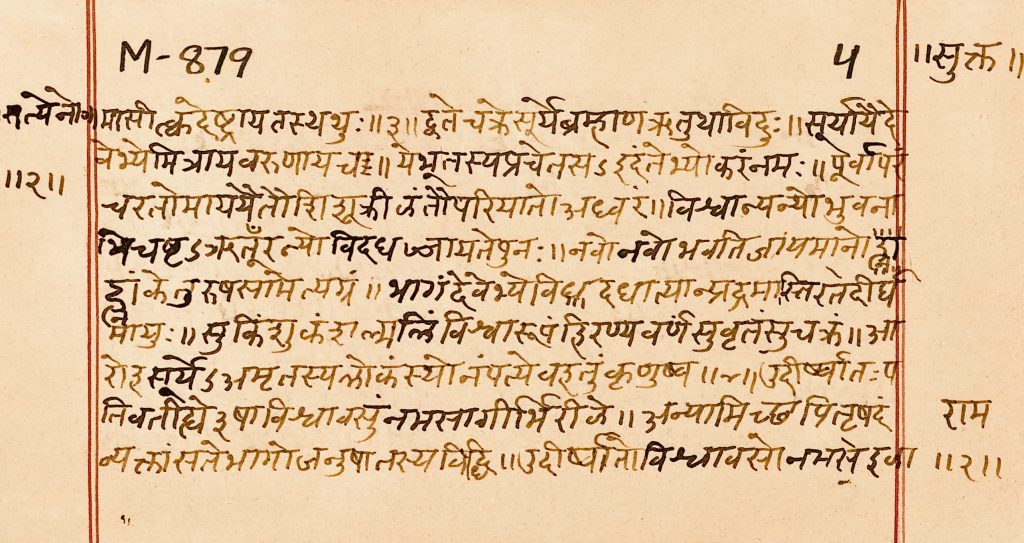
Vivaha Sukta, Rigveda Mandala 10 Hymn 85 Verses 16-22

Composed in Vedic Sanskrit, the Veda constitute the oldest layer of scriptural literature within Santana Dharma, with Hindus considering the Vedas to be apauruṣeya, – not authored by man. While monarchies prevailed in Vedic society [19, 20], not only was there a movement away from preeminence given to political power towards a more spiritual one [21, 22] but also the existence of ancient Indian republics – Ganatantra, which contributed towards decentralisation of power [23]. Whether this directly took the form of anarchism is debatable, but there was a move towards reducing the importance of the construct of a primary, overarching state and constructs of powers [24]. The Dharmic path has always been about a fearless trek into the unknown, about seeking the truth of reality [25-27]. It throws out any and every imposed normative ideal of political philosophies, and in doing so, calls for the sacrifice of attachment of the human mind with dogma and rigid political alignments. While this perspective highlights society’s ills and even prescribes possible solutions, it lays a greater emphasis on mutual respect, cooperation and harmony in society rather than rigid loyalties to political constructs of the state or ideologies. This is part of the greater Dharmic realisation of the futility and fleeting nature of all constructs, be it political, social or economic, in the pursuit of the Absolute Truth:

Satya, the Absolute Truth, is beyond constructs of politics and society, particularly those of state and (political) ideologies

And in doing so, it had anarchist undertones, when one considers politics: it highlighted the fallibility of human power and reasoning that can be applicable to one and all, the importance of spontaneous self-organisation and unconscious design in political entities, significance of innovation and influence of factors and forces beyond the control of a central authority.

Satyaniti, this Dharmic anarchism, is the result of the Indic civilisation embracing the dynamism of life, and the spontaneity and capacity to self-organize of human beings.

The principle of self-governance naturally arises from this realisation. Instead of imposed structures, emphasis is on peaceful emergent orders without any rigid conservatism regarding hierarchy, power dynamics and coercion. A truly Dharmic society has at its foundations a preeminent place for honest introspection, self-improvement and evolution of thought and individuality thereby. This is a dynamic way of determining one’s purpose of life, of one’s role within society and the key to one’s happiness.

There is a distinct difference between western anarchism and Dharmic anarchism. While western anarchism is about negation and oft-violent insurrection against political structures, the Dharmic version preoccupies itself with the realisation of why obsession with these political elements is naturally at odds with one’s existence and well-being. The Rishis (seers) since times immemorial led by example, in highlighting how self-governance and self-rule is significant, coupled with anarchist tendencies of not placing much importance with control of the state. They dwelled in forests outside the control of any government, be it of a monarchy or republic of ancient India. They brought forth a spiritual mooring for education and existence, a values-based living and a realisation of Rta (cosmic order) and Dharma (the path that facilitates this order, the universal cosmic principle as well equilibriation in nature).

Read- Satyatva or the Absolute Truth: Resonances across Religions and Rejection of Exclusivism

While western anarchism emphasised anti-state policies, Dharmic anarchism emphasised self-consciousness. While western anarchism went against specific rulers, Dharmic anarchism went for decentralised and non-hierarchical polities. The latter prioritises community living, sensitivity to holistic living and ecologically sustainable lifestyles. This was done with a combination of grassroot democracy (that was centralised around the unit of the Gram – village), Dharma, Varnasrama (not Jaativad) and socio-spiritual realisation of Satya – Truth.
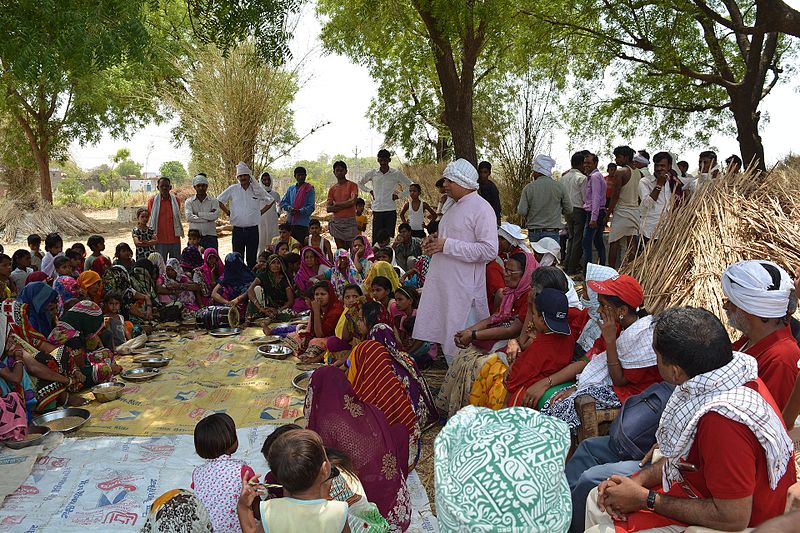
Gram Panchayat. Courtesy: Shagil Kannur

The grassroot democracy can be seen even today with the Panchayati model. Over millenia, this turned India into not only a village-based society but also a strongly community-based and resilient society. The movement towards making these fundamental units of politics and society self-governing and self-sufficient has been seen over the ages. This was in a cooperative model, which was sustainable and nature-bound, and most importantly, independent from the state and its associated politics. Orientalists such as Metcalfe, Munroe and Wilks have described the importance of these communities in India. Kings came and went, dynasties came and went, power exchanged powers, wars took place. What never changed beyond a point was the underlying social fabric of India, based on the village- and community-based model. C. F. W. Hegel highlighted how this system made India impervious to the vagaries of despotism and subjugation by rulers and invaders, even during the colonial era. The achievement of this high level of decentralisation was that there never was a political monolith that a coloniser or invader could demolish for the Indians to fall as a people. It is this rich political heritage that naturally translates to the principle of self-governance, self-rule and Swaraj, and it is this rich political heritage that I would like to stand by.

Satyaniti and Swaraj constitute the historical backbone of the socio-political order of India, through the ages.

References:

  1. Talwar, Balvir. “‘Sustainable growth–the Vedic way.” International Conference on Quality (ICQ’05), Tokyo, September. 2005.
  2. Rammohan, Sethuraman. “Improving Governance In The Light Of Ancient Indian Heritage Texts.” (2018).
  3. Jha, Pradip Kumar. “Decentralization in India: Reflections from Bihar.” Journal of Politics and Governance 3.4 (2014): 149-155.
  4. Singh, Gurdeep. “Swami Dayananda Saraswati’s Instruments in the Reformation of Indian Society.”
  5. Mohapatra, Amulya Ranjan. Swaraj: A Multi-Dimensional Concept. Readworthy, 2009.
  6. Herbert, Auberon Edward William Molyneux. The principles of voluntaryism and free life. Free Press Association, 1897.
  7. Watner, Carl. “‘Stateless, not lawless’: voluntaryism and arbitration.” The voluntaryist 84 (1997): 1-8.
  8. Tilak, Deepak, and Geetali Tilak. “Swarajya and Tilak.” (2019).
  9. Nikam, N. A. “Indian Thought and the Philosophic Bases of Responsibility of Man.” Revue Internationale de Philosophie (1957): 75-87.
  10. Kuppuswamy, Bangalore. Dharma and society: A study in social values. Macmillan, 1977.
  11. Londhe, Manali. “Vedic Concept of Rta: The Cosmic Order.” Proceedings of the XXIII World Congress of Philosophy. Vol. 16. 2018.
  12. Saravanamuthu, Kala. “Gandhian-Vedic’.” Envisioning a New Accountability (Advances in Public Interest Accounting, Volume 13). Emerald Group Publishing Limited (2007): 177-235.
  13. Halbfass, Wilhelm. “The Idea of the Veda and the Identity of Hinduism.” Defining Hinduism. Routledge, 2017. 16-29.
  14. Goodall, Dominic, ed. Hindu scriptures. University of California, 1996.
  15. Macnicol, Nicol. Hindu scriptures. Univ of California Press, 1996.
  16. Zaehner, Robert Charles. Hindu scriptures. Motilal Banarsidass Publ., 2001.
  17. Frawley, David. Wisdom of the ancient seers: Mantras of the Rig Veda. Motilal Banarsidass Publ., 1994.
  18. Wilson, H. H. “Rig-Veda Sanhita: A Collection of Ancient Hindu Hymns, Vol.” (1888).
  19. Bedekar, V. M. “VEDIC FOUNDATIONS OF INDIAN CULTURE.” (1976): 223-226.
  20. Singh, Sarva Daman. “Monarchy in the Vedic Age.” Australian Journal of Politics & History 35.3 (1989): 338-352.
  21. LINDBLAD, J. THOMAS. “The Ultimate Implications of the Ancient Hindu Concept of Sovereignty: The Principle of.” Journal of Indian History: Golden Jubilee Volume (1973): 193.
  22. Sinha, Braj M. “SVADHARMA AND SVABHĀVA IN THE” BHAGAVADGĪTĀ”.” Journal of South Asian Literature 23.2 (1988): 144-149.
  23. Pandey, R. B. “Vedic origin of Indian republics.” Proceedings of Indian History Congress; 15th. session, Gwalior. 1952.
  24. Weir, Kay. “A brief history of anarchism.” Pacific Ecologist 19 (2010): 48-50.
  25. Agarwal, Manjul K. The Vedic Core of Human History: And Truth Will Be the Savior. iUniverse, 2013.
  26. Edgerton, Franklin. “The Upanisads: what do they seek, and why?.” Journal of the American Oriental Society (1929): 97-121.
  27. Nigal, Sahebrao Genu. Vedic philosophy of values. Northern Book Centre, 2009.
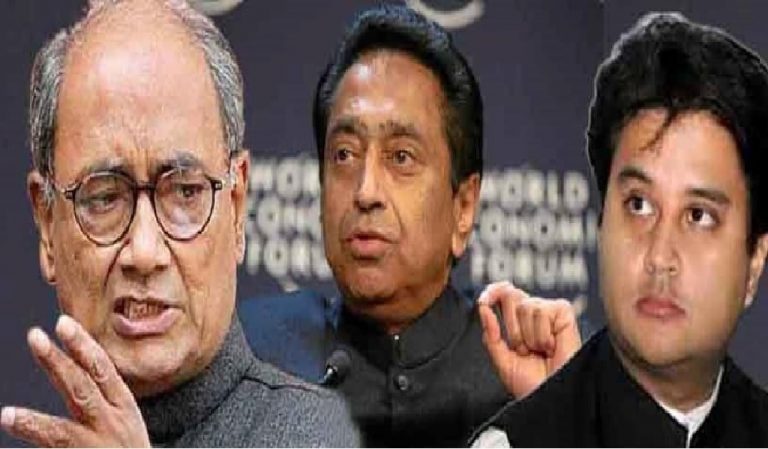
Digvijay Singh: The Mastermind behind the fall of Kamal Nath Government

Digvijay Singh is the reason for feuds and factionalism in MP Congress. It is a perfect example of how a personal dislike can bring down a whole government. He is also the only person who benefitted from this entire scandal.

Let us go a little back in time to the year 2018. It was the time of Vidhan Sabha elections in Madhya Pradesh and the Congress unit there was torn apart with in-fighting. Both Jrotiraditya Scindia and Kamal Nath wanted to lead the party and they made their intentions clear to the High-Command. Everybody expected Scindia to lead Congress in MP as he was a close aide of Rahul Gandhi. So, it took people by surprise when Gandhi went with Kamal Nath. The reason you ask? It was Digvijay Singh’s dislike with Scindia and this rivalry dates back to the rivalry of two erstwhile royal families of Gwalior and Raghogarh, the families to which India and Singh belong.

The former princely state of Raghopur once collected revenues for the Maharaja of Gwalior, the Scindias. The brunt of this rivalry was still borne by the descendants in Congress. This Raghogarh versus Gwalior rivalry goes way back to the eighteenth century. Mahadji Scindia was a part of the Maratha forces who fought for the Peshwa against Ahmed Shah Abdali in the Third Battle of Panipat. Though Scindia was injured, he survived. Ten years after the defeat of Panipat, Scindia recaptured Delhi in 1771 and placed the weakened Mughal emperor Shah Alam II on the throne but under the Maratha suzerainty. Daulat Rao Scindia was the successor to Mahadji who defeated the 7th Raja of Raghogarh, Hindupat Raja Jai Singh in the year 1802 and this is where it all began.

Read: “Traitor”: Congress leaders express ire as senior party leader Jyotiraditya Scindia along with 19 other ditch the party

Scindia then made Raghogarh the vassal state of Gwalior. So, when the British subdued all Indian princes, Gwalior remained a 21 gun-salute state but Raghogarh became a no-gun-salute state. It is heard that the Scindia senior, MadhavraoScindia also fostered a dislike towards Digvijay Singh, the former Chief Minister of Madhya Pradesh for the same reason. Well, after independence all princely states got de-recognized, but it seems the rivalries still remained.

Now, let’s come back to the year 2018. The youngsters of Congress lobbied hard to let Scindia be their nominee for the post of CM. He was a perfect choice: educated, bright, loved by people and most importantly, belonged to Rahul Gandhi’s inner circles. He did seem as the uncontested winner in this regard. But, when Kamal Nath won the CM’s seat, it seemed that once again Sonia’s coterie Digvijay Singh won. A failed politician trying to destroy the career of a promising young leader just to pacify some age-old rivalry. Rahul Gandhi tried to pacify both sides by tweeting a photograph of him with Nath and Scindia, but the cracks were too deep to be plastered.

But Digvijay Singh wasn’t done jeopardizing Scindia’s chances in Congress just yet. Earlier this year, Madhya Pradesh Congress was supposed to choose its new head. Scindia again appealed for the post and it was yet again rejected. Kamal Nath is not just the CM but also the party chief in MP. The reason? Scindia was not acceptable to all factions, especially to the faction led by Digvijay Singh. Singh’s vehement opposition has left the deserving claimant Scindia failing to get the opportunity to serve in MP state congress’ most powerful post. This further aggravated Scindia’s wounds. The last nail in this coffin was regarding the RajyaSabha nominations. Singh’s intervention also culled Scindia’s chances of winning a RajyaSabha seat from the state. Singh and Nath, who are supposed to be rivals teamed up and ensured that Scindia is side-lined at the party. Well, I think now they are indeed getting a taste of their own Karma.

So, it isn’t unnatural when Scindia chose to explore his options somewhere else. He did try his best to serve Congress, but after being repeatedly denied positions of responsibilities despite working hard, there were no reasons left to be in Congress. BJP did seem like a natural option for him as his father had also started his career with Jana Sangh, the predecessor of the Bharatiya Janata Party. But he also took the calm of MP Congress with him as he left. The MP Congress is at the brink of collapse and Scindia cannot be blamed for it.

Well, the only person who seems to have benefited from the entire scandal is Digvijay Singh. He was seeking to find relevance in the party after his shameful defeat against Pragya Thakur. This entire scandal brought him back to the limelight. In pretending to solve this crisis, he gained both relevance and respect from his party workers. His ploy did give him the results he wanted. What a win-win situation. With Scindia gone, he can now be the face of Congress.

This is indeed a wake-up call for the Congress High Command. Perhaps, if they really want to save the party from an unnatural death, they should start rewarding those who work hard for the party. How long can they survive on the shoulders of oldies and dynasts without recognizing sheer talent and hard work?

Twitterati couldn’t believe Indian students ‘studying in Pakistan’ but here is the truth

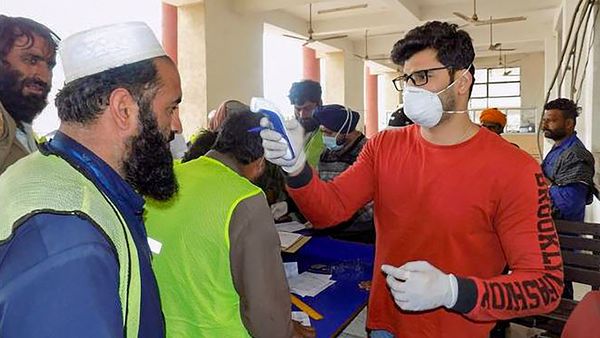
43 Indians who had arrived from Pakistan last night through Attari-Wagah Border have been sent to a quarantine facility in Amritsar. Reportedly, 29 people had gone to Dubai to watch a cricket match returned to India on Wednesday through the land transit route of Attari-Wagah border in Amritsar.

Addition to them, fourteen Indian students who were studying in Pakistan have also returned back to the country. They have all been quarantined at a facility in Amritsar, said civil surgeon Parijeet Kaur Johal.

As reports emerged that Indian citizens, especially students were residing in Pakistan, netizens expressed surprise regarding the rationale behind Indian citizens going to the terror state of Pakistan for educational purposes.

However, it turns out that the Indian students returned from Pakistan are from Kashmir. As per a Hindustan Times report dated 16th March, 2020, about 100 Indians including 15 students from Kashmir were allowed to return to India from Pakistan through the Attari-Wagah border. A senior customs official on condition of anonymity informed Hindustan Times reporter that about 15 Kashmiri students studying in Pakistan have also returned to India after special screening was carried out for them at the border.

Hundreds of Kashmiri students study in Pakistan. As educational institutes there closed because of coronavirus outbreak, most of them are returning home. Prior to that, about 60 Kashmiri students had returned from Pakistan at Wagah border.

Chennai: Anti-CAA protest organisers of Thowheed Jamath booked, had held massive rally defying govt order

0

Chennai police have registered a case against four office-bearers of Tamil Nadu Thowheed Jamaath (TNTJ) and 2500 unknown persons for staging a protest without permission and flouting the governments advisory to maintain social distance amidst the coronavirus threat.

After repeated warnings given to the anti-CAA protestors to call off the protests in the wake of the outbreak of novel coronavirus, the Chennai police booked these protestors and the four organisers who have been sitting for the Shaheen-Bagh-style protest in the state.

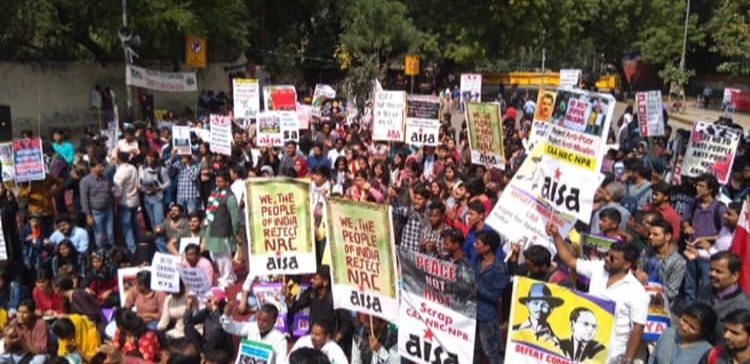
Shaheen Bagh-style protests were going on in 58 places in the state to protest against the CAA, NRC and NPR. The first such protest started at Washermenpet in Chennai on February 14.

According to reports, these protestors have been booked under four sections of the IPC including section 269 of the IPC which says that whoever unlawfully or negligently does any act which is, and which he knows or has reason to believe to be, likely to spread the infection of any disease dangerous to life, shall be punished with imprisonment of either description for a term which may extend to six months, or with fine, or with both.

Nearly 50 organisations, which were protesting against CAA since December, have suspended their agitation in the interests of public health. However, the TNTJ had announced that its protest march outside the Madras High Court premises in the already crowded Broadway area will be held as planned on Wednesday.

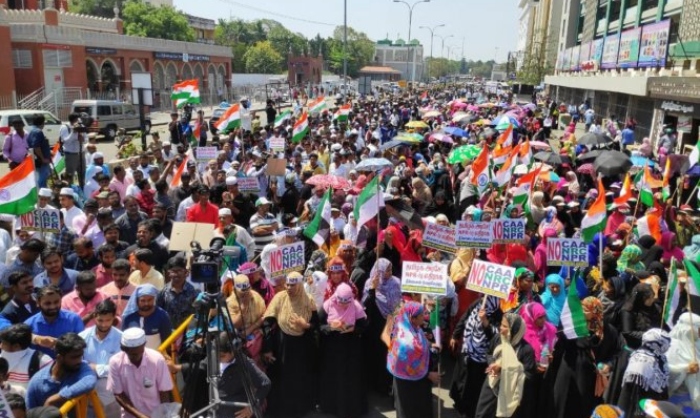
Hundreds of TNTJ cadre and sympathisers, holding umbrellas to protect themselves from scorching heat, converged and raised slogans against the Centre and state governments. The mass gathering was organised despite CM Edappadi K. Palaniswami orders on Monday that no permission would be granted for rallies or public meetings as a precaution to curb the spread of the novel Coronavirus.

The TNTJ cadre had said the Citizenship Amendment Act and NRC are “more dangerous” than COVID-19, which has so far “killed only two people” but the former has “consumed the lives of several.”

Earlier in the day, it was reported how one of the organisers of the anti-CAA protests in Delhi’s Jahangirpuri has shown symptoms of the COVID-19 and is currently undergoing tests after he met his sister, who was earlier tested positive. His sister had returned from the Umrah pilgrimage in Saudi Arabia on 11th March. The 35-year-old protestor said he had been to the anti-CAA protest site in Delhi “a couple of times” after meeting his sister on 13 March.

Yesterday we had reported how ‘protestors’ at Delhi’s Shaheen Bagh were defying rules to lead mass protests at the protest site despite warnings from the government that the virus could affect them. Targetting the government over such diktats, the ‘protestors’ had said it was a conspiracy by the government to evict them from the protest site and asserted that they would not move an inch until the government revoked the law.

They also claimed that the protests were a call from Allah and they do not fear the Coronavirus. Instead, they asked to repel all the laws if they cared for the ‘protestors’ at the Shaheen Bagh.

The total number of novel coronavirus cases in India rose to 170 on Thursday after a record number of fresh cases reported from the various parts of the country. Globally, the virus has infected more than 2,25,000 people and killed more than 9200, as per the data available online.

Karnataka: Coronavirus positive patient had taken Dubai-Bengaluru flight, then bus to Madikeri, advisory issued to co-passengers

0

Amidst the Coronavirus scare, the District Administration of Kodagu, Karnataka has released an advisory asking all the passengers who had travelled in the IndiGo flight 6E96 which flew from Dubai to Bengaluru on 15th March to report to the nearest Government hospital, as a positive case of COVID-19 had travelled in the same flight, reports ANI.

Similarly, the district administration has also asked all the people who had travelled in KSRTC Bus No. KA-19-F-3170 from Bengaluru to Madikeri to report to the nearest hospital, as the suspect who had travelled from Dubai, had reached Madikeri in that KSRTC bus.

The total number of novel coronavirus cases in India has risen to 166 on Thursday after a record number of fresh cases reported from the various parts of the country. Maharashtra is the worst affected state with the maximum number of cases. According to the data released by the Ministry of Health and Family Welfare, the total tally includes 141 Indian nationals and 25 foreigners.

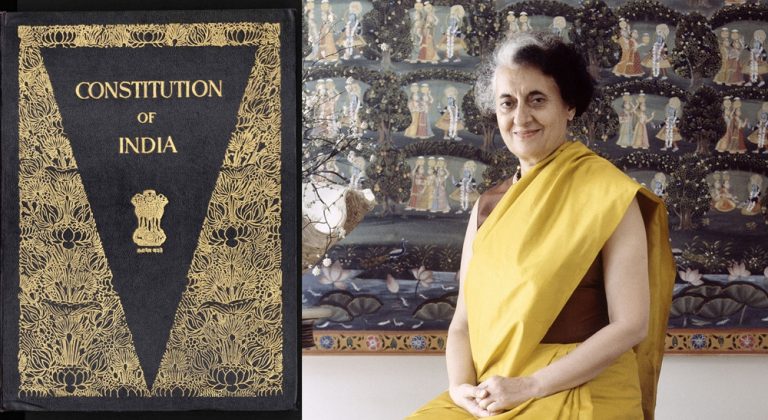
By changing the Preamble of the Constitution, Indira Gandhi had destroyed democracy, in the words of Ambedkar

There is a much famous quote of Joseph Goebbels, the chief propagandist of Hitler, about how ‘It would not be impossible to prove with sufficient repetition and a psychological understanding of the people concerned that a square is in fact a circle’. But then there is another quote by the same gentleman which is of relevance to the topic I am about to broach upon.

‘If the day should ever come when we must go, if some day we are compelled to leave the scene of history, we will slam the door so hard that the universe will shake and mankind will stand back in stupefaction.’

This is one quote which reflects closely to the statement made by a senior Congress leader after the electoral rout in 2014 elections. One could have called that statement as frustrated outburst of a leader who was struggling to stay relevant in the world which was fast-changing around him. But then, if we look at the lies which have been propagated with ample support of media and sold-out intellectuals, we realize Goebbels speaking through that leader. This propensity to lie with a straight face, unburdened by a conscience, has now placed our society at large in a strange situation. I am sure when the farce wears out, we, as citizens, will find ourselves standing back in stupefaction.

The young, created softly, over the years with little facts and an overdose of emotions, are reading Preamble of the Constitution these days. People have told them that the current Narendra Modi government has messed it up and the constitution of India is in danger. For a democratic nation, there are two things in the Constitution which were of utmost significance- the definition of the nation and freedom of expression. The government which came to power in 2014 is being attacked by the young on both the counts. What helps them is that before and after 2014, the students continue to read the same books which were meant to create a zombie out of them, of the kind which ignored facts and celebrated lies.

Only other day, a young kid argued vehemently with me on the above matters. I wanted to tell her, that while the first amendment of US constitution was brought in to liberalize thought and speech, the first amendment of Indian constitution, brought in by Jawaharlal Nehru, was affected to curtail the freedom of speech. But I have written on the first amendment earlier as well. I will here restrict myself to the Preamble. That is something which defines the nation.

There have been 104 Amendments to the Indian constitution. Between Modi and late Shri Atal Bihar Vajpayee, the BJP ruled government has made 20 amendments (6 by Modi and 14 by Vajpayee). The most far-reaching amendment in the history of independent India was made by Mrs Indira Gandhi and that amendment was called 42nd amendment. This amendment came in when the opposition was in prison under the draconian rules of Emergency. The dictatorial right of the state to pick up anyone and throw in the prison was challenged in Supreme Court and was rejected by a judiciary which was led by the Chief Justice of India who was had superseded three judges senior to him and was appointed with the blessings of Mrs Gandhi. This amendment did many things to the democratic constitution of India which was put in place with much care by Dr. Ambedkar and Dr. Rajendra Prasad.

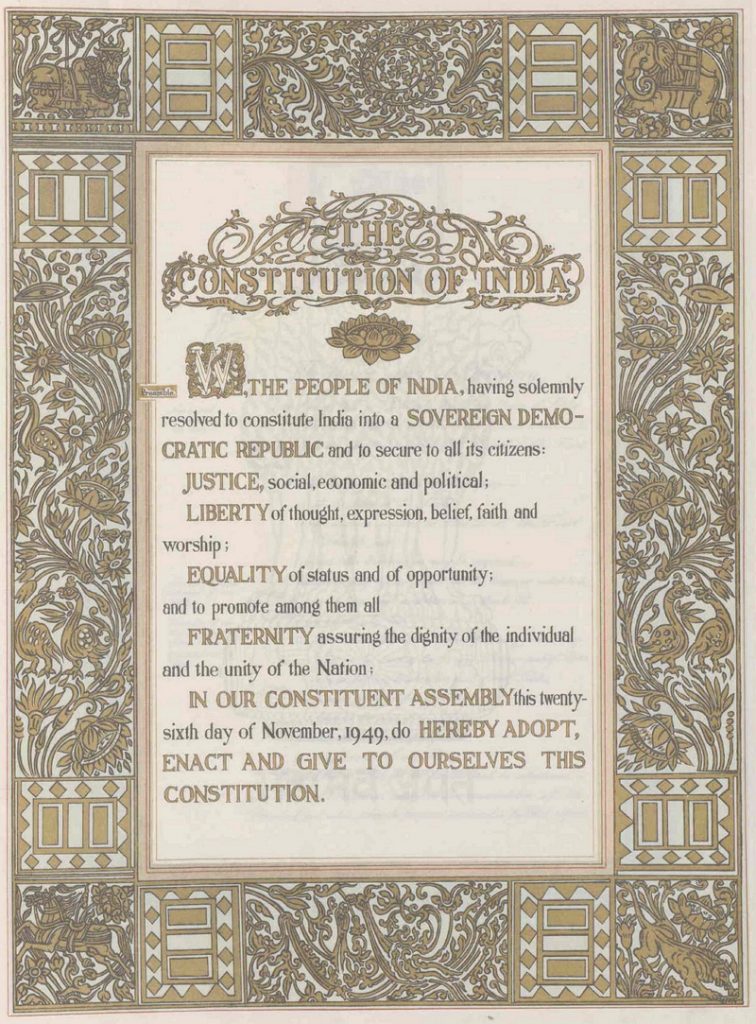
Let us go back to the time when the Preamble was finalized to understand the damage that the Congress government brought to it when India was suffering under an Emergency. The Preamble was brought in for the debate on 17th of October, 1949. The earlier Preamble, in its unadulterated form, read that “We, the people of India, having solemnly resolved to constitute India into a sovereign Democratic Republic”. Initially it was proposed to put the Constitution in for third reading without Preamble. This was objected by Maulana Hasrat Mohani and supported by Shri KM Munshi. Maulana Hasrat Mohani brought in three amendments to the Preamble, first being, replacing Sovereign Democratic Republic as the nation with Sovereign Federal Republic or Sovereign Independent Republic. The amendment was rejected. The second amendment or alternative he proposed was to name India, Union of India Socialist Republic, in line with the Russia being called USSR. This too was rejected. Then another amendment was sought to introduce ‘In the name of God’ or ‘In the name of Gandhiji’ in the preamble. This too was rejected by 68 votes to 41.

Shri Brijeshwar Prasad brought the discussion on the inclusion of the word- Secular and Socialist- in the Preamble. This inclusion was also sought about in a debate on 15th November, 1948, when Shri KT Shah brought in amendment seeking in Clause (1) of Article 1, mention of the terms “Secular, Federal and Socialist”. Dr. Ambedkar’s response explains that the Preamble should never have been tampered with. Dr Ambedkar was against the hard-wiring of the Constitution according to the wishes of Constituent Assembly which might or might not have represented the wishes of all the people, at all the times. He said, “What should be the policy of the State, how the Society should be organized in its social and economic side are matters which must be decided by the people themselves according to time and circumstances. It cannot be laid down in the Constitution itself because that is destroying democracy altogether.”

When the state was under democracy, the opposition was in prison or underground, Mrs Indira Gandhi sneaked in the two terms into the preamble of the constitution. Apart from circumstances, Dr Ambedkar’s words do tell us what she did- destroyed democracy. It is unfortunate that the same Congress which thus destroyed democracy is now handing the same preamble to ill-informed youth who read it believing it to be Ambedkar’s Preamble. Another reason Dr Ambedkar gave while rejecting the amendment is that this was ‘superfluous’. Dr Ambedkar cited Fundamental Rights which anyway assures freedom, liberty and equity to the citizen. It was quite an irony that the 42nd Amendment while introduced these two terms to compensate for Indira Gandhi’s excesses against the minorities and to the people at large under Emergency, they diluted the same fundamental rights like never before.

The original preamble of the constitution

The 42nd Amendment, 1976 brought in by Indira Gandhi Government, and presented in Lok Sabha on 28th of August, 1976 by HR Gokhale, in essence, sought to make 59 changes in the Constitution. It took away the authority of the Courts to examine the decisions taken by the Parliament (this is exactly what the opposition today wants the court to do on CAA). It also proposed that no law providing for the prevention of anti-national activities and prevention of the formation of antinational associations shall be deemed void on the grounds of being inconsistent with article 14, 19 or 31. Essentially it meant that fundamental rights cannot be cited to escape the laws to prevent anti-national activities. Imagine a Narendra Modi bringing such an amendment.

The amendment defines antinational activities too. For instance, action by individual or association which is intended to bring about, on any grounds whatsoever, the cession of a part of the territory of India, or which incites any individual or association to bring about such cession or secession. I do not think supporters of Sharjeel Imam have read Indira Gandhi or 42nd Amendment much. This amendment also brought in fundamental duties under 51A which included the duty of every citizen to abide by the Constitution and respect its ideals and institutions, the national flag and the national anthem. The amendments contained in 42nd Amendment gave discretionary powers to the state and the individual rights which are so strongly contested today, were curtailed like never before.

Read- Did the government really “remove” Secularism and Socialism from Indian Constitution?

The ceiling of the maximum duration of the President’s rule was increased from 6 months to 12 months and allowed the union to deploy central military forces to handle any grave law and order situation in any state. Mamata Banerjee was then with the Congress. It was only later decisions of Supreme Court which struck down some of these amendments and restored the balance. The amendment to the Preamble which should have happened after Emergency could not happen as initially it was defeated by the Congress which held 163 seats in the Rajya Sabha, even while in the opposition, and later dismissed in the SC by CJ KG Balakrishnan in 2008 on a petition filed by an NGO and represented by Fali Nariman as being merely academic since the government had not attempted to restore the Preamble in its pre-emergency form. As we see, after the first Amendment, again it was Congress which was on the side working to cripple the liberty and democracy, and as fate would have it, the Right on the side of freedom and fundamental rights. It is really unfortunate that the evil desperation of the opposition and the lack of grassroot communication by the BJP has allowed the truth to be twisted and turned to such an extent that all squares have turned into circles.

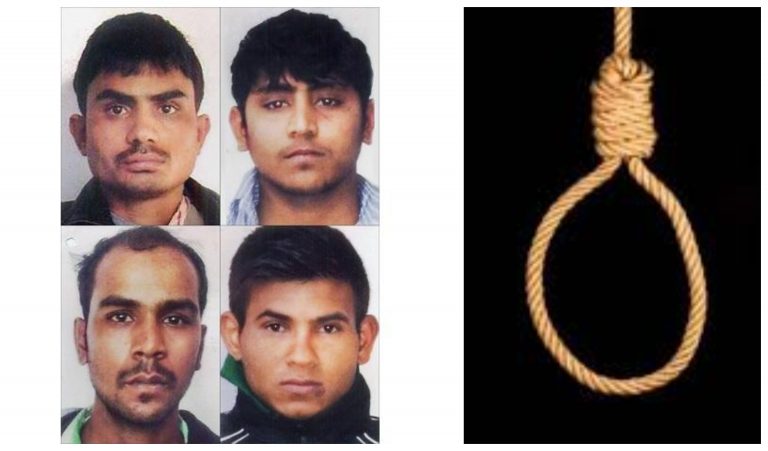
Nirbhaya case: No legal remedies pending says court, convicts to be finally hanged tomorrow at 5:30 am

After President Ram Nath Kovind refused to consider the second mercy petition filed by 2012 Delhi gang-rape case convicts Pawan Gupta and Akshay Thakur on Thursday and the Supreme court dismissed the curative petition of Pawan Gupta where he claimed that he was a juvenile at the time of the crime, a Delhi court has cleared the way for the hanging of the four convicts on Friday. While passing the order, the court maintained that no legal remedies of any of the four convicts in the Nirbhaya gang rape and murder case were pending in any of the courts.

On March 5 this year, a trial court had issued the death warrant with March 20 as the date.

Earlier today, the Patiala House Court has dismissed the pleas of Akshay Kumar, Pawan Gupta and Vinay Sharma seeking a stay on the death penalty, saying the second mercy plea of one of them was still pending.

The victim’s family, who have been seeking justice for their deceased daughter for the last 8 year, will today surely heave a sigh of relief, as the four convicts in the 2012 case- Mukesh Singh, Akshay Singh Thakur, Pawan Gupta, and Vinay Sharma, are finally scheduled to be hanged at 5:30 am on March 20 (Friday).

Asha Devi, the mother of the victim said: “The courts gave them so many opportunities that they have now got the habit of bringing something ahead of the hanging date in order to get it postponed. Now, even our courts are aware of their tactics,” Devi told ANI.

She added: “Tomorrow, they will be hanged. Nirbhaya and all the girls in India would get justice. They don’t have any pleas left in order to postpone the hanging date.”

Earlier in the day, hours, before the court was to decide on the execution, the lawyer of the convicts, had once again made an attempt to save the lives of the convicts.

Lawyer AP Singh, who had claimed that one of the convicts Pawan Kumar Gupta was a juvenile at the time of the gruesome crime, called the entire case a media trial and made a bizarre comment that ‘govt should be making masks instead of hanging ropes’.

The visibly upset AP Singh made the comments while talking to reporters after the curative petition filed by Pawan Gupta was dismissed by the Supreme Court today. Pawan had filed the curative petition challenging the Supreme Court order dismissing his earlier review petition making the same claim.

Ever since the mercy petition of Mukesh Singh, Pawan Gupta, Akshay Thakur and Vinay Sharma were rejected by the President, the lawyers of them have been using one delaying tactic after another to postpone their hanging. As the death warrants are issued giving a time of fourteen days, they have been filing petitions separately. Every time a petition of one convict is rejected, another one files a petition, starting the process all over again. But now seems they have almost exhausted all the opportunities of legal review, as no court has stayed the death warrant issued by a Delhi court this time.

Every time death warrant was issued, the Tihar Jail authorities have been making arrangement for the hanging. Pawan Jallad, a hangman from Meerut, reached Tihar jail on 17th for the fourth time in three months in this regard. The Jail authorities have already prepared the gallows, and dummy hanging took place on Wednesday to make sure that everything goes well on the day of execution.

According to reports, the jail has procured 8 manila ropes, 4 to use and rest 4 to keep as standby. Moreover, all the four convicts – Mukesh Singh, Akshay Thakur, Pawan Gupta and Vinay Sharma – will be hanged simultaneously inside jail number 3.

The four men are currently lodged in jail 3 next to the hanging courtyard. Each convict is lodged separately and guarded by at least 2-3 jail wardens who monitor their movements round-the-clock.

Coronavirus: Anti-CAA protests organiser in Delhi shows symptoms of COVID-19 after sister tests positive, had visited ‘protest’ site

One of the organisers of the anti-CAA protests in Delhi’s Jahangirpuri has shown symptoms of the COVID-19 and is currently undergoing tests after he met his sister, who was earlier tested positive, reports ThePrint. His sister had returned from the Umrah pilgrimage in Saudi Arabia on 11th March. The 35-year-old protestor said he had been to the anti-CAA protest site in Delhi “a couple of times” after meeting his sister on 13 March.

“I did not show any symptoms of the disease at the time, so I went about life as usual,” claimed the protestor as he spoke to the Print. He informed that his sister tested positive two days after he met her. She is currently undergoing treatment at Delhi’s Safdarjung Hospital. The anti-CAA protestor claimed he developed a slight cough on 16th March. Since he had come in contact with his sister who later tested positive for coronavirus and had flu-like symptoms himself, he approached the doctors. He is currently undergoing treatment at LNJP Hospital, Delhi. Results are expected later today, the report says.

Read: How the century-old Islamic evangelical event which originated in India spread coronavirus in South East Asia

Yesterday we had reported how ‘protestors’ at Shaheen Bagh were defying rules to lead mass protests at the protest site despite warnings from the government that the virus could affect them. Targetting the government over such diktats, the ‘protestors’ had said it was a conspiracy by the government to evict them from the protest site and asserted that they would not move an inch until the government revoked the law.

They also claimed that the protests were a call from Allah and they do not fear the Coronavirus. Instead, they asked to repel all the laws if they cared for the ‘protestors’ at the Shaheen Bagh.

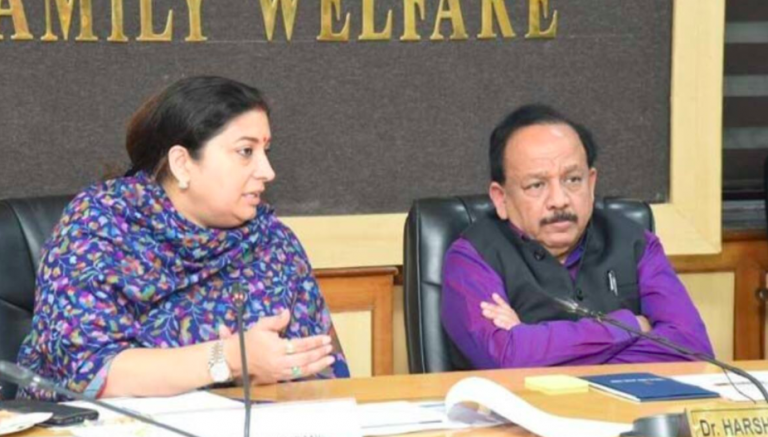
Amethi gets a new medical college, Smriti Irani reminiscences how it came as a full circle for Dr Harshvardhan

Union Minister Smriti Irani today took to Twitter to announce a new government medical college coming up in her constituency, Amethi.

Thanking Union Minister Dr Harshvardhan, Irani said how things have come to a full circle for Dr Harshvardhan. She informed that 43 years back, Dr Harshvardhan, who was still studying MBBS back then, had gone to Amethi ahead of 1977 General Elections to campaign against Sanjay Gandhi who was contesting from Amethi, which has essentially been the Nehru-Gandhi family bastion.

Read: Smriti… who? Smriti, the one who gave your brother a run for his money

43 years later, after Irani defeated Sanjay Gandhi’s nephew and 3 time Amethi MP Rahul Gandhi from the home turf, as Union Minister for Health and Family Welfare, Dr Harshvardhan informed Irani that the Government of India has approved of opening a new medical college in Amethi.

In the 2019 Lok Sabha elections, many a giants and dynasts were slain. The one battle that stood out was that of Amethi, the constituency that has been the bastion of the Gandhi dynasty. Smriti Irani fought a valiant fight and defeated the reigning MP from Amethi, Congress President Rahul Gandhi.

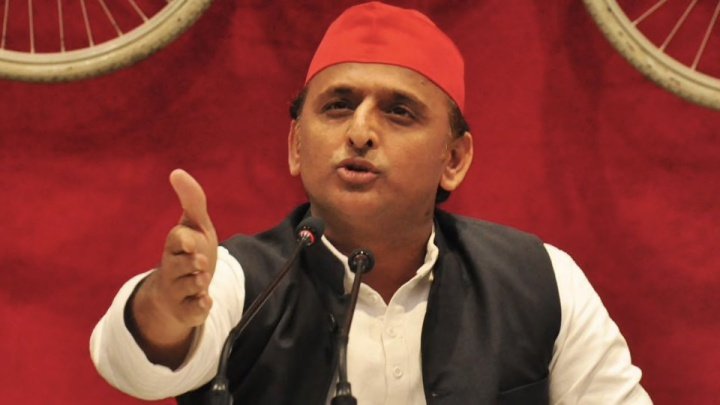
Akhilesh Yadav says BJP bigger threat than coronavirus, accuses Yogi Adityanath of not being serious on tackling the pandemic

The opposition party’s contempt against BJP does not come as a surprise anymore. However, the malice just seems to be increasing with every passing day. Hitting a new political low, the Samajwadi Party chief Akhilesh Yadav has gone on to now equate BJP to coronavirus. In a statement, the SP bigwig has called “BJP a bigger virus than corona”.

It is shocking that a senior leader like Akhilesh has come up with such an insensitive comment especially at the time when India is struggling to battle the deadly coronavirus which has caused over 8000 deaths and affected more than 2,00,000 people globally.

The Samajwadi Party supremo, at a press conference in Lucknow, also went on to criticise the Yogi Adityanath-led BJP government of not taking the coronavirus outbreak seriously. He alleged that there are no adequate provisions in UP hospitals and the government is simply unprepared for the crisis.

Even though Covid-19 has been declared a pandemic, the SP chief is of the opinion that instead of dealing with this epidemic, at this point of time, the government should tackle the other issues, which are, according to him, far more serious than the Covid-19 threat.

Trivializing the Central and State government’s fight against the deadly disease, Akhilesh Yadav went on to target BJP by saying: “The issue which the people are worried about is more serious than corona. We will fight this disease for a few days but the BJP, which for its own gain has worked to spread hate across the country is a serious disease. I appeal to all the mothers and sisters to do something to protect themselves from coronavirus but once it’s gone then we all have to fight with this long term disease.”

To contain the coronavirus spread, the Uttar Pradesh government on Tuesday extended the closure of all educational institutions, cinemas, multiplexes and tourists places in the state till April 2 and implemented work-from-home protocol to the extent possible. The Yogi government has also decided to promote students up till class eighth, to the new session, without exams amid the coronavirus threat in the country.

Read: Uttar Pradesh: All students up to class 8 to be promoted to next class without appearing in examinations

The Chief Minister has appealed to the people to avoid venturing into crowded places and not to panic. Yogi Adityanath also ordered that the government will get the coronavirus victims tested and treated free of cost.

Three fresh cases from Noida in last two days took the total number of confirmed patients in Uttar Pradesh to 19. Meanwhile, the total number of novel coronavirus cases in India rose to 170 on Thursday after a record number of fresh cases reported from the various parts of the country.

Globally, the virus has infected more than 2,20,000 people and killed more than 8900, as per the data available online.