Home Blog Page 5870

Rajasthan: Congress workers pelt stones at Union Minister Kailash Chaudhary’s car

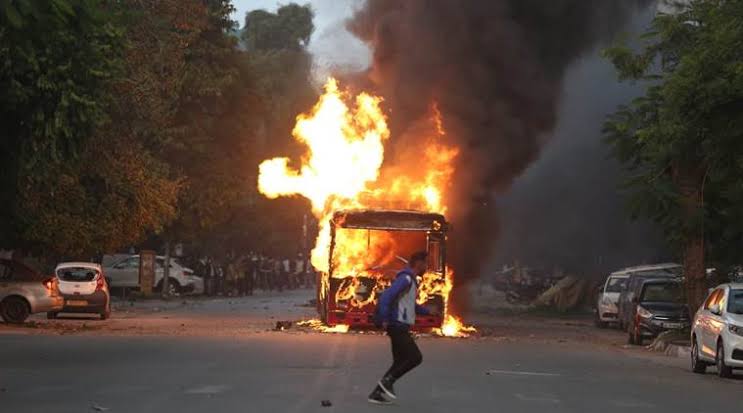
Union Minister of State for Agriculture Kailash Chaudhary fell prey to the Congress workers angst who allegedly pelted stones at the minister’s car while he along with Rashtriya Loktantrik Party (RLP) MLA Hanuman Beniwal were on their way to attend a religious function in Rajasthan’s Barmer district on Tuesday night.

Though no one was injured in the incident the police said that the window panes of the minister’s vehicle and a police jeep were damaged in the ensuing ruckus, said the police.

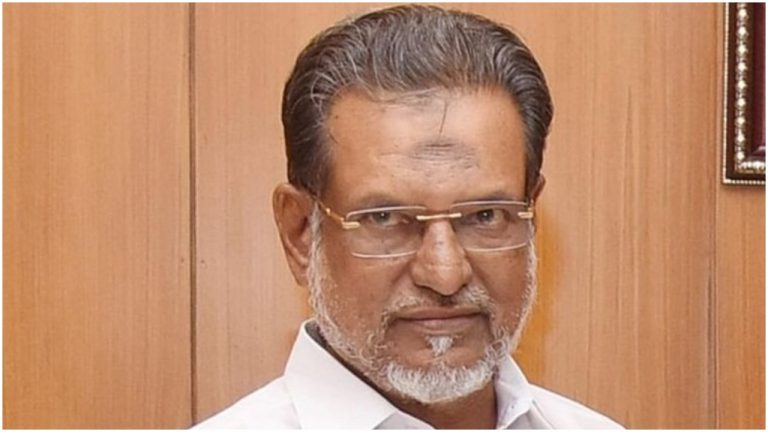
The Congress workers were reportedly targeting Beniwal, who had earlier levelled corruption charges on the Congress leader and the state revenue minister Harish Chaudhary.

The RLP MLA had while speaking to media persons on Tuesday, levelled corruption charges on the state revenue minister, which had irked the Congress workers who then decided to teach Beniwal a lesson.

When Beniwal and Union minister Kailash Chaudhary reached the religious function at a temple in Baytoo area of Barmer at night, they were attacked by the Congress workers who had decided not to let Beniwal attend the function. Notably, Baytoo is the assembly constituency of the state revenue minister Harish Chaudhary.

“There was resentment among the Congress workers. They assembled near Baytoo last night saying they will not let the MP attend the function”, SP Barmer Sharad Chowdhary said, furthering that “They were initially pacified. Senior police officers were also present but when the vehicles arrived, some of the Congress workers pelted stones at the vehicle of the union minister in which RLP MP Hanuman Beniwal was also present.”

The SP confirmed that the situation was ultimately brought under control and the ministers were escorted by the police to the temple where they attended the function. After the function was over, the union minister stayed at Balotara town in Barmer while the RLP MP from Nagaur was escorted by the police to the Jodhpur border, confirmed Chowdhary.

Rashtriya Loktantrik Party is an NDA alliance partner. Hanuman Beniwal had contested and won the Lok Sabha election from the Nagaur seat as the alliance candidate last year while BJP’s Kailash Chaudhary represents Barmer constituency in the Lok sabha.

Governor has not denied change to anyone, if anyone has the numbers, they can form government: HM Amit Shah on Maharashtra

In a scathing attack against BJP’s political opponents in Maharashtra, Union Home Minister Amit Shah slammed the opposition for politicising the office of Governor and tarnishing democracy. Shah’s statements come after high-voltage drama in Maharashtra concluded with the imposition of President rule yesterday.


Speaking to the ANI, Shah rubbished accusations made by the opposition that the BJP government in the centre was stonewalling them from forming government in Maharashtra and calling the shots through the Governor. Slamming Kapil Sibal for his childish arguments, Shah made it clear that nobody is stopping anybody from staking claim to the government in Maharashtra. “If anybody has numbers today, they can approach the governor. A learned man like Kapil Sibal is putting forth childish arguments like “we were denied a chance to form a government”.

Read: A tale of two Sanjays: The Maharashtra conundrum

Taking a dig at their former alliance partner Shiv Sena, Amit Shah said that both he and PM Modi had declared in the election campaign rallies that if the alliance wins the elections, Devendra Fadnavis will be the chief minister of the state. Nobody objected back then, now they have come up with a new set of demands which is unacceptable to us, Shah said.


The Governor of Maharashtra had yesterday sent a report to the Home Ministry recommending imposition of President rule in the state. After discussions in the cabinet meeting concluded, President rule was implemented in the state of Maharashtra.

The opposition- Shiv Sena had argued that they were not given sufficient time to prove their majority. Sena chief Uddhav Thackeray, through his lawyer Kapil Sibal, filed a complaint in the court contesting Governor’s decision of recommending President rule in the state.

The BJP-Sena alliance broke out over disagreement over the position of the chief minister. The Sena maintains that they had agreed upon what they call “50-50 formula” with a rotational chief ministerial post. The BJP has explicitly denied having agreed to any such formula before the elections.

Following the severance of alliance with the BJP, Sena sought NCP and Congress’ support to stake a claim at the government. Uddhav Thackeray called up Sonia Gandhi on November 11 seeking support for forming the government. After responding in affirmative, Gandhi held back her party’s support citing discussions to be held with her party MLAs and alliance partner-NCP. Sena was left in limbo as they could not prove the numbers to the Governor.

The Governor then invited the third-largest party NCP to form government in the state but they too couldn’t muster the required number necessary to stake a claim at the government. The Governor then, using his discretionary powers, sent his report to the Centre recommending President rule to be imposed in the state since no political party or alliance was in a position to form a government in the state.

Central govt assures Manipur that the Naga Peace Talks will not harm their interests amidst protests

Chief Minister of Manipur, Biren Singh, has assured that the territorial integrity of Manipur won’t be affected by the final settlement of the Naga Peace talks. He said that he has been assured of the same by the Central government. He further said that his government has full faith in the leadership of the Prime Minister and Home Minister Amit Shah.

“Union Home Minister Amit Shah categorically gave us this commitment when a government delegation including the Assembly Speaker and ministers visited him on Sunday,” he told reporters on Tuesday. Singh also stressed on the need to be calm till all the stakeholders are invited for discussion by the Central government.

Congress MLAs are demanding that the state government ought to provide a written assurance of the same. “If the chief minister and his MLAs firmly believe in the assurance given by the home minister that Manipur’s interest will not be harmed under any circumstances, the state government should provide a written assurance and take full responsibility for any eventuality,” said Th Lokeshwar, a former speaker of the Manipur Assembly and current MLA from the Congress party.

Read: Manipur CM Biren Singh raises concerns about Rohingyas in the state, urges residents to identify agents who felicitate their entry

Meanwhile, protests are ongoing in the state fearing that the final clauses of the settlement may have adverse implications for Manipur. On Tuesday, protesters clashed with the Police. They are primarily being organized by the Coordination Committee on Manipur Integrity (COCOMI).

The protesters are concerned that Manipur’s territorial integrity will be infringed by the seetlement given that the Naga rebels demand the creation of a unified Naga homeland, called Greater Nagaland, by incorporating the Naga-inhabited areas of Manipur besides Assam and Arunachal Pradesh with Nagaland. The chorus has also been joined by the Left parties.

JNU announces roll-back in fee hike and some other schemes, JNUSU calls it ‘cosmetic’

As the JNU students protest against the Draft hostel manual that has provisions for the fee hike, curfew timings and dress code restrictions on the students intensified, the administration has announced a ‘major rollback’ in the hostel fee hike and other stipulations said the Ministry of Human Resource Development.

The authorities will also provide assistance to students of economically weaker section (EWS) students, confirmed the administration of JNU on Wednesday.

Education Secretary R Subrahmanyam took to Twitter to announce: “JNU Executive Committee announces major roll-back in the hostel fee and other stipulations. Also proposes a scheme for economic assistance to the EWS students. Time to get back to classes.


The decision was taken in the varsity’s Executive Council (EC) meeting, which had to be shifted outside the campus at the last moment fearing agitation by students.

The students union, however, termed the partial rollback of hostel fee hike “cosmetic” said it will continue its struggle till the time the manual is discussed with them.

“The JNU community has received no communication whatsoever regarding this. The said EC meeting has happened without any communication or consultation. If it has passed the IHA Manual without consultation, which includes curfew timings, permission for adult students for going out for a day and regressive notions on dress code we reject it,” they said.

On the issue of fee hike, there are unconfirmed reports that the so-called major rollback has happened only in room rent, they added. “Our issue substantively is not just with the room rent but the Rs 1,700 service charge, water and electricity charge which was zero and has been steeply hiked,” they said.

“The HRD secretary while announcing the so-called rollback has the arrogance to advise us to: ‘go back to classes’. With the fee hike still in place, students will be going out of classes and out of JNU. We reject this sham propaganda and selective usage of facts,” they said.

The Jawaharlal Nehru University (JNU) Students’ Union had on Monday organised protests outside the University over a slew of issues including fee hike even as the University’s convocation ceremony continued inside the campus with Vice-President M. Venkaiah Naidu as the chief guest.

It has been two weeks since the JNU Student’s Union (JNUSU) has been conducting protests over the hostel manual. The JNU Vice-Chancellor Mamidala Jagadesh Kumar had on November 8 alleged that Associate Dean Dr Vandana Mishra was kept in illegal captivity by some students as a part of their protest.

The last year’s convocation at the JNU, which was second after a period of 46 years was marred with boycott calls by the students’ union, which had accused JNU VC M Jagadesh Kumar of “muzzling their democratic rights”.

West Bengal: Union minister Babul Supriyo faces protests during visit to cyclone-hit areas, claims agitators belonged to ruling TMC

0

Union minister Babul Supriyo on Wednesday faced massive protests as agitators showed black flags asking him to go back when he reached South 24 Parganas to take stock of the situation in cyclone ‘Bulbul’-hit areas.

Supriyo has claimed that the agitators were activists of the ruling Trinamool Congress (TMC) who at the behest of CM Mamata Banerjee wanted to prevent him from doing his work. “I knew I would face protests during my visit (to cyclone-hit areas). The agitators were all TMC activists,” Supriyo said.

Reportedly, soon after Babul Supriyo reached Namkhana, one of the worst- affected areas, protesters stopped his convoy and showed him black flags.

The Union Minister had on Tuesday said that he had been asked by Prime Minister Narendra Modi to visit the storm-affected areas, in West Bengal and take stock of the situation.


Taking to Twitter the Union Minister shared the trauma of the locals who have been affected by the Bulbul cyclone in areas like Namkhana and Bokkhali in West Bengal’s South 24 Paraganas where the storm left a trail of destruction rendering thousands of people homeless.

Read: Union Minister Babul Supriyo heckled, pushed by pro-Naxal activists at Jadavpur University, preventing him from entering the campus

In the video shared by the minister, the distressed and homeless locals can be heard saying that no aids or relief materials, like food and medicines, have been provided to them by the ruling TMC government.


This is, however, not the first time the Union Minister has faced such harassment in the hands of TMC cadres. Earlier, in April, party workers belonging to Mamata Banerjee’s Trinamool Congress (TMC) have reportedly attacked Union Minister Babul Supriyo and damaged his vehicle in Asansol while he was on his way to a polling booth in Barabani.

BJP Asansol candidate Babul Supriyo had then visited a polling booth in Asansol constituency after villagers had threatened to boycott polls following the non-deployment of central forces in some polling booths.

The TMC workers clashed with BJP workers who were demanding for central forces to be deployed near polling booths. Clashes were also reported between TMC workers and the security personnel. During this incident, TMC workers have allegedly resorted to vandalism and damaged Babul Supriyo‘s car which was outside the polling station.

Winter of 1949: The untold story of the ‘miraculous appearance’ of Murtis of Ram Lalla at Babri Masjid

The history of the struggle for the reclamation of Ram Janmabhoomi in Independent India begins on a fateful night in 1949. Murtis of Shri Rama and Sita Mata ‘miraculously appeared’ within the premises of the Babri Masjid. However, as such things often are, it was less a miracle and more a tale of human ingenuity and the devotion that people bear towards their Gods.

An FIR was registered on the 23rd of December, 1949 by Ram Dubey, officer-in-charge of the police station in the area recorded the following FIR: At about 7 AM I reached Janam Bhoomi, I came to know from the constable Mata Pershad who was on duty, that in the night 50 to 60 persons had entered in the mosque by breaking lock, scaled the walls , established the idols of Shri Ram Lalla, written with geru and yellow colours on the wall ‘Shri Ram’. Constable Hans Raj who was present on duty at that time told them not to act in that manner but they failed to listen to him. The PAC force which was posted there was called but by the time it reached there, they had already entered the mosque.”

Read: Kalyan Singh, Class of 92: 6th December, 1992 a matter of National Pride, No Regret, No Repentance, No Grief

The Central and State governments were not pleased with what happened. There are certain indications that the governments wanted the Murtis removed in order to maintain communal harmony in the country. However, there was one man who cautioned against such a move and warned that removing the Murtis could prove to be catastrophic. It was the District Magistrate of Faizabad, K.K. Nayar, whose will ultimately prevailed and the Murtis remained within the premises even though the compound was locked.

As it so happened, the Murtis were placed inside the Masjid by Baba Abhayram Das who is believed to have been from the Nirmohi Akhada. Nayar, during his communications with the governments, maintained that there was no credible forewarning about the event. The rumours that were circulating about Baba Abhayram Das’ intentions of installing the Murtis there were not deemed credible because of his obscurity.

Nayar further argued with reference to Kashi and Mathura that the Murtis could be removed in a discreet fashion but it would have administrative consequences and raise questions about administrative bankruptcy and tyranny. He further argued that removal of the Murtis in such a manner would tantamount to interference with his administrative and judicially justifiable order. He also suggested that a solution that did not involve the removal of the Murtis could be found.

The District Magistrate also asserted that there would be a threat to public peace if the idols were to be removed. He further said that there was a unity of belief among Hindus that the Murtis should not be removed regardless of what they thought about how they were installed. He also said that no one was available to remove the idols in accordance with Hindu rituals. Nayar, at the same time, agreed that the act of the installation of the Murtis was in itself illegal. Most importantly, he said that he would rather be relieved of his duties than further aggravate the already situation.

Read: Ayodhya verdict: This is how the front page of some of the major newspapers across India looked like day after the judgement

The situation then was ‘pregnant with the possibility of future riots’, Nayar said and he suggested an amicable settlement between the two communities. He informed the government that thousands of licensed firearms owners had promised support against the Police should the Murtis be removed. Nayar also said that there was a popular demand to unlock the gates of the Temple. He also appeared distressed that a slogan had become popular among the people which went “Nayar anyay karna chhod do, Nayar Bhagwan ka phatak khol do”.

The end result of it all was that the idols were not removed and they stayed where they were. Later, on the 19th of January, 1950, an injunction was issued restraining the government from removing them which was then affirmed five years later by the High Court. Permission to conduct worship was also granted but the inner courtyard was locked. And thus, the struggle for Ram Janmabhoomi became dormant for the next three decades.

There were numerous unanswered questions about what happened on that fateful night. Since then, some answers have surfaced. And as it would appear, Nayar was not merely a District Magistrate who refused to remove the Murtis despite instructions. He was an intrinsic part of the plan to install the Murtis in the first place.

In their book, Ayodhya: The Dark Night, Krishna Jha and Dhirendra K Jha wrote, “The idea that eventually changed the politics of India, though much later than its originators had anticipated, emerged for the first time among three friends—Maharaja Pateshwari Prasad Singh, head of the princely state of Balrampur, Mahant Digvijai Nath, and KK Nayar”. Baba Abhayram Das only carried out the plan that was hatched by these individuals in the first place.

Read: Struggle for Ram Mandir at Ayodhya will remain a high point for Hindu civilization

Not too long after the fateful night, Nayar was accused of ‘dereliction of his duty’ and was forced to quit the service. Mahant Digvijay Nath mentioned here is none other than the then Mahant of Gorakhnath Muth, whose spiritual descendant is Yogi Adityanath. As it so often happens with such events, it cannot be said conclusively whether these individuals were indeed involved in the planning and execution of the installation of the Murtis. But there appears to be some indications about their involvement.

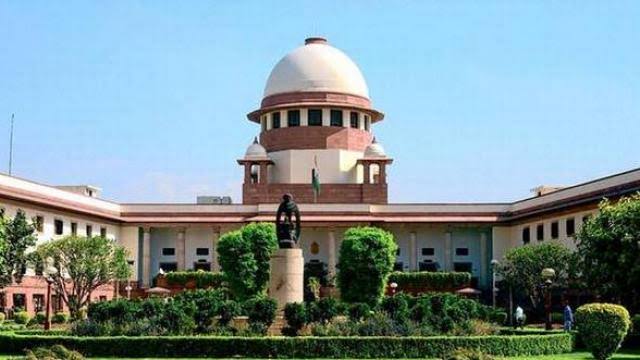
As per reports, after the Supreme Court verdict paving the way for the construction of a Bhavya Ram Mandir at Ram Janmabhoomi was announced, VHP’s International General Secretary, visited Yogi Adityanath’s house and told him that the Ram Temple was ‘the fruit of labour’ of the two generation of Gurus of the Chief Minister, Mahant Avaidyanath and Mahant Digvijay Nath of Gorakhnath Muth, and it was fitting that the temple would be built during his tenure as Chief Minister.

The only event of note that happened during the lifetime of Mahant Digvijay Nath was the installation of the Murtis. It is also said that he was the chief architect of the plan. It is also said that Mahant Digvijay Nath was the first to realize that the Ram Janmabhoomi Movement had the potential to unite Hindus under a single banner. As it were, the Murtis were installed after a nine-day recitation of Tulsidas’ Ramcharitmanas which was organized by the Mahant himself.

KK Nayar went on to contest elections on a Jan Sangh ticket and was elected to the Lok Sabha as their representative. According to a report on the Wall Street Journal, a disciple of Baba Abhayram Das told the journalist that he was told by his Guru that K.K. Nayar and Guru Dutt Singh, who was also fired from service, worked with his Guru on how the Murtis may be installed within the Masjid. It is also said both, Singh (the Faizabad city magistrate at the time) and Nayar were aware how furious the Nehru government would be and had made up their minds that they would rather resign than remove the Murtis.

The story that began that night culminated eventually with the verdict on the 9th of November, 2019. Over the centuries, a countless number of individuals have fought for Ram Janmabhoomi. In Independent India, the struggle was rekindled by these individuals. The spark that was lit on the fateful night of Winter, 1949 would eventually alter the future of the entire country. It could verily be argued that the rise of Hindutva from a fringe ideology in the corridors of power at the time of independence to becoming the greatest political force in the country began on the 23rd of December, 1949.

Sources: The Liberhan Commission Report, media reports

All 17 ‘rebel’ MLAs who were disqualified will join BJP: Karnataka CM BS Yediyurappa

Within hours after the Supreme Court paved the way for the disqualified Congress and JD(S) legislators to contest the December 5 by-polls for 15 seats in Karnataka, Karnataka Chief Minister BS Yediyurappa said they will be joining the BJP.


The disqualified ‘rebel’ MLAs will now officially join the Bharatiya Janata Party and are likely to contest the upcoming by-polls from the BJP ticket, as claimed by the CM.

Following the Supreme Court verdict, Chief Minister B S Yediyurappa had hailed the top court’s decision to allow the 17 rebel legislators to contest by-polls.

Read: BS Yeddyurappa takes oath as Chief Minister of the new BJP government in Karnataka

“The SC decision was much awaited. Our earlier Speaker colluded with Siddaramaiah and hatched a conspiracy, against which the Supreme Court has taken a clear decision. We welcome the 17 MLAs being allowed to contest. All preparations have started. Starting tomorrow, we will go all out and 101% we will win all the seats,” Yediyurappa told reporters.

Speaking to reporters in the morning, Deputy Chief Minister CN Ashwathnarayan had also confirmed that the ‘rebel’ MLAs will be joining the BJP on Thursday at 10.30 a.m in Bengaluru in the presence of Chief Minister B S Yediyurappa and BJP state President Nalin Kumar Kateel.

Earlier in the day, in a partial victory to the ‘rebel’ MLAs, the Supreme Court had allowed them to contest in the upcoming Karnataka by-polls. However, the apex court had also upheld former Karnataka Speaker’s order to disqualify 17 ‘rebel’ Congress and JD(S) MLAs.

The Supreme Court has quashed the order of former Speaker KR Ramesh Kumar, who had disqualified the MLAs from contesting elections until the term of the current assembly, till 2023. Fourteen rebel MLAs of the Congress and three of the JDS were disqualified under the anti-defection law by the Speaker in July.

The by-polls to 15 out of 17 Karnataka assembly seats, which became vacant following the disqualification of MLAs, are scheduled to be held on December 5. The by-polls will not be taking place at two out of the 17 vacant seats — Rajarajeshwari Nagar and Maski as separate election petitions challenging the results of the 2018 elections are pending in Karnataka High Court.

Documents reveal hideout of slain former ISIS chief Baghdadi had Internet connection sourced from Turkey

In a stunning revelation by the journalist Jenan Moussa, the compound where Baghdadi was holed up and later died by detonating a suicide vest had an Internet connection. Baghdadi was hiding in a nondescript compound in the Barisha town of Idlib district in northern Syria.


The Internet connection was bought by the owner of the compound-Abu Muhammad al-Halabi via a local Internet provider in Idlib city. Internet reaches Barisha town in Syria from Turkey. From Barisha, the Internet reaches Idlib through several antennas. Through Idlib, with the use of several antennas, the connection reached the Barisha town where former ISIS chief had taken refuge. Baghdadi’s compound was 5 kms away from border separating Turkey and Syria.

According to Moussa, the Internet connection was subscribed and bought under the name of the compound owner-Abu Muhammad al-Halabi. The cost of the connection was 5000 Syrian pounds per month that are equivalent to USD 8 per month. According to the documents, the Internet connection was activated on February 1 this year. It was still active when the US troops attacked the compound in the wee hours of October 27, 2019.

Read: Washington Post glorifies ISIS chief Abu Bakr al-Baghdadi in its obituary, changes headline after public backlash

The username of the connection was ‘mhrab’ and hours before the US attack, the residents of the compound had accessed Internet 7 times for the total of 1 hour 29 minutes and 34 seconds.

The documents show that around 211 GBs of download was consumed so far while 11 GBs were uploaded via the Internet connection.

Though the documents do not conclusively prove that Abu Bakr Al-Baghdadi himself was using the Internet but it does show that the compound where he had taken shelter was connected to the Internet sourced from Turkey and it was used by the residents until 12 hours before the US raid took place.

Rising number of dengue cases: BJP protest against government inaction, workers allege manhandling by Kolkata police

The Kolkata police employed brute force against the protestors demanding action against the menace of dengue outside the Kolkata Municipal Corporation. The BJP on Wednesday had organised a rally in Kolkata to register their protest against the spike in dengue cases in the city and accused the incumbent Trinamool Congress of hushing up figures of dengue cases in the state.


Leading the rally, BJP state president Dilip Gosh told reporters, “The state government is deliberately trying to hide the actual number of dengue cases. They are more interested in concealing the actual number of dengue incidents than tackling the menace.”

The protest march was organised by BJP’s Yuva Morcha. It was started from the Central Avenue and culminated at the Kolkata Municipal Corporation headquarters. Police have stated that barricades were set up near Chandini Chowk Metro Station to stop the rally beyond that point.

BJP leader Rimjhim Mitra stated that despite having permission to carry out peaceful protests, male police personnel manhandled them. The police had also used water cannons to disperse the crowd.


Dengue is a water-borne disease, caused by a bite of a female infected mosquito. The dengue mosquitos prefer to breed in fresh stagnating water. When a mosquito bites a person who has dengue virus in his or her blood, the mosquito becomes infected with the dengue virus. An infected mosquito can later spread that virus to healthy people by biting them. Dengue cannot be spread directly from one person to another, and mosquitoes are essential for the transmission of the dengue virus.

According to the report by the state health department, about 44,852 dengue cases have been reported from Kolkata and its adjoining areas so far. As many as 25 people have died of dengue in Kolkata since January this year.

Uttar Pradesh: Imam amongst those arrested for hiding explosives inside mosque in Kushinagar, report suggests ‘something big’ was planned

The Uttar Pradesh police have nabbed four persons including a Muslim cleric in connection with a blast at a mosque in Kushinagar in Uttar Pradesh. As per Jagran report, the explosives were procured in April 2019 itself. One Haji Kutubuddin had reportedly told the youth who had stored the explosive that ‘something big’ is being planned. The explosives reportedly weigh around 8-10 kgs.

As per Jagran report, role of Haji Kutubiddin’s grandson Ashfaq’s role is also being investigated. Ashfaq and his wife are working with in the health department of the Indian Army and are posted in Hyderabad. It is believed Ashfaq was in Kushinagar when the blast took place on Monday and he reached the spot and immediately cleaned it up. Agencies are also investigating whether the explosives reached the mosque via Ashfaq.

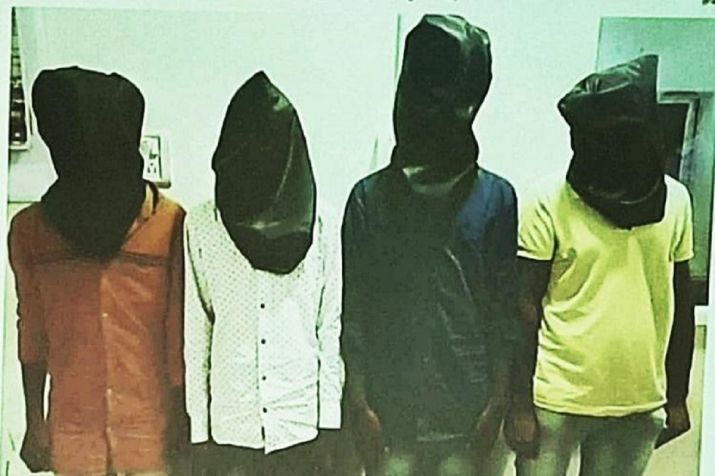
According to the reports, the UP police had registered an FIR against seven persons. Among the four arrested is the Imam of the mosque, Maulana Azmuddin, while three others are absconding.

Vinod Kumar Mishra, SP (Kushinagar) said that the others arrested are Izhar, Aashiq and Javed, who are residents of the Bairagi Patti village. The Uttar Pradesh police are yet to ascertain the motive behind the blast that occurred at the mosque on Monday.

Read: Mosques in the valley under scanner, Amit Shah’s Home Ministry seeks the details of mosques in Jammu and Kashmir

According to the forensic reports, the explosion was caused by explosives stored in the mosque. Initially, it was believed that the blast was caused by an explosion in an inverter battery. However, it further investigation had revealed that it was not the case.

ATS Gorakhpur, intelligence agencies and Local Intelligence Unit (LIU) teams have joined the investigation. During interrogation, the cleric admitted that he and some other youths had kept the explosives in the mosque.

The blast took place in Bairagai Patti village here on Monday afternoon. The explosion was strong enough to rip apart doors and windows in the mosque.