Home Blog Page 908

Home Minister Amit Shah launches e-Sakshya, Nyaya Setu, Nyaya Shruti and e-Summon apps for the 3 new criminal laws, the apps will strengthen technical competency of the entire system

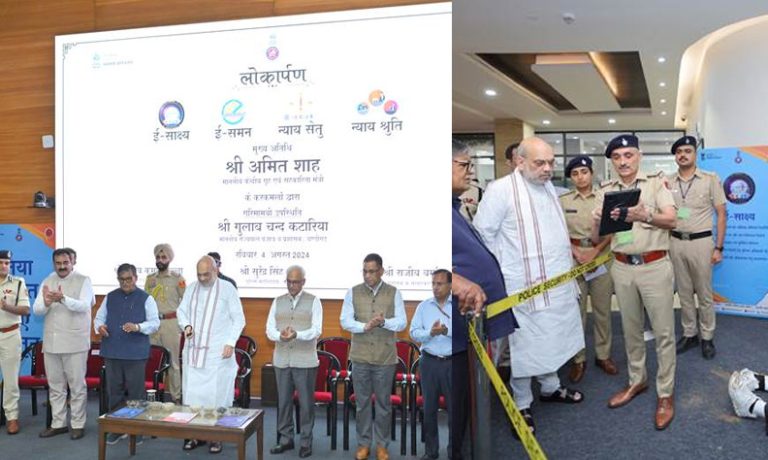
Union Home Minister and Minister of Cooperation, Amit Shah launched the e-Sakshya, Nyaya Setu, Nyaya Shruti and e-Summon apps for the three new criminal laws in Chandigarh today. The Governor of Punjab and Administrator of Chandigarh, Shri Gulab Chand Kataria, and the Union Home Secretary were among the dignitaries present on the occasion.

In his address, Shri Amit Shah said that everyone present here today has witnessed the implementation of the biggest reform of the 21st century. He said three new laws brought in by Prime Minister Shri Narendra Modi ji – Bharatiya Nyaya Sanhita (BNS), Bharatiya Nyaya Suraksha Sanhita (BNSS), and Bharatiya Sakshya Adhiniyam (BSA)- have the fragrance of Indianness and our ethos of justice. He said that it is the responsibility of the Constitution to give justice to every person and our criminal justice system is the means to bring this spirit of the Constitution to reality.

Union Home Minister said that laws made 150 years ago cannot remain relevant today. He said that there is a vast difference between the objectives of 1860 and today’s India, and interests of rulers of those times and the objectives of our Constitution today, but the machinery of implementation has remained the same. He said that for years, people did not get justice, instead the justice system was blamed for only giving newer dates of hearing. Shri Shah added that gradually the trust of the people on our systems was getting eroded. That is why Modi government has done the work of implementing BNS instead of IPC, BNSS instead of CrPC and BSA instead of Evidence Act, he said.

Shri Amit Shah said that Prime Minister Shri Narendra Modi had spoken of Panch Pran from the ramparts of the Red Fort, one of which was to abolish all signs of slavery. He said that BNS, BNSS and BSA are laws made by the elected representatives of the people in the Indian Parliament and for the people of India. Shri Shah said that there is precedence to justice than punishment in the new laws, and are aimed at giving justice to the people, that is why they are not penal code but ‘Nyaya Sanhita’.

Union Home Minister and Minister of Cooperation said that after the full implementation of these laws, India will have the most modern and technology-enabled criminal justice system in the whole world. For this, he said, the Ministry of Home Affairs has made arrangements for training and skill development at various levels. He said that even before these laws were enacted, a decision was taken to set up a Forensic Science University and today forensic science universities are functioning in eight states of the country and forensic experts have started to be made available. He said that forensic science universities will be opened in eight more states, which will provide 36 thousand forensic experts annually.

Shri Amit Shah said that these laws provide for mandatory visits by a forensic team in offences carrying a punishment of seven years or more and technical evidence will also help in increasing the proof of conviction. He said that a Director of Prosecution has been arranged in these cases who will continuously monitor the entire process of prosecution. He said that the entire chain of Directors of Prosecution up to the district and tehsil level has been prepared and their powers have also been fixed.

Union Home Minister said that the technical capacity of our entire system will have to be increased for its complete implementation. He said that today e-Sakshya, Nyaay Setu, Nyaay Shruti and e-Summon apps have been launched. He said that under e-Sakshya, all videography, photography and testimonies will be saved on the e-evidence server, which will also be available in the courts immediately. Under the e-Summon, it will be sent electronically from the court to the police station and also to the person to whom the summons is to be sent. Police, Medical, Forensic, Prosecution and Prisons are interlinked together on the Nyaay Setu Dashboard, which will provide the police with all the information related to the investigation in just one click. Through Nyaay Shruti, the court will be able to hear witnesses through video conferencing. This will save time and money and also settle the cases faster.

Shri Amit Shah said that the Modi government has taken many initiatives for the smooth implementation of these three new laws. He said that a lot of work has been done from CCTNS to training of SHOs and integration of FSL. He said that technology has been made the main pillar of this entire system. He said that in Chandigarh alone, 22 IT specialists and 125 data analysts have been placed. 107 new computers, speakers and two web cameras have been installed in all police stations, 170 tablets, 25 mobile phones and 144 new IT constables have been recruited. Shri Shah said that the first administrative unit in the country is likely to be Chandigarh having 100% implementation of the new criminal laws. Shri Shah said that those who imbibe the teachings of Swami Vivekananda, from ‘self’ to ‘selflessness’, are the real wisemen, and our cyber-soldiers have worked to realise it.

Union Home Minister said that our campaign against drug addiction is not just a government campaign but it is a campaign to get our new generation out of drug addiction. He said that by removing the stigma of those who are in the grip of drugs and their families, we should treat this disease and spread awareness about it.

Shri Amit Shah said that through these three new laws, India’s criminal justice system is witnessing the biggest reform of the 21st century. He said that technology has been included in these laws in such a way that it will cater to the requirements of the next 50 years. Shri Shah said that citizen-centric laws have been made according to the spirit of our Constitution and after their full implementation, it will be possible to get judgement up to Supreme Court within three years.

Union Home Minister said that citizens have as much responsibility to bring awareness about these laws as the Ministry of Home Affairs, state governments or judges. The Home Minister requested the people of Chandigarh to seek official clarification from the Ministry of Home Affairs, Government of India or the Chandigarh Administration on the misconceptions being spread about these laws. He appealed to everyone to stay away from rumours and make active and constructive contributions towards the implementation of these laws.
Lifetime imprisonment for love jihad, CM’s permission for inter-religious land sale, domicile policy in govt jobs: Himanta Biswa Sarma announces several new laws in Assam

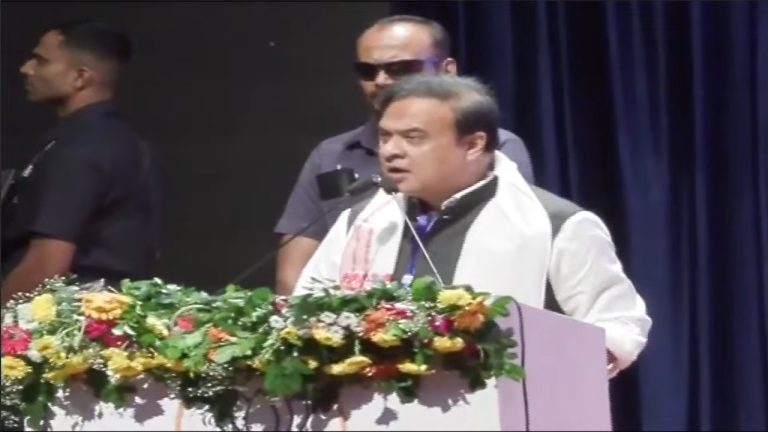
Assam Chief Minister Himanta Biswa Sarma on Sunday announced that his govt will bring a stringent law against Love Jihad, with lifetime imprisonment as punishment. He also announced a domicile policy for jobs, restricting govt jobs only to those born in Assam, and restrictions on land sale to Muslims.

CM Sarma made these announcements while addressing a state Executive meeting of BJP in Guwahati. “We will bring a new law in the next few days, to convert the punishment for love jihad to life imprisonment”, he said amid applause from the audience at Srimanta Sankardev Kalakshetra in Guwahati.

He also announced new law to protect land owned by indigenous people in the state. He said that a new law will be brought to restrict inter-religious land sale. He said that if a Muslim wants to buy land owned by a Hindu or vice-versa, chief minister’s permission will be required. The land transfer can happen only after taking permission from the CM, he emphasised.

He also announced a special provision for areas in undivided Goalpara district, where sale of land to ‘people of a specific community’ will not be allowed at all. He said that people in the area have become minority, and this law will be implemented to protect the remaining land owned by indigenous people.

The CM also announced another law to protect the land rights of tribal communities, including small pockets inhabited by tribals and other backwards people. This law will establish micro tribal belts and blocks in such areas in the state.

Himanta Biswa Sarma had promised 1 lakh govt jobs before the elections, and his government is set to exceed that promise. Today he announced that a domicile law will be implemented to reserve the govt jobs only to those who were born in Assam. He said that the move is aimed at addressing the state’s changing demography, which is a “huge concern” and a “matter of life and death”.

CM Sarma said that the new domicile policy will be brought in the next two months, which will clearly say that only those who were born in Assam will be eligible for govt jobs.

Announcing another initiative, the chief minister announced another law to protect the land owned by religiously important sites in Barpeta, Bordowa and Majuli. As per the new law, only local people in these places will be allowed to purchase land in these places. He said that even people from other places in Assam would not be allowed to settle in these places by purchasing land. He added that the govt is open to add more places to this provision on the suggestion of people.

“We can’t push anyone to Bangladesh, but we will take every step within our power to protect our future,” the CM said.

End protests or you will be shot dead: Pakistani defence forces threaten Baloch Yakjehti Committee activists over Gwadar sit-in

0

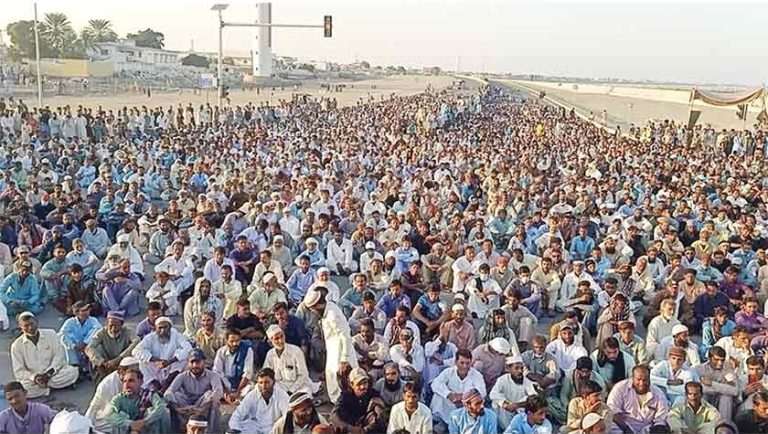
The Pakistani defence forces have allegedly issued threats to the leaders of the Baloch Yakjehti Committee (BYC), warning that they will be shot dead if the sit-in at Gwadar is not ended soon, The Balochistan Post (TBP) reported.

Reportedly, the Gwadar protest, which was planned as a one-day event on July 28 titled the Baloch National Gathering or the Baloch Raaji Muchi, has now been extended to eight days and is facing state violence and brutalities of the Pakistani defence forces.

A government delegation warned BYC leaders, including Mahrang Baloch and Sammi Deen Baloch, that they would be shot if the protest continued, reported The Balochistan Post.

The threats were made by an officer from Pakistan’s Inter-Services Intelligence (ISI), who has been stationed at the Deputy Commissioner’s office in Gwadar and has been given a task to sabotage the Baloch Raaji Muchi along with the sit-in at Gwadar.

These threats to the top leadership of the BYC are witnessed when negotiations are being held between BYC and authorities of Balochistan but authorities are using them as delaying tactics to intensify its crackdowns on the Baloch community.

The BYC has demanded that First Information Reports (FIRs) be registered against the people who have killed and injured Baloch protestors during the Baloch National Gathering (BNG). The same list of demands also urged for the release of all detained individuals alongside BNG.

The BYC leadership has also called for the withdrawal of FIRs against participants and demands assurances of no further harassment detentions and restoration of the internet services.

Although authorities have suggested that these demands will be met, recent incidents have once again intensified tensions, The Balochistan Post reported.

Earlier on Friday, Noshki, security forces, orchestrated open fire on a BYC rally, which resulted in one death and multiple injuries to the protestors.

In another incident in Karachi, the police detained several BYC protesters, including women, during a demonstration against Pakistan.

As of now, the BYC has urged the people to continue their peaceful protests against the brutalities of Pakistan’s defence forces. Meanwhile, Mahrang Baloch, the central organiser of BYC, declared on Friday that protests and sit-ins would continue across Balochistan until their demands are fully implemented.


 (This news report is published from a syndicated feed. Except for the headline, the content has not been written or edited by OpIndia staff)

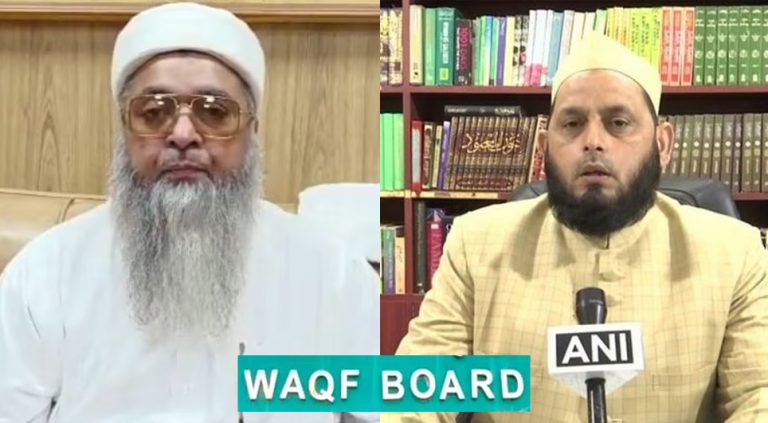
There should be no politics on it: All India Imam Organization Chief supports amendment of Waqf Board Act, AIMPLB member Maulana Khalid Rasheed opposes

Amid reports that the Centre is planning to amend the Waqf Board Act, All India Muslim Personal Law Board (AIMPLB), member, Maulana Khalid Rasheed Farangi Mahali said that the government should consult and take the opinion of the stakeholders before making any amendments.

Maulana Mahali said, “Our ancestors have donated a large part of their property and they have made it a Waqf under Islamic law. So as far as the Waqf law is concerned, the property must be used only for charitable purposes for which the Waqf has been done. And it is a law that once a property is made a Waqf, it cannot be sold or transferred. As far as the management of properties is concerned, we already have the Waqf Act 1995 and then some amendments were made in 2013. Currently, we do not feel that there is any need to make any kind of amendment to this Waqf Act and if the government feels that there is any need, then the government should consult and take the opinion of the stakeholders before making any amendment. Everyone should keep in mind that about 60 per cent to 70 per cent of the waqf properties are in the form of mosques, dargahs, and graveyards.”

Notably, the central government is likely to bring a bill to curb the powers of the Waqf Board over assets.

Earlier reports suggested that the government was looking to amend the Waqf Act.

According to the reports, the Centre is likely to bring 40 amendments to the Act in the next Parliament sitting.

On the other hand, supporting the amendments, Imam Umer Ahmed Ilyasi, Chief Imam, All India Imam Organization said that it is the need of the hour to do amendment and there should be no politics over it.

“The amendment is a part of the process that keeps on happening from time to time. Amendments have been made in the Waqf Act earlier also. It should be taken care of that the dignity of Waqf should not be harmed. It is the need of the hour to do amendment and there should be no politics over it. There should be a discussion on it. What did Asaduddin Owaisi or other opposition leaders say when amendments were made during the previous governments? The opposition should not protest against everything. There should be a discussion on it rather than politics,” he said.

Reacting to the same, Former Union Minister of Minority Affairs in the UPA government, Rahman Khan said that he hopes that the Centre will not amend the act without proper discussion.

“They (Central government) are going to amend substantially and the impression given is that Waqf properties will be taken away without enquiry, or investigation. The impression is created by the government itself and various authorities that the Waqf board has unlimited powers to declare any property as a Waqf board. It is an exaggeration, Waqf board can’t do that. I hope that the government will not amend the act without proper discussion and looking at all aspects,” Khan said.


 (This news report is published from a syndicated feed. Except for the headline, the content has not been written or edited by OpIndia staff)

Explained: ‘Nazul lands’ and the controversy surrounding the Bill passed by the Yogi govt in UP

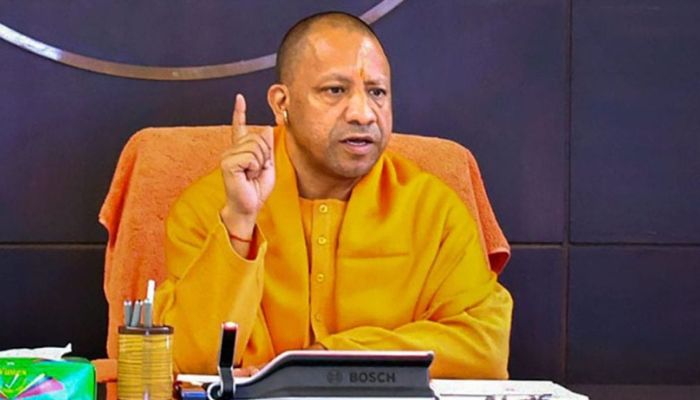
On Wednesday (31st July), the Yogi Adityanath-led-BJP government passed the Uttar Pradesh Nazul Properties (Management and Utilisation for Public Purposes) Bill in the State Assembly.

The development came three months after the government notified an ordinance, preventing the conversion of ‘nazul land’ into freehold in favour of a private person.

The concept of ‘Nazul land’ came into existence during the British era when the colonisers took away lands belonging to defeated kings. After India gained Independence in 1947, the Britishers left the country but the ownership of such lands remained in dispute.

The kings couldn’t provide documentation of their prior ownership and such lands came to be known as ‘nazul.’ Although such lands are owned by the State governments, they have been given on lease to poor people, hospitals and government establishments for several decades.

An estimated 10,000-15,000 acres of land in Uttar Pradesh are classified as ‘nazul’, with 1200 acres of such land in Prayagraj alone.

The BJP government in Uttar Pradesh have been eyeing to free the ‘nazul lands’ from the land mafia, strongmen politicians and those who have violated lease rules.

In this regard, it had notified the Uttar Pradesh Nazul Properties (Management and Utilization For Public Purposes) Ordinance in March and passed the Uttar Pradesh Nazul Properties (Management and Utilisation for Public Purposes) Bill on 31st July.

The bill [pdf] ensured that ‘nazul lands’ remained under government control by cancelling applications and court proceedings related to transfer of such land to private individuals and institutions.

It also provided provisions to extend the lease for leaseholders, who comply with lease terms and regularly pay rent.

After the bill was passed in the Vidhan Sabha, the BJP government faced opposition from the Samajwadi party, Congress as well as its allies.

Apna Dal leader Anupriya Patel and Nirbal Indian Shoshit Hamara Aam Dal (NISHAD) chief Sanjay Nishad objected to the enactment of the Uttar Pradesh Nazul Properties (Management and Utilisation for Public Purposes) Bill and dubbed it ‘unnecessary’ and ‘against the public sentiments’. 

The Opposition has claimed that the new law would lead to the eviction of long-standing residents and displace people who use ‘nazul lands’ for livelihood.

Amid the fearmongering about the Uttar Pradesh Nazul Properties (Management and Utilisation for Public Purposes) Bill, it was referred to the Select Committee of the Vidhan Parishad on Thursday (1st August).

Suresh Kumar Khanna, the UP Parliamentary Affairs Minister, has assured that no poor people would face eviction. He informed that existing leaseholders can get lease terms extended for up to 30 years if they are in good standing.

He further added that leaseholders who choose not to renew their lease can receive refunds from the government.

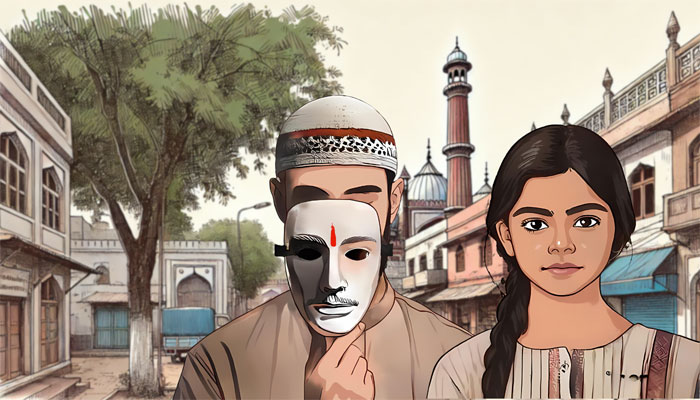
Uttar Pradesh: Mushtaq poses as Hindu man Raju, lures and kidnaps Hindu minor girl

A case of love jihad has come to light in the Agra district of Uttar Pradesh where a Muslim man has been accused of befriending a minor Hindu girl using a Hindu name and later kidnapping her. The accused has been identified as Mushtaq. The incident took place on 30th July 2024. As per the reports, Mushtaq used to apply tilak on his forehead and tie a sacred thread (Kalawa) on his hand. He presented himself as a Hindu man named Raju. Hindu organisations staged protests after they came to know about it and gave an ultimatum to the police to recover the victim at the earliest.

As per reports, on 30th July, the father of a 14-year-old minor Hindu girl complained to the Sadar Police Station in Agra. In the complaint, the father said that his daughter studies in class 8. On 30th July, she went to school at 7 AM like every other day. However, on the way to the school, she met Raju alias Mushtaq who is a resident of Farrukhabad. Mushtaq lured the victim and took her away with him. The father of the victim has demanded strict action in the matter.

Based on the complaint of the father, Agra police registered an FIR against Mushtaq under Section 137(2) and 87 of Bharatiya Nayay Sanhita (BNS). OpIndia has a copy of the complaint filed by the father of the victim. Multiple police teams have been formed to search for the accused as well as to recover the victim. By the time this report was published, the accused was on the run. The police assured the family of the victim that they would arrest Mushtaq soon and recover the victim safely.

Mushtaq used to apply tilak and tie kalawa

As per media reports, Mushtaq lured the minor victim by posing as a Hindu man. He created an ID on Instagram under the guise of Raju. He used to call himself a Hindu and used to wear a Tilak on his forehead and tie Kalawa on his hand. Mushtaq worked as a driver for a doctor in Agra. The victim’s family also said that their daughter took gold and silver jewelry from the home when she left on the day of the incident.

Kasab was wearing Kalawa

Notably, this practice of wearing kalawa by non-Hindus while committing crimes is nothing new. Pakistani terrorist Ajmal Kasab was wearing a Kalawa and had Hindu ID cards with him when he and his fellow terrorists attacked Mumbai on 26th November 2008. They aimed to blame Hindu organisations for the terrorist attack. Thanks to the heroic act of Tukaram Omble, a Mumbai police constable, who sacrificed his life and caught Kasab alive, their plan was foiled. Kasab was the only terrorist caught alive during the terrorist attack and he revealed his true identity during interrogation.

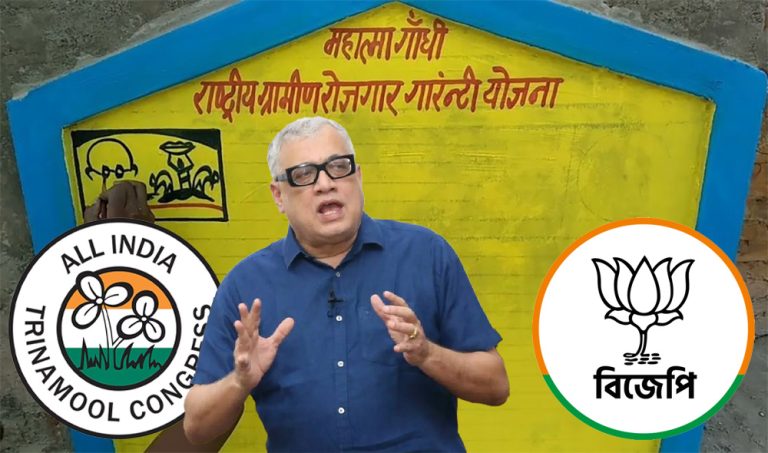
TMC’s habitual engagement in duplicity and capriciousness: BJP responds to Derek O’Brien’s allegations on frozen MGNREGA funds, says payments will be made after Bengal govt takes action on corruption

After TMC MP Derek O’Brien claimed that central govt has finally admitted that West Bengal has not been given any fund for MGNREGA scheme, the BJP hit back at the TMC govt, saying that funds have been frozen due to corruption charges. In a tweet posted on 4 August, the TMC leader said that his party has been demanding “a White Paper to prove what BJP govt has paid Bengal since loss in 2021 Elections.”

He posted a table showing the number of households who completed 100 days of employment under the Mahatma Gandhi National Rural Employment Guarantee Act, which showed that the number for West Bengal is zero. Although it does not show funds allocated for the states, the fact that no family completed the required 100 days of work under the scheme, it means no fund was released to West Bengal.

Responding to Derek’s tweet, West Bengal BJP posted a detailed tweet explaining why funds under the scheme has been stopped for the state. They said that while Derek O’Brien blamed the centre for not releasing funds to Bengal under MGNREGA, the fact is that there is a temporary cessation of funding under MGNREGA for West Bengal effective since Mar 9, 2022. The reason of this not arbitrariness or political malice, but this is due to “misgovernance of the unaccountable and corrupt Mamata Banerjee administration,” Bengal BJP said.

As per the tweet by them, repeated audits on the scheme in the state have revealed substantial financial irregularities by TMC administration, including the misappropriation of Rs 537.05 lakh, and as a result funds have been frozen for the state under the scheme. They said that irregularities have been detected in Purba Bardhaman, Hooghly, Darjeeling, and Malda.

BJP also added that the responses of the Mamata Banerjee government have been deemed insufficient, and the state govt has not complied with directives for corrective measures.

“Despite repeated requests, TMC Govt’s responses, including the Action Taken Report (ATR) submitted on Jun 19, 2019, were deemed deficient and insufficiently contrite. The State Govt’s persistent non-compliance with the Central Govt’s directives to institute corrective measures precipitated the invocation of Section 27 of the Mahatma Gandhi National Rural Employment Guarantee Act, 2005, thus justifying the fund embargo,” they said.

They added that on 25 July this year, the Central Govt reiterated its demand for an updated status on the disciplinary actions and recovery processes pertaining to the misappropriated funds. Out of ₹537.05 lakh misappropriated amount, only ₹161.64 lakh have been recovered. BJP added that this “highlights a persistent problem with financial accountability and transparency.”

The tweet by Bengal BJP ended with by saying, “the Central Govt’s actions are underpinned by an unwavering commitment of Modi Govt to safeguarding public exchequer’s integrity, ensuring that public funds are disbursed and utilised with the utmost propriety, without any exploitation. It is high time for TMC to finally accept their involvement in the debacle and take action against the Chief of the Loot – Mamata Banerjee!”

Notably, while Derek O’Brien tried to insinuate that central govt has admitted only now that funds under MGNTREGA for WB have been stopped, the fact is that it is already well known since 2022. The centre invoked the Section 27 of the employment guarantee act to stop releasing funds to Bengal due to non-compliance of rules.

After irregularities were detected, no fund has been released for West Bengal under MGNREGA since March 2022, and it will not be lifted unless the state govt takes corrective measures. As per state govt officials, ₹6,913 crore is due to the state under MGNREGA since FY 2021-22.

Central govt has said that the payments will be made to West Bengal when the Centre is satisfied over transparency in implementation of the scheme in the state. CM Mamata Banerjee has rejected the CAG audit report that pointed out the irregularities, and called it ‘false propaganda’.

Notably, the Calcutta High Court in January this year formed a team to verify MGNREGA job cards in Bengal so that genuine beneficiaries can be identified.

Gujarat: Abdul arrested in Bharuch for publishing pamphlet justifying beef consumption, 3 other Muslim youths arrested in the area for vulgar comments on Hindu deities

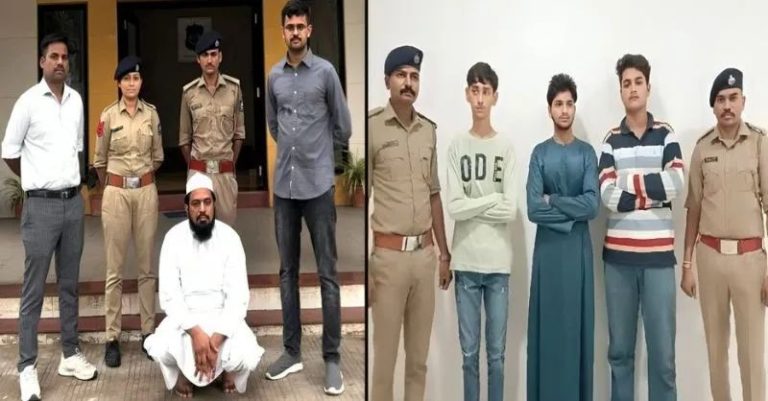
Bharuch taluka police have arrested a Muslim man Abdul who published pamphlets with false and misleading interpretations of Hindu theological verses. He was misinterpreting them to justify cow slaughter and consumption of beef. The accused interpreted the Hindu verses in a completely wrong way, due to which the sentiments of the Hindus were hurt. After receiving a complaint about the incident, the Bharuch taluka police launched an investigation and arrested the accused Abdul Aziz Ahmed Patel Mufti. In another case from the area, the Bharuch police also arrested 3 other Muslim men for making vulgar comments on Hindu deities.

According to further details, a Hindu man found an 18-page pamphlet in the middle of the road at Kantharia village in Bharuch taluka. The pamphlet included several Sanskrit verses. Upon studying the pamphlet, the person found that it contained hurtful text about Hinduism. The pamphlet was titled ‘Vegetarianism in terms of religion and nature’. In the pamphlet, text was written on the subject of cow slaughter, eating beef, and Muslim customs. Everything in this 18-page pamphlet was against religion and violated the faith and sanctity of Hindus.

Misinterpretation of verses from Ramayana-Mahabharata, Upanishads, Puranas and Manusmriti

The pamphlet misinterpreted the Sanskrit verses of the great texts of Hinduism, the Mahabharata, the Ramayana, the Manusmriti, the Upanishads and the Puranas. It clearly displayed a conspiracy to mislead the common people by trying to justify cow slaughter and consumption of beef. Apart from this, it also insulted the sentiments of Hinduism with topics like ‘cow slaughter and cannibalism – Hindu society’.

The Hindu man then contacted the Bharuch taluka police and gave details about the incident. He also gave that pamphlet to the police. The police conducted further investigation in this direction and found that a person named Abdul Aziz Ahmed Patel Mufti, who lives in Tipu Sultan Colony in Kantharia, had written and printed this pamphlet. After that, the Bharuch taluka police immediately arrested the accused Abdul.

Three others arrested in Bharuch for vulgar comments on Hindu deities

Along with this, another incident which hurt the sentiments of Hindus also came to light in the area. On a social media platform, three persons, Mohammad Waheed Sajid Hussain, Mohammad Hasan Sulehbaba Sheikh, and Mirza Mohammad Sani Mohammad Yusuf Sheikh used vulgar words about the gods and goddesses of Hinduism. The incident came to light after screenshots of their chat went viral. The police took action after a Hindu man reported the incident to the Bharuch Cyber ​​Crime Police Station.

After further investigation about the incident, information about the three accused was collected with the help of technical surveillance. After that, the police arrested the three accused and took further action.

It may be noted that in Bharuch itself, recently a leaflet went viral on social media during Eid, which was released by Darul Uloom Barakat Khawaja, an Islamic organisation in Bharuch. The pamphlet also mentioned the slaughter of cows along with other animals, which sparked outrage. After this incident, the responsible cleric was also arrested.

Pakistan: Karachi activists furious over state crackdown on Baloch protesters

0

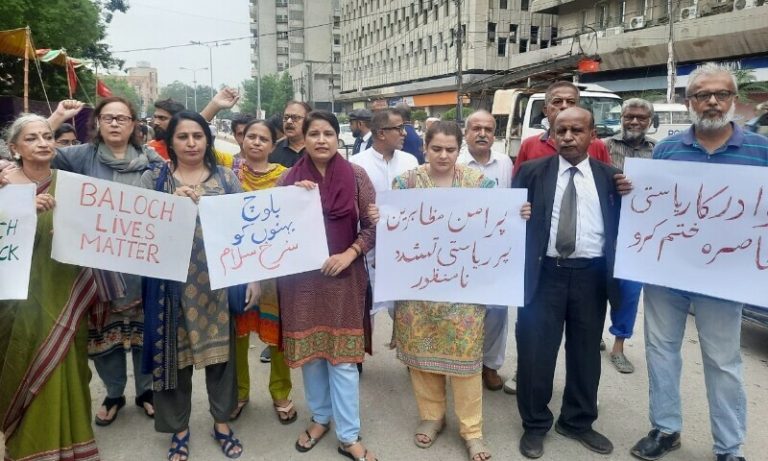
A massive gathering by civil society activists took place at the streets of Karachi on Saturday, against the state crackdown on Baloch protesters in Sindh and Balochistan, Dawn reported.

The protestors chanted slogans against the government’s “cowardice” and “hypocrisy”, and also called out the state to “stop the siege of Gwadar.”

Their voices, the loudest among the three demonstrations underway in the area, were undeterred even as the city’s humidity levels peaked.

“We won’t back down until and unless the oppression stops,” said Virsa Pirzado, one of the protesters and a member of the Sindh Commission on the Status of Women.

“The state clampdown is unacceptable, the way they arrested them is unacceptable, the way they beat up Baloch women and children is unacceptable,” Dawn quoted the protestor as saying. “The issue of missing persons is genuine.”

Earlier on Friday night, several workers of the Baloch Yakjehti Committee (BYC) were arrested when they gathered near the Arts Council roundabout to stage a rally in protest over incidents of alleged torture and detention in Gwadar, as reported by Dawn.

The BYC accused the police of manhandling participants of the rally and alleged that around 50 workers, including women, were detained, when they tried to march on the KPC.

On the other hand, the police claimed that organisers violated the ban on holding any unlawful assembly in the Red Zone, adding that 14 male activists were booked under the relevant sections of the Pakistan Penal Code while women protesters were released immediately.

But activists who gathered for the release of these detainees today claimed that the number of those arrested was largely under reported.

“Last night, around 150 Baloch protesters, including students, were subjected to a baton charge and arrested for nothing. They were just lodging a peaceful protest,” Riaz Ahmed, a Karachi University professor, said.

“Several of those arrested have not yet returned home; their names are not in the first information reports and we fear they will be declared missing persons,” he said.

Ahmed highlighted that peaceful Baloch protesters were being pushed into a corner. “Where is the civilian government? All these political parties only speak up when they are benefiting. But what about the public? Who will listen to them?” he questioned.

The professor, who has spearheaded several protests in the city, added that he was prepared to be arrested today. Ahmed’s sentiment was shared by other protesters as well.

Senior journalist Mujahid Barelvi also lambasted the Pakistani authorities for imposing a four-day ban on holding public gatherings and rallies within the city’s Red Zone.

“I have written an application to the KPC’s governing body and I have demanded that as long as their ban remains, the Press Club be declared a Red Zone for any government official,” he stated as his fellow demonstrators cheered him on.

According to Dawn, what started as a small protest soon expanded into a crowd. Soon, the demonstrators decided to march towards the Artillery Maidan police station — which is located a short distance from the Press Club — and check on the status of the detainees.

They were, however, stopped by a large contingent of police, both men and women officers, who held batons in their hands.

The protesters expressed their objection to this. Iqra Baloch said: “How is it possible that the police are never present anywhere but at a protest, especially when it concerns the Baloch people?” she asked.

On the other hand, activist Anum Khan emphasised that the protest in Gwadar was being held to speak up against the chronic problem of ‘enforced disappearances.’

“But the response by the state in the form of intimidation and force…this shows their weakness, not their strength,” she added. 

(This news report is published from a syndicated feed. Except for the headline, the content has not been written or edited by OpIndia staff)

Paris Olympics: Harmanpreet Singh-led 10-men Indian hockey team defeats Great Britain in shoot-out to advance into semi-finals

0

Harmanpreet Singh-led Indian men’s hockey team defeated Great Britain in a thrilling quarter-final match at the Paris Olympics and advanced into the semi-final on Sunday.

As the score scores were level 1-1 after the end of regulation time, India won the shoot-out 4-2 and made the semi-finals.

In the second quarter of the quarter-final match, India took a 1-0 lead after skipper Harmanpreet Singh converted a penalty corner. India had four penalty corner opportunities while Great Britain had five in the second quarter.

Earlier in the second quarter, India’s Amit Rohidas was given a red card after he raised his stick and caught opponent William Calnan’s head. India played the rest of the match one-man down.

Before half-time, Great Britain’s Lee Morton scored the equaliser and gave his side a moment to breathe. In the second half, Great Britain failed to score, despite multiple opportunities.

Meanwhile, in the shoot-out, India scored all four of their attempts. While Indian goalkeeper PR Sreejesh saved one helping India to move into the semis of the tournament.

Earlier in the previous match, The Indian men’s hockey team bounced back in the men’s competition with a 3-2 win over Australia in their Pool B match at the ongoing Summer Games.

Two names shined bright on India’s scoresheet in the first quarter, with Abhishek (12′) and skipper Harmanpreet Singh (13′) scoring within a space of two minutes at the Yves-du-Manoir Stadium. Thomas Craig (25′) however, converted a penalty corner to bring Aussies back into the hunt.

Harmanpreet scored his second goal in the third quarter starting in the 32nd minute. A late penalty conversion from Blake Govers in the 55th minute ensured a thrilling end to the contest in which India collected three points.

Currently, the Indian contingent has won three bronze medals at the Paris Olympics and all of them came in shooting.


 (This news report is published from a syndicated feed. Except for the headline, the content has not been written or edited by OpIndia staff)