Home Blog Page 5909

Laws will have no impact, Muslims will continue to have children: AIUDF chief Badruddin Ajmal on Assam two-child policy

As Assam government has decided to bring in two-child policy criteria for government jobs in an attempt to stabilise the population growth of the state, the All India United Democratic Front (AIUDF) chief Badruddin Ajmal on Saturday asserted that Muslims will not listen to anyone and will continue to produce children.

Read: Assam: No government jobs for people with more than two children after January 2021

According to the reports, AIUDF chief Badruddin Ajmal said that Muslims will continue to produce children and will not listen to anyone. “The government has brought this law to stop Muslims from having jobs. According to the Sachar committee, below 2 per cent of Muslims get government jobs. Literate people are now increasing among the Muslim community and they are working across the world,” Badruddin Ajmal said.

Badruddin Ajmal further added that their religion (Islam) and he himself personally believe that those who want to come to the world will come and no one can stop it. Hitting out at the BJP-led Assam government, Badruddin Ajmal said whatever laws the government make, they will have no impact on the Muslims.

“Tampering with nature is not good. Muslims will do whatever they want to bear children. Don’t shout later that we have more children. Don’t fight with nature,” said Ajmal.

Read: AIUDF chief Badruddin Ajmal abuses journalist, says he will smash the scribe’s head

Badruddin Ajmal further said, “On one side, the RSS chief Mohan Bhagwat asks to produce 10-10 children and on the other side, the government says that no government jobs will be given to the people having more than two children. First, they should decide what they want. They don’t follow what RSS said.”

The shocking statements from AIUDF chief Badruddin Ajmal come as a reaction to the Assam government’s new two-child policy. The Assam Cabinet last week decided to bar people with more than two children from having government jobs in the state after January 1, 2021.

The 126-member Assam assembly in September 2017 had passed a resolution adopting the ‘Population and Women Empowerment Policy of Assam’. According to the policy, the state government proposed to bar anyone with more than two children from contesting municipal and panchayat elections, getting government jobs and other benefits. had passed the “Population and Women Empowerment Policy of Assam” in September 2017.

Have other options if BJP doesn’t agree to 50-50 formula: Shiv Sena ups its ante in Maharashtra, attempts to negotiate with BJP

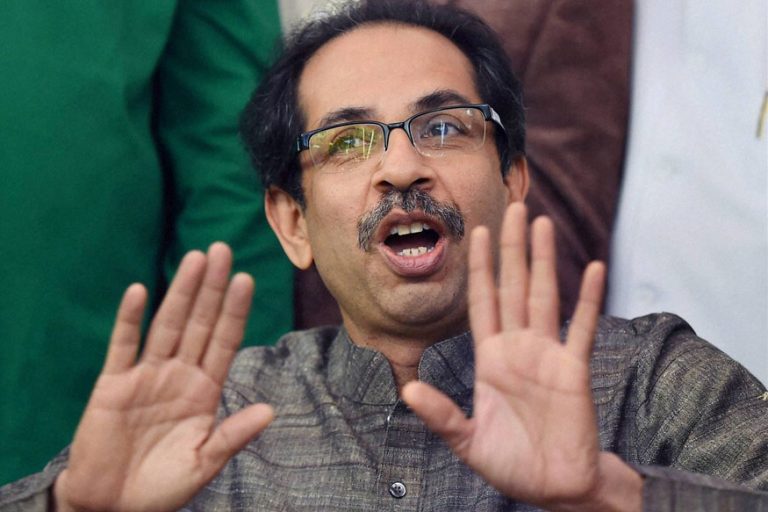
As BJP moves towards its second term in Maharastra, Shiv Sena which had announced in February to continue as BJP ally is now driving a hard bargain. After the Thursday Assembly elections result, Shiv Sena supremo Uddhav Thackeray has upped the ante over the ’50-50′ agreement he claims to have with the BJP.

After felicitating the new-elected Shiv Sena MLAs, the party supremo on Saturday told them that he has more alternatives to forming a government in Maharashtra if his demands were not met by BJP.

“The Shiv Sena and the BJP will form a government, keeping Hindutva as the central agenda. However, the government will be formed only on the basis of the 50-50 agreement that the BJP top leadership had promised. If they fail to do that, let me tell you, we have other alternatives before us,” Uddhav said today.

Though the Sena chief did not specify his ‘other choices’, he reminisced that the BJP had promised the 50-50 formula even before the Lok Sabha elections earlier this year. “And now for the post of the Chief Minister, unless the BJP clears the matter before us, that too in writing, we will not go ahead with any decision regarding the formation of the government,” Uddhav Thackeray said.

The Shiv Sena is demanding priority for its MLAs in the government’s Cabinet that is to be formed in the state Assembly.

Soon after the results were out, Uddhav Thackeray in a press conference had blustered that same discourse. Citing a pre-poll agreement with the BJP, Thackeray had said that based on the 50-50 formula agreed upon, inter-party discussions should be held and on that basis, Chief Minister of the state would be decided.

Shiv Sena president Uddhav Thackeray said that in the run-up to the Lok Sabha elections, he and BJP president Amit Shah had hammered out a “50-50 formula” based on which the two parties had agreed to select the next chief minister of Maharashtra. Uddhav Thackeray said, “It is now time to remind everyone about the formula and implement it.”

Though Thackeray had not divulged the modalities of his party’s agreed formula with the BJP, he did say that if need be, Home Minister Amit Shah will himself come to get the things sorted. Rumours are rife that the agreement between the two frenemies was about sharing the chief ministerial position for a period of 2.5 years. There are also rumours that say that the 50-50 formula may allude to the equal number of ministries in the cabinet for the two parties.

The BJP won 105 seats, and Shiv Sena 56 in the 288-member Maharashtra Assembly. While BJP is insisting that Devendra Fadnavis continues on the CM post, Shiv Sena wants to go ahead with the ’50:50′ formula agreed between the two parties prior to polls. With this discord, the fate of Devendra Fadnavis as the Maharashtra Chief Minister, as of now, hangs in the balance.

After BJP refuses to take support from Gopal Kanda, Swamy asks Congress to expel Shashi Tharoor for ‘abetting wife’s unnatural death’

Soon after BJP’ disclosure of not accepting the support of Lokhit Party leader Gopal Kanda to form the government in Haryana, Rajya Sabha MP Subramanian Swamy took to Twitter to ask Congress to follow it’s opponent’s suit and drop its loyalist MP Shashi Tharoor who has been accused in the death of his wife, Sunanda Pushkar.

Swamy said, “Now that BJP has bowed to public opinion by rejecting Gopal Kanda, will Congi also bow to public opinion by expelling from the party Mr Shashi Tharoor for a more serious offence of abetting his wife’s unnatural death?”


This statement by Swamy came in after Congress spokesperson Manish Tewari took a dig at the BJP saying that the saffron party will take support from anyone to form the government in the state even when the mandate is against them (hinting at Gopal Kanda). “Kanda, Batata, Baingan, Aloo -Sab Chalega BJP Ko – Sam Dam, Dand, Bhed- Sarkar Banani Hai BJP Ko – by all means foul – even when the mandate is against them. Party with a difference eh!” he had tweeted.

Ironically, though Congress had themselves reached out to controversial Lokhit Party leader Gopal Kanda for support, Congress had slammed the BJP for ‘accommodating rapists’ in the party. BJP has, however, cleared the air that they would not be accepting the support of Kanda to form the government in Haryana.

Read: Missed outrage by Media: Bhupinder Singh Hooda had appealed to Gopal Kanda for support 

For those unaware, Congress MP representing Thiruvananthapuram in Kerala was charged for the abetment of suicide and subjecting Pushkar to cruelty according to a 3,000-page charge sheet filed by the Delhi police in the case. Shashi Tharoor’s wife, Sunanda Pushkar, was found dead under mysterious circumstances in Delhi on January 17, 2014. The trial against Tharoor had begun on February 21, 2019.

Gopal Kanda, the Haryana Lokhit Party (HLP) chief and a much talked about Haryana MLA after the conclusion of the 2019 Assembly Elections, had extended support to BJP for the formation of the government which had created substantial outrage. However, while the BJP has now decided to form the government with the support of JJP, it is notable that Congress had extended support to Gopal Kanda in an attempt to form the government in Haryana.

In an interview to Indian Express, Bhupinder Singh Hooda had said, “The mandate of the people of Haryana is against the state government. I have already appealed to the entire Opposition that the people’s mandate should be respected and we should all join hands — whether it is the JJP, INLD, independents or Kanda’s HLP. Let us see how they respond”.

It is clear from the statement of Bhupinder Singh Hooda that Congress had approached Gopal Kanda for extending support to Congress for the formation of government in Haryana.

From what followed, it is only logical to assume to Gopal Kanda had refused to extend support to Congress but extended support to BJP instead. BJP has won 40 seats in the 90 seat assembly in Haryana, while the newly formed JJP won 10 seats. Congress won 31 seats, independents 7, while INLD and Haryana Lokhit Party won 1 seat each.

Interestingly, while Congress had reached out to Gopal Kanda for support, Congress had slammed the BJP for ‘accommodating rapists’ in the party. The BJP had notably never said that they would be accepting the support of Kanda when these statements were made. Kanda had, however, extended support to BJP.

Kanda was arrested in 2012 in the Geetika Sharma suicide case. The airline hostess had committed suicide and accused him of harassment in her suicide note and “misusing her”. She was employed at Gopal Kanda’s now-defunct MDLR Airlines. She had accused Kanda of being a “fraud” and a “shameless” man with “bad intentions” towards girls and said that he has “no shame and no guilt”. She said she had trusted Kanda and his aides but that was “costing” her “life”.

Read: From abetment to suicide to beating up a cricketer, read all the accusations against Gopal Kanda

Six months after Geetika Sharma’s death, her mother had committed suicide by hanging herself in the same room as her daughter. Gopal Kanda, meanwhile, was charged with rape, abetment to suicide and ‘unnatural sex’. The rape charges were later dropped. He remained in jail for a year and a half and was granted bail in 2014 after the charges of rape were dropped. He continues to face trial in the case which is now at the evidence stage.

The BJP has offered the Deputy CM post to JJP, while the BJP has retained the Chief Minister position with ML Khattar all set to return as the Chief Minister of Haryana.

Haryana and Maharashtra Assembly Elections 2019: Lessons and the role of the candidates, citizens and the media

State elections have concluded in the BJP ruled states of Haryana and Maharashtra. Maharashtra was a clear win for the incumbent BJP, under the leadership of Devendra Fadnavis. Haryana, facing the brunt of Congress fueled caste-politics was not such a straight game, even though BJP did emerge clearly as the largest party, still short of a majority by six seats. It was a time for the euphoric Congress-leaning media which discovered by the evening that the Congress ended up its tally with 31 seats and JJP with 10 seats.

The initial exuberance quickly gave way to swift melt-down once it became clear that adding up JJP and Congress will still not given the state a Government, being short of the halfway mark of 46 seats in a 90 Seats Assembly. The total of JJP plus Congress, falling short of the half-way mark at 41, proved that it was not easily possible to repeat a Karnataka in Haryana. By the end of the day, it was quite clear that the ML Khattar government fighting both incumbency and caste-politics, held a popular mandate which equalled the sum-total of the mandate obtained by the two of his challengers.

By the time, I settle down to write my thoughts on this election, it is Saturday, and the Haryana conundrum is already settled. The erstwhile Chief Minister of Haryana, Manohar Lal Khattar is all set to form another government in Haryana, in coalition with JJP, Dushyant Chautala joining in as the Deputy CM of the state. If all goes well, this will make a decade of BJP rule in traditional Congress State. The young chief, Dushyant Chautala, of a young eleven month old party, JJP, which ate into the share of the grand old Party, nibbling out a-third of grand old party, has learnt the lessons of Karnataka from the tears of HD Kumaraswamy and aligned with ideologically-driven BJP, carrying on with their allies for decades, often to the exasperation of their own supporters.

The media went into a frenzy of Archimedes Eureka moment when their theorems of caste politics appeared true in Haryana, and articles were written out quickly about the return of Jat politics as if it were a good thing to come back in modern society. There is no denying that it did come back, but that is no cause to celebrate. I for one was saddened by the return of caste politics and rightly or wrongly let my mind wander to the point, when the Mighty Mughals after the collapse of the empire of temple-breaking, Jaziya seeking and Beef promoting a regime of Aurangzeb self-propelled itself into the darkness of decline.

If one reads the history around that time, the majority Hindus had seen the worst of the persecution under Aurangzeb, as Akbar’s policies were replaced by fanatic ideology; Jats were almost as strong as the Marathas down south at that time under Shivaji. The Jats, in the North, stayed content collecting protection money from the Mughal Empire which remained only in the name after Aurangzeb, alienated from the majority section of the people it ruled over. Marathas, to my mind, looked at this as a civilizational battle and created a formidable empire. The model the jats then had vis-à-vis the throne of Delhi seems similar to what Hooda proposed, after declaring a rebellion, with the first family of Congress, resembling Mohammad Shah Rangila’s sham Mughal Empire of India. Congress is now simply a case of the centre which can no longer hold.

I am not sure if there is a pattern or design in the appointment of the leaders of caste with lesser influence by Narendra Modi in the states. But I am sure that in the long run, it plays a great civilizational role. By appointing a non-Patel in Gujarat, a non-Brahmin in the UP, a non-Maratha in Maharashtra, a non-Tribal in Jharkhand, a non-Jat in Haryana, the BJP has done two things. It has urged people to come out of the casteist politics of the Congress and asked them to judge their leaders on their honesty of purpose. Another thing it did was that in an India where Hindus have been pushed away for so long, by dividing them into caste lines, this allowed the larger Hindu population come together as a collective of not-so-influential castes, eventually making the once-dominant caste, find themselves standing isolated in the middle of Hindu and anti-Hindu forces.

In an ideological battlefield where one side throws its weight behind the morality of Ram and another calls him a myth, one side protects cow and another slaughters a calf in Kerala to make a point; the stronger castes found that the other smaller caste formation have consolidated as one around a less caste-oriented leadership placed on the state throne, and it became pertinent for them, to move to one side of the faith eventually forming a monolith based on faith. In the longer run, the irrelevance of caste is one great service given to the nation, for which BJP will always be remembered. The way for BJP is for it to be more of the BJP which has emerged, not the less of it. The way for the Congress ahead is to not think of Laloo Prasad Yadav and Mulayam Singh Yadav of caste politics, cleverly camouflaged under the fancy term of social-engineering, as their ideological heroes, rather think of the ways to return to the times of Babu Rajendra Prasad, KM Munshi, Patel, Tilak and Malviya. If that means dumping the current anti-majority leadership they have, so be it.

The media has come out as an evil axis of opposition politics, lamenting the inability of the Congress to form the government in either of the two states. It is amusing that the progressive media voices find happiness in what they perceive of the return of regressive caste politics, which forgives corruption of caste leaders in Haryana and which even celebrates the nefarious connect of the wily politicians with the crime syndicates as in Maharashtra in the name of caste. It is as if when a Robert Vadra goes out to acquire lands through corrupt means, Jats do not lose the means of employment and as if when a Dawood unleashes 26/11 on Mumbai, Marathas do not suffer. The way they celebrate that the results show a defeat of nationalism is at once amusing and appalling. What kind of country has a press which hates the idea of nationalism and celebrates what it perceives to be the defeat of nationalism?

As has often been said, in their zeal to oppose Narendra Modi, somewhere down the line, they started opposing India. Most of the mainstream analysis of the election demonstrates that. This tendency to consider things in binary does nobody any good. It is not either-or between nationalism and the economy. A strong national pride is always boosted by a strong economy and vice-versa. It was on the back of strong nationalistic feeling that the Japanese economy came up even stronger post-world-war. The only economy which does not need nationalism as its fuel is the black economy. Every other form is supported and propelled by a strong sense of national pride and purpose. It is stupid to think that nationalism works counter purpose to the economy and one must be shunned for the other. The factory workers, the engineers, the accountants, the doctors- they too are performing their patriotic duties as much as the soldiers on the border. Nationalism is beyond visible motifs and any sign of reduced nationalism should because of worry not of celebration because sooner or later it will reflect in all aspects of national life.

If Congress needs to revive, it needs to stop listening to the media. It needs to answer BJPs nationalism with more nationalism. Opposing BJP on Article 370 was not the promise to bring it back, rather it should have been to remove 370 earlier than BJP promised. The job of the opposition is not to oppose everything the party in power promises. Oftentimes, it is to promise more aggressive, stronger strides towards the same objectives. BJP has things in their manifesto. Those have been accepted by the people who vote for Narendra Modi in larger and larger numbers, election after election. You can oppose the majority ambition reflecting in BJP manifesto or adopt them with a pledge of better implementation. The media in India has its own political design and agenda. They will, therefore, give a bigger coverage to a party like AAP which performed worse than NOTA in both Maharashtra and Haryana than say, a JJP.

Congress got lesser seats in Maharashtra than the Dawood-tainted NCP and is happy about the Satara loss of BJP where the descendent of Shivaji has lost to the NCP from where he defected. Instead of smirking, Congress should take the lesson about how the people of India are rejecting the dynastic claim to the throne, whether it be an ancient dynasty or modern. The nation has grown over servile gratitude towards one’s ancestors, be it Shivaji or be it, Nehru. Congress has only won only in the states which were kept out of the influence of the first family if we take together the Assembly elections in two states and by-elections in other states. With three exceptions, Maharashtra has been Congress bastion. The last CM before Devendra Fadnavis to complete full term and to step into a second term was Vasantro Naik of Congress who ruled for 11 years. Incidentally, Sudhakar Naik, his son also became CM of Maharashtra and had to leave the position to Sharad Pawar, whose alleged underworld links are suddenly of nobody’s interest after the great electoral performance of NCP in the election, claiming that Pawar Saheb gave him a call asking him to go slow against the notorious mafia Pappu Kalani.

Here another thing comes up is the problem with a league of laconic leaders which stares at the BJP.  There is a crisis of communication. After Arun Jaitley and Sushma Swaraj, how many are reaching out to the people to communicate their position. I would say, many tried and attempted initially, but got so scared after they found what constitutes mainstream turn and twist their statements and turned those attempts to communicate into a PR disaster. Modi and Amit Shah managed to circumvent the media hostility through direct communication on Social Media. Unfortunately, others have not been able to do that. They don’t write on SM (when was the last you saw a tweet of ML Khattar or Raghubar Prasad or even say, a Manoj Tiwari go viral about any pro-citizen action or initiative), they don’t blog on matters of national importance or public priority. Yogi comes out and makes a statement on Article 370 to Ram Temple. When you want people to take a stand, people want to see you taking a stand as well, and not only around the elections.

If we look at the current situation, apart from Maharashtra and Haryana elections, UP by-polls gave strong positive results for the BJP. Of the 11 seats which were polled, BJP picked 7 and one was won by BJP ally, SP won 3. Congress import Alpesh Thakore lost for BJP in Gujarat. An open-door policy does not seem to be doing much good for the BJP. In Bihar, AIMIM made an entry in 2 seats and RJD wrestles 3 seats from JDU. It is high time that BJP re-thinks its partnering strategy in Bihar, instead of drowning in dead with the partner. North East brings in good news yet again, as BJP wins 2 seats in Sikkim; in Assam, BJP wins 3 and AIUDF wins 1. If we look at Assam and Bihar, BJP loss has been the gain of blatantly Islamist parties, the Congress has been left out in dry with its neither-here, nor-there ideology. In UP, being a fourth-ranker, it seems neither Priyanka Vadra nor Ajay Kumar Lallu, in spite of adulatory articles written in the mainstream media about relatively unknown face, has been able to do much about the falling fortunes of the ideologically confused Congress in UP.

The lesson for BJP and Congress both is that you cannot run the media play with your narrative. Politics is about communications. It is not enough to be on Social Media, you need to communicate as well. That is the only way to circumvent the compromised mainstream media. The Great War of Mahabharat was narrated by Sanjay not fought by him. The media went into overdrive on the rumours of BJP taking support from the Controversial politician Gopal Kanda. The prodigal daughter of the first family of the Congress who celebrated the nose-dive of Congress in UP politics took pot-shots at BJP based on the rumour and speculations. Even as per speculations, Kanda support to BJP was unconditional. He is an elected MLA and if he supports the BJP, I do not know how the party can stop him from supporting him. It is the people who elected him. It is in vogue to blame the politicians, but can the people exonerate themselves? “A vote is like a rifle: its usefulness depends upon the character of the user.” wrote Theodore Roosevelt. The man is an elected member of the assembly, how is it even possible BJP to oppose his unconditional support? To all those who are thumping their fists and gnashing their teeth, I would just like to point out that as against the rumour of Gopal Kanda offering unconditional support(which means no place is being offered to him in the ruling cabinet), in 2009, the same man not only offered support to the Bhupendra Singh Hooda led Congress Government, also bargained the post of a Minister of, hold your breath, Home Affair. He was never sacked, rather he resigned in August 2012, after being arrested on the charges of abetting suicide of a woman.

Read: Gopal Kanda: From abetment to suicide to beating up a cricketer, read all the accusations against the newly elected Haryana MLA

However, as things turn out, after giving material to the media for writing editorials to attack the BJP based on rumours, BJP has entered into an alliance with the JJP and is forming the Government in Haryana. Questions can be asked as to how something can be right for the BJP merely because it has been done by the Congress in the past, the counter would be, how something can be wrong for the BJP merely because Congress is failing to do it in the present. The morality of a society is the responsibility of the people of society, not of the politicians of the society. The politicians come from society. These elections are the time not only for the politicians to rethink, but it is also the time for the people to sit down and think about the political choices we make. As George Bernard Shaw wrote-

“Democracy is a device that ensures we shall be governed no better than we deserve.”

All roads lead to Gilgit-Baltistan: The tensions between India and Pakistan and what it could really mean

Things have been heating up at the border, to put it mildly. At his address at the Field Marshal KM Cariappa Memorial, Army Chief General Bipin Rawat described Pakistan-Occupied Kashmir as “Terrorist-Controlled”. He went further and said Gilgit-Baltistan and PoK are illegally occupied by Pakistan.

“The territory (PoK) occupied by Pakistan is not controlled by the Pakistan establishment but it is controlled by terrorists. PoK is actually a terrorist-controlled part of Pakistan,” he said. As expected DG-ISPR Asif Ghafoor of Pakistan reacted to it strongly on social media.


The comments by General Bipin Rawat had come days after the Indian Army attacked terrorist camps in PoK after Pakistan tried to push terrorists into India. General Rawat had said afterwards that 6-10 Pakistani soldiers were killed and heavy damage was inflicted on terrorist infrastructure across the LoC. Ghafoor, as usual, was satisfied with feeding Pakistanis convenient state propaganda through social media.

The recent change in the India-Pakistan relationship

It’s symbolic of the tectonic shift India-Pakistan relations have undergone since the fateful terrorist attack at Uri that the Pakistani establishment did not engage in dire threats following the retaliation by the Indian Army. One would expect the establishment of a country such as Pakistan to react in extreme fashion if their arch enemy stated that numerous soldiers of theirs were neutralized. It’s how Pakistan would have reacted in the past.

However, on this particular occasion, Ghafoor contained himself by putting up a false sense of bravado on social media and the Pakistani establishment did not escalate affairs. The international community as well, which would have engaged in calamitous doomsday apocalypse narrative earlier had the Indian Army Chief announced such a thing, quietly ignored the entire matter and allowed things to pass unnoticed by the world at large.

Something has changed fundamentally about the India-Pakistan relationship. And the statements that have been by top officials of the Indian government are a testament to that effect. There is an increased boldness about the manner in which high-ranking members of the Indian government speak of Pakistan and that is translating into action on the ground.

Defense Minister Rajnath Singh on the 25th of September warned Pakistan that if it refuses to mend its ways, they will lose territory again as they did in 1971. He said, “we are advising Pakistan again and again, in 1971 Pakistan was split into two, Pakistan and Bangladesh were created. I say don’t repeat the mistake of 1971 again, otherwise, understand clearly what will happen to PoK”. Earlier, Singh had hinted at the revision of India’s “No First Use” nuclear policy.

Read: Defence Minister Rajnath Singh hints at the revision of India’s ‘No First Use’ nuclear doctrine, says it will depend on circumstances in future

Prime Minister Narendra Modi announced on US soil at the Howdy Modi event that time had come to wage the decisive war against terrorism. Home Minister Amit Shah declared in the Parliament after the abrogation of Article 370 that they are willing to sacrifice their lives for PoK (Jaan de dengey iske liye). On the 25th of October, Union Minister Jitendra Singh asserted that days are not far off when it will be possible to unfurl the Indian flag in Pakistan-occupied-Kashmir.

And then, of course, we have General Bipin Rawat’s remarks as mentioned above. The comments are far too numerous and far too precise to be dismissed as mere rhetoric, especially when things are extremely heated up at the LoC. There is a certain change in the air and every one of us can feel it. Thus, we have to ask, what is the endgame here?

All roads lead to Gilgit-Baltistan

The clue, perhaps, lies in comments that were made by Rajnath Singh in 2013 as president of the BJP during his five-day visit to the US. He had raked up the issue of the violation of human rights and the oppression of the people of Gilgit-Baltistan and the strategic significance that the region holds for India.

“India and Afghanistan have traditionally been tied together by the Silk Route. If India does not share a land border of 106 km with Afghanistan today, it is because of Pakistan’s illegal occupation of this historical part of the state of Jammu and Kashmir since 1948,” Rajnath Singh said in a keynote address at a conference on Afghanistan held at the Capitol Hill.

He further stated, “The Northern Regions of Gilgit and Baltistan, whose people are subjected to massive oppression and human rights violations today, are a gateway for India to Central Asia with which we have had millennia-old relations. India should get rightful access to Central Asia through the Gilgit-Baltistan region, with connectivity being established between Kargil in India and Skardu in Gilgit.”

These statements cannot be brushed away lightly. In 2013, it became clear that the UPA will not be able to form the government for the third time, thus, people in the US would have wanted to know more about the foreign policy approach of the potential incoming government in 2014. As BJP President, Rajnath Singh was best placed to convey the message.

Since then, important people in the administration have consistently emphasized on the geostrategic significance that Gilgit-Baltistan has for India. NSA Ajit Doval, who holds an indispensable position in the Modi government, said at a BSF function in May 2015, “We have to plan and prepare for the future. We have got seven countries with which we share our border. We have six with which we directly share a contiguous border. But we also have a 106-km-long non-contiguous border with Afghanistan that we need to factor in. With all these seven countries, we have very special and peculiar relationships and peculiar problems.”

In June 2015, Spokesperson in the External Affairs Ministry Vikas Swarup called elections in Gilgit-Baltistan an attempt by Pakistan to “camouflage its forcible and illegal occupation” of the regions which are an integral part of India. “India’s position is well known. The entire state of Jammu and Kashmir which includes the regions of Gilgit and Baltistan is an integral part of India. The election in Gilgit and Baltistan on June 8 under the so-called ‘Gilgit Baltistan Empowerment and Self Government Order’ is an attempt by Pakistan to camouflage its forcible and illegal occupation of the regions,” Swarup had said in New Delhi.

The geostrategic significance of the region

The geostrategic significance of Gilgit-Baltistan appears obvious from the statements Rajnath Singh made in 2013. Numerous others have made similar observations about the region as well. S. Kalyanaraman. Research Fellow at the Institute for Defence Studies and Analysis, said, “Regaining this territory would also provide India with a direct land link to Afghanistan and thence to the Central Asian Republics, both of which are increasingly falling into the Chinese sphere of economic and political influence.

As Kalyanaram mentioned, there is significant Chinese involvement in the region. Manoj Joshi, a distinguished fellow at the Observer Research Foundation, wrote on June 2015, “Beijing has been an important player in the region. Beginning in the mid-1960s, China constructed the Karakoram Highway linking Kashghar in Xinjiang with Gilgit and Abbottabad through the Khunjerab Pass. Though prone to landslides, efforts are on to upgrade this highway and make it an axis of China’s Silk Road Initiative which will link Xinjiang to Gwadar port in Balochistan through the highway, a possible railroad and oil and gas pipeline. China has invested in a number of projects in the Gilgit-Baltistan region and the Chinese connection is an important element of the region’s economy. During his recent visit, President Xi Jinping committed some $46 billion to projects in Pakistan.”

Read: Pakistan plundering Balochistan, we appeal to PM Modi to support freedom struggle: Dr Allah Nazar Baloch of BLF speaks exclusively to OpIndia

Major General (retired) Umon Sethi, wrote in an article in 2012 in the Vivekananda International Foundation (VIF) founded by NSA Ajit Doval, “The Chinese investments and involvement in infrastructure development project have seen a steady increase over the last few years. It is interesting that both the countries have remained evasive and non-committal while explaining ever-increasing Chinese presence in GB and POK.”

He added, “Investing billions of dollars in various infrastructure and other projects in the Gilgit-Baltistan region of PoK involving several thousand Chinese personnel belonging the People’s Liberation Army (PLA) have caused much suspicion and uneasiness both among the indigenous people and the strategic community. There have been reports of protests and clashes in Hunza and other places between locals protesting against the ‘stealing of jobs’ by the Chinese.” The retired Major General elaborated numerous other Chinese projects in the regions which are a cause for concern.

Gilgit-Baltistan is situated between the mountain ranges of the Hindu Kush and borders Wakhan Corridor of Afghanistan; Xinjiang Province of China, Pakistan’s Khyber Pakhtunkhwa Province, Pakistan occupied Kashmir and Indian State of Jammu and Kashmir. Thus, it lies at the confluence of Central Asia, China and South Asia. By virtue of its geography, it offers the advantage of being the vital hub for trans-region exchanges. Most importantly, Gilgit-Baltistan is the entry point for the China-Pakistan Economic Corridor (CPEC). Thus, it’s perfectly understandable why India would want it back.

Thus, the abrogation of Article 370 was merely the end of a chapter that began at Uri in 2016. It also marked the beginning of a new one which, quite possibly, will end with the reclamation of Gilgit-Baltistan. It makes sense for India to pursue the strategy not only for ideological reasons but for sheer realpolitik and economic necessities as well. It will help India access Central Asian markets and will help India counter China’s OBOR in a grand fashion.

Implications for the World Order

We have said earlier at OpIndia.com that the ongoing trade war between the USA and China provides India with a unique opportunity to pursue its own national interests without any inhibition. The current global climate offers India an opportunity to pursue a geostrategic realignment in the region that is more suited to its interests.

MEA Jaishankar, during his interview at an American Think Tank, said quite bluntly that the West will have to come to a new understanding with India. He said, “You have a new set of people there with different thoughts, with their own sense of roots, who relate to the world obviously different from the people who dominated the Indian political scene before them.” He further stated that the West never wanted India to become weak but it never wanted India to become strong either. He described it as the ‘Goldilocks era of the relationship’. He also emphasized the fact that “India would hedge enough to make sure that it always has a strong bargaining hand vis-à-vis the West”.

Read: Report by Silk Road Associates and Baker McKenzie: 5 possible scenarios of China and OBOR’s future and how it can cost $800 billion

The ongoing tensions and the Trade War between the USA and China were bound to occur at some point. China, with its hegemonic ambitions, was always destined to collide with the US, the current hegemon. And ironically as it may seem, China cannot pursue its hegemonic ambitions without inadvertently strengthening India, the only power which could ever hope to thwart them in the region. The Doklam conflict was the most glaring demonstration of it. The Dragon stared down at the Elephant in Doklam and the Elephant refused to look away and stared right back until the Dragon was forced to flinch. And the world took notice.

The USA and much of the West will be more than happy if India controlled a region as significant as Gilgit-Baltistan instead of the Chinese regime. The British Parliament, too, passed a resolution in 2017 condemning Pakistan’s attempts to declare the regions its fifth province and reaffirmed that its position Gilgit-Baltistan belongs to India. The resolution also stated the construction of the CPEC is illegal.

The USA will see it as an effective counter to China’s rising influence in the international arena. And as long as China is mired in a conflict with the USA, it cannot afford to antagonize India as well without massive consequences for its economy, which by all accounts, is taking significant blows already due to the Trade War.

From the Indian perspective, the USA cannot afford to antagonize India as well while it engages in a Trade War with China. The increasing cooperation between India and the USA that we see today was not born in a vacuum, it was triggered by the Chinese threat. The VIF, in a response to a question posted to its website in February this year, said, “A direct Chinese involvement during an Indo-Pak conflict seems highly unlikely in any scenario. India’s own ties with China have high economic stakes involved and both are keen to keep the borders calm.”

Thus, it’s no wonder that Pakistan is being hammered both at the LoC and international forums. Even Imran Khan was forced to concede that Pakistan has found no support from the global community on the matter of Kashmir. And the developments are not surprising at a time when the USA is in a conflict with China, and Pakistan has been basically selling itself to the Chinese regime for quite a while.

Read: Imran Khan finally admits that Pakistan has got no support from the global community on its anti-India rhetoric on Kashmir

The grand reception that Chinese President Xi Jinping received recently in Mamallapuram in Tamil Nadu was as much a message to China as it was to the West. It’s India making clear to the West that the time when they could bully India has long since passed. At the same time, India conveyed to China that we are more than willing to cooperate with them provided that our strategic interests are not compromised. And right now, if India’s strategic interest is the reclamation of Gilgit-Baltistan, China may well not be in a position to do much about it given the current equations in the global world order.

Endgame: Gilgit-Baltistan?

From the Indian perspective, it isn’t too farfetched to assume that India’s objective in the current tensions between the two countries is the reclamation of Gilgit-Baltistan. It makes sense from a geostrategic and economic perspective. Is the Indian government really considering it? That only people in the government could ever tell, but it will be extremely hard to argue that the thought hasn’t crossed their minds. Can India really pursue this strategy at this point in time? At the end of the day, it’s a decision for the Prime Minister and others in the Indian government to make.

From an outsider’s perspective, the phase period between 2021-22 appears to be an optimum period to initiate military operations to reclaim Gilgit-Baltistan. Donald Trump’s reelection as President appears very likely and even if he loses his reelection bid, it appears unlikely that the American establishment’s approach to China will change in the near future. In the time frame mentioned, the economic policies of the US against China if they continue, which appears it will, will certainly start affecting China’s economic prowess significantly.

Read: US House Foreign Affair’s Committee Hearing: Democratic Party’s opposition to India was only public posturing and impotent rage

Pakistan has never been weaker than it is now. And it’s extremely unlikely that they will be able to recover anytime soon. By 2021-22, one expects Pakistan to be on even weaker ground than it is now. Thus, hitting them when they are at their weakest makes sense. Reclamation of Gilgit-Baltistan will also be a massive psychological blow to Pakistan and it might disintegrate further as a consequence. All of this works in India’s favour. But the question at the heart of the matter is: How far is the Indian government willing to go and what are the sacrifices is it willing to make?

Bangladeshi court awards death penalty to ex-Madarsa headmaster and 15 others for burning teenager Nusrat to death

The women and children repression prevention tribunal in Feni, Bangladesh, where judge Mamunur Rashid was hearing the case on a fast track basis, awarded death sentence to 16 people involved in the murder of a 19-year-old student, Nusrat Jahan Rafi in April this year. The death sentences will be sent to Bangladesh High court for confirmation.

Amongst the guilty were former headmaster of the Madarsa Sirajuddaula against whom the teenager had filed a sexual harassment case and other teachers and pupils. 12 out of the 16 accused had confessed to participating in the killing in which the teenager was lured on to the school’s roof, doused in kerosene and set ablaze.

After the verdict, defence lawyer Giasuddin Nannu said all the 16 convicts will file appeals within seven days while Nusrat’s brother Mahmudul Hasan Noman expressed satisfaction and demanded immediate execution of the judgement.

On April 19 we reported that one 19-year-old Bangladeshi teenager Nusrat Jahan Rafi was burned to death after she filed a sexual harassment complaint against her madarsa headmaster. As per reports, on March 27, she had complained that the madarsa headmaster had called her into his office and repeatedly touched her inappropriately.

Nusrat had managed to escape and went to a local police station to give her statement. Unfortunately, the policemen filmed her when she was retelling her traumatic experience which was later on leaked to local media. Following this, she started facing abuse and threats. While the police arrested the headmaster on March 27, things got worse for Nusrat as a mob led by two male ‘students’ and local politicians gathered on the street to demand the release of the headmaster.

Despite fearing for her life, Nusrat went to school on April 6, 11 days after the traumatic incident, to sit for her exams. A fellow female student asked Nusrat to accompany her on the roof, where four-five people, on directions of the principal who molested Nusrat, wearing burqa started beating her up and started pressurising her to withdraw the case against the madarsa headmaster. When she refused, she was set on fire by them. As per reports, they wanted to make it look like a suicide, but when Nusrat was rescued, they fled the scene.

According to the investigating officer, one of the killers was holding her head down with his hands and hence they weren’t able to pour kerosene there because of which her head was not burned. Nusrat recorded her statement on her brother’s phone while she was being taken to the hospital in an ambulance. “The teacher touched me. I will fight this crime till my last breath,” she had reportedly said.

Around 80 per cent of her body was burnt. After fighting for her life for five days, Nusrat succumbed to her injuries at Dhaka Medical College Hospital on April 10, which triggered a huge public outcry across the country prompting Prime Minister Sheikh Hasina to promise speedy action in the case.

Fifteen people, including a woman who allegedly poured kerosene over Nusrat, had been arrested of which two men had confessed to her killing. Both were studying at the same madarsa Nusrat studied at and were also leaders in the Bangladesh Chhatra League unit at the madarsa. Investigations have also revealed that they met the suspended headmaster, Sirajuddaula in the jail to receive instructions for Nusrat’s murder. One of the accused, Shahadat, who has confessed to the crime, said that he was eager to be part of the murder because she had refused his advances a few months prior.

A day after anchor brazens it out, NDTV apologises for her blatant lie against Assam CM in an attempt to discredit his policy

In a bid to stabilise the state’s population growth rate, the Assam Cabinet decided to bar people with more than two children from having government jobs in the state after January 1, 2021. The two-child norm was already implemented in the state for Panchayati Raj and Municipal body elections, and now the same has been extended to state government jobs. While reporting this decision, NDTV anchor Sonal Mehrotra Kapoor chose to lie profusely and spread fake news in order to discredit the Chief Minister of Assam, Sarbanand Sonowal.

NDTV Anchor Sonal Mehrotra Kapoor, while reporting the news of the two-child norm for government jobs in Assam claimed that while people with more than two children will not be eligible to get a government job in Assam, the Assam Chief Minister, Sarbnand Sonowal himself has 6 children. The truth is that CM Sonowal is unmarried and thus has no children.

Read: NDTV anchor lies blatantly in a bid to discredit Assam’s two-child policy for govt jobs, says CM Sonowal has 6 kids himself

Now NDTV has issued an unconditional apology for their anchor’s blatant lie.


NDTV has tweeted that their anchor had inadvertently said on live TV that Assam Chief Minister Sarbanand Sonowal has 6 children when it is a known fact that he is unmarried.


Further, NDTV said that all references to this were removed in all future bulletins. “This was immediately corrected and the reference removed in all future bulletins and stories. The story we carried made absolutely no reference to this and all facts were correct in that”, NDTV said.

NDTV then extended its apologies to Assam CM Sarbanand Sonowal and said “it was committed to responsible journalism”.

While it is interesting that NDTV has admitted their mistake, though called it ‘inadvertant’, the anchor who lied blatantly on Live TV had taken to Twitter after the OpIndia story to brazen it out.

Tweet by Sonal Mehrotra Kapoor, NDTV anchor

Sonal Mehrotra Kapoor insinuated that it was a ‘slip of tongue’ and what she meant to say was that CM Sonowal was the 8th child to his parents. It would appear as though, in the context, Sonal was insinuating that the step to make government jobs inaccessible to ones with more than 2 children was incorrent, since the CM himself was the 8th child to his parents.

Sonal’s non-apology has now been exposed further with NDTV issuing an unconditional apology for the blatant lie that was aired on NDTV by their anchor.

The anchor who blatantly lied on NDTV is not indulging in spreading such canards for the first time.

In 2018, NDTV published and shared news on their social channels with the headline, “Assam BJP Lawmaker’s Nephew Not On Citizen’s List, Says “It Happens.” The story carried a photograph of BJP MP Bijoya Chakravarty and Jaydip Phukan, who is a resident of Guwahati. Jaydip had taken to Twitter to assert that his name indeed does appear on the NRC list and he is not the nephew of the BJP MP.

Jaydip also wrote an official mail to NDTV, asking them to immediately retract his image from the irrelevant news published by them. He also tried to contact Sonal Mehrotra Kapoor, the writer of that particular article, to make the necessary corrections, but she was unavailable, said Jaydip.

Family of Rajasthan truck driver killed by terrorists in Kashmir refuses to accept his body, asks for compensation and govt job

0

The family members of truck driver Mohammed Ilyas from Rajasthan, who was killed by terrorists in Jammu and Kashmir on Thursday, have refused to accept the deceased’s body unless their demands of Rs 15 lakh and a government job in compensation are not met.

District Collector Ram Charan Sharma, officiating the procedure said that a large crowd gathered outside Ilyas’ home in Khobas village and district officials all tried to convince the family to accept the body which arrived in the wee hours of Saturday, but the family denied to accept the body until their demands were not fulfilled.

In the fourth such incident which has transpired in the last couple of weeks, Ilyas (45), and his helper Zahid Meo were killed by terrorists in Kashmir’s Shopian district on October 24.

Ilyas and Zahid were returning with a truckload of apples. They had gone to the valley to deliver a supply of milk at the army camps. They were attacked near Shopian.

As per a report in Hindustan Times, Ilyas is survived by his wife and four children while Zahid Meo, a resident of Bharatpur district, by his wife and three children.

The state government has given Rs 2 lakh to each family while the Jammu and Kashmir government has promised to give Rs 5 lakh to the family of the deceased.

The recent killings of non-local workers, traders and truck drivers by Islamic terrorists in Kashmir have provoked a sense of fear among non-locals who load their trucks and transport Kashmiri apples to other states. Terrorised by the brutal killings unleashed by Kashmiri terrorists at various places across Kashmir, many truck drivers are now returning empty from the Valley.

Reportedly, after the successful abrogation of Article 370 in Jammu and Kashmir, normalcy has been restored in the valley. However, an isolated Pakistan due to its desperation to internationalise the issue has been attempting to incite violence in the valley to disrupt the normalcy.

In just last two weeks, two non-local truck drivers have been shot down by terrorists. In another such incident, an apple trader from Punjab named Charanjeet Singh was shot dead by unidentified gunmen in the Shopian district last Wednesday.

Read: Truck drivers, apple traders, shopkeepers and migrant worker shot: Terrorists in Kashmir target business in the valley

These killing came days after terrorists shot dead a truck driver from Rajasthan and assaulted an orchard owner in Shirmal village in Shopian district of Jammu and Kashmir. The truck, bearing a Rajasthan registration number, was set ablaze on its way to Jammu. The body of the driver was recovered from the truck.

In August, terrorists had shot and killed a 65-year-old shopkeeper for defying their diktat and keeping his shop open. On September 7, three fruit traders and a toddler were shot by terrorists in Sopore.

As per reports, after these attacks, a fresh wave of terror has gripped in the valley resulting in non-locals fearing to enter or stay in the state. Truck drivers camping in Kashmir valley to ferry apple boxes outside the state are living in constant fear after terrorist attacks on non-local workers. The main markets, where apple growers were bringing their crop from different orchards in the region are deserted.

Many truckers, which carry essential commodities and other goods for the people of Kashmir from Jammu and other parts of the country are being targeted and not allowed to load apples for different destinations in the country.

The terrorist attacks have not only resulted in losses to non-local workers but also to the local Kashmiri apple growers, who are now facing the heat as no trucks are being able to transport their apples out of the state.

Kerala nun rape case: Victim alleges harassment, police officer who sent notice to Bishop Franco transferred by state govt

A Kerala police officer who reportedly sent a notice to rape accused Jalandhar Bishop Franco Mulakkal has been transferred immediately from his post by the left government raising apprehension on the intentions of the state authority in the case concerning rape accused Bishop Franco Mulakkal, who is accused of raping a 44-year-old nun.

On October 19, the survivor nun in the rape case against Bishop Franco had filed a complaint against the Malayalam YouTube channel ‘Christian Times’ at the Kuravilangad police station, alleging that the channel was harassing her at the behest of Bishop Franco.

The Kuravilangad police handed over the case to Vaikom police for investigation. As part of the investigation, Vaikom police station Sub Inspector Mohandas had issued a notice to Franco asking him to justify as to why his bail should not be cancelled, in the face of such a complaint from the survivor. After he issued the notice on Wednesday, the police officer was immediately transferred to the Kottayam crime branch.

According to a report by The News Minute, the Malayalam YouTube channel, Christian Times, had allegedly released many videos against the victim and the nuns who had been supporting her. Moreover, the channel allegedly also tried to target the investigating officers through these videos.

The nun had lodged a complaint with the Kerala Women’s Commission alleging mental harassment in connection with the case concerning rape accused Bishop Franco Mulakkal. In her complaint, the nun has alleged that Mulakkal and his men are using social media platforms in order to defame her.

“The videos are intended to disrespect, abuse, intimidate and influence the witness, victim and the investigation team,” the complainant said.

Reportedly, the aggrieved nun stated that such actions are a violation of the bail conditions laid down by the Kerala High Court and sought intervention from the state women commission in the matter.

State Women’s Commission chairperson MC Josephine had said that the commission will take strict action against those who humiliate the victim and fellow nuns through social media. Josephine said, “The Women’s Commission has registered a case on this issue. The commission has directed the state police chief and cyber police to submit a report within 10 days.

It is being believed that this step to transfer the police officer was taken by the state government to prevent the officer from appearing in the court on November 11 when Bishop Franco Mulakkal is scheduled to face a trial in the rape case. This reestablishes the allegations which have been levelled against the state government in the past. It has been alleged that the Left government in Kerala has been trying to save the Bishop in the nun rape case.

Franco Mulakkal, Bishop of the Roman Catholic Diocese of Jalandhar, was accused of raping a 44-year-old nun at a guest house in Kuravilangad in May 2014 and subsequent sexual exploitations afterwards. The nun had registered a complaint on June 2018 and has also claimed that despite her complaints, the church took no action on the bishop.

In July, Sister Anupama, one of the five nuns who led the protests against Bishop Franco last year, had alleged that there are efforts being carried out to sabotage evidence to protect rape-accused Bishop Franco Mulakkal.

Missed outrage by Media: Bhupinder Hooda had appealed to Gopal Kanda for support

The BJP is now on its way to comfortably forming the government in Haryana. The BJP has 40 seats of its own. Five BJP rebels won as independents, which already takes the BJP tally to 45 in the 90 member house. With JJP declaring support with its 10 MLAs, there is not much room for speculation left.

Read: Gopal Kanda: From abetment to suicide to beating up a cricketer, read all the accusations against the newly election Haryana MLA

As such, the big spectacle yesterday, which received saturation coverage in mainstream media and the maximum interest on social media, was the case of one Gopal Kanda. He runs his own Haryana Lokhit Party (HLP) and has won from Sirsa, becoming the lone MLA of his party. In 2012, he resigned his ministry in the Congress led government of Haryana when he was accused of abetting the suicide of a flight attendant who worked for his (now defunct)  MDLR Airlines. When it was reported that the BJP would be taking his support, it resulted in an outcry on all platforms.

Untitled.png

Priyanka Gandhi Vadra herself stepped in to denounce the BJP over these reports.

Untitled.png

But here is something highly inconvenient to the Congress narrative and the larger liberal outrage that was totally missed yesterday.

Untitled.png

Bhupinder Hooda confirmed to The Indian Express that he had appealed to Gopal Kanda’s HLP for support in forming the government in Haryana. He confirmed that he was waiting for a response from Gopal Kanda. According to Bhupinder Hooda, this was the way to show respect to the people’s mandate.

Don’t ask me why. Ask him.

Did Priyanka Gandhi Vadra know this when she said that every self-respecting woman should boycott the BJP?

If she did not, will Priyanka now publicly reprimand Bhupinder Singh Hooda for seeking the support of Gopal Kanda?

Let’s be clear about this: BJP said NO to Gopal Kanda. But it was Gopal Kanda who said NO to Congress.