Home Blog Page 5922

The Hindu publishes article in support of Chidambaram, says no one should be interrogated in custody

The Hindu published an article that could only be construed as a defence for disgraced former Union Minister P. Chidambaram. Titled ‘A case for abjuring custodial interrogation’, the article by G. Mohan Gopal makes an eloquent case against custodial interrogation and argues that it is unconstitutional.

The mention in The Hindu article of court proceedings in the Chidambaram matter and the choice of the featured image for the article is sufficient for us to make reliable speculations about the true intent of the article.

The article argues, “As coercion and voluntariness cannot coexist, it follows that custodial interrogation in Indian prisons necessarily violates the right against self-incrimination and is therefore unconstitutional and illegal.” It states further, “Abjuring custodial interrogation will improve public safety. It will encourage the police to reject self-incrimination as a tool of investigation and improve their ability to find evidence through modern, scientific and humane means. Above all, it will reduce the scope for arbitrary power and strengthen liberty.”

As compelling as the legal basis for the argument may be in the article shielding P Chidambaram in The Hindu, and surely there’s plenty of scope for rebuttal of Gopal’s arguments by other legal luminaries as well, it is hard to ignore the politics and elitism of it all. It is not surprising that the article finds a place in The Hindu. The Chairman of The Hindu Publishing Group (THG), N. Ram, who was its editor-in-chief for a great many years, is close to Chidambaram and their relationship goes way back.

The two of them during their younger days along with Communist leader Prakash Karat started a far-left publication, Radical Review, that advocated for the nationalization of all private assets. Therefore, it isn’t really surprising at all that the article by Gopal argues against custodial interrogation at a time when the law appears to be catching up with Chidambaram. Perhaps, N. Ram’s extremely shoddy journalism during the Rafale saga can be attributed to the relationship that he shares with Chidambaram as well. Emotions do affect the ability to think clearly after all. And now that Chidambaram is in prison, The Hindu appears to be working in its limited capacity to help out its Chairman’s old friend.

The elitism of it all is reflected by the timing of publication of the article. It’s only when one of the elites end up in jail that the elites are suddenly discovering numerous flaws with the laws that he elites themselves created. No one thought anything was wrong with the legal system when Sadhvi Pragya was unjustly imprisoned for years without any evidence to suggest that she committed the heinous crimes she was accused of. No one found any problems with the law when numerous individuals were wrongfully imprisoned to support Chidambaram’s ‘Saffron Terror’ theory.

The legal system appeared to be working just fine when Home Minister Amit Shah was imprisoned for three months in 2010 during Chidambaram’s tenure as Home Minister in a blatantly obvious instance of political vendetta. It’s only now when all the geese that Chidambaram cooked are coming home to roost that the elites are suddenly discovering various flaws with the legal system that their own people created. It really betrays the mentality of these elites.

They create laws and persecute innocent individuals using them. When the same laws are used against one of their own, they suddenly start discovering everything that is wrong with the very laws they created and used for their own benefit. If these laws are so bad, why do these people continue to this day to support the very people who created them in the first place and used them for political benefit? The reason is simple, the elites do not consider laws to be instruments of justice, they believe laws are tools to control people they don’t like.

A great many ordinary people have been interrogated in the past in custody and it’s safe to conclude that numerous other ordinary people are being interrogated in custody right now as we speak. Why doesn’t The Hindu’s heart bleed for such people? If the process is so unjust, then why weren’t they motivated to act by the plight of these ordinary individuals? The answer is simple, they don’t really believe anything is really wrong with custodial interrogation. They are just sad that one of their own is having to go through it. They couldn’t care less if hundreds and thousands of ordinary men and women were interrogated in custody, they just want their own to be left alone. It’s not about virtues, it’s about power.

The elites didn’t have any problem with the ‘Saffron Terror’ theory because they believed it would help the secular-liberal establishment further eliminate its biggest political opposition. They didn’t care about Sadhvi Pragya’s fundamental rights because she was not one of their own. A Sadhvi in saffron garb is the farthest anyone could be from the secular-liberal elite club. They didn’t care about Amit Shah’s rights because he was a political threat to the existing establishment. The elites only care about themselves and they protect their own.

When the laws were created, the elites never imagined that they will one day be used against their own. But the Universe has a strange sense of humour. And Home Minister Amit Shah is the biggest joke that has been played on them. The very legal system that the secular elites used to persecute their political opponents is now being used effectively to bring one of their own to justice.

The whole charade by The Hindu also puts the mask off the face of so-called ‘neutral journalism’ when it comes to players within the ecosystem, like P Chidambaram. It only reveals that vast sections of the media are in bed with the secular-liberal political parties, as their conduct in recent times has revealed. The scene is changing with the passage of time but these relationships between politicians and journalists go way back, like the one between N. Ram and Chidambaram, and old loyalties cannot be broken by electoral defeats.

TMC supporter who had called Jai Shree Ram a ‘call of terror’ now calls Gorkhas ‘infiltrators’ on national TV

While opposing implementation of National Register of Citizens in the state of West Bengal, political analyst and TMC supporter Tanvi Das ended up terming the Gorkhas as ‘infiltrators’ during a panel discussion on a TV channel.
While addressing a rally in Kolkata on October 1, Home Minister Amit Shah had said that the government will implement NRC in West Bengal. He had said that before implementing NRC, the centre will pass the Citizenship Amendment Bill first so that people who should get Indian Citizenship will get it. Amit Shah had alleged that Mamata Banerjee is spreading a lie that millions of Hindus will have to leave West Bengal if NRC is implemented. He said that people of Bengal were misled on NRC, and he wanted to clarify and clear all doubts.

In the backdrop of Amit Shah’s remarks, News channel TV9 Bharatvarsh had hosted a panel discussion on the issue on 1st October. Political anylist Tanvi Das present in the panel on behalf of TMC, who rejected the claims made by Amit Shah and strongly opposed the NRC in Bengal.

During the heated debate on NRC and CAB, Tanvi Das made a shocking statement saying that Gorkhas are also illegal infiltrators, and questioned BJP spokesperson R P Singh for supporting the Gorkhas. “Gorkhas are also illegal infiltrators. Deport the Gorkhas, why are you supporting the Gorkhaland”, the TMC supporter said during the debate. She said that Gorkhas entered India by crossing the border illegally.

It is interesting to note that nobody in the panel reacted to the Tanvi’s comment, as they were involved in a heated argument over NRC, and probably didn’t hear what she was saying. The anchor Samir Abbas also didn’t react to the same.

The comment of Tanvi Das is totally wrong, because Gorkhas are not illegal immigrants in India. Gorkhas are living in several states of India for several decades, before the independence of India. They are known as India Gorkhas, as opposed to Nepalese Gorkhas, and after the independence of India, they were granted citizenship by a gazette notification of government of India.

Moreover, even the Gorkhas that entered India after that can’t be deported as they are protected by the Indo-Nepal Treaty of Peace and Friendship signed in 1950. This treaty provides citizens of one country same privileges in terms of residence, property, trade and commerce, movement etc in the other country on a reciprocal basis.

Also Read- Garga Chatterjee and the ‘Gutkha Pill’: A reaction to the rise of Hindutva in West Bengal

Even on the matter of NRC, the home ministry had clarified that people from Gorkha community can’t be referred to the Foreigners Tribunal.

Gorkhas living in West Bengal, concentrated in North Bengal, are undisputed Indian citizens who are participating in Indian electoral system. By terming them as infiltrators, the TMC supporter has insulted the community which has given the country the dreaded Gorkha Regiment of the Indian Army. One may have a difference of opinion over splitting Bengal and creating Gorkhaland, but insulting fellow citizens as infiltrators is unacceptable.

This is not the first time Tanvi Das has made a controversial statement on TV. In July this year, she had said that Jai Shri Ram is a call of terror.


During a debate on India TV, she alleged that Jai Shri Ram has become a name of terrorism. But that time she was strongly countered by the panellists, and the India TV anchor Sushant Sinha had demanded that she must apologise for insulting Hindus.

Here is all you need to know about Bhadresh Patel, the man who features on FBI’s Top 10 most wanted list

0

In one of the biggest ever manhunt launched, the United State’s Federal Bureau of Investigation (FBI) is on the lookout for Bhadresh Kumar Patel, an Indian National, hailing from Viramgam in Ahmedabad.

Patel who figures in the FBI’s top 10 list of most wanted fugitives and carries an award of $100,000, is considered as a cold-blooded murderer and an ‘extremely dangerous’ criminal by the FBI as he is accused of mercilessly killing his wife in cold blood, in a doughnut shop in Hanover, Maryland in the United States in 2015.


Patel was placed on the FBI’ top 10 most wanted fugitives list on April 18, 2017, after intelligence and the security agencies failed to track him down after he was last seen taking a shuttle to Pennsylvania Station in Newark, New Jersey. He was the 514th fugitive to be placed on the FBI’ list.

Though this list is constantly updated and changed, Bhadresh Kumar Patel’ name remains on the list for the last three years as he continues to be in the run. A County police official, detective Kally Harding, who has been helping the FBI in the investigation was quoted as saying, “Patel’s wife Palak was young and the scene was very brutal. She was killed in a horrible way, that’s the kind of person (killer) we are dealing with.”

The FBI officials believe that Patel has connections in various places like Canada, India, New Jersey, Kentucky, Georgia, and Illinois which has been helping him to remain constantly in the hideout.

In April 2015, Patel, (then 24) and his wife Palak(21) were working in night shift in the Dunkin’ Donuts store. The CCTV footage of the night of the crime showed Bhadresh and Palak walking together towards the store’s kitchen before disappearing behind the racks. After brutally beating and stabbing Palak to death, Patel left the store and returned to his nearby apartment by foot. According to witnesses, he remained unfazed the whole time, as though nothing happened. Later in the night, Palak’s body was found with multiple stab wounds with a large kitchen knife.

Anne Arundel County police, who were investigating the murder, had stated that the crime scene was extremely brutal and graphic.

Investigators believe the couple had an argument and that Palak wanted to return to India but Patel was against the idea and wished to remain in the US. Patel is on the run ever.

After Palak’s body was discovered, investigators were surprised when scanning through the CCTV footages of the shop and the local areas. Bhadresh had coolly walked from the shop to his apartment, hired a cab, spent the night at a hotel near the Pennsylvania Station airport, Newark without any shadow of guilt, remorse or fear in his gait and behaviour. He had left the hotel on the following morning.

Patel’s visible apathy and indifference after just having committed such a brutal crime has made the FBI list him as a highly dangerous criminal.

Posters with various photographs of Patel have been printed in English, Hindi, Gujarati, Marathi and even in French and they have been circulated in different parts of the world where Patel could hide.

FBI’s agent in Delhi is also coordinating with different state police and law enforcing agencies to keep a tab on Patel’s known friends and relatives. The hunt for Patel is on in Gujarat, Maharashtra and Delhi.

INX Media case: CBI tells court that finance ministry officials had changed file notings to approve excess FDI

0

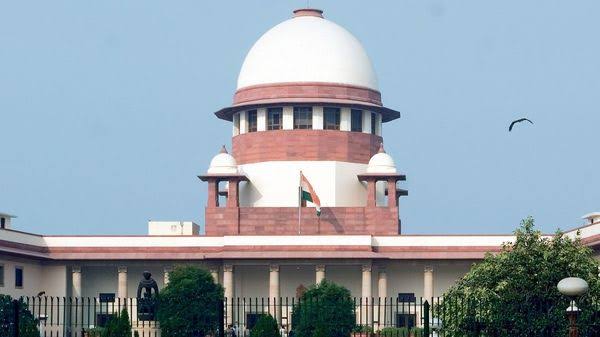
The CBI court in Delhi hearing the INX Media case has taken cognizance on the chargesheet filed by CBI last week. The Central Bureau of Investigation has named former Union Minister P Chidambaram, his son Karti Chidambaram and others in the chargesheet. Charges have been filed under 120B read with 420, 468, 471 IPC and 9, 13 Prevention of Corruption Act in the case that relates to granting of illegal FIPB approvals to INX Media.

A total of 14 entities have been named in the chargesheet, which includes 4 companies and 7 former bureaucrats from the finance ministry. The court has asked P Chidambaram to be produced before the court on 24th October.

During the hearing, the CBI counsel explained the modus operandi of the scam in the INX Media case. When the judge Ajay Kumar asked how cheating was done, the counsel said that notings in the file relating to FIPB approval for the company were illegally changed by bureaucrats in the Finance ministry to favour INX Media.

The bureaucrats had approved excess amount of FDI, and this excess FDI amount was invested into a downstream company without prior permission. The CBI also told the court that after the initial approval for FDI was granted to INX Media, various complaints were received in regards to irregularities committed by the company. As a result, the FIPB board had asked the company to clarify its stand on the issue.

But instead of answering the queries, the company sent the letter to Chest Managerment to prepare a ‘dubious reply’, which was sent to FIPB. Subsequently, the stand of each and every person changed, the CBI counsel said.

Also Read: All you need to know about the INX Media scam

It has also been alleged that Karti Chidambaram’s associate, S Bhaskaraman then raised false invoices for rendering certain professional services to adjust the bribes paid.

Besides P Chidambaram and Karti Chidambaram, others named in the chargesheet are, Karti’s CA S Bhaskararaman, INX Media’s Peter Mukherjea, bureaucrats Sindhushree Khullar, Ajeet Kumar Dungdung, Rabindra Prasad, Pradeep Kumar Bagga, Prabodh Saxena, Anup K Pujari, INX Media Pvt Ltd, INX News Pvt Ltd, Chess Management Services Pvt Ltd and Advantage Strategic Consulting Pvt Ltd. Peter Mukherjea’s wife Indrani Mukherjea is also mentioned, but she has been pardoned in the INX Media as she has turned approver in the case.

Malaysia: More than 1 out of 5 Muslim women believe husbands have the right to beat them, survey finds

0

21% of Muslim women in Malaysia believe that a husband can beat his wife if the wife disobeys him, a survey by rights group Sisters in Islam (SIS) on Muslim women’s realities in Malaysia has stated. The Islamic concept of “nusyuz” or refusing to obey a husband’s wishes or commands is cited as the basis for this opinion.

The survey states, “Worryingly, 21% of respondents believe that a husband has a right to beat his wife. Among those who accept this, the concept of nusyuz appears to provide a justification. 88% of respondents agreed that it would be nusyuz if a wife were to leave the house without her husband’s consent, refuse to move in with the husband (54%), refuse to have sexual intercourse (52%), refuse to open the door for the husband (50%) or refuse to answer the husband’s calling (46%). Under these circumstances, they believe a husband may beat his wife. They believe that these are acts of disobedience by the wife, and therefore the husband is permitted to strike her.”

In addition to that, 93% of the surveyed Muslim women believed that a woman must always obey her husband, 76% believed that the right to divorce must always be in the hands of the husband and 20% believed that a working mother is usually not a good mother to her children. Furthermore, 31% of the women did not believe they had the right to report if their husbands forced them to have sex without their consent. 32% of them did not believe they had the right to decide when to have sexual relations within their marriages.

The opinions of the women on polygamy were interesting. 70% of the surveyed women agree that Muslim men could practice polygamy so long as they treated all their wives fairly but only 32% of them would permit their husbands to take another wife. At the same time, 66% of respondents agreed that it is fine for a wife to demand a divorce if her husband decides to marry another wife and 74% of respondents agreed that a wife has a right to object should her husband wish to take another wife.

The SIS survey also revealed the bigotry that prevails within Malaysian society against non-Muslims. 54% of the Muslim women surveyed believe it is not acceptable for a Muslim to attend a Hindu wedding at a temple. 58% believe it is not acceptable for a Muslim to attend a Christian funeral at a church. 61% believe it is unacceptable for a Muslim to accompany a non-Muslim friend to eat in a non-Halal resteaurant. 87% believe it is not acceptable for a Muslim to consume alcohol among his non-Muslim friends.

Furthermore, 31% believe it is not acceptable for a person to marry someone from a different religion. 35% of those surveyed believe it is unacceptable for a non-Muslim to attend an Ijab Qabul ceremony at a Mosque.

The survey came to the conclusion that “Gender inequality is more prominent at an individual level; there exists strong pressure to conform to expectations. Independence is lacking in the roles of Muslim women as daughters, wives and mothers. As a wife, a Muslim woman encounters far greater levels of discrimination than in other roles”.

The report further concluded that “Many women feel that Islamic teachings can be used to favour men as the more ‘dominant’ gender and this is a pressure point for women to portray a correct self-image as a Muslim woman. This can be seen at home and at work”.

Let Kamlesh Tiwari’s death not go waste, can we do one of these two things?

With Kamlesh Tiwari murdered in a way to send signals to Hindus that Islam will ultimately prevail regardless of electoral victories by the BJP, a sizeable section of the online supporters of the party have once again started questioning the BJP about what exactly it is doing to take on Islamic extremism, which in its most violent – but pristine – form has now reached doorsteps of assertive Hindus.

This question has been raised multiple times this year itself. When a Muslim mob shouting Allahu-Akbar desecrated and damaged Durga Mandir in Hauz Qazi area of Delhi, when multiple Dussehra and Durga Puja processions were attacked while passing through ‘Muslim areas’, when scores of Hindu activists were killed in various cities, especially in West Bengal, and now murder of Kamlesh Tiwari in Lucknow, which has been celebrated and supported by many ordinary Muslims and ‘intellectuals’ alike.

The party has not officially responded to such questions, but their supporters, as well as some leaders, have tried to address the issue and explain their position. The reactions range from expressing inability to take some radical step like dismissing Mamata government over law and order issue, to pointing out that steps have been taken wherever possible, e.g. in Kamlesh Tiwari murder case, the conspirators were arrested the next day. It has also been repeatedly pointed out that barring isolated incidents involving some individuals, Islamic terrorists have not been able to attack any civilian areas since the Modi govt took charge in 2014.

Even the critics will have to accept that internal security indeed has been far better since the UPA years, and while we get to know when lapses happen e.g. inability to provide foolproof security to Kamlesh Tiwari, we may not get to know how many other tragedies are being averted by timely action. Security agencies don’t make every information or step public. Do remember that they could foil plans of Islamic terrorists to poison prasad of Mumbreshwar temple in Maharashtra so that hundreds of Hindus are killed without even a bomb going off. They must have averted many more such plans of Jihadis.

Read: Dear DGP OP Singh, people with a violent dogma don’t need a Kamlesh Tiwari to get radicalised

The immediate anger of people is entirely understood and even justified. It will really be naïve if we expect people to do a rational analysis as above before expressing their anger and grief. I myself tweeted and then deleted at least one tweet in the aftermath of Tiwari’s murder, though many angry tweets remain on my timeline.

I am not saying that everything will be fine once the anger subsides with time, even though that’s exactly what might happen. That will not help anyone. That ‘all is well’ will be temporary. The scenes will be repeated again when a “dara hua musalman” upsets the carefully crafted narrative of the liberals, and taking one step a time towards Ghazwa-E-Hind.

Both the BJP as well as the angry Hindus need to find out the solution.

I will not write here what the BJP should do, because they have been being told what to do by many people. All I can tell them is that this anger of people, which might appear limited just to social media, should be taken seriously. Things indeed might become normal in a few days, but in the long run, it will hurt the party.

I instead want to put some thoughts to the angry Hindus for consideration. This might appear preposterous that I’m suggesting a course of action to a group that is amorphous and unorganised with no formal structure to plan or execute a decision, instead of suggesting steps to the BJP, which is an organised group and where decisions can actually be taken and executed. However, there is a flip side to it to. A large organisation suffers from bureaucracy and inertia and it is less likely to try out new things than a start-up.

I have two suggestions for the angry Hindus – one constructive and perhaps relatively easier to do, and another being a radical one and might even be argued as ‘destructive’.

Kamlesh Tiwari Act For Curbing Islamist Ideology

In British India, a murder that was triggered by accusations of insult to Prophet Muhammad had given rise to the introduction of blasphemy laws. You can read the details here. The man who carried the act of murder is idolised in Pakistan, and why not. Because people like Jinnah and Allama Iqbal had glorified the act and eulogised the murderer.

Basically, the murder of Kamlesh Tiwari is a testimony to the fact that the ideology that created Pakistan is safe and thriving in India. I repeat that his murder is being celebrated and supported by many ordinary Muslims and ‘intellectuals’ alike, and that is why I say it is thriving.

Many are demanding that if a similar murder last time led to the introduction of blasphemy laws, this one should lead to repealing of those laws. I think that activism is misplaced. The issue is not blasphemy here, but the mentality that created Pakistan. A mentality that is alive and thriving and receives intellectual support.

The real tribute to Kamlesh Tiwari won’t be repealing the blasphemy laws but introducing a law that curbs and counters this mentality that created Pakistan. A law specifically aimed at fighting Islamist ideology and activities.

Just like the Congress-left ecosystem pushed for communal violence bill and anti-lynching laws – the latter has become a reality in Rajasthan after Congress regained power there – the non-left ecosystem has to push for a law against Islamist ideology. There are far more justifications for having such a law because this is about the territorial integrity of India. We need this law if we want to avert another partition.

People who understand the law and public policy should be roped in to come up with a draft bill that takes on threat of Islamism. Say, how exactly did Maulanas or outfits that organised protest rallies demanding capital punishment for Kamlesh Tiwari escape punishment? Perhaps at best IPC 506 could have applied to them, and that too if someone went and file an FIR? I feel that the cowardice of state coupled with a lack of relevant laws allowed them to get away.

Read: Here are the 4 Islamists who had openly issued threats to Kamlesh Tiwari for allegedly ‘insulting’ Prophet Muhammad

This proposed law should codify how the police must act suo-moto and put stringent punishments for anyone demanding any part of Shariyat laws to be applicable in any part of India.

This is just one aspect, the Jihadi and Islamist mindset goes beyond demanding Shariyat, and those need to be identified, codified and made punishable offences too. For example, false accusation of blasphemy, refusal to follow civil laws and rules citing religious preferences, promotion of Ummah, and many such things can be included. These aspects need to be discussed and debated.

We desperately need such a law, unless we want to create another Pakistan or become a Londonistan.

Read: One Hundred Years of the end of ‘Khilafat’: How the Gandhi supported movement unleashed the beast of Islamic fanaticism

I think this will be a constructive step to take and one can channelize the anger towards achieving it. Such a bill might not become law immediately – and I didn’t mean that when I said that this option was perhaps easier – but at least the activism and attempt could be easier than the second option that I may propose.

Unite, Organise, Get Counted, Put Pressure

Before I come to the second solution that I believe is more difficult to execute and could be argued to be destructive, I want to briefly recount an article that I had written just days after BJP returned with even a bigger mandate in the 2019 Lok Sabha elections, I had hinted why the right-wing (rather the non-left wing) too needs to understand Narendra Modi.

Modi is currently being attacked for his silence, ironically by people who are termed bhakts by those who are slaves of either a family or a dogma. He is being asked, primarily on Twitter, why does he not seem to care about people like Kamlesh Tiwari. That why was he getting pictures with Bollywood actors clicked a day after Tiwari was killed.

Read: Prime Minister Modi, Hindus are under siege, and now is the right time to speak up

I don’t want to answer on behalf of Modi, that will be pointless at this juncture. All I can say is that while I may not agree with attacks on someone who has given hope for a Hindu resurgence after a lost decade, I entirely understand and empathise with the anger.

In my article, I had hinted that to make sure Modi listens to you, you have to form an identifiable and measurable crowd. And this suggestion is about that. It goes a step, rather multiple steps, beyond what I had suggested, and it is almost like fighting Modi, which incidentally I had advised against.

But it’s not really about fighting Modi, but proving yourself. It might anger many who are already angered, but one retort that has come from contrarians is that issues like Kamlesh Tiwari just make noise on social media. Not many appear bothered about it in the real world.

Personally, I don’t think the party thinks that way. The issue has received highest attention in Uttar Pradesh and then there have been leaders like Shivraj Singh Chauhan and Sadhvi Pragya Thakur from outside the state who spoke up. Many guys officially attached to the party have been aggressively raising the issue and helping Kamlesh Tiwari’s family.

Read: UP CM Yogi Adityanath has assured the murderers will be hanged to death, says Kamlesh Tiwari’s widow

But what if that doesn’t convince you and you still believe that a section of the party indeed thinks that way? The only way to catch their attention and change their thinking will be to show that these issues have an impact on the ground too. Can we settle this debate by choosing one constituency where you pick one guy to represent these issues and prove to the party that your crowd is identifiable and measurable?

In upcoming Delhi elections, let us choose one constituency, say Chandani Chowk, where Hauz Qazi Durga Mandir was desecrated. Put up one candidate who fights on all these issues. Prove your point. Then either BJP is forced to listen to you, or you realise that much more needs to be done and you start working towards that.

Please don’t take it as a dare thrown at you. I’m as much anguished as you. However, I prefer solutions. I prefer to channelize the anger into creating something that attempts to solve the problems. This website itself is an example of that.

Aaj Tak drags ‘Karwa Chauth’ into report on violence in a Muslim household, rectifies after OpIndia calls out their misleading headline

A few days back, OpIndia had published a report calling out Aajtak news for slandering the Hindu festival of ‘Karwa Chauth’ by mentioning it in their headlines that a husband had severed his wife’s tongue on the day of ‘Karwa Chauth’.

OpIndia had pointed it out that despite the perpetrator and the victim both being non-Hindus, Aaj Tak had mentioned the Hindu festival of Karwa Chauth in describing the barbaric incident.

Now, Aaj Tak has updated its headlines, removing the controversial mention of ‘Karwa Chauth’ in it.

Updated headline

A day after the Hindu festival of ‘Karwa Chauth’, Aaj Tak News published a report with a controversial headline saying “On the day of Karwa Chauth, Husband’s brutality against his wife, severed wife’s tongue with a blade”. However, the incident was a barbaric case of domestic abuse where a Muslim man has beaten up his second wife and had severed her tongue.

Earlier headlines by Aajtak

The incident pertained to Saraiya village of Muzaffarpur, where a man named Mohammad Shafiq had severed the tongue of his second wife Meena Khatun.

Perhaps, in a bid to sensationalise the episode, news channel Aaj Tak maligned the Hindu festival of ‘Karwa Chauth’ by giving an egregious twist in their headlines to convey that a brutality was committed by a husband on the day of ‘Karwa Chauth’, the day when Hindu women generally fast for their husband’s long and healthy life. The inclusion of ‘Karwa Chauth’ in the headlines alluded that a practising Hindu husband must have committed the despicable atrocity upon her wife.

Heeding to OpIndia’s report and the criticism directed towards it for its blatant Hinduphobia of spuriously mentioning ‘Karwa Chauth’ in its headlines without it having any link with the atrocity, Aaj Tak has now dropped the reference to ‘Karwa Chauth’ in their report and updated their headline.

Watch: Congress leader Bhupinder Singh Hooda pushes women away to vote ahead of them

During elections, it is a regular sight to topmost political leaders patiently waiting in queues for their turn to vote. There are no VIPs in polling booths, as every voter has equal right of one vote, and most politicians across the party lines respect that. But sometimes some politicians believe it is beneath their dignity to wait in a queue at a polling booth, and the latest example of the same is Congress leader and former Haryana chief minister Bhupinder Singh Hooda.

A video has emerged which show that Hooda bypassed several women waiting in a line to move ahead and cast his vote during the Haryana Assembly elections today. Today Bhupinder Singh Hooda along with his family reached a polling booth in Rohtak to cast their votes. But instead of waiting in a line as per norms, Hooda and one of his associates started to push women, who were standing in a disciplined queue, out of his way and moved ahead bypassing the voters who had reached the polling booth before him.

[youtube https://www.youtube.com/watch?v=twdyz-V_JHc]

After exercising his voting right, Hooda tweeted that he along with his family voted without any fear and partiality, which is ironical because just moments ago several women made way for him out of fear of his power and position.


Also Read: “Congress party has lost its way”: Former Haryana CM Bhupinder Singh Hooda attacks his party for opposing abrogation of Article 370

Bhupinder Singh Hooda has served as the chief minister of Haryana for two terms from 2005 to 2014, and is the leader of the opposition in the current assembly. Currently, he is facing several probes by CBI and ED in relation to scams in land deals during his term as CM. Hooda is hoping to return to power in the state as he is the CM candidate of the Congress party.

Security heightened across Delhi ahead of Diwali, 400 sensitive buildings on JeM radar including PMO, Parliament House

0

Security has been beefed up in Delhi after a terror threat alert was sounded that Pakistan-based terror group Jaish-e-Mohammed (JeM) was planning to target over 400 sensitive buildings and markets in the national capital ahead of Diwali.

A Delhi Police official told IANS, “Rohini, North-East, North-West, North, East, Central, New Delhi and Dwarka — eight of the 15 districts in Delhi are considered sensitive.” These districts have the highest number of sensitive buildings. New Delhi alone has 200 buildings identified as sensitive and in total, there are 425 buildings that have been identified as sensitive.

In addition to buildings like the Prime Minister’s Office, Sena Bhavan, Parliament House and Rashtrapati Bhavan in New Delhi district that is always deemed sensitive, now markets like Connaught Palace and Khan market have been added to the list. The Jama Masjid in Central Delhi district, Delhi Police Headquarters, Rouse Avenue Court, Laxmi Nagar, Preet Vihar, Anand Vihar are some other places that the terrorists could target.

New Delhi District Deputy Commissioner of Police Eish Singhal told IANS with regards to the terror threat, “We do not have any intelligence input of any kind of threat, but we have enhanced security in the city ahead of Diwali.”

Security has also been tightened at police stations after Delhi Police was tipped off by central intelligence agencies that Delhi police stations and police colonies may be targeted via suicide or direct attacks by terrorists. According to these inputs, terrorists may use explosive-laden vehicles or enter the police stations on foot.

Ignoring Human Rights Activists, Bangladesh to start relocating Rohingyas to flood-prone island from early November

0

Bangladesh establishment has firmed up its decision of relocating Rohingya refugees in Bangladesh from Cox Bazaar to a remote, uninhabited island situated 21 nautical miles away from the shore. Dhaka plans to move next month about 100,000 Rohingya refugees to Bhasan Char from its overcrowded Cox Bazaar refugee camps where more than 1 million Rohingya refugees from Myanmar are currently camped.

According to the Relief and Repatriation Commission chief Mahbub Alam Talukder based in Cox Bazaar, the government plans to shift the refugees in phases from early November. As per the report, the first relocation was to take place in April this year. However, that could not take place reportedly due to concerns raised by many human rights groups who claimed that the island is remote and prone to devastating cyclones and floods. When the idea of moving Rohingya refugees in Bangladesh to the remote island was first floated, many Rohingyas had said that they would rather prefer dying in the congested Cox bazaar camps.

Read: Bangladesh arranges Rohingyas to live on an uninhabited remote island, 21 nautical miles off the coast

Bhashan Char, which literally means ‘floating island’ emerged as an island about 20 years ago from a slit. The area was declared a forest reserve in 2013 and it regularly gets flooded between the monsoon months of June to September. The island’s area is around 10,000 acres at high tide and 15,000 acres at low tide.

It is located 21 nautical miles from Noakhali, 11 nautical miles from Jahajir Char, 4.2 nautical miles from Sandwip, 28 nautical miles from Patenga, and 13.2 nautical miles from Hatia and the only mode of commute for residents of Bhasan Char, should the Rohingyas decide to relocate to that island, will be vessels that take three to three-and-a-half hours to travel from Hatia.