Home Blog Page 6202

108 laws including IPC, CrPC, SC/ST Atrocities Act to be applicable in Jammu and Kashmir as Article 370 is stripped

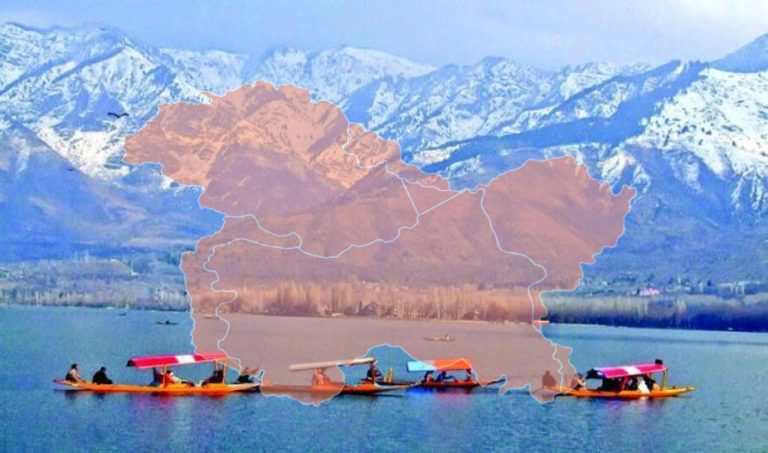
A day after India witnessed a historic event of revocation of Article 370 and bifurcation of the state into two Union territories, the people of the Jammu and Kashmir will be now able to enjoy all the benefits just like any other citizen of the country.

Interestingly, Union Home Minister Amit Shah invoked the same Article 370 to abrogate the controversial provisions in the state. Home Minister Amit Shah invoked section 3 of Article 370, which empowers the President to declare the special status granted to Jammu and Kashmir under the Article inoperative anytime.

Instead of discarding Article 370, the government used the power given by the same Article to the President to make the provision ineffective.

With this special status to Jammu and Kashmir being scrapped, the Government of India has announced that a total of 106 laws shall henceforth apply to the Union Territory of Jammu and Kashmir and Ladakh. From laws related to property, criminal laws of IPC and CrPC to crucial central laws like Right to Information, Education, the proposed two Union territories will see a tectonic shift in their system of administration and governance. 

On Monday, Union Home Minister Amit Shah had announced that Jammu and Kashmir will not be a state anymore and awarded the status of a Union Territory (UT) with legislative assembly. He added that Ladakh will be a separated Union Territory without an assembly like Chandigarh.

With Article 35A gone, the discrimination between permanent and non-citizens of Jammu and Kashmir will cease to exist. The new laws will allow anyone to buy land, invest in the state. The new bill will also allow other citizens of India to settle in the two proposed UTs under the provision of Article 19 of the Indian constitution, where one can move freely throughout the territory of India and to reside and settle in any part of India.

All laws passed by Parliament will be now extended to the proposed Union territories without any exception. Earlier, every legislation, except on defence, external affairs and communications began with an exception clause stating that the law will apply to the whole of India except Jammu and Kashmir.

Additionally, the new bill will bring significant changes in the existing criminal law system of the proposed UTs. The Indian Penal Code will replace the existing Ranbir Penal Code. The Criminal Procedure Code and the Indian Evidence Act will now apply in the state. The other important criminal laws applicable to the region are National Security Act, Prevention of Corruption Act, Scheduled Caste and the Scheduled Tribes (Prevention of Atrocities) Act, The Protection of Children From Sexual Offences Act and The Juvenile Justice (Care & Protection of Children) Act.

The new bill The Jammu and Kashmir Reorganisation Bill, 2019 will also enact laws related to the protection of women and children that were not enacted earlier by the Jammu & Kashmir Assembly. The Dowry Prohibition Act, 1961; The Prohibition of Child Marriage Act and Indecent Representation of Women (Prohibition) Act, 1986 will be applicable in the two regions once the bill is passed in the Parliament.

Here is the list of 108 laws that will be implemented to Union Territory Jammu and Kashmir, and Ladakh. Although the last serial number is 106, the list has two serial numbers 67A and 94A, therefore the total number of acts is 108.

1. The Aadhar (Targeted Delivery of Financial and other subsidies, benefits and services) Act, 2016.
2. The Administrative Tribunal Act, 1985.
3. The Anand Marriage Act, 1951.
4. The Arbitration and Conciliation Act, 1996.
5. The Benami Transactions (Prohibition) Act, 1988
6. The Charitable Endowment Act, 1890.
7. The Chit Funds Act, 1982.
8. The Code of Civil Procedure, 1908.
9. The Code of Criminal Procedure, 1973.
10. The Commercial Courts Act, 2015.
11. The Commission for Protection of Child’s Rights Act, 2006.
12. The Commission of Inquiry Act, 1952.
13. The Consumer Protection Act, 1986.
14. The Contempt of Courts Act, 1971.
15. The Delimitation Act, 2002.
16. The Dissolution of Muslim Marriage Act, 1939.
17. The Disturbed Areas (Special Courts) Act, 1976.
18. The Dowry Prohibition Act, 1961.
19. The Drugs and Magic Remedies (Objectionable Advertisement) Act, 1954.
20. The Easements Act, 1891.
21. The Electricity Act, 2003.
22. The Employees Provident Funds and Miscellaneous Provisions Act, 1952.
23. The Employment of Manual Scavengers and Construction of Dry Latrines (Prohibition) Act, 1993.
24. The Enemy Property Act, 1968.
25. The Energy Conservation Act, 2001.
26. The Family Courts Act, 1984.
27. The Fatal Accidents Act, 1855.
28. The Forest (Conservation) Act, 1980.
29. The General Clauses Act, 1897.
30. The Governors (Emoluments, Allowances & Privileges) Act, 1982.
31. The Gram Nyayalayas Act, 2009.
32. The Guardian & Wards Act, 1890.
33. The Hindu Adoptions and Maintenance Act, 1956.
34. The Hindu Disposition of Property Act, 1960.
35. The Hindu Marriage Act, 1955.
36. The Hindu Minority & Guardianship Act, 1956.
37. The Hindu Succession Act, 1956.
38. The Identification of Prisoners Act, 1920.
39. The Indecent Representation of Women (Prohibition) Act, 1986.
40. The Indian Boilers Act, 1923.
41. The Indian Christian Marriage Act, 1872.
42. The Indian Contract Act, 1872.
43. The Indian Easements Act, 1882.
44. The Indian Evidence Act, 1872.
45. The Indian Forest Act, 1927.
46. The Indian Nursing Council Act, 1947.
47. The Indian Partnership Act, 1932.
48. The Indian Penal Code, 1860.
49. The Indian Stamp Act, 1899.
50. The Indian Succession Act, 1925.
51. The Indian Trust Act, 1882.
52. The Indian Veterinary Council Act, 1984.
53. The Judges (Protection) Act, 1985.
54. The Judicial Officers (Protection) Act, 1850.
55. The Juvenile Justice (Care & Protection of Children) Act, 2015.
56. The Legal Services Authorities Act, 1987.
57. The Limitation Act, 1963.
58. The Maintenance and Welfare of Parents and Senior Citizens Act, 2007.
59. The Majority Act, 1875.
60. The Medical Termination of Pregnancy Act, 1971.
61. The Muslim Personal Law (Shariet) Application Act, 1937.
62. The Muslim Women (Protection of Rights on Divorce) Act, 1986.
63. The National Commission for Minorities Act, 1992.
64. The National Commission for Minority Educational Institutes Act, 2005.
65. The National Commission for Safaikaramcharis Act, 1993.
66. The National Commission for Women Act, 1990.
67. The National Council for Teacher Education Act, 1993.
67-A National Security Act, 1980
68. The National Trust for Welfare of Persons with Autism, Cerebral Palsy, Mental Retardation and Multiple Disabilities Act, 1999.
69. The Oaths Act, 1969.
70. The Partition Act, 1893.
71. The Pharmacy Act, 1948.
72. The Powers of Attorney Act, 1882.
73. The Preconception and Pre-natal Diagnostic Techniques (Prohibition of Sex Selection) Act, 1994.
74. The Prevention of Blackmarketing & Maintenance of Supplies of Essential Commodities Act, 1980.
75. The Prevention of Corruption Act, 1988.
76. The Prevention of cruelty to animals Act, 1960.
77. The Prevention of Damage to Public Property Act, 1984.
78. The Prisoners Act, 1900.
79. The Prisons Act, 1894.
80. The Private Security Agencies (Regulation) Act, 2005.
81. The Prize Chits and Money Circulation Scheme (Banning) Act, 1978.
82. The Probation of Offenders Act, 1958.
83. The Prohibition of Child Marriage Act, 2007.
84. The Prohibition of Employment as Manual Scavengers and their Rehabilitation Act, 2013.
85. The Protection of Children From Sexual Offences Act, 2012.
86. The Protection of Human Rights Act, 1994.
87. The Protection of Women from Domestic Violence Act, 2005.
88. The Public Gambling Act, 1867.
89. The Public Records Act, 1993.
90. The Registration Act, 1908.
91. The Religious Endowments Act, 1863.
92. The Religious Institutions (Prevention of Misuse) Act, 1988.
93. The Right of Children to Free and Compulsory Education Act, 2009.
94. The Right to Fair Compensation and Transparency in Land Acquisition, Rehabilitation and Resettlement Act, 2013.
94A. The Representation of People Act, 1951.
95. The Right to Information Act, 2005.
96. The Sale of Goods Act, 1930.
97. The Scheduled Tribes and Other Traditional Forest Dwellers (Recognition of Forests Rights) Act, 2007.
98. The Scheduled Caste and the Scheduled Tribes (Prevention of Atrocities) Act, 1989.
99. The Special Marriage Act, 1954.
100. The Specific Relief Act, 1963.
101. The Suits Valuation Act, 1887.
102. The Transfer of Property Act, 1882.
103. The Transplantation of Human Organs and Tissues Act, 1994.
104. The Wakf Act, 1995.
105. The Whistle Blowers Protection Act, 2014.
106. The Wild Life (Protection) Act, 1972.


Rights-based central legislation like The Right to Information Act, 2005 and the Right to Fair Compensation and Transparency in Land Acquisition, Rehabilitation and Resettlement Act, 2013 are also proposed to be applicable.

Among personal laws, the Muslim Women (Protection of Rights on Divorce) Act, 1986 and the Special Marriage Act enacted by Parliament and currently not applicable to the region are also proposed to be applicable. Other personal laws enacted by the Centre, The Hindu Succession Act, 1956 and The Muslim Personal Law (Shariat) Application Act, 1937 are proposed to be applicable to the region.

The High Court of Jammu and Kashmir shall continue to be the common constitutional court for both the proposed Union Territories. Further, the new bill gives the power to Lieutenant Governor to make laws relating to All India Services and Anti-Corruption Bureau.
JNU communists raise ‘Laal salaam, 370 wapas lao’ slogans at midnight, abuse Army: Report

0

In a historic move, the central government had yesterday stripped the Article 370 that provided Jammu and Kashmir with a special status and bifurcated the state into two Union Territories.

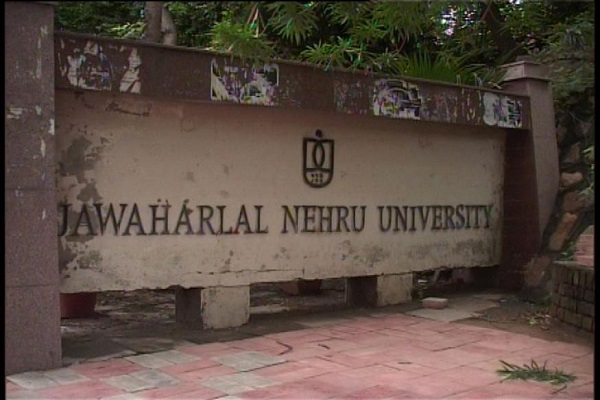
The communists and Islamist sympathisers at JNU, who are known for their dharnas and hatred for India, reportedly held a protest at midnight. As per reports,  communists at the university gathered late last night to hold a protest against the government’s move to strip Article 370. ‘Lal Salam’ slogans were used in abundance.


As per reports, the crowd gathered there did a lot of sloganeering against the government’s decision and claimed that the stripping of Article 370 is an attack on Kashmir’s ‘culture’. They also raised slogans for bringing back Article 370. The report says that some people from the gathered crowd even said that they do not consider themselves as Indian.

As per a report in Aaj Tak, the gathered crowd used foul language against the Indian Army and the Union of India. The gathered protesters, however, were reportedly trying to avoid cameras.

It is notable here that in February 2016, the students of JNU had organized an event to mark the death anniversary of terrorist Afzal Guru who had attacked the Indian Parliament. Many slogans challenging the Indian State’s sovereignty and calling for its dismemberment were raised.

former JNU student leaders Kanhaiya Kumar, Umar Khalid, Anirban Bhattacharya and several others were booked under sedition charges after the event. The Delhi police had submitted its charge sheet against the accused in December last year.

Congress leaders go against party stand and bat for India while ‘Kashmiri’ Rahul Gandhi and Priyanka Gandhi maintain stunned silence on dilution of Article 370

The BJD and BSP extended their support to the stripping down of Article 370 in the Parliament yesterday when Home Minister Amit Shah put up a proposal to dilute the discriminatory provision in the state of Jammu and Kashmir. However, now support seems to be trickling down from unexpected quarters.

Senior Congress leader Deepender Hooda extended his support to stripping down of Article 370 saying that Jammu and Kashmir is an integral part of India and such a move will be beneficial to Kashmiris.


Of course, his support came with riders that such a move should have been made by taking other political parties into confidence.

Congress’ chief whip Bhubaneswar Kalita resigned from Rajya Sabha yesterday because he was upset over Congress’ stand to oppose Centre’s move to dilute Article 370. He stated that Congress’ stand on this issue was “against the people’s feelings” and that the party seemed “ hell-bent on political suicide.”

Another senior Congress leader Janardan Dwivedi, a close aide of former Congress President and currently UPA chairperson Sonia Gandhi, too went against the party’s stand and welcomed the move.


“This is an old provision and many freedom fighters did not want this article to stay. On a personal level, my political mentor Ram Manohar Lohia was always against Article 370. Hence, as far as my personal views go, this is a matter of national satisfaction. A mistake which happened during the partition, that has been corrected, even if it took time. I welcome this,” said Dwivedi.

Congress’ Rae Bareli MLA Aditi Singh, too, welcomed the move.


When a Twitter user pointed out that she is a Congress leader, she responded by saying that she is an Indian.


Another Congress leader Milind Deora, while didn’t give explicit support to stripping down of Article 370, he got a lot of flak for saying that the does hope that diluting Article 370 plays out more favourably for Jammu & Kashmir.


Apparently, asking for a debate on the issue and hoping that the government’s move works out in favour of people of Jammu and Kashmir is ‘abandoning liberalism’.


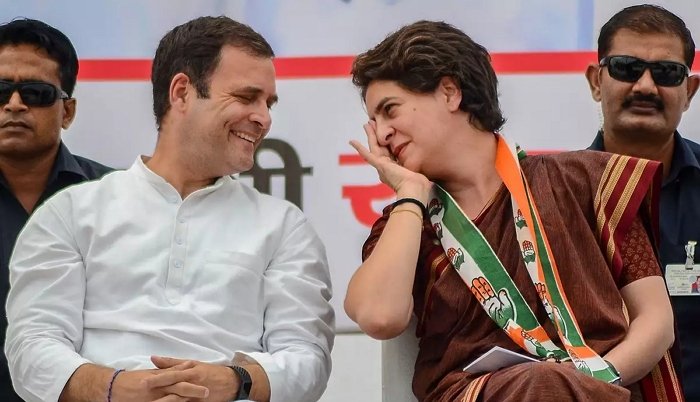
Amidst all this, there has been a stunned silence from former Congress President Rahul Gandhi and his sister and Congress General Secretary Priyanka Gandhi Vadra. The brother-sister duo which is quite quick with using memes and Snapchat-generation inspired sarcasm, have oddly remained silent when India corrected a historical wrong. This, when they claim to be proud Kashmiris. This, especially when stripping down the Article 370 rectifies the Himalayan blunder their own great grandfather and former Prime Minister Jawaharlal Nehru had committed.

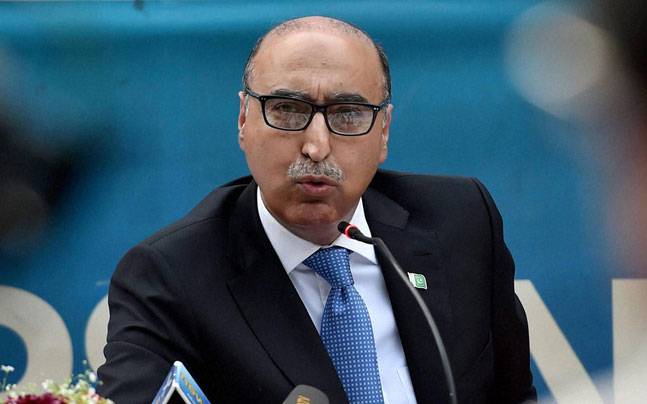
Former Pakistan High Commissioner to India Abdul Basit casts gloom over future, says Modi might ask Trump to mediate over PoK

0

Narendra Modi-led BJP government’s audacious decision of scrapping Article 370 and bifurcating Jammu and Kashmir into two Union territories have set Pakistanis on their heels as they cannot bring themselves to the fact that India has proceeded towards complete integration of Jammu and Kashmir in its union. Many Pakistanis, including former Pakistan high commissioner to India, Abdul Basit raised their concern over the future of Jammu of Kashmir conflict as he expressed his apprehension in an interview on a Pakistani news channel.


Basit mentioned that he met senior BJP member Ram Madhav in 2014 and had a good 1-1.5 hours chat with him to understand BJP’s stand on Kashmir. According to Basit, Madhav made himself amply clear that the BJP will move towards abrogating Articles 370 and 35A and that Pakistan should not be wasting its time on Kashmir. Basit further added saying that Madhav issued a threat to Pakistan saying it should be more concerned about Pakistan occupied Kashmir as his government might even move to stake its claim over the disputed territory under Pakistan’s control.

“In which world are you living? Do you want to progress? If you want your country’s development then forget about the issue of Jammu and Kashmir,” Ram Madhav said as claimed by Abdul Basit.

Basit also expressed his anxiety saying that India might now press the US President to settle the unresolved issue of Pakistan occupied Kashmir. Expressing his misgivings about PM Modi’s impending meet with President Trump, Basit said, “PM Modi might tell the US president that Jammu and Kashmir has been integrated with India and now he may ask President Trump to mediate on Pakistan occupied Kashmir which is still with Pakistan.”

Senior Pakistani Journalist Kamran Khan has also theorised that the Donanld Trump offereing to mediate betweetn India and Pakistan refers to a situation after abolision of Article 370. He speculated that after Jammu and Kashmir has been made an integral part of India by removing the special status, now Trump will have a role in the disputes in the region. He also hoped that the situation is moving towards lasting peace, not war.


Earlier today, the BJP government at the centre moved a resolution abolishing Article 370 and moving a bill in the Rajya Sabha aimed to bifurcate the vexed state of Jammu and Kashmir into two Union territories-Jammu and Kashmir with legislature and Ladakh without legislature.

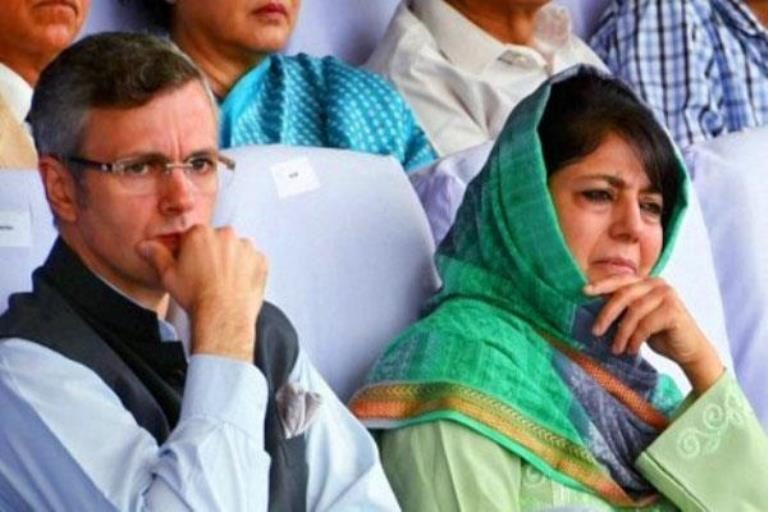
Former Jammu and Kashmir CMs Mehbooba Mufti and Omar Abdullah detained by police to prevent law and order situation

Former Jammu and Kashmir chief ministers Mehbooba Mufti and Omar Abdullah have been detained by the Jammu and Kashmir police as a preventive measure. They, along with several political leaders of the state were already under house arrest since last night. The government is taking these precautionary measures to prevent any law and order situation as the special status enjoyed by Jammu and Kashmir was withdrawn by diluting Article 370 and abolishing Article 35A today. The government also bifurcated the state into two union territories, Jammu and Kashmir, and Ladakh.


After the presidential order changing the state’s status tabled by Home Minister in Rajya Sabha, Mehbooba Mufti had posted a series of tweets strongly opposing the move. She had claimed with the articles gone, the accession of Jammu and Kashmir had become null and void. Omar Abdullah had also issued similar statements in media.


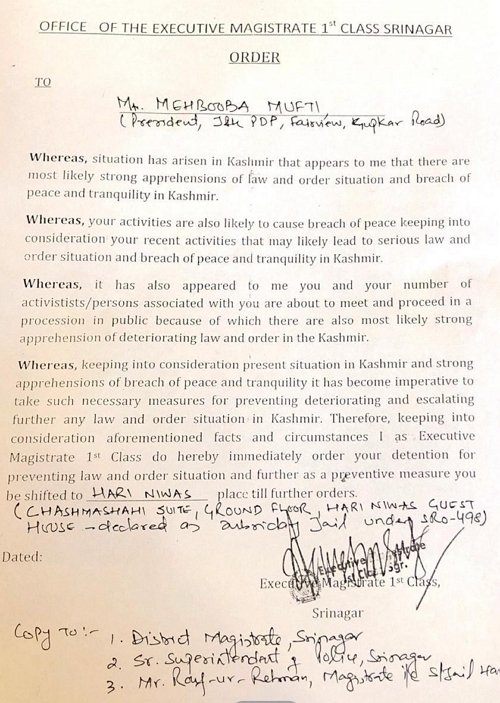
An order addressed to Mehbooba Mufti by the executive magistrate of Srinagar says that activities of Mehbooba Mufti are likely to cause serious law and order situation and breach of peace of tranquillity of the state. The order also says it appears that the former CM and others are about to meet and proceed in a procession, which will create further law and order problems. It is speculated that she was trying to leave her residence to arrange a protest.

Therefore, keeping the present situation in Jammu and Kashmir into consideration, the magistrate ordered the detention of Mehbooba Mufti to prevent law and order situation. The order states that the PDP chief will be shifted to Hari Niwas Palace till further orders.

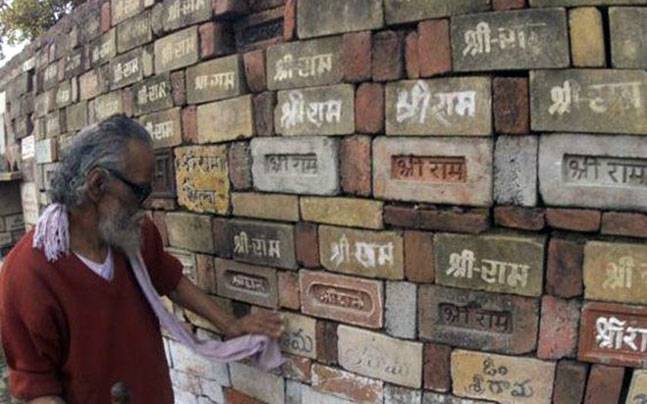
After Article 370 being stripped, Ram Mandir decision next? Hearing commences tomorrow, day-to-day proceedings to be held

After Article 370 and Article 35A were stripped and the declaration of Jammu and Kashmir, and Ladakh Union Territories it seems like the nation is poised to solve yet another long-standing conflict that has distressed the country. The hearing in the Ram Mandir case is poised to be taken up by the Constitutional Bench from 6th August 2019 on a day to day basis.


The Ram Mandir issue is one of great importance to the Hindu population of the country. And India Today survey had shown that 69% of Indians want Ram Mandir constructed on Ram Janmabhoomi.

Prime Minister Modi in an interview to the news agency ANI, at the beginning of this year,  said that the decision on an ordinance on the Ram temple will only be considered after the judicial procedure is concluded. He added that the judicial procedure for the temple is being stalled in the Supreme Court since Congress lawyers are ‘slowing down the process’.

OpIndia, in December last year, had surveyed the Ayodhya region to ascertain about the people’s wish regarding the construction of mandor. We had found that the residents of Ayodhya overwhelmingly support the construction of the Ram Mandir. While they want other facilities such as hospitals and playgrounds to be built at Ayodhya, they are of the opinion all of it can proceed simultaneously with the temple construction.

“A Ram Mandir did exist there, the Babri Masjid was constructed after demolishing the Temple. And a Ram Mandir definitely should be built there.” One person had told Opindia, “Not 100%, the Ram Mandir should be constructed 110%.” The person had added.

With the Kashmir Reorganisation Bill 2019 righting a historic wrong, it would seem like the day-to-day hearings of the Ram Mandir case could settle another long-pending conflict in the foreseeable future.

Here is what the President means by ‘concurrence of Jammu and Kashmir Government’ in the order abolishing special status of the state

The government of India issued a Presidential order in the Gazette of India, which has effectively abolished the Article 370 and Article 35A of the Constitution of India which had given special status to the state Jammu and Kashmir. The order reads that it has been issued by exercising the powers conferred by clause 1 of Article 370, with the concurrence of Government of Jammu and Kashmir.

Now, many people are asking, what is the meaning of this concurrence of J&K government, when there is no government in the state at present, as the state is under the Presidents rule. The answer to this lies in two documents, Article 370 itself, and the Constitution of Jammu and Kashmir.

Section b(ii) of Article 370 contains this explanation: For the purposes of this article, the Government of the State means the person for the time being recognised by the President as the Maharaja of Jammu and Kashmir acting on the advice of the Council of Ministers for the time being in office under the Maharajas Proclamation dated the fifth day of March 1948. At that time the Maharaja was the government of the state, who acted on the advice of the council of ministers.

This provision was amended by a presidential order in 1952, which had said that Government of the State means the Sadar-i-Riyasat of Jammu and Kashmir, acting on the advice of the Council of Ministers of the State. During that time, the governor and the chief minister of Jammu and Kashmir was known as Sadar-i-Riyasat and Prime Minister. Hence, this means that the Government of the State meant the Governor, known as Sadar-i-Riyasat. This was changed in 1965, via another Presidential order, which had said that reference of Sadar-i-Riyasat will mean reference of the governor. And it also specified that Government of the said State shall be construed as including references to the Governor of Jammu and Kashmir acting on the advice of his Council of Ministers.

Therefore, Article 370 and the subsequent amendments mean that the term Government of Jammu and Kashmir refers to the Governor of the state acting on behalf of the council of ministers.

This means, the president has issued the order, replacing the 1954 order, in concurrence of the governor, who represents the government of the state.

Now, the Article 370 also says that the governor acts on the advice of the council of ministers, but as there is no government in the state at present, can the governor act without the advice of state government?

The answer to this lies in the Jammu and Kashmir Constitution. It may be noted that the president’s rule in the state is imposed as per provisions of the Constitution of Jammu and Kashmir, not Constitution of India. Article 92(1)(a) of the state’s constitution says that in case the government of the state can’t be carried on, the governor will “assume to himself all or any of the functions of the Government of the State and all or any of the powers vested in or exercisable by anybody or authority in the State”.

In the case of Mohd. Maqbool Damnoo vs State of Jammu And Kashmir, the Supreme Court of India had deliberated on the meaning of Government of Jammu and Kashmir. Going by all the provisions of Constitution, the apex court had come to the conclusion that “it is quite clear that the Governor is competent to give the concurrence stipulated in article 370 and perform other functions laid down by the Jammu and Kashmir Constitution. The court had clarified that the Governor is the successor of Sadar-i-Riyasat, and retained all the powers of the Sadar-i-Riyasat, even if the mode of appointment was changed from election to appointment by the president. Therefore, if the current order of the president is challenged in the Supreme Court, the court will most probably uphold it.

So, in summary, the Government of Jammu and Kashmir refers to the Governor of the state, and as there is no state government at present, the Governor assumes the role of the state government in advising the governor.

Army, Air Force and Navy kept on high alert, NSA Ajit Doval to visit Jammu and Kashmir to take stock of the situation

0

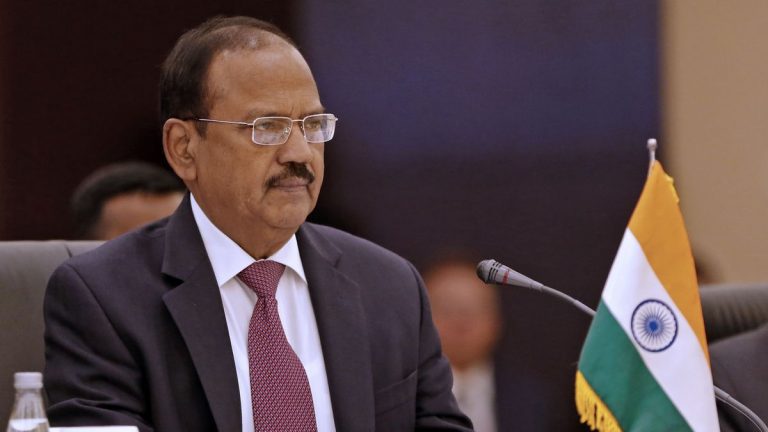
The National Security Advisor, Ajit Doval along with other senior security officials is expected to visit Kashmir valley today to review the on-ground situation.

This decision came even while the Army, Air Force and Navy kept have been kept on high alert to deal with any fallout of the bifurcation of Jammu and Kashmir into two Union Territories and stripping of Article 370.

The Indian Armed forces, though are of the view that the repealing of Article 370 and what is preceding in Jammu and Kashmir is India’s internal matter, but are still keeping a hawk’s eyes on any reaction regarding this decision from Pakistan’s side and the responses of its Army on the Line of Control (LoC) and other areas.

As a precautionary measure, more troops have been sent to Kashmir. Close to 8,000 paramilitary troops were airlifted and moved in from Uttar Pradesh, Odisha, Assam and other parts of the country to the Kashmir valley. Troops induction still going on.

Ajit Doval had previously visited Srinagar in the last week of July, in the run-up to the decision to evoke Article 370 from the Valley.

After reviewing the situation, Doval had ordered to deploy over 25,000 security personnel in Jammu and Kashmir.

Hours before the announcement, section 144 CrPc was imposed in Srinagar with effect from 1200 Hrs on 5th August 2019 which shall remain in force till further orders.

It is notable here that the LoC between India and Pakistan Occupied Kashmir has been tensed since days as Pakistan has reportedly been attempting to send BAT personnel with Islamist terrorists into the valley. There have been reports of continuous shelling at the LoC.

Previously, the Amarnath Yatra had been cancelled following the discovery of American M-24 sniper and Pakistan made mine in a terrorist cache.

Mobile internet has been suspended in the Valley. As a preemptive measure, several political leaders, including Mehbooba Mufti, Omar Abdullah and Sajad Lone, have been put under house arrest while Army personnel have taken to the streets of Kashmir.

Schools and colleges in Jammu, Kishtwar, Resai, Doda and Udhampur districts were also ordered to remain closed on Monday.

Today, the Modi government came up with a historic move to change Kashmir’s destiny by revoking Article 370 in Jammu and Kashmir.

Apart from this, the govt has announced to bifurcate the border state into two separate Union Territories – one for Ladakh without a Legislative Assembly, and another for Jammu and Kashmir with a legislative assembly with curtailed powers.

Home Minister Amit Shah is also likely to tour the Valley after the end of the Parliament session.

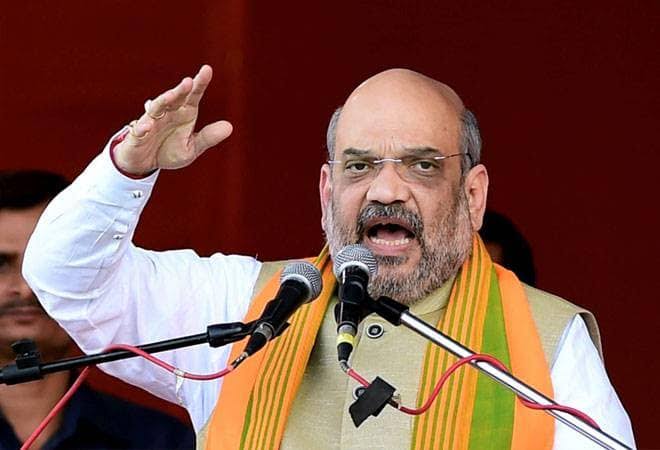
Amit Shah’s thundering speech in the Rajya Sabha: Article 370 has been the root cause of terrorism and poverty in J and K

Union Home Minister addressed the Rajya Sabha today after the central government’s historic decision to strip Article 370 and bifurcate the former Jammu and Kashmir into two separate Union Territories.

Addressing the upper house, Amit Shah stated that by stripping the Article 370, the long age of violence and bloodshed in the valley will now come to an end. He added that the resolution for bifurcation and the scrapping of Article 370 will bring a new era of development in the valley.

Shah added that Article 370 was a temporary provision and it was bound to be removed one day but the previous governments never dared to touch it due to fear of losing their vote banks.

Amit Shah added that Article 370 was the reason democracy never bloomed in Jammu and Kashmir while some people with their vested interests kept misusing it to further their own interests. He added that due to Article 37 and section 35A, corruption has been propagating and now it has reached its zenith. These provisions have made poverty and lawlessness take root in the land.


The Home Minister stated that certain politicians of Kashmir had made the environment such that no local body elections were being held in the state and government’s money meant to be spent in villages and towns for developmental works never reached there.

He stated that Article 370 had snatched the democratic rights of 40 thousand sarpanch and panchayat members in the state for all these years.

Also read: Jammu and Kashmir Panchayat elections: The mark of a new dawn and perhaps, a new destiny

Amit Shah highlighted the fact that due to the provisions in section 35A, quality educational institutions have not been able to open their schools and colleges in the state and the children in the state had been forced to go far away from their home to receive an education.

He added that over the decades, the government of India has sent thousands of crores of money to Jammu and Kashmir but instead of helping the people in the state, the money has been gulped down by corrupt politicians and bureaucrats. Article 370 is the reason behind it because it never allowed national anti-corruption laws to be applicable in the state.


Shah slammed the Congress saying that when the Allahabad HC brought judgement against Indira Gandhi, the then Congress government had brought a proposal and passed it the same day to force the emergency on the nation. But the same party is today opposing the NDA government for the resolution.

Shah stated that the entire Jammu and Kashmir has tremendous potential for tourism. But Article 370 has been stopping tourism and hospitality companies from opening their business in the state, thus keeping its population poor and in the mercy of a handful of politicians and their family members who monopolise all the business in the state.


Shah also stated that the government of India has brought Ayushman Bharat Yojna to benefit Indians but the Artcielc 370 deprives the people in the state of enjoying its benefits because no healthcare professional wants to go and live there. When a doctor cannot vote, buy a property or own a business in a state why would he want to work there, Shah asked.


Shah also slammed the opposition leaders who claim that the scrapping of the article is a threat to the identity, language and culture of Jammu and Kashmir. He asked that all other states in India obey one constitution and one law, which state has lost its own language and culture by opening its doors to business and development?

He further stated that the people who are opposing the government’s proposal send their own children abroad to study and live while encouraging the poor youth from J and K to pick up arms and stone-pelting.

Shah stated that Article 370 has withheld Jammu and Kashmir from enjoying the developments that a modern, inclusive and advanced India has achieved.

Pakistanis go completely mental as India strips Article 370 and proceeds to bifurcate Jammu and Kashmir state

Following India’s historic move to strip Article Article 370, which granted a special status to Jammu and Kashmir and a subsequent bill aimed to bifurcate the state into two Union Territories, Pakistanis on Twitter couldn’t stop themselves from expressing the devastation that swept them following India’s audacious move.

A large number of Pakistanis, who had no idea what was transpiring back in India were taken aback by the government’s decision to do away with the partition relic of Article 370 and proceed in the direction of greater assimilation of the state with the Indian Union. Dejected Pakistanis took to Twitter to lament about India’s dare-devilry vis-a-vis Kashmir.

Ghazwa-e-Hind proponent, Zaid Hamid, who was in the news for receiving lashes from Saudi Arabia regime had a meltdown on Twitter as he questioned Pakistan’s inability of having no intel input about the abolition and Modi government’s utter secrecy in doing away with Article 370.


He lost his mind so much that in a series of tweets in Urdu he asked the Prime Minister of Pakistan Imran Khan to resign over India’s revocation of Article 370 in Jammu and Kashmir.

Pakistan’s foreign minister too took to Twitter to announce that Pakistan ‘condemns and rejects’ India’s proposals.


Seems like Pakistan has forgotten that it really doesn’t have a say in internal matters of India.

Pakistani senior journalist Hamid Mir was also gobsmacked by India’s move to scrap Article 370. Trotting out the age-old accusation that India acted in contravention to the United Nations, Mir proceeded to equate Prime Minister Modi with General Dyer who ordered the massacre of thousands of innocents in Jallianwala Bagh in 1919.


And there were still Pakistanis who were hoping against hopes that Kashmir will someday merge with Pakistan.


There has been quite a meltdown on the Indian side too, who perhaps never wanted peace to return to the valley. PDPD chief Mehbooba Mufti and the last chief minister of the state of Jammu and Kashmir said that today was the darkest day in the history of democracy. This, surprisingly, wasn’t in reference to the fact that MPs of her party tore the Constitution in the Parliament and later, when asked to leave, tore their own clothes as a mark of protest against the revocation of special status granted to Jammu and Kashmir.