Home Blog Page 6326

Shekhar Gupta admits that journalists chose to ignore the positive effects of Modi government’s welfare schemes

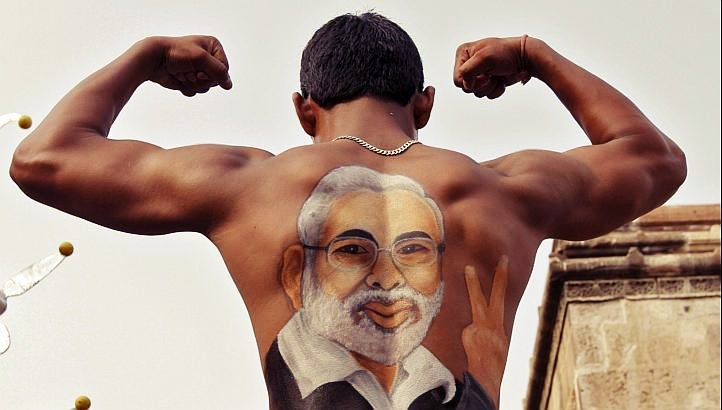
Shekhar Gupta, the owner of the online news portal, The Print, and the Chief of Editor’s Guild, while speaking at a discussion on ‘How India Voted’ admitted that journalists chose to ignore the effects of Modi government’s welfare schemes before the elections. “I have to say this very honestly that we journalists at the commentariat chose not to see it. Even when we see it we compulsively try to deny it”, said Gupta.

Prior to the historic victory of the NDA in the elections, the left-liberal section of the media was spreading the theory that there was widespread resentment against the Modi government among the general people. The allegations of high unemployment, farmers’ problems, economic slowdown etc were cited as the reasons why Modi will not come back to power. It was claimed that various schemes of the government didn’t reach and benefit most people in India. But now Shekhar Gupta has confirmed that they peddled such lies by deliberately ignoring the benefits that people had obtained from various schemes of the government.

https://youtu.be/mL5quXQzLkY?t=5050

(update: the above video has been deleted but relevant portions can be heard below in some embedded tweets)

Speaking on the embarrassing defeat of the Congress Party in the recent Lok Sabha elections, Gupta said that the party suffers from autoimmune disease. “In so many days of campaigning, I never heard Rahul Gandhi or anybody from Congress Party, say anything good about what their own government did under UPA II. This is the autoimmune disease of the Congress Party. They want to blame Modi, they want to blame the media”, said Gupta.

“The vote has been bullshitted for too long in the name of schemes. The voter in this country does not trust the Congress schemes. Forget it. Anything that happened in the past, very little got to her”, he added.

Gupta confessed that though he was looking for the evidence against the schemes of the Modi government he did not find any evidence. “We were hoping to see evidence for the contrary but we were not finding it. We were finding gas cylinders. We would even peek inside a house and find a gas cylinder”, said a disappointed Gupta.


He said that the government was using the JAM trinity, the Jan Dhan Account, Addhaar and Mudra loan, which the left liberals hate, to successfully help people. He said, “initially I thought that Mudra loans were rubbish, that these were all fakes. But I have videos… 50 kms from Azamgarh, a Dalit saying that I got Rs 50,000 Mudra loans, made this chai shop, I repay Rs 1,300 every month. If I don’t repay on time, the bank manager sends somebody to me. And then I came back and checked the larger data, 4.81 crore people have got Mudra loans, and Rs 2.1 lakh crore has been disbursed.”

Then Shekhar Gupta says, “Now I have to say this very honestly, that we journalists and commentariats, chose not to see it. And even when we see it increasingly, we compulsively tried to deny it. ‘Oh they got the gas cylinders, but they can’t afford the next cylinder. The next one is full price.’ But that is a lie, the next one is not full price. The next one you pay full price, you get the subsidy amount back at your bank account.”

“The fact is that these people had never seen the delivery of anything. And even if they got any delivery they had not seen the delivery of anything without having to pay bribes for it including in most cases NAREGA wages. It’s a big change. It’s a big governance exercise. You may like it you may not like it but smart people are learning from it”, Gupta said talking about how the Modi government changed the governance in the country.

Gupta said that the Congress Party lacked the intellect to counter this governance of Modi because the Party did not like facts. “It is the Congress Party’s lack of intellect, lack of commitment and arrogance”, said Gupta criticising the Congress Party.

First decision of new government dedicated to those who protect India, major changes made in Scholarship Scheme under National Defence Fund

Taking the first decision after assuming office as the Prime Minister for a second time, PM Modi has made a major change in the ‘Prime Minister’s Scholarship Scheme’ under the National Defence Fund (NDF).


The changes approved by the Prime Minister are increasing the amount of scholarship provided to boys and girls. The rate of scholarship has been increased from Rs 2000 per month to Rs 2500 per month for boys and from Rs 2250 per month to Rs 3000 per month for girls. The ambit of the scholarship has also been widened to include wards of State Police Officials who are/were martyred during terror/naxal attacks. The allocation of new scholarships for the wards of State Police officials will be Rs500 per year. The nodal Ministry in this regard will be the Ministry of Home Affairs.

The NDF was which set up back in 1962 to take charge of the voluntary donations received for the promotion of the national defence effort and to decide their utilisation, is being used for the welfare of the members of the Armed Forces, Para-Military forces, and Railway Protection Force, and their dependents. It is administered by an Executive Committee consisting of the Prime Minister as the Chairman and the Defence and the Home Ministers as the members of the committee.

The Prime Minister’s Scholarship Scheme under the NDF is provided to encourage technical and post-graduate education for the widows and wards of the deceased/ex-service personnel of the Armed forces, the Para-Military forces, and the Railway Protection Force. These scholarships are available for education at technical institutions e.g. medical, dental. veterinary, engineering, MBA, MCA and other equivalent technical professions.

Under the PMSS, every year new scholarships are given for 5500 wards of armed forces controlled by Ministry of Defence, for 2000 wards of paramilitary forces controlled by Ministry of Home Affairs and for 150 wards of forces controlled by Ministry of Railways.

The National Defence Fund accepts online voluntary contributions through the website ndf.gov.in.

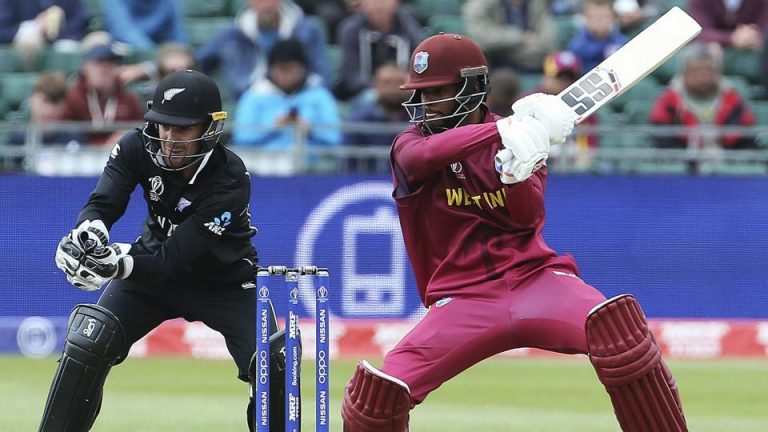
World Cup: Match 2 – Pakistan v West Indies in numbers

Who would have thought of such a low scoring match at Trent Bridge which produced 2 highest ODI totals in the recent past? The match ended in just 35.2 overs.

The West Indian bowlers dominated the match, and then the batting was dominated somewhat by Chirs Gayle. Let’s see what new records were created today.

The match length of 35.2 overs, the second shortest match between two Test playing nations in the World Cup history in which a result was achieved. The Bangladesh-West Indies match at Dhaka in 2011 got over in 31.1 overs. Both the times West Indies was involved.

105 in 21.4 overs is Pakistan’s shortest innings in the World Cup history and second lowest total after 74 vs England in Adelaide in 1992. Pakistan also holds the record for the lowest total in a World Cup Final. They made just 132 in World Cup final, held at Lord’s in 1999.

11 defeats in a row in completed ODIs. This is Pakistan’s worst losing streak in one-day internationals history.

This is Pakistan’s second biggest defeat in ODIs in terms of balls (218) to spare. The record is for 225 balls, against West Indies in Capetown, 1993.

Chris Gayle has a 50 plus score in each of his last 6 innings in ODIs. Only the second West Indies batsman to achieve this feat after Gordon Greenidge in 1980.

Gayle has now hit 40 sixes in World Cup history which is now the highest number of sixes hit by any batsman. The second in the list is AB de Villiers who has 37 sixes on his name.

4 for 27 by Oshane Thomas is the 10th best bowling figure for a West Indian bowler in World Cup (Brendon Julien v Sri Lanka in 1975 and Jason Holder v Ireland in 2015 also took 4 for 27).

An iron hand and zero tolerance policy can ease Traffic and Pollution situation easily

Pollution is often attributed to the vehicles plying on the roads and it is becoming impossible to put a break on number of vehicles being added to the roads. My study and knowledge says that smooth running traffic can ease the situation a lot as most of the fuel burnt and wasted by the vehicles during a traffic jam adds to the pollutants in the air. A smooth running traffic will ease Pollution situation and save Millions of liters in fuel being burnt during traffic jams. This is National wastage. Our policy makers are doing a good job by adding more lanes, flyovers, Bypasses, underpasses etc., but ignoring the root cause of traffic jams.

Below, I will try to give a few points on how Traffic can be made to run smoothly in the existing scenario.

  1. Footpaths need to be cleared of Hawkers and Squatters

Most of the city footpaths (Patri), which are essentially for people to walk, are occupied by stalls selling cigarettes, vegetables, food or mobile accessories. This makes our footpaths impossible to walk on and leads to people walking on the roads due to no other available option. These encroached upon footpaths also breed vagabonds, chain snatchers, drug addicts and criminals like molesters.


If the pavements are clean and free of any activity other than for walking, we will get an additional lane for traffic movement. So, if there is a 4 lane road, we immediately get 25% more road for traffic movement by just clearing one lane from Jay walkers.

Smooth moving traffic means less fuel consumption by vehicles, more mileage per litre of fuel and a great saving of Fuel (Lesser Pollution, lower imports of Crude oil and more)


  1. Remove all structures encroaching Roads & Highways.

Many structures obstruct the traffic movement and sometimes encroach half the road. This is very common in areas which have unauthorized construction. In order to prevent authorities from demolishing their illegally built shops or homes, they make a religious structure in front.

Since it becomes a very sensitive issue, civil authorities look the other way and do not demolish them. This needs to end now. Our Highways and roads are our lifeline and for developing the country, we need to clear them. A strong action and immediate demolition of all structures coming on highways, must be done.


  1. Gramin Seva and E Rickshaws need to go from cities

Since these vehicles are not regularized properly, they always are biggest offenders of rules in terms of blocking 3-4 lanes of roads, overloading passengers, driving in wrong lanes and over speeding. Complete removal or strict enforcement of law on them is needed to ease traffic situation. Most of these vehicles are racing with each other and owners have fights erupting on minor issues.

They’re everywhere, at Bus terminals, Railway stations and outside Metro stations but they cause more traffic nuisance than helping commuters.

E Rickshaws, although do not cause any pollution but are major contributors in slowing traffic because of their erratic methods of driving, lane cutting, wrong side driving etc.

Just like in Mumbai, there are areas where only Taxis are allowed and Auto rickshaws are banned, other cities too need such traffic control.


  1. Traffic signals must be made Free of Beggars & Vendors.


Balloon selling kids, Beggars etc must be removed and all kinds of commercial sales at traffic signals must be stopped for making traffic movement faster. They add to traffic woes and also are a major cause for Road rage.


  1. Educate Vehicle owners.

The vehicle owners need to be taught Lane driving, No honking and no Driving on wrong side of the roads. The very commonly seen wrong acts are:

  1. a) People wanting to take a right turn will overtake all vehicles standing on a traffic signal from left and make a beeline at the zebra line, this blocks the lanes designated for vehicles going straight.
  2. b) When they see a traffic jam, they start reversing the vehicle and enter wrong side.

Both these menaces need instant cancellation of license and impounding of vehicle.


  1. Fine Tuning All Possible Problems.

After all the above actions are in place, we can move further towards improving any faulty design or removing unwanted hindrance, like pot holes, uneven roads, unaligned roads etc.

In this new world of technology, we can simply take the help of services like Google Maps and satellites, even traffic lights must be made automatically moving from Red to green depending upon the traffic density.

Google maps shows density of traffic as Orange and RED. A central control room of traffic police can see which road is turning Green to orange and immediately deploy more constables to run traffic smoothly. With good policing, we can ensure traffic always moving at good pace.

Above steps will ensure:

  1. A more efficient society, spending less time n commuting
  2. People getting better mileage per litre of fuel
  3. Those walking to bus stops, metro stations etc will find better walkways, footpaths and overall improvement in quality of life.
  4. Vehicles running smoothly ensure best fuel average, lesser pollution, Overall National saving in fuel, lesser imports of Crude Oil and better utilization of existing infrastructure.


‘Cannot allow Hindus to vote anymore,’ Trinamool Rajya Sabha MP tells party workers

Subhashish Chakraborty, Rajya Sabha MP and District President of the Trinamool Congress in South 24 Paraganas, has been caught on camera issuing directives to his cadres that Hindus will not be allowed to vote in the future, Bengali portal ei bangla 24×7 has reported.
[youtube https://www.youtube.com/watch?v=cxuC_tljZ00]

In the video, Chakraborty can be heard saying, “Hindus there cannot be allowed to vote any more.” The comment was made while analysing the results of the Lok Sabha elections in which the BJP managed to increase its tally to 18 seats in the state. It was made after it was discovered that a certain village had voted greatly in favour of the BJP. While analysing booth wise voting pattern, Chakraborty said that it is OK that CPM has increased their votes in some booths, but asked the party workers to take care of booths where BJP got majority votes. When his aide said that these are Hindu majority areas, he said that Hindus won’t be allowed to vote any more.

It is pertinent to remember that Hindus were prevented from voting in various constituencies across the state even this time around. Hindu voters were stopped from voting in Raiganj and Medinipur.

Communal violence was reported in Diamond Harbour, too, while elections were on, a constituency in South 24 Paraganas itself. A Trinamool hand was suspected behind the violence which reportedly caused many Hindus to flee the area ahead of voting. Trinamool had won all the four Lok Sabha seats in the district handsomely.

A post-poll CSDS survey showed that there indeed had been a great consolidation of Hindus behind the BJP in Bengal as well while Muslims consolidated in favour of Trinamool which led to the utter collapse of the Left.

The 2019 Lok Sabha elections witnessed great violence and rampant rigging by the Trinamool Congress. Yet, they were unable to suppress the saffron surge. It appears that the party has now decided to punish the Hindu community specifically for exercising their constitutional right to vote.

India’s GDP grew by 6.8% in the last financial year, quarterly rate fell below 6% in the last quarter

The Ministry of Statistics & Programme Implementation has released the provisional estimates of GDP for the financial year 2018-19. The numbers have been published at both Constant (2011-12) and Current Prices. Along with this, Quarterly Estimates of Gross Domestic Product (GDP) for the fourth quarter (January to March) has also been released.

According to the provisional estimates, the fourth quarter in 2018-19 saw a dip in GDP growth rate, as it fell to 5.8% at constant prices and 9.4% at current prices, down from 6.6% and 11% from the previous quarter. The GDP at Constant (2011-12) Prices in the fourth quarter of FY 2018‑19 is estimated at ₹37.20lakh crore.

The GDP growth rate for the financial year 2018-19 was 6.8% at constant price, and 11.2% at the current price. The growth rate showed a decreasing trend in every quarter in the financial year. The growth rate of 6.8% is the lowest in the last five years.

Period Constant Prices (2011‑12) Current Prices
Financial year 2018 -19 6.8 11.2
Q1 2018-19 (April-June) 8.0 12.6
Q2 2018-19 (July-Sep) 7.0 12.0
Q3 2018-19 (Oct-Dec) 6.6 11.0
Q4 2018-19 (Jan-Mar) 5.8 9.4

The Second Advance Estimates of National Income for the financial year 2018-19 were released on 28th February, 2019. These estimates have now been revised incorporating latest estimates of Agricultural Production, Index of Industrial Production (IIP) and performance of key sectors like, Railways, Transport other than Railways, Communication, Banking, Insurance and Government Revenue Expenditure, a press release by the ministry said.

The Real GDP or GDP at Constant (2011-12) Prices for the financial year 2018‑19 is now estimated at ₹140.78 lakh crore, showing a growth rate of 6.8%over the GDP for the year 2017‑18 of ₹131.80 lakh crore. At current prices the GDP is estimated at ₹90.10 lakh crore.

The sectors which registered growth rate of over 7.0% are public administration, defence and other services (8.6%), construction (8.7%), financial, real estate and professional services (7.4%), electricity, gas, water supply & other utility services (7.0%). The growth in the ‘agriculture, forestry and fishing’, ‘mining & quarrying’, ‘manufacturing’ and ‘trade, hotels, transport, communication and services related to broadcasting’ is estimated to be 2.9%, 1.3%, 6.9% and 6.9% respectively.

The Gross National Income (GNI) at 2011-12 Prices rose by 6.9%, and it is now estimated at ₹139.32 lakh crore at constant prices for the FY 2018-19, as against the previous year’s estimate of R130.34lakh crore. The Per Capita Income for FY 2018-19 stood at ₹92,565, up from ₹87,623 in the previous year, registering a growth rate of 5.6%. At current prices, the GNI was ₹188.17 lakh crore, and per capita income was ₹ 1,26,406.

Grenade flung at CRPF camp in Kashmir, firing underway between the forces and terrorists

In the latest development, terrorists have hurled grenade at CRPF camp of 180 BN at Midoora in Tral, Jammu and Kashmir. As per reports, CRPF personnel responded with aerial firing.


Earlier today, 3 terrorists were neutralised by the Armed Forces in Dragad Sugan area of J&K’s Shopian. Encounter is currently underway and top commanders of Lashkar-e-Toiba and Jaish-e-Muhammad are believed to be trapped in the region. Cordon and search operation was initiated by the paramilitary forces after the police received a tip-off about terrorists’ whereabouts. As the forces carried out the search operations, terrorists started firing at them, leading to the encounter.

Earlier in February this year, Jaish-e-Muhammad trained Kashmiri terrorist carried out a suicide attack on CRPF convoy near Pulwama killing 40 CRPF personnel. The situation between India and Pakistan then quickly escalated as India carried out retaliatory attacks against the Pak based JeM camp in Balakot and Pakistan sending its fleet of F-16s and JF-17s, in a failed bid to attack India’s military installations. Pakistan has since been pleading India to deescalate the tensions on the border but India has so far turned a blind eye to their repeated entreaties stating that Pakistan should act against the terrorists before initiation of any meaningful dialogue between the two countries.

David Warner declared fit, will open for Australia

Australian opener David Warner who was doubtful for the opening game for Austalia in World Cup due to sore glute has been declared fit for the first game in the World Cup.

Earlier, Justin Langer had concern over his fitness as Warner is in good form and can play an important role in their road to semis.

Talking to Cricket.com.au before Warner’s fitness test, Langer said, “We’ll have a pretty good idea today, how he moves and how he pulls up in the morning.”

Australia will take on Afghanistan on Saturday in Bristol. The coach was waiting for the fitness test.

“But what I have expressed to him is it’s really important to be fair to the other players, we don’t want to be getting to Saturday morning and making a call, when a couple of other guys are wondering if they are going to play or not going to play.”

Warner was in tremendous touch in IPL and scored maximum runs (692) in the tournament despite playing 2 games less due to his commitment for the Australian team.

Sachin Tendulkar on Thursday picked David Warner as one of three players to watch out in this world cup.

“He’s obviously desperate to play,” Langer continued. “As all 15 players would, he is jumping out of his skin, his energy is up and he’s laughing a lot, which is a really good sign.”

The Australia – Afghanistan match is a day-night game. New Zealand and Sri Lanka playing the first match of Saturday.

Journalist Rana Ayyub continues to smoulder as Amit Shah is appointed as Union Minister of Home Affairs

The meltdown that was triggered by an emphatic victory for the BJP in the recently concluded Lok Sabha elections seems to continue for Rana Ayyub as she carried on with her rant on Twitter. In the wake of Amit Shah being appointed as Home Minister, while many prominent journalists chose to stay mum, Rana Ayyub’s meltdown had severely compounded.


Rana Ayyub couldn’t bring herself to the terms that her nemesis Amit Shah is going to preside over the Home Ministry of the country. So profound is the meltdown that Ayyub has continued to cast smear on India’s newest Home Minister by asserting that he had been arrested for murder and extortion when he was Gujarat Home Minister.


However, in harmony with the quintessential liberal trait of having selective regards for the Indian judiciary, Rana Ayyub deceitfully obscures the fact that the courts had exonerated Amit Shah in the cases she had averred.

Ayyub’s meltdown had started when most of the Exit Polls had declared that BJP government at the centre is imminent. However, she held on to her horses until the Results Day when the early trends indicated that BJP is set to form a government at the centre with an overwhelming majority.

Even then, Rana Ayyub couldn’t digest the fact that her bete noires Modi and Shah will go on to form a stable government at the centre with a decisive majority. Lamenting on Twitter, Rana posted a series of tweets questioning the Congress incompetence against the robust BJP election machinery. She bemoaned that nothing worked for Congress in this election campaign as their numbers remained close to the 2014 digits, reflecting utter decimation for the principal opposition party.

With Shah reigning over the Home Ministry, one can expect Rana Ayyub to work overtime to fear-monger by vilifying the PMO and his cabinet ministers and painting a grim picture about the country on Twitter and other International forums.

Gurugram ‘hate crime’: Police says Barkat Alam may have been tutored to give it a communal angle

The case of a Muslim man in Gurugram being allegedly beaten up by some Hindu men in Sadar Bazar area had caught media attention on May 28 after newly elected BJP MP Gautam Gambhir had tweeted about it, insinuating it to be a hate crime and preaching about ‘secularism’.

While the usual suspects in the media jumped to the opportunity to keep the communal pot boiling, the police have almost denied the angle of hate crime in the incident. The day of the incident itself, the Gurugram police had stated that the incident was a case of a minor brawl in a drunken state. On 28 May, Gurugram Police Commissioner Mohammad Akil held a press conference in which he claimed that the victim might have been tutored.

Swarajya journalist Swati Goel Sharma delved into the entire incident and got in touch with Mohammad Barkat Alam’s cousin Murtaza over the phone. While he was initially even reluctant to talk on phone, on Sharma’s persistence, he eventually agreed to meet her in Gurugram on condition that no video is recorded. Murtaza, who is in his 40s, works in a tailoring shop in Gurugram’s Jacob Pura, around 30 kilometres from New Delhi.

According to the report, Murtaza and Barkat Alam hail from Begusarai in Bihar. While Murtaza was staying in Gurugram for the last few years Alam had come two weeks ago. Barkat, who lost his father at an early age, was earlier in Madhya Pradesh, where he worked as a mason.

On May 25, Barkat lodged an FIR (first information report) against unknown men at the city police station, saying that when he was returning from the Jama Masjid in nearby Sadar Bazaar around 10.15 pm, six unknown men cornered him. Four were on a motorcycle and two were on foot. They were drunk and told him that the skull cap was not allowed in the area. They hurled abuses at him, and the two men thrashed him and even threatened him with his life.

The police applied sections 153A (promoting enmity between groups on ground of religion), 147 (rioting) 149 (unlawful assembly), 323 (causing hurt) and 506 (criminal intimidation) of IPC or Indian Penal Code.

The incident was blown up the next day as Barkat gave statements to several television news channels claiming that he was forced to say ‘Jai Shri Ram’ and ‘Bharat Mata ki Jai’.

However, Gurugram Police had later said that many of Barkat’s allegations did not match with his statement in the FIR as well as with the footage obtained from CCTV cameras.

For instance, while Barkat said in the FIR that six men accosted him, CCTV shows two men, out of which, only one attacked him. Moreover, Barkat had told the media that his skull cap was forcibly removed, whereas the video showed the attacker hit him on his head which displaced his cap and Barkat himself had put the cap in his pocket. While Barkat told the media he was asked to chant Jai Shri Ram and Bharat Mata ki Jai, police said he did not mention it at all in the FIR.

Meanwhile, when the Swarajya correspondent met Barkat on Wednesday (29 May), he did not know that several of his claims had been refuted by the Gurugram police a day ago.

In his defence, Barkat told the correspondent that he did tell the police about the slogans but, being illiterate, he did not know what the cops ended up recording.

On the gaps between his allegations and the probe, Barkat says the CCTV seems to have captured only one angle and the other attackers were probably out of view. He also showed his white kurta torn at the shoulders and asks, “Is this kurta lying?”

“I stand by my statement,” Barkat said and showed reluctance to speak further.

Murtaza intervened and said that the police had been very helpful and cooperative. He maintained that because they were illiterate, he was not sure of the statement Barkat gave to the police. However, he regretted saying that had Barkat also stayed back for the Taraweeh namaz, that evening and not returned alone the incident would not have transpired.

Murtaza further divulged that a local man named Haji Shahzad Khan who had helped them get back the documents which the police had impounded after the incident, took Barkat to Delhi the next morning. Barkat too, obliged by the favour agreed to go with him.

According to Murtaza, “God knows what kind of videos” were made in Delhi. “I am his guardian. Shahzad should have asked me at least,” says Murtaza. “Wahan Dilli villi mein kya kya banwaya… uske saath kya kya video banwa diya” [There in Delhi, they made god knows what kind of videos],” he says.

However, it was not clear as to what Murtaza was trying to imply and whether Haji Shahzad Khan was instrumental in tutoring Barkat to give the incident a communal aspect, as the police had claimed.

Meanwhile, before the cousins could divulge further they were cut short by fellow tailors who asked the correspondent to leave citing trouble and said the matter is with the police and they should not be speaking to the media.

According to the Swarajya report, different people of the locality had different aspects. Many shop owners the correspondent spoke to, did not know about the findings in the police probe nor could they for certain say what had transpired that day.

However, one Sardar Tanwar, who runs a gifts shop opposite the sweets shop outside of which the incident took place, said some “village buffoons” roam around in the night and they could be behind the incident.

Meanwhile, another shopkeeper, Aman Dua, who runs a grocery stall just opposite the mosque, also confirmed that Muslims in the area wear skull caps all the time without any trouble.

While many locals said the ‘mahaul’ (atmosphere) is very peaceful and they find it hard to believe that such an incident has happened in the area, some Muslim stall owners said a different story.

Nausheer Ahmed, who sells dates outside the mosque, said that he is not surprised because two similar cases have taken place in the recent past.

The details of the ground report leave much to be answered. According to Swarajya, though the police have ruled out the communal angle, the fact remains that with non-availability of audio in the CCTV footage, this cannot be ruled out completely. Moreover, given the glaring gaps between Barkat’s allegations and the footage, one also wonders if he was really tutored as the police suspects?