Home Blog Page 7221

BJP, Akalis angry as Punjab Board textbooks removes 23 chapters on Sikh history

The removal of 23 chapters on Sikh history from Punjab school textbooks, has caused quite a stir among the BJP and Shiromani Akali Dal (SAD) leaders in Punjab and Delhi. As per reports, 23 chapters from class 12 history book of Punjab School Education Board (PSEB) pertaining to important aspects of Sikh history on Sikh gurus and their teachings, including Anglo-Sikh wars, the rule of Maharaja Ranjit Singh and annexation of Punjab were removed from the textbooks to ‘bring the syllabus on a par with the National Council of Educational Research and Training (NCERT)’.

BJP and SAD leaders have registered their strong protest against the removal of these chapters. BJP Delhi spokesperson Tajinder Bagga told OpIndia that if the printing isn’t stopped and old syllabus isn’t reinstated, he will go on indefinite hunger strike from 4th May. He even took to Twitter to voice his anger.

SAD leader and Delhi MLA Majinder Sirsa, too, chimed in to register his anger.

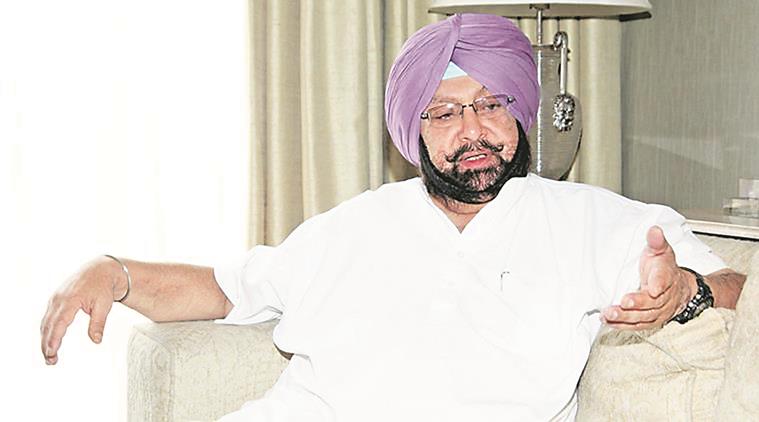
Punjab Chief Minister Captain Amarinder, however, has denied such deletion of Sikh history from school.

Pregnant relative of BJP candidate raped in West Bengal allegedly by TMC goons

The relative of a BJP candidate contesting in the Panchayat Elections in West Bengal has been allegedly raped by Trinamool Congress activists in Nadia district early on Sunday. Bappa Sheikh, one of the five people named in the police complaint by the victim’s mother-in-law, has been arrested. The victim was six months pregnant at the time.

The police complaint alleged that the BJP candidate was being threatened by TMC ever since she filed her nomination. It said, “On the night of April 29, a group of men barged into our residence, ransacked it and trashed our handlooms. Another daughter-in-law who is six months’ pregnant was home at the time. The miscreants kicked her in the stomach before raping her.”

“On Sunday, a group of 30 persons had come to our place. While 7-8 broke open my house, the others waited outside. They looted valuables from my house, ransacked my residence and broke three handlooms which we used to make sarees. My mother-in-law, sister-in-law and her three and a half-year-old son were staying in the adjoining house. They broke open their house, held the child at gunpoint and beat up the two ladies. My sister-in-law is pregnant. She was beaten and raped,” said the BJP candidate. The victim’s mother-in-law and the candidate’s mother said, “They took me to the verandah and beat me up. They vandalised the house, looted all the belongings and tortured my daughter-in-law.”

Union Minister Babul Supriyo blamed the ruling party in the state for the incident. He said, “It was a barbaric incident. Ruling party supporters assaulted and raped a woman closely related to one of our candidates. She has been admitted to the NRS Hospital in a critical state. I have brought the matter to the governor’s notice.”

However, the TMC has denied the involvement of its party cadres in the matter. Gourishankar Dutta, District President of the party, alleged that the BJP was cooking up these allegations to malign the party ahead of the Panchayat Elections. Local Trinamool MLA Arindam Bhattacharya remarked that it was a family matter. He said,  “As far as I know, this is a case of a family feud and has nothing to do with TMC.”

The Panchayat Elections in Bengal has been mired in violence this year. There have been regular allegations of attacks on the opposition to prevent them from filing their nomination papers. Eventually, the Calcutta High Court had suspended all poll processes as a consequence of large-scale violence in the state. Ultimately, some candidates were forced to submit their nomination through WhatsApp alleging that it was their only option in light of the attacks perpetuated by TMC goons and the Calcutta High Court directed the State Election Commission to accept the same failing which poll processes would be suspended again. Amidst all the chaos, the TMC is set to win about 20,000 seats uncontested.

In a first, GST revenue exceeds Rs 1 lakh crore in a single month

In a first for the Indian government, the revenue collection for the Goods and Services tax exceeded Rs 1 lakh crore in a single month. This revenue figure was clocked for April, as claimed by the Finance Ministry:


As per a press release issued by the Finance Ministry, Rs.1,03,458 crore was collected in April 2018. The breakup of this figure is in the form of, Rs 18,652 crore for CGST, Rs.25,704 crore as SGST, Rs. 50,548 crore as IGST – which includes 21,246 crore collected on imports and a Cess of Rs 8554 crore.

The number of GSTR 3B returns filed for the month of March were clocked at 60.47 lakh as of 30 April, against a total of 87.12 lakh possible returns. This number comes out to be 69.5% of total returns required to be filed.

When it comes to filing of quarterly returns for the total 19.31 lakh Composition Dealers, 11.47 lakh of them filed the said GSTR 4 return which resulted in a tax collection of Rs 579 crore.

After settlements, the total revenue which was earned by the Central and State governments in April stood at, Rs.32,493 crore and Rs 40,257 crore respectively.

As per the finance ministry, this tax revenue reflected better compliance and upswing in the economy. The ministry though cautioned that such a revenue increase might not turn out to be a trend, as in the last month of the financial year people try to clear the amount owed by them in previous months.

Going by an Economic Times report, the Finance Ministry has earned about Rs 7.19 lakh crores as via GST from August 2017 to March 2018.

Probably following such revenues, the GST council has set a target of Rs 12 trillion as revenues for the current financial, which in Indian numeral system translates to Rs 12 lakh crores, as reported by Mint.

This as per the report, would be possible thanks to the higher GST revenue and the introduction of the e-way bill which was introduced on 1 April.

Tripura: In a major clean up drive, 78 illegal buildings including political party offices to be demolished

The Tripura government will raze offices of political parties built illegally on government land if they don’t move out in due time, according to reports.

The west district administration conducted a detection drive and found that 78 illegal buildings including offices of political parties and trade unions, were on government land. Claimants of these offices have been told to move out by May 6, or face razing, said district magistrate Dr Milind Ramteke. “If the offices are not removed by due time, the administration, with the help of police, security forces, and if required, paramilitary forces would demolish those offices from May 7. And we will not be responsible for the destruction of the belongings,” Dr Ramteke told reporters.

The survey to identify these illegal structures took around 25 days, he said, adding that more might be included in the list. “This is a cabinet decision. I am unaware of the rest of the state but if any illegal structure of political offices is found standing after seven days from now, we will demolish them,” he said.

Chief Minister Biplab Kumar Deb, during the assembly session in March, had said his government would not allow the construction of offices of political parties and its affiliated bodies on government land and had warned of stern action.

“If offices of any political party, including BJP, are found illegally on public land, action would be taken,” Deb said.

This came following complaints from opposition Left members over the forceful occupation of some of their offices in different parts of the state after declaration of Assembly polls results on March 3. The BJP-IPFT coalition has come to power in the state, on trouncing the 25-year-old CPI(M) led Left Front government.

Tripura government is all out to follow the Central government’s footsteps. Modi government, as soon as it came to power, in a tenacious step was seen throwing out more than 460 squatters out of their comfortable Lutyens bungalows. This figure swelled up to 1500 by the year 2016. However, there were not many media houses documenting this cleanup mission in Lutyens’ Delhi.

Playing fast and loose with Ramayan

0

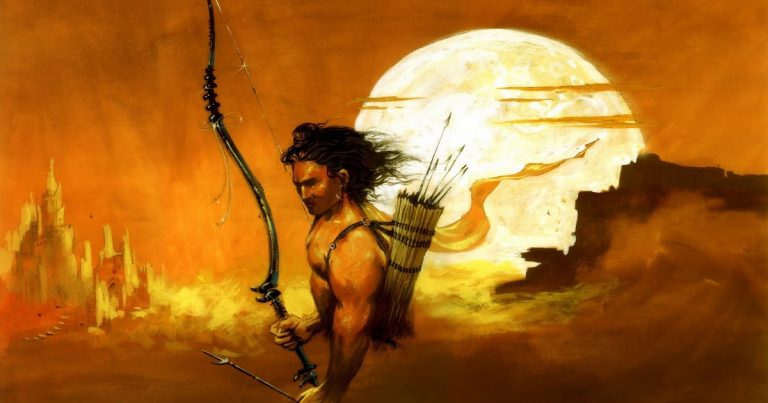
Controversies and public spats can indeed be very educative. What was characterized as a “right-wing troll attack”  was actually a spontaneous uprising of dharmic certainty among a people who may or may not know their Sanskrit, but certainly know their revered Ram and Sita well enough to stick it in no uncertain terms to a self-proclaimed “scholar” pushing a scurrilous agenda.

Why should it be okay for an “academic” outsider to denigrate an adored Hindu deity as “an uncouth, misogynistic pig”, but not okay for the Hindu devout to take umbrage and reply in like terms? Civilized debate is certainly desirable, but that must be a pre-requisite on both sides. For an outsider, the Ramayana is also capable of being appreciated as sublime poetry rather than scripture, but even from this relatively secular standpoint, there is much that is offensive about that lackadaisical phrase coming from an academic who ought to know better, and the smugness of the reaction that followed. There are “loose, colloquial” translations, but there are also lazy, erroneous translations and bigoted, misleading translations – and it doesn’t take a PhD to be able to tell them apart. These same academics are capable of being notoriously circumspect and measured in handing out criticism to personalities of other religious hues, but that is another matter.

In any case, all this brouhaha aroused my curiosity, and so I headed for the Yuddhakanda of the Srimad Valmiki Ramayana. I have read the Balakanda and Sundarakanda in the Sanskrit original a few times, but confess that I had never ventured into the Yuddhakanda beyond hunting for a few stray slokas here and there.

After skimming through a few of the preceding cantos, I dived straight into Canto 116, which picks up the narrative after Ram has expressed his suspicions about Sita’s chastity and harshly rejected her. This is quite a problematic section for modern readers, although the narrative rights itself eventually.

In this situation, any modern girl worth her salt would doubtless have responded to her mate as Truschke describes. But this is Ram, the ideal man, the embodiment of human perfection, in search of whom Valmiki had set out after he had discovered his wonderfully new poetic metre. And Sita is divine because she is born of the earth, and like Sarvamsahaa her mother, she too is all-enduring. Between Ram and Sita is a love that runs deep and wide, one that Valmiki has described in lush and lyric fullness many, many times over by this point in the narrative.  So Ram’s rejection, though stinging and deeply wounding, is in itself insufficient to dam the river of that love, and this is the standpoint from which Sita responds.

The Canto is short at thirty-six verses, and Sita’s reply takes up most of the Verses 5 – 28, but even translating each of these would make this article too long, so I shall focus on just a few relevant highlights. There are numerous commentaries that also enrich our perspective, but I am not including these here. Valmiki’s verses are sufficiently rich and remarkable to stand on their own and are the basis of a “personal interpretation” that I have provided after each verse.  Hopefully, this will aid in the edification of certain professors who seem to have forgotten to do their homework during their student days. I also add that this is a loose, colloquial translation that aims to retain complete fidelity to the original.

ततो बाष्पपरिक्लिन्नं प्रमार्जन्ती स्वमाननम् ।

शनैर्गद्गदया वाचा भर्तारमिदमब्रवीत् ॥ ४ ॥ 

(Then wiping her tear-stained face, she addressed her husband in timid, faltering tones.  4  )

Here Valmiki brings out the steadfastness of Sita’s love, for she does not feel anger, only hurt and pain. Just as a mother might be wounded by a child’s insensitivity, but would be not be angered to the point of repudiating her love for the child, Valmiki’s picture of conjugal love rests on a similarly rooted foundation. And before the female brigands come out with their usual chants of protest, let it be noted that Ram’s love is also presented in similar fashion elsewhere in the epic.

किं मामसदृशं वाक्यमीदृशं श्रोत्रदारुणम् ।

रूक्षं श्रावयसे वीर प्राकृतः प्राकृतामिव ॥ ५ ॥

(Why do you, eminent as you are, speak such harsh words that are so hurtful to hear, and so unbecoming of you? You speak words by which a common man might address a common woman.  5)

And this is Sita’s core – she upbraids her husband while holding him up to the highest standards that she knows he embodies. Nor is she afraid to show her sorrow, her pain. Sita questions Ram’s actions by elevating him, and herself in the process, above the common run.

पृथक्स्त्रीणां प्रचारेण जातिं त्वं परिशङ्कसे ।

परित्यज्यैनां शङ्कां तु यदि तेSहं परीक्षिता ॥ ७ ॥

(Based on the conduct a few wayward women, you appear inclined to distrust all of womankind. If I have previously been tested by you and found trustworthy, then give up this doubt of yours.  7)

What is interesting here is that Sita is standing up not just for herself, but all of womankind. With her reputation on the line, she could easily have said, “You distrust me” instead of “You distrust all women.” Why did Valmiki choose those words for Sita? If we consider our epics as embodiments of dharma, then this is not so much Sita’s message to Ram, but Vamiki’s counsel to the Prakrita men mentioned earlier in Verse 5. As far as Sita is concerned, she is परीक्षिता, tried and tested already, and known to be true to Ram. Why then does he stoop to generalize, she asks him.

Valmiki’s comments are delightfully relevant even today. Because of the conduct of a few wayward academics, we must not condemn all of academe. There are many scholars that bind themselves to a higher standard, even in the wild and wayward West!

मदधीनं तु यत् तन्मे हृदयं त्वयि वर्तते ।

पराधीनेषु गात्रेषु किं करिष्याम्यनीश्वरी ॥ ९ ॥

(My heart, which I control, forever beats for you alone. But when my body was under another’s control, what was I to do, helpless as I was?  9)

Sita’s words are breathtaking really, in the assumptions on which she proceeds and the issues she refuses to address. She makes no mention of her purity. She will not answer Ram’s doubt as to whether anything happened in Lanka. We hear nothing of what Ravana did or did not do. She holds herself above that. What’s more, even though Sita is the one in jeopardy here, she holds Ram to his ideal of perfection and demands that he understand her from that perspective and not with the prejudices of a commoner. She will only attest to the single-minded devotion in her heart. I am the mind and not the body, she seems to say, an early echo of a sentiment that is destined to develop in much greater depth in dharmic philosophy.

सह संवृद्धभावेन संसर्गेण च मानद ।

यदि तेSहं न विज्ञाता हता तेनास्मि शाश्वतम् ॥ १० ॥

(In all the time that we have spent together and grown together, if you, who confer honour on others, have not understood me, then I am truly lost.  10)

Ram is addressed as मानद, one who gives honour to others. Yet he has not honoured Sita. She has been publicly dishonoured. Who is Sita blaming here? Is she even blaming anyone? Ram? Herself? The time they spent together? The quality of their interactions? It is hard to say. But it is important to understand that Sita is not beating around the bush here, for we have seen on many occasions that she can clearly speak her mind. If her words are nuanced, it is because it must be so. Because she believes Ram is perfect, she will not and cannot criticize him. It is the subtlety of Valmiki that he has Sita say this almost in passing and does not beat us over the head with it, for Sita’s next words quickly move on to her time in Lanka. She then requests a fire to be created, for she does not wish to live any longer in the absence of Ram’s affection.

As the narrative continues, Sita enters the fire. The gods appear before Ram, but they too do not proclaim Sita’s purity. Ram has faltered, and Sita has been unable to help him recognize who he is. He needs divine help to be restored to his state of perfect equilibrium, because he is, after all, a mortal, and subject to human fallibility, as he himself candidly admits. The gods then proceed to acquaint him with his real nature, and upbraid him for behaving like “a common man.” They reveal to him the divinity that resides in him and reminds him of the purpose of his human incarnation. It is then left to Agni, the fire-god, the intermediary between gods and men, to return Sita to Ram, to affirm her chastity, and to admonish Ram that he never hurt Sita again.

And very unlike common men in such a situation, Ram rejoices at this command, and happy tears running down his cheeks. He is overjoyed and reveals that he acted with a larger purpose in mind, and of course, everyone who knows the Ramayana in one form or another is well acquainted with that part of the story.

In the verses quoted above and some intervening ones that have been omitted, Sita addresses Ram variously as, “वीर – O great one! महाबाहो – O mighty-armed one! प्रभो – O lord!  मानद – O giver of honour! राजन् –   O king! नरशार्दूल – O tiger among men!  वृत्तज्ञ – O knower of right conduct!” And later as सर्वधर्मज्ञः – knower of all the dharmas. So claiming “uncouth, misogynistic pig” as a “loose translation” can be more correctly interpreted as being loose so as to be completely untethered to reality.

A highly regarded Indian manual of poetics states (loosely translated) that the purpose of poetry is not to ordain like books of scripture, or to command in the manner of a surly boss, or even to advise like a trusted friend, but rather like a lover to lead one down the secluded alleyways of the imaginative spirit and there to ravish the mind with the choicest of words and images so that one’s soul is roused to the pinnacle of aesthetic bliss. And Valmiki’s Ramayana delivers, as it has done for centuries and will doubtless continue to do.

It is with good reason that the Srimad Valmiki Ramayana has traditionally been accorded the status of ‘Adikavya’, the first literary poem. It is Valmiki’s poetic vision, his gift for language and description, and the fullness of enjoyment that he gives us that makes reading the Ramayana in the original Sanskrit such a deeply satisfying experience. Not for him are the gender wars and casteist agendas, for he was gifted with divine sight in order to perceive something that mere mortals were unable to see. There is so much treasure in the Ramayana that often we can only see so much, and in seeing what we choose to see we hold a mirror to our own sensibilities. Valmiki soars above all this, attainable yet sublime, ever patient, ever willing to reward with his genius both the student and the connoisseur of Sanskrit poetry.


Hindu outfits demand ban on offering Namaz on government lands and open spaces

About 500 Hindu activists on Monday took to the streets to demand a ban on the act of offering Namaz on open spaces and government land, performed without taking prior administrative permission, as reported by Times of India. Besides this, the outfits also demanded the scrapping of FIR against six men who were arrested for ‘disrupting’ a Friday Namaz supposedly being offered on government land.

With regards to the FIR, the six individuals were arrested by the Gurugram Police last Thursday after a video of them trying to ‘disrupt’ the outdoor Namaz, went viral on social media.

They were granted bail on Sunday as the police didn’t follow proper procedure before filing the case. The court also observed that prior permission was not given for conducting these prayers on the land owned by the government.

As per a former Gurugram Bar Association president – Kulbhushan Bharadwaj, the Namaz was being conducted on government land near a temple without permission from authorities. He also claimed that the police had admitted to the Namaz organisers not taking prior permission.

He also alleged that prayer offering group had chanted pro-Pakistan slogans, which was opposed to by the arrested youths. Bharadwaj thus alleged that the police acted in a biased manner and only took action against the protesting youths.

With regards to this episode, the Hindu protesters marched from the Kamla Nehru Park in the city to the Mini Secretariat, where a letter was given to the additional deputy commissioner, asking him to forward it to Haryana CM Manohar Lal Khattar.

As per reports, the said letter alleged that land was being illegally occupied in pretext of reading prayers, for about one and a half months. It also alleged they were vitiating the communal atmosphere by chanting provocative slogans, and questioned as to why action was taken against some patriotic youths who tried to put a stop to it.

The groups thus demanded that Namaz should only be allowed on open lands or land owned by the government without prior permission. With regards to the permission they demanded that it should only be given in areas where Muslim population is in the excess of 50%.

Was Vishal Jangotra framed in the Kathua rape and murder case?

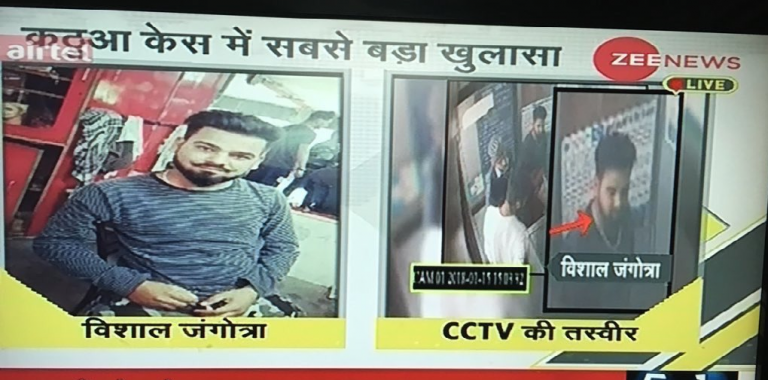
Fresh details have emerged in the Kathua rape and murder case where an eight-year-old girl was reportedly raped and killed in the Kathua Village in Jammu in last January. An investigation by Zee News has revealed that one of the accused, Vishal Jangotra, the son of Sanji Ram who was accused by the police to be the mastermind of the crime, was present in Muzaffarnagar on the day and at a time when the police charge sheet accuses him to be present in Kathua.

Zee News has accessed CCTV footage from an SBI ATM in Muzaffarnagar where Vishal Jangotra is visible standing in a queue and withdrawing money among other people. The Zee News team had even gone to Kathua to verify the identity of Vishal where his mother and sister have positively identified him. They also pointed out to the chain he was wearing and his clothes as proof that it was really him. Vishal’s sister has claimed that it was her ATM card Vishal was using as he did not have an account and all the transactions shown in the passbook have been done in the same location as Vishal stayed there to study.


Vishal Jangotra is a student in the first year course of BSc Agriculture at Meerut University. Earlier too, claims that the charge sheet poses false allegations on Vishal had surfaced when it was revealed in media that Vishal had attended the University examinations during the time he was accused to be in Kathua. The university has now reportedly provided Vishal’s answer sheets and CCTV footage recorded during the exams to the Jammu Police crime branch for verification of authenticity. Vishal’s family has been claiming since the beginning of the case that the crime branch investigations are botched up and Vishal was never present during the crime period.


Vishal’s presence in Muzaffarnagar on 15 January at 3 PM definitely throws a shadow of doubt on the charge sheet filed by the Jammu crime branch team in the Kathua case. The charge sheet was already under scrutiny as many reports claimed that it contained factual discrepancies. The whole matter of Vishal’s involvement is now questionable because the charge sheet claims that Vishal was helping the minor accused dump the body of the victim at 4 PM on 15th January.

Courtesy @rahulrajnews

The residents and several public organisations have been demanding a CBI probe in the case claiming that the investigations were sabotaged to frame the accused at the behest of certain elements with vested interests. The Jammu Bar Association has also protested in demand of a CBI probe into the incidents. The accused have pleaded not guilty in court and have demanded a narco test.

Saradha Scam: ED sends summons to Nalini Chidambaram

A week after Madras High Court rejected Nalini Chidambaram’s plea to quash ED (Enforcement Directorate) summons over Saradha chit fund scam, ED has issued summoned Nalini on 7th May in money laundering probe.

Wife of former Union Minister P. Chidambaram, who was the legal advisor of Saradha accused Manoranjana Sinh, had been summoned first by the ED in 2015 but she had sent her representative to the agency’s office. Nalini Chidambaram’s name was mentioned in Saradha scam “mastermind” Sudipta Sen’s letter to the Central Bureau of Investigation (CBI) in April 2013 in which he had mentioned that she prepared an agreement for co-accused Manoranjana, wife of Congress leader and former Union Minister Matang Sinh. In September 2014, the CBI sought some clarifications from her and based on the CBI case, the ED has been investigating the money laundering allegations against the main accused and his associates.

The summon in question was issued by the ED on 7 September 2016, asking Ms Chidambaram to be present at their Kolkata office. This was prompted via a statement made by a chit scam accused named Manoranjana Sinh that, Ms Chidambaram was paid Rs 1 crore by the Saradha Group for her court appearances. As per ED, the legal fee was paid via the money collected from the public in form of chits.

Later a stay order was imposed on the summons by the Madras High Court on 21 September 2016.

This might come as a bit of a blow to the Chidambaram family, whose member Karti is one of the accused in the INX Media Case, and is currently out on bail. It has been reported that Indrani Mukherjea (accused of murdering her daughter), had admitted to paying a Rs 5 crore bribe to one of Karti’s firms. This was allegedly paid with the motive to acquire “dubious and illegal” post facto FIPB clearances given to INX media by then Finance Minister P Chidambaram.

Mass violence erupts in Azamgarh over Facebook post which allegedly questioned Islam

0

The Saraimeer area of Azamgarh in Uttar Pradesh was engulfed in mass violence on Saturday, following uproar over a Facebook post titled, Islam mein burqa kyon (Why does Islam prescribe Burqa), as reported by Times of India. Other reports have claimed that the individual made objectionable comments again Prophet Mohammed.

The report further claimed that the act resulted in a Muslim mob laying seize to the local police station, to demand the immediate arrest of Amit Sahu who wrote the Facebook post. The police promptly acted in the matter and apprehended Sahu on Friday night, after booking him under sections 66A and 295A of the IT Act.

This though failed to diffuse the situation and on Saturday a large crowd gathered on the street to demand sections of National Security Act (NSA) be slapped on Sahu. As per an Indian Express report, a group led by known criminal Kaleem Jamai reached the police station at 11 AM to chant slogans demanding slapping of NSA related charges. The mob then went out of control and started pelting stones on the policemen and vandalising nearby vehicles.

Jamai who is believed to be the main perpetrator of the attack is wanted in 22 cases and was also believed to be responsible for 2016 Khudadarpur communal riot.

The violence which spread in the region as per a Dainik Jagran report, saw various incidents of arson which resulted in injuries to civilians and policemen. The mob also attacked a security guard, vandalised private banks, ATM and CCTV cameras.

As per an Amar Ujala report the violence was a premeditated conspiracy which was hatched on Friday, when the main perpetrator of the violence had issued threats over social media. The report also claimed that the stone pelting resulted in injuries to SDM Bagish Shukla and three police constables.

The resultant violence also included setting ablaze the Saraimeer square, following which the police had to resort to lathi charge, air firing and firing teargas shells, to bring the situation under control.

Later district administration dispatched a heavy police and Provincial Armed Constabulary (PAC) force to restore calm in the region. About 15 people have been arrested in connection with the rioting. Local reports have claimed that three cases have been registered in connection with the rioting, which name 45 people as accused.

Kedarnath Shrine opens in new avatar after winter break, laser show, new facilities greet devotees

0

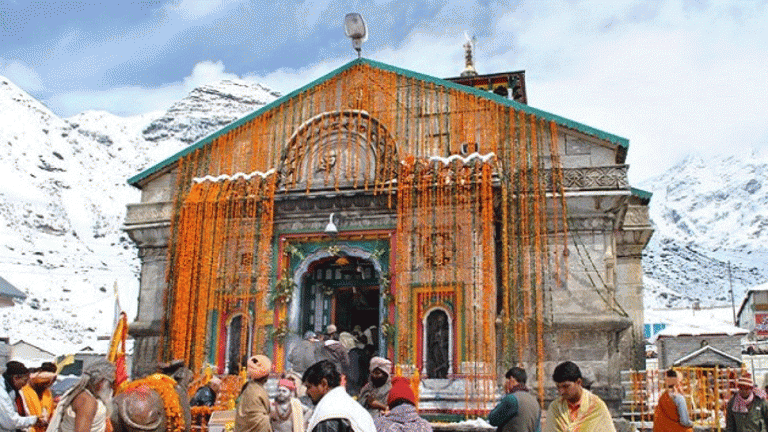
The Kedarnath shrine was reopened for pilgrims early on April 28 after the 6-month long winter break. Every year, the shrine is closed for the winter months and the main idol of Baba Kedarnath is worshipped in the Omkareshwar Temple in Ukhimath. In a grand reopening ceremony, the idol was brought in a flower-adorned palanquin to be reinstalled in the temple. Thousands of devotees had flocked to the Himalayan temple to have a Darshan and to offer prayers.

courtesy: Ktectours
courtesy: ANI

According to reports, the Kedarnath shrine will now have several revamped and new amenities for visiting pilgrims and residing priests. Prime Minister Narendra Modi is a devotee of Baba Kedarnath and he been personally supervising the construction works on the Kedarpuri project. Before the shrine was opened to tourists, earlier last week, the PM had reportedly conducted a review of the ongoing work through drone cameras.

A meditation cave, new pavements and amenities for the pilgrims have been added. The meditation cave is set to open by May. A laser show on Lord Shiva has been one of the major attractions for the pilgrims coming to the shrine.


The government of Uttarakhand under CM Trivendra Singh Rawat had taken careful measures to organise the reopening ceremony with much glory and enthusiasm.


The Char-Dham yatra has now been completely opened to pilgrims with the reopening of the Badrinath Dham Shrine today.

courtesy: Trivendra Singh Rawat, CM, Uttarakhand

The routes to Gangotri and Yamunotri were opened on April 18. With revamped facilities and new attractions, the Char Dham yatra is expected to bring many pilgrims and tourists to the scenic state of Uttarakhand this year.