Home Blog Page 888

Terror attack near Gaza border: Pro-Palestine Canadian citizen killed while trying to stab Israeli security personnel

On Monday (22nd July), the Israeli Defence Forces and Police stated that a terror attack took place in the Kibbutz of Netiv Ha’asara area which is near the Gaza border. The Israeli authorities said that the knife-wielding terrorist was neutralised after he carried out a stabbing attack in the southern Israeli town. The Israeli forces described the attack as a terror incident. They also revealed that the attacker was a Canadian citizen. According to the Kan public broadcaster, the attacker has been identified as Qawarshi Zakaria Adam. He carried a Canadian passport and he shouted “Free Palestine!” as he carried out the stabbing attack.

According to Israeli media reports, the terrorist Qawarshi Zakaria Adam was reportedly pro-Palestine and he was a Canadian citizen. He arrived at the entrance to the kibbutz, alleging that “the IDF is killing civilians in Gaza.” According to the Israeli military, the deceased attacker arrived in the area from within Israel rather than crossing over from Gaza. 

According to Israeli Channel 12, the attacker came to Israel as a tourist. He had rented a car for two weeks. He left Ashdod in southern Israel in the morning before reaching Netiv HaAsara where he carried out the stabbing attack. 

According to reports, the terrorist attempted to stab the Israeli security force personnel but the attack was thwarted and nobody was injured in the attack. The unsuccessful attack unfolded at the entrance of Netiv HaAsara. Incidentally, this Israeli town was one of the worst hit areas when Hamas terrorists launched large-scale attacks from land, air, and sea on 7th October last year killing over 1,200 Israeli and foreign citizens and kidnapping over 250 civilians, including children. 

The Israeli military said that the attacker “exited his vehicle and threatened with a knife members of the community’s rapid response team operating in the area.”

The military added, “The rapid response team responded with fire and neutralized the suspect. No injuries to the security forces were reported.”  

Following the incident, the IDF confirmed that the attacker was a Canadian citizen.

The Paramedics of Israel’s emergency service known as Magen David Adom (MDA) reported that the terrorist had been apprehended. It added that a 61-year-old woman was suffering from shock. However, the MDA added that “no one was physically wounded.”

MDA paramedics recounted, “We were told that a terrorist had arrived at the location, attempted to stab, and was thwarted by the security forces. We screened the area to make sure there were no physical injuries. A 61-year-old female suffering from anxiety symptoms is being treated on the scene by MDA teams and, as for now, does not need evacuation to a hospital.”

What is ‘Special Category Status’ and why Bihar cannot have it

The ‘Special Category Status (SCS)’ for Bihar and Andhra Pradesh have been the long-standing demand of Janata Dal (United) and the Telugu Desam Party (TDP) respectively – the two allies of the BJP-led-National Democratic Alliance (NDA) at the Centre.

A State with ‘Special Category Status’ becomes eligible for tax cuts and preferential central government assistance. Although the Indian Constitution does not provide for such categorisation, the provision was first introduced by the National Development Council (NDC) of the Planning Commission in 1969.

Three States, namely, Jammu and Kashmir, Assam and Nagaland were accorded SCS in that year. Over the next 41 years, more 8 States were added to the list. These included Tripura, Arunachal Pradesh, Mizoram, Manipur, Meghalaya, Sikkim, Uttarakhand and Himachal Pradesh.

Bihar is not eligible for Special Category Status

The decision to accord ‘Special Category Status’ to these States was based on the following 5 criteria:

  1. Hilly and difficult terrain
  2. Low population density and/or sizeable share of tribal population
  3. Strategic location along borders with neighbouring countries
  4. Economic and infrastructural backwardness
  5. Non-viable nature of State finances.

Once a State is accorded SCS, it becomes eligible for 90% of Central government funds in the case of schemes sponsored by the Union government. In contrast, non-SCS States get only 60% of the funds from the Centre.

Moreover, States with ‘Special Category Status’ get more tax concessions and additional revenues from the Centre.

The National Development Council noted in 2012 that Bihar did not fulfil any criteria, which would justify its categorisation under ‘SCS.’ This was re-affirmed by the Minister of State for Finance, Pankaj Chaudhary.

Political blackmail and non-existent SCS

JD(U) supremo Nitish Kumar has cited the economic backwardness, poor human development indicators, frequent natural disasters, insufficient water for irrigation, and loss of industries to Jharkhand to rationalise the demand for SCS for Bihar.

This is despite the fact that Bihar’s GDP growth for 2022-2023 was 10.98%, which was higher than the national average.

Similar demands have been made by NDA ally, N Chandrababu Naidu-led-TDP, in the past for the State of Andhra Pradesh. He had even pulled out of the NDA alliance in 2018 after the Narendra Modi government did not give in to his political blackmail.

It must be mentioned that the Centre dissolved the Planning Commission and the National Development Council in 2014-2015 and replaced it with NITI Aayog.

Essentially, the Special Category Status of 11 States ended with that decision. As such, there is no provision now to accord SCS to Bihar, Andra Pradesh any State for that matter.

It now remains to be seen as to how the JD(U) and TDP arms twists the Centre and whether the BJP comes out on top.

Mamata Banerjee and her unhealthy obsession with not being a kafir and ‘fighting kafirs’: Here’s how she peddled the dangerous line earlier

“What Bengal thinks today India thinks tomorrow”: This popular saying of freedom fighter Gopal Krishna Gokhale boasted Bengal’s cultural and intellectual richness, in the present context sounds no less than a “warning”. Imagine a sitting Chief Minister using a pejorative term used by a religious community to dehumanise others to boast about her bravery. Well, you don’t need to imagine, since this is the new normal, the new reality of West Bengal. On the 21st of July, West Bengal CM Mamata Banerjee while speaking at TMC’s ‘Martyr’s Day’ event said that she is not a Kafir and went on to equate Kafirs with cowards. 

CM Banerjee said: “Jo darte hai wo marte hai, Jo ladte hai wo Kamyab hote hai, hum darpok nhi hai, hum kafir nhi hai, hum gaddar nhi hai.” (Translation – Those who get scared end up losing, while those who put up a fight achieve victory, we are not cowards, we are not kafir.)

Such desperation to prove her pro-Muslim credentials that Mamata Banerjee, voted and elected as the state’s representative by people of various religious communities, ended up declaring all of them except Muslims as “Kafirs” [infidels] and cowards.

It is pertinent to understand, especially for those labelled as “Kafirs” what exactly the term means before delving into why it is outrageous for a ‘democratic’ leader holding a constitutional post to use this jibe against her political adversaries.

“The word Kufr means to reject faith in God, God’s signs, the prophets, the Holy Scriptures and the Day of Judgment. One who does not have faith in the unity of God and does not have faith also in other sacred signs of God is a Kafir, according to the Quran. One who rejects faith in God or does not have faith in God is called a Kafir. A Kafir may also be an idolater who worships gods and goddesses. According to the Quran, they are those who have gone astray. There are about 350 verses about Kufr and Kafir. In the majority of the verses, Kufr is non-belief in one God and prophets of God and the Holy Scriptures. Kufr is also worship of idols and gods and goddesses other than God. In some of the verses, the word Kufr and its variations are used to mean ingratitude for the favours of God. It is natural that if someone does not recognize God or does not have faith in God, he will also not acknowledge God’s favours but will attribute the favours to his gods and goddesses,” this is how New Age Islam, an Islamic reformist organisation describes Kufr and Kafir. Here God without an “s” is used for Allah.

In a country where millions of Hindus who are polytheists and worship their deities using idols reside, a Chief Minister finds “Kafir” the most appropriate term to attack her political rivals. This, however, is not the first and certainly not going to be the last time Banerjee used this slur against non-Muslims.

Past instances when Mamata Banerjee when used ‘Kafir’ slur

On 22nd January 2024, the day Prime Minister Narendra Modi performed the Pran Pratishtha of Ramlala at Ayodhya Ram Mandir, a historic day of reclamation for Hindus, Mamata Banerjee issued a stern warning to those who support or vote for BJP saying that Allah will not forgive them and that only Kafirs fear, but those who fight they win.

 “Ek bat yaad rakhna, BJP ko madad mat karna, BJP ko agar tum log madad karoge koi to Allah ki kasam aap logo ko koi mafi nhi karega hum to mafi nhi karenge.” (Translated – Do remember one thing, don’t support/assist/vote for BJP. I am swearing on Allah if you help/assist BJP, nobody would forgive you, let alone me.) “Jo Kafir hain, woh darte hain, Jo ladte hain, woh jeet te hain,” Banerjee said.

Irony died a painful death as Mamata Banerjee made these remarks at a ‘Sarv Dharm Sambhav’ rally.

Similarly, in May 2022, a video of West Bengal Chief Minister Mamata Banerjee went viral on social media where she was addressing the crowd on the occasion of Eid. During her address, she said something that sounded like ‘Kafir’. She said, “Let them do what they want. We are not scared. We are not cowards. We are not ‘Kafir’ [possibly]. We fight. We know how to fight. We will fight against them. We will finish them.”

Who would have thought that the idea of respecting all religions emanates from labelling non-Muslims as Kafirs and cowards? The Quran and Islamic scholars say that anyone who does not believe in Allah, his messenger and the judgement day is a Kafir and his ‘sins’ are unforgivable. These Kafirs, who do not believe in Allah become Mushrikeens when they worship Gods other than Allah.

Islamic terrorists and ‘unarmed’ Islamists often use the term “Kafir” to subjugate Hindus and other non-Muslims as well as to justify their violent attacks on ‘infidels’.

Banerjee’s usage of ‘Kafir’ goes beyond mere political jabs. It is a potent symbol of religious exclusion and conflict. CM Banerjee’s choice of words is not incidental but rather a deliberate strategy to solidify her support base among Muslims by framing political battles in religious terms. The Trinamool Congress supremo knows that making such opprobrious remarks won’t trigger protests of the same intensity if anyone said something slightly critical about Muslims. The streets of India have witnessed widespread protests, effigy-burnings and violence over a Hindu woman and BJP’s former spokesperson Nupur Sharma for merely stating facts often mentioned by Islamic scholars and the Islamic texts.

Mamata Banerjee’s statements during such public events suggest that she is fighting against ‘Kafirs,’ positioning herself and her supporters as the true believers against an opposing ‘other.’ This language feeds into a larger narrative of religious and cultural conflict, which is particularly dangerous in a multi-religious society like India where the peaceful Hindu majority is perpetually subjected to scrutiny for their religious beliefs and customs, gaslighting in the event Muslims get offended over Hindus celebrating their festivals like Ram Navami in ‘Muslim areas’ and resort to stone pelting and violence. CM Banerjee’s statements alienate Hindus by casting them as the ‘cowards and infidels’ fostering a sense of exclusion and division in the land of Hindus, in the land of Swami Vivekanand.

While framing political opponents as ‘Kafirs’ promotes intolerance and bigotry against Hindus and other non-Muslims in addition to dehumanising them, this bigotry has been mainstreamed in the TMC-ruled state. OpIndia has reported several incidents wherein the state government demonstrated its blatant favouritism towards Muslims and disdain towards Hindus. It was reported last year, that a Durga Mandir was found blocked and barricaded in Kaliachak town in Malda district of West Bengal. The development came a day before the Islamic month of Muharram. Before this, CM Mamata Banerjee imposed restrictions on the immersion of Durga idols in 2016 and 2017 to make way for Muharram processions. The burden of upholding the farcical ‘secularism’ lies on the shoulders of Hindus, since the state itself makes it a matter of “Us vs Kafirs” and deems Kafirs as cowards. Just imagine the outrage liberals and Islamists would unleash if a BJP leader says he/she is not a coward or not a Mleccha.

While there are numerous incidents, let’s discuss a recent incident to understand how the Islamisation of West Bengal is being normalised unchecked. TMC leader and a Cabinet Minister in the state government, Firhad Hakim derided non-Muslims as ‘unfortunate’ and openly called for their religious conversion to Islam. “Those who were not born into Islam were born with misfortune. If we can give them Dawat (call for proselytization) and bring Iman (Faith) in them, then, we will make Allah happy. We need to spread Islam among non-Muslims. If we can bring someone on the path of Islam, then, we will prove to be true Muslims by ensuring the spread of Faith,” said Firhad Hakim who is also Mamata Banerjee’s close aide.

When a state minister openly gives the call for converting ‘unfortunate’ non-Muslims to Islam to make his God happy, Mamata Banerjee calling BJP leaders or non-Muslims in general Kafirs is not shocking. Hakim has earlier called for the “Urduisation” of Bengal. In addition, he once called BJP leaders and the Central Armed Forces “Suar ke bacche” [progeny of pig]. It is widely known that Muslims despise pigs and even eating pork is considered “haram” in Islam.

No wonder a TMC MLA Hamidul Rahman’s alleged close associate Tajemul Haque alias JCB holds an ‘Insaf Sabha’ brutally assaults a woman in public and the TMC MLA justifies this Taliban-style flogging by saying that there are some ‘codes’ in a ‘Muslim Rashtra’. Apparently, in their heads and actions, the Islamists and their cheerleaders have already assumed West Bengal to be an ‘Islamic nation’ and it seems only an official declaration is awaited.

Mamata Banerjee celebrated ‘Khela Hobe Diwas’ on the same day the Muslim League launched ‘Direct Action Day’ to massacre Hindus

Even before declaring her political opponents as “Kafirs”, Mamata Banerjee had selected 16th August to observe ‘Khela Hobe Diwas’, the day which coincided with ‘Direct Action Day’ to launch her campaign to remove BJP from power in various states ahead of the elections. CM Banerjee had then said that the “Khela Hobe” slogan would now be used on the national stage and declared that “Khela” would now happen in all states until the BJP is removed from the country.

Incidentally, 16th August is the day when Muhammad Ali Jinnah called on Muslims throughout India to observe the Direct Action Day, also known as the 1946 Calcutta Killings, when thousands of Hindus were butchered by Islamists of the Muslims Leagues on the streets of Kolkata. Two months after the Trinamool Congress (TMC) swept the West Bengal State Legislative polls, Chief Minister Mamata Banerjee announced to commemorate her election slogan in the form of ‘Khela Hobe Diwas‘.

Mocking Hindus, dehumanising political opponents using Islamist slurs, and warning people that Allah will not forgive them, West Bengal under the TMC government has become opposed to its vibrant cultural identity.

Mamata Banerjee’s repeated use of the term ‘Kafir’ is not just a political statement but a significant threat to the social fabric of India. It reflects an unhealthy obsession with religious identity and an attempt to appease the Muslim voter base at the cost of broader societal cohesion. As the Chief Minister, her responsibility should be to unite the people of West Bengal and address their collective needs rather than resorting to such polarising tactics. This desperation to prove to the Muslim vote bank that she is one of their own and others are ‘Kafir’, does not exemplify her ‘secular’ mindset but the extent to which the TMC is willing to go to retain power. On one hand, Mamata Banerjee randomly recites Chandi Paath to fool Hindus on the other, exposing her Islamist sympathising mindset. This mindset is no different from Islamic terrorists who want to subjugate non-Muslims to turn India into a Dar-ul-Islam.

Ironically, from calling opponents Kafirs, Hindus “Hinsak” [violent] to calling Sanatan Dharma as “Dengue, Malaria” and calling for its eradication, the opposition parties and their leaders are deemed ‘defenders’ of Indian democracy and ‘idea of India’ and champions of constitution while the party following and respecting the democratic processes without slandering any religious community is labelled as ‘fascist, communal, bigot, and whatnot by the opposition friendly pens for hire and the extended ‘ecosystem’.

UAE: 57 Bangladeshis sentenced to jail for protesting against their government in the Gulf country

On Monday, July 22, a court in United Arab Emirates (UAE) handed long prison sentences to 57 Bangladeshi citizens for protesting against their own government in the Arabic country. While 3 of the Bangladeshis were awarded life imprisonment, 1 was awarded 11 years prison sentence, and 53 others were sentenced for 10 years.

Emirates News Agency WAM reported, “The court heard a witness who confirmed that the defendants gathered and organised large-scale marches in several streets of the UAE in protest against decisions made by the Bangladeshi government.”

Following the completion of the prison terms, the Bangladeshi citizens will be deported from the UAE as per the Abu Dhabi court order. Protests are banned in UAE and any public protests generally invite legal action.

The UAE’s attorney general’s office noted that the Bangladeshi nationals faced multiple charges, including gathering in a public place and protesting against their home government with the intent to incite unrest, obstructing law enforcement, causing harm to others, and damaging property, according to WAM.

Earlier, on July 20, UAE authorities started an inquiry and expedited trial for the detained Bangladeshi nationals following their protests. The protests in the UAE by Bangladeshi citizens followed weeks of protests in Bangladesh over quota in government jobs for relatives of veterans from the 1971 war of independence.

Bangladesh student protests

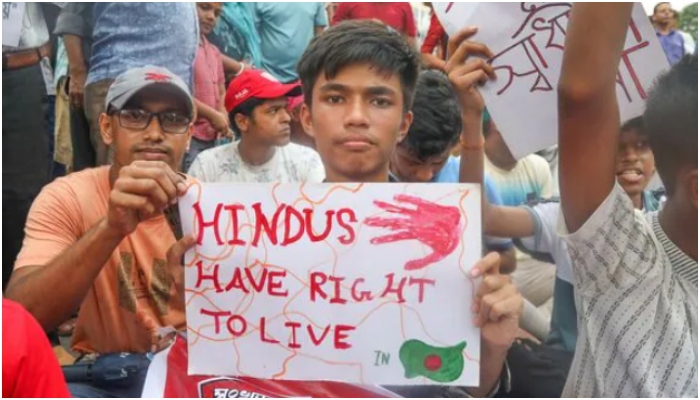
Bangladesh has been witnessing violent protests for more than a month over the decision of the High Court to reinstate 30% reservation in government jobs to the descendants of the freedom fighters of the 1971 Liberation War.

The agitation against the ‘quota politics’, which is said to benefit members of Hasina’s Awami League, is largely spearheaded by students belonging to prominent colleges and universities in the country.

Over 100 people died in the violence that ensued following the protests. In a significant decision, the Bangladesh Supreme Court has scrapped most of the quotas in govt jobs amid violent protests against the reservations for grandchildren of freedom fighters. 

The story of Bhagat Singh Thind: A Sikh immigrant who claimed to be ‘White’ and sought citizenship in the USA

Bhagat Singh Thind was born in 1892 in Amritsar, Punjab, India. He was raised in a devout Sikh family. Before shifting to the USA in 1913, Thind pursued his education at Khalsa College. When he was 20 years old, he moved to Seattle, Washington. Later, he moved to Oregon and worked at a lumber mill in Astoria. Oregon was famous for being a hub of Indian immigrants and a lot of them were associated with the Ghadar Party, a revolutionary group aiming to kick out Britishers from India. [PDF]

Thind’s involvement in the Ghadar Party and World War I

During his time in Oregon, it is believed that he was associated with Ghadar Party activists and supported the cause of kicking out Britishers from India. However, during World War I, while the Ghadar Party made a call to all Indians to join forces against the Britishers, Thind decided to choose a different path. He got himself enlisted in the US Army. He was among the first turbaned Sikhs to serve in the American military. Due to his loyalty to the US, he was granted honorary citizenship, a promise made by the US Government to the immigrant soldiers. However, later his citizenship was revoked. Thind decided to legally fight for citizenship.

The landmark Supreme Court Case

In 1920, his case reached the US Supreme Court. Thind claimed to be “White” to gain citizenship contending he was a Caucasian belonging to the Aryan race. The crux of the case was whether Thind, who belonged to a high caste in India, could be considered “White” under the naturalization laws of the US. In 1923, the Supreme Court ruled against him. The court classified him as Caucasian but not considered him “White” by the common man’s understanding of the term. The decision led to other Asian immigrants losing their citizenship.

In the case of United States vs Bhagat Singh Thind, the Supreme Court faced a complex issue. The court had to decide if a High-caste Hindu of full Indian blood, could be considered a “White person” under the Naturalization Act of 1790 or not. Notably, the court’s ruling in Thind’s case contradicted the earlier decision in Ozawa vs United States where a Japanese man was denied citizenship on racial grounds. The court accepted Thind was Caucasian but refused to classify him as a “White person” based on the common understanding of the time and not on “scientific” classification. The court also noted that the Aryan Theory was anyway dismissed by several scholars if not all.

Justice Sutherland, who delivered the judgment, emphasised that the words “free white persons” were meant to include only those whom the original framers of the law knew as white, basically immigrants from the British Isles and Northwestern Europe. The racial diversity of more recent immigrants, including those from Eastern, Southern, and Middle Europe, was acknowledged, but people of primarily Asiatic stock, including Hindus, were not considered part of this group.

Thind continued his fight for citizenship and later achieved it in 1936 under the Nye-Lea Act which granted citizenship to WWI veterans. Later, the doors to the US were opened for other immigrants as well.

Dreaded criminal Mohammed Umar, wanted for the murder of two gang members and disfiguring an associate’s face with acid, arrested after 12 years in Delhi

On Sunday (21st July), Delhi Police’s Special Cell stated that they had arrested 51-year-old Mohammad Umar who is an opium smuggler and proclaimed offender. He was wanted for the murder of two gang members and had been absconding from the Police for over a decade. As per reports, he is an accused in seven criminal cases in different Police stations in Uttar Pradesh and Delhi. 

In 2012, Mohammad Umar along with his accomplices killed one of his gang members on the suspicion that he had earlier leaked information to the Police. After brutally killing him, Mohd. Umar disfigured his face by pouring acid to conceal his identity. Afterward, Umar absconded with his family and went into hiding in Nepal. 

The Police had announced a reward of Rs 50,000 for giving information that could led to his arrest. According to the Police, on 16th July, they received intel on him and subsequently went on to apprehend him from the Anand Vihar Bus Terminus area. 

According to the Police, the accused was identified as Mohd. Umar alias Umardin is a native of Behraich, Uttar Pradesh. He fled the country and went into hiding in Nepal where he was using a false identity for 12 years.

DCP Special Cell Amit Kaushik said that Umar was arrested on 16th July after a police team received a tip about a fugitive criminal near Anand Vihar Bus Terminus. Subsequently, he was arrested from the area. 

According to the police, the dreaded criminal Umar was born in Meerut. After completing his class eighth, he started working as a tailor with his father. However, in 2002, he started indulging with local criminals and was involved in theft and petty crimes. 

DCP Kaushik said, “He was previously involved in electricity transformer theft and was arrested in four cases in 2009 at police stations in Loni and Pilkhuwa, Uttar Pradesh.”  

The Police official further stated that in 2010, Mohd. Umar came in contact with Naiem, Taslim, Mukesh, and Moti. They were involved in opium smuggling and cheating people by luring them to exchange Saudi Riyals, the police official added.

The DCP stated that in 2011, Mohd. Umar was arrested in Amroha, Uttar Pradesh in Arms Act and cheating cases. After getting released on bail he again started smuggling narcotics substance opium bud with Naiem, Taslim, Mukesh, and Moti. 

However, a dispute broke out among them over the issue of the leadership of the gang. 

DCP Kaushik added that there were trust issues, as three of them had killed Mukesh in Baghpat in 2011 because they believed he had informed the police about them.

The DCP said, “Naiem, Taslim, and Moti murdered Mukesh in Baghpat Uttar Pradesh. In this case, Naiem, Taslim, and Moti were arrested. In 2012, Umar along with Naiem murdered Taslim in the area of Sonia Vihar Delhi and disfigured the face of Taslim after pouring acid on his face to disguise police and hide his identity.” 

According to the Police, they killed Taslim to assert dominance and take control of the gang. 

Following the incident, the accused Mohd. Umar fled with his family and went into hiding in Nepal where he lived under a false identity. The Police stated that he had changed his Aadhaar card and other identity documents. During the hiding period, he was living across the Rupadia border towards the Nepal side and visited India occasionally for work.

According to DCP Kaushik, Mohd. Umar has seven criminal cases registered against him.

End of political blackmail? Modi govt turns down ‘Special Category Status’ request for Bihar, the long-standing demand of its ally JDU

The Narendra Modi-led-BJP government ruled out the possibility of ‘special category status’ for Bihar, which has been the long-standing demand of its alliance partner Janata Dal United (JDU).

The Centre made its position clear on Monday (22nd July) during the Question Hour of the Parliament Monsoon Session.

The Union Finance Minister Nirmala Sitharaman was asked, “Whether the Government proposes to provide special status to Bihar State and other most backward States to promote economic growth and industrialization?”

The reply to the contentious question was provided by the Minister of State for Finance, Pankaj Chaudhary.

He stated, “The Special Category Status for plan assistance was granted in the past by the National Development Council (NDC) to some States that were characterized by a number of features necessitating special consideration.”

Chaudhary pointed out that the special category status was provided to States that had certain disadvantages such as hilly and difficult terrain, sizeable share of tribal population, strategic location along borders, economic and infrastructural backwardness and non-viable nature of State finances.

The Minister of State for Finance pointed out that the Special Category Status for Bihar was previously considered in 2012 but it did not fulfill the criteria laid down by the National Development Council.

“Earlier, the request of Bihar for Special Category Status was considered by an Inter-Ministerial Group (IMG) which submitted its Report on 30th March, 2012. The IMG came to the finding that based on existing NDC criteria, the case for Special Category Status for Bihar is not made out,” he emphasised.

In simple words, the Centre made it clear that no special category Status would be given to JDU-ruled Bihar.

Productive jobs, skill gap, green transition, China conundrum among focus areas that find mention in the Economic Survey 2023-24

The Economic Survey for 2023-24 tabled in the Parliament on Monday has identified six key policy focus areas for the government to achieve sustained economic growth.

Those six areas where the government would focus are generating productive employment; skill gap, tapping the full potential of the agriculture sector, easing the compliance requirements and financing bottlenecks confronting MSMEs, managing India’s green transition, and the persistent China challenge.

The structural reforms undertaken by the Government of India since 2014 have put the economy firmly on a growth path, and India is soon set to become the third-largest economy in the world.

In the medium term, the Indian economy can grow at a rate of 7 per cent plus on a sustained basis if the government can build on the structural reforms undertaken over the last decade, the Economic Survey said.

Stressing on generating productive employment, the Survey document asserted productive jobs are vital for growth and inclusion.

India’s workforce is estimated to be nearly 56.5 Crore, of which more than 45 per cent are employed in agriculture, 11.4 per cent in manufacturing, 28.9 per cent in services, and 13.0 per cent in construction

However, to create these many jobs, there is a need to create the conditions for faster growth of productive jobs outside of agriculture, especially in organized manufacturing and services, even while improving productivity in agriculture.

Skill gap challenge:

“Sixty-five per cent of India’s fast-growing population is under 35, and many lack the skills needed by a modern economy,” the survey said citing a 2023 World Bank report.

“Estimates show that about 51.25 per cent of the youth is deemed employable. In other words, about one in two are not yet readily employable, straight out of college. However, it must be noted that the percentage has improved from around 34 per cent to 51.3 per cent in the last decade.”

Tapping the full potential of the agriculture sector:

The Economic Survey document noted the agriculture sector continues to face structural issues that have implications for India’s economic growth, despite its centrality in India’s growth trajectory.

“The foremost concern confronting the sector pertains to sustaining agriculture growth without letting food price inflation rise beyond acceptable limits while incentivising farmers to raise production.”

There is also a need to improve price discovery mechanisms for agriculture products, increase efficiency, reduce disguised unemployment, address the fragmentation of landholding, and increase crop diversification, among a host of other issues, the Survey suggested.

On MSMEs, a critical sector of Indian economy, the Economic Survey noted the sector continues to face extensive regulation and compliance requirements and faces significant bottlenecks with access to affordable and timely funding being one of the core concerns.

“Licensing, Inspection, and Compliance requirements that MSMEs have to deal with, imposed particularly by sub-national governments, hold them back from growing to their potential and being job creators of substance.”

Managing India’s green transition:

The path of green transition in India needs to ensure the consistency of the E-Mobility policy with the required and optimal energy mix between traditional and renewable sources; ensure grid stability for E-Mobility to become pervasive; develop or acquire storage technology at affordable costs for the share of renewable energy in power generation to rise.

At COP26 held in 2021, India as a whole committed to an ambitious five-part “Panchamrit” pledge. They included reaching 500 GW of non-fossil electricity capacity, generating half of all energy requirements from renewables, to reducing emissions by 1 billion tonnes by 2030.

India also aims to reduce the emissions intensity of GDP by 45 per cent. Finally, India commits to net-zero emissions by 2070.

Among others, the Economic Survey suggested to recognise and deal with challenges posed by dependence on China for critical minerals, which are crucial raw materials needed for E-Mobility and renewable energy generation.

“Last but not least, India not only has to deal with climate change and undertake energy transition but also deal with the protectionism of the developed countries[p1] ,” the Survey read.

On the Chinese conundrum, it said the domination over the global supply chains

across product categories is a key global concern, especially in the wake of supply disruption

accompanying the war in Ukraine.

China’s near-monopoly over the production and processing of critical and rare earth minerals has already been a cause of global concern, it added.

“Against this background, it may not be the most prudent approach to think that India can take up the slack from China vacating certain spaces in manufacturing. Indeed, recent data cast doubt on whether China is even vacating light manufacturing. The questions that India faces are: (a) Is it possible to plug India into the global supply chain without plugging itself into the China supply chain? and (b) what is the right balance between importing goods and importing capital from China? As countries attempt to restore and friends here, India’s policy choices concerning China are exacting.”

Union Finance Minister Nirmala Sitharaman tabled the Economic Survey 2023-24 in Parliament today. The Economic Survey document, prepared by the Economic Division of the Department of Economic Affairs in the Ministry of Finance and formulated under the supervision of the chief economic adviser, gives insights into the state of the economy and various indicators of 2023-24 (April-March) and some outlook for the current year.

Sitharaman is set to present the Union Budget for 2024-25 in Parliament tomorrow. With this Budget presentation, Sitharaman is set to surpass the record set by former Prime Minister Morarji Desai, who presented five annual budgets and one interim budget between 1959 and 1964 as finance minister. Sitharaman’s upcoming budget speech will be her seventh.

(This news report is published from a syndicated feed. Except for the headline, the content has not been written or edited by OpIndia staff)
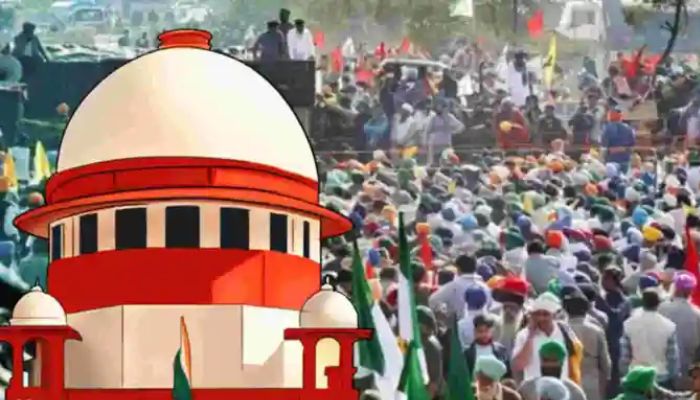
Are eateries run by an ‘Abdul’ or ‘Abhishek’, Kanwariyas won’t have any way to know as Supreme Court pauses UP and Uttarakhand governments’ orders to display names

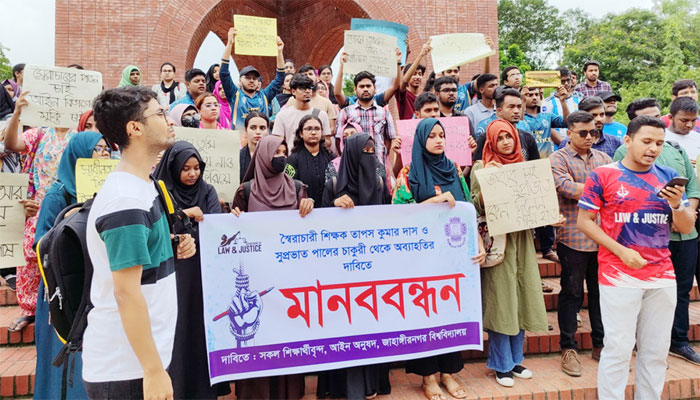
On Monday (22nd July), the Supreme Court of India passed an Interim order prohibiting the enforcement of orders recently passed by the Uttar Pradesh and Uttarakhand governments that directed eateries to display the names of owners and operators.

The court has issued notices to the UP, Uttarakhand, and Madhya Pradesh governments and has asked the administrations not to force the eatery owners to display their names or of their employees. Instead, they now will have to display food type instead, that is, whether they serve vegetarian or non-vegetarian food.

Following the interim order passed by the bench, Kanwariyas will now not be able to know whether the eateries where they are eating are being run by an ‘Abdul’ or an ‘Abhishek’ as eateries have been asked to display only food type. The two-judge bench comprising Justices Hrishikesh Roy and SVN Bhatti heard the matter. 

The bench has asked the representative states to file their responses by Friday following the interim order.

Dictating the order, the bench said, “Let notice be issued in all these petitions under Article 32 of the Constitution. Made returnable on coming Friday. Dasti permitted for standing counsel of UP, Uttarakhand, Madhya Pradesh.”

The bench added, “Until the returnable date, having regard to the above discussion, we deem it appropriate to pass an interim order prohibiting the enforcement of the above directives. In other words, the affected owners have to display the type of food but not the names of owners and staff employed”.


Notably, the petitioners, Apoorvanand Jha and Aakar Patel approached the Supreme Court to challenge the UP and Uttarakhand governments’ order for eateries falling on the Kanwar Yatra routes. They were represented by Senior Advocate Huzefa Ahmadi before the bench. Mahua Moitra, another petitioner in the case, was represented by Senior advocate Abhishek Manu Singhvi in the top court. However, the bench noted that no one made arguments from the side of the UP and Uttarakhand governments. 

During the hearing, Justice Bhatti had asked petitioners’ counsel Abhishek Manu Singhvi to not exaggerate things. He observed, “Dr Singhvi, let us also not exaggerate what is happening on the ground level. These orders have dimensions of safety and hygiene also. Your contention is it is leading to exclusion, correct? Let us narrate without exaggeration.”

He noted that the orders has 3 dimensions – safety, standard, and secularism, and that all 3 are equally important.

However, the court passed interim order following the arguments of the petitioners’ counsel that the reservation of hygiene could be achieved merely by the display of food type.

Following the arguments of the petitioners’ counsels and since none of the counsel representing the UP and Uttarakhand governments approached the bench, the bench issued the interim order prohibiting the enforcement of these directives of the state governments. The bench also issued notices to the representative governments.

Bareilly: Bulldozer action against 11 of 35 accused who attacked Hindus, molested women during Muharram celebrations, NSA charges to be added too

The Uttar Pradesh government has decided to impose bulldozer action against those accused of attacking the Hindu community in Gausganj village of Bareilly during Muharram. As per a Jagran report, the illegal properties of the accused persons who attacked Hindu families and molested Hindu women are to be razed to the ground on 22nd July.

The stated administration conducted a survey on 21st July to learn that around 11 accused persons belonging to the Muslim community had illegally expanded their properties. The same will be demolished. The police have so far arrested around 35 persons for attack and assault against Hindus. Reports mention that the accused persons will be charged under the National Security Act, 1980.

The incident is said to have happened on 17th July in the Gausganj area of the state during the celebration of Muharram. The Hindu community had objected to noise and dhols in front of the temple during a Muharram procession. The accused then started attacking the Hindus and pelting stones on their houses and harassing the women. The ruckus had continued even after the arrival of the police and the accused persons had continued their attack in the presence of police personnel too, as per reports.

The Islamists then, at around 11:30 pm attacked the homes of the Hindu community and molested their women. The accused Islamists also pelted stones at the Hindu properties and threatened them with dire consequences. The FIR in this case was then filed by the Hindu community against 50 identified individuals and 15 unidentified individuals.

The Police eventually began an investigation into the case and arrested around 35 persons including Afsar Ali, Imran, Mukhtiar Ali, Abdul, Salam, and others. When police tried to arrest some accused, the accused had opened fire on police personnel too. The police had to open retaliatory fire. This resulted in injury to one of the accused identified as Alamgir. After this incident, one Najakat Ali was also arrested by the police. A constable has been injured by shrapnel in the firing.

Further investigations into the case are underway.

Earlier on 21st July, the state police arrested 3 individuals identified as Akram, Shahrukh, and Arshad for causing a disturbance and damaging idols at the Gopeshwar Nath temple in the Izatnagar area of UP’s Bareilly district. The police have charged three under relevant sections of the Bharatiya Nyaya Sanhita, including section 298 (injuring or defiling a place of worship with intent to insult the religion of any class).