

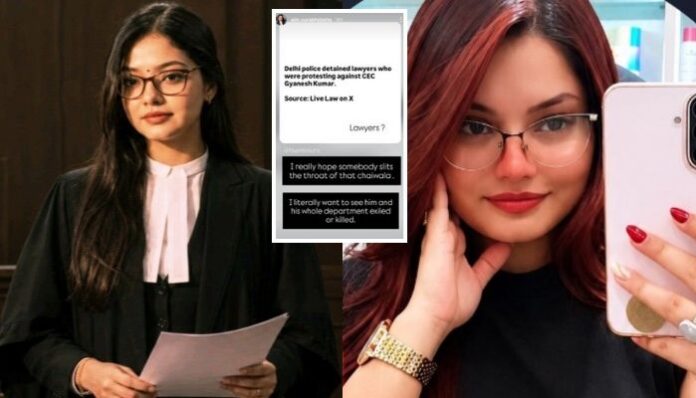
In a shocking incident, Calcutta High Court advocate Surabhi Datta has sparked intense outrage after openly threatening to slit the throat of Prime Minister Narendra Modi in a social media post.
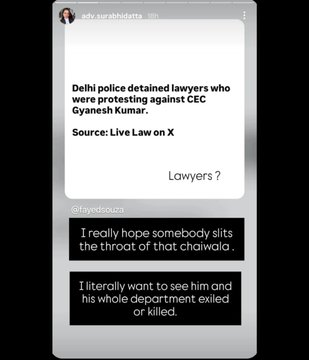
Sharing a post by the leftist ‘journalist’ Faye D’Souza on her Instagram story regarding the Delhi Police’s detention of lawyers who were protesting against Chief Election Commissioner Gyanesh Kumar over alleged electoral roll irregularities and Form 6 registrations during the Special Intensive Revision (SIR) exercise, Datta expressed extreme hostility.
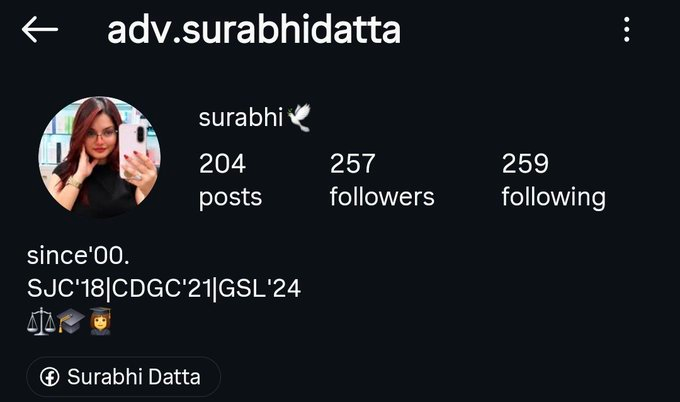
This Kolkata HC lawyer on Instagram is openly wishing for someone to slit the throat of PM Modi and wants his whole department exiled. Her name is Surabhi Datta (adv.surabhidatta) This is not opinion it’s a direct threat. Please take cognizance and act. @DelhiPolice @KolkataPolice @DGPWestBengal
— VARAHA WARRIOR (@VarahaWarrior) October 17, 2026
Referring to the Prime Minister as a ‘chaiwala’, she wrote, “I really hope somebody slits the throat of that chaiwala”. She further escalated her violent rhetoric by adding, “I literally wanted to see him and his whole department exiled or killed”.
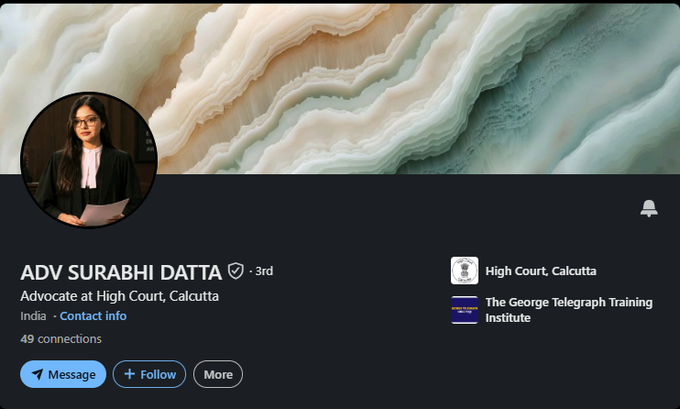
According to her LinkedIn profile, Surabhi Datta is currently a practising advocate at the Calcutta High Court. Her comments have raised serious concerns, especially coming from a legal professional who is fully aware of the laws governing incitement to violence and public order.
The controversy brings up a crucial question about the boundaries of expression: does freedom of speech give citizens the liberty to issue direct death threats to anyone, including the head of the nation? The incident has led many to argue whether the country is grappling with an abuse of constitutional liberty, where basic legal decorum is pushed aside under the guise of political protest.
While criticism and political disagreement are essential parts of a healthy democracy, issuing open death threats crosses every acceptable boundary. Opposing the policies or decisions of the ruling government is a constitutional right, but explicitly wishing for or calling for the murder of the Prime Minister cannot be brushed off as mere political opinion.
There is a fundamental difference between expressing political dissent and issuing explicit calls for violence, and no political grievance can justify public threats against human life.
