

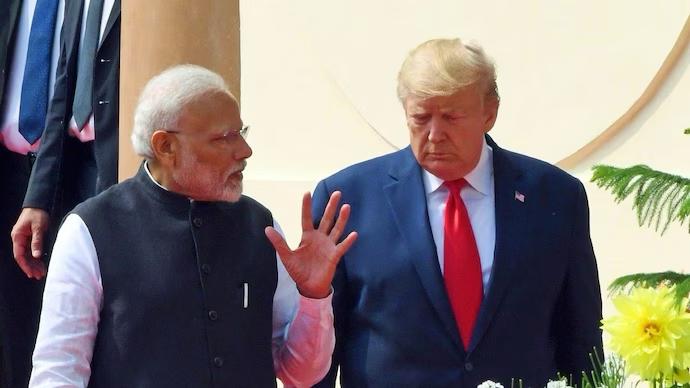
In the wake of the recent India-US trade agreement, a report by Bloomberg has shed light on how New Delhi quietly but firmly pushed back against pressure from the Donald Trump administration during a tense phase in India–US relations, making it clear that the Modi government would not be coerced into a trade deal.
According to the report, National Security Adviser Ajit Doval told US Secretary of State Marco Rubio that India was prepared to wait out the remainder of Trump’s tenure if the White House did not dial down its hostile rhetoric and pressure tactics.
The message was conveyed in early September, when bilateral ties were strained by a combination of punitive tariffs and sharp public remarks from President Trump. At the time, Trump had described India’s economy in dismissive terms and accused New Delhi of indirectly funding Russia’s war in Ukraine by continuing to purchase Russian crude, even as Washington imposed steep duties on Indian exports.
Doval underlined India’s willingness to move past the acrimony and return to serious trade negotiations, but only in an atmosphere free of public insults and coercion. He also indicated that India had dealt with difficult US administrations in the past and could afford to take a longer-term view if necessary.
Not long after this exchange, the public tone began to soften. On September 16, Trump called PM Modi on his birthday and praised his leadership, a notable shift from earlier rhetoric. The two leaders subsequently spoke several times, gradually creating space for renewed engagement.
This week, Trump announced that Washington and New Delhi had reached a trade understanding that would lower US tariffs on Indian goods to 18% and remove a separate 25% duty linked to India’s purchase of Russian oil. Trump also claimed India would expand purchases of US goods and cut tariffs on American imports, though the Modi government has yet to formally confirm the full details or release a written agreement.
The announcement surprised even some senior officials in New Delhi, highlighting how quietly the diplomacy had unfolded. The sudden agreement with the US pointed to a broader strategic context that may have strengthened India’s hand. In 2025, India concluded a trade deal with the United Kingdom; earlier this year, it signed a series of agreements with the United Arab Emirates, and most recently, it finalised a long-pending free trade agreement with the European Union. PM Modi also held a chummy meeting with Vladimir Putin and Chinese Premier Xi Jinping last year, after which the US President ruefully admitted that they might have “lost” India to China.
Together, these moves signalled that India was diversifying its economic partnerships and was not solely dependent on Washington.
That broader push appears to have increased pressure on the US to mend ties, with the outcome suggesting that New Delhi may have emerged from the standoff with a stronger negotiating position, and possibly the better end of the deal.
