

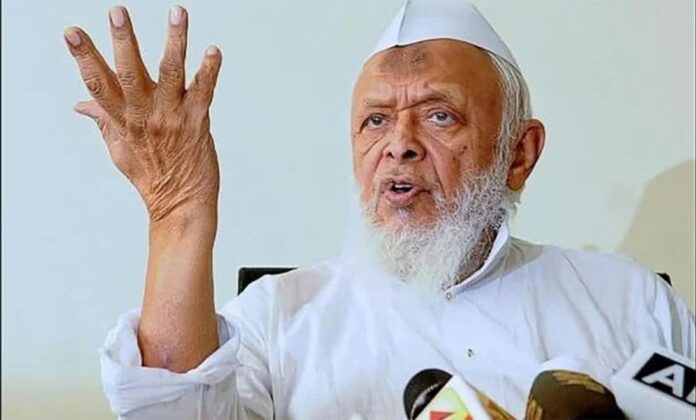
A controversy has erupted in Uttarakhand after Jamiat Ulama-i-Hind president Arshad Madani criticised proposals to restrict the entry of non-Hindus into prominent Hindu pilgrimage sites, including Badrinath, Kedarnath and Gangotri. His remarks came amid declarations by temple committees seeking to enforce long-standing religious customs at these revered shrines.
Reacting to the proposed restrictions, Madani alleged that “some people think the country belongs only to them” and claimed that minorities were being unfairly targeted. He also linked the issue to unrelated developments, alleging that Muslim colonies were being demolished in Assam and that lakhs of Muslims were being branded as Bangladeshis. His comments have drawn sharp reactions, with critics accusing him of communalising a religious matter rooted in temple tradition.
#WATCH | Saharanpur, UP | On Non-Hindu prohibited to enter religious sites in Uttarakhand, Jamiat Ulama-I-Hind President Arshad Madani says, "They think that the country is theirs, and they can lead the public in any direction, but the times have changed… It is good that the… pic.twitter.com/jdOWaw2Gqw
— ANI (@ANI) January 26, 2026
The development follows resolutions passed by local temple councils, after which the Badrinath-Kedarnath Temple Committee (BKTC) moved to formally propose a ban on the entry of non-Hindus into temples under its jurisdiction. The decision applies to the Badrinath and Kedarnath shrines, as well as Mukhba, the winter seat of Goddess Ganga. Shri Gangotri Temple Committee chairman Suresh Semwal stated that the prohibition would be strictly enforced, stressing that the move was aimed at preserving religious sanctity.
Chief Minister Pushkar Singh Dhami said the state administration would act in accordance with the recommendations of temple committees and religious institutions managing Uttarakhand’s pilgrimage sites. BKTC chairman and BJP leader Hemant Dwivedi confirmed that a formal proposal would be placed before the committee’s next board meeting, noting that entry restrictions for non-Hindus have historically existed in the Kedarnath and Mana regions but were diluted during previous governments.
Dwivedi also praised the state government’s drive to remove illegal mazars and dargahs, describing it as necessary to uphold religious identity, cultural heritage and law and order. He said coordination between the government and temple committees would ensure better protection of Uttarakhand’s temples and traditions.
The Badrinath temple is scheduled to reopen on April 23 after its six-month winter closure. Kedarnath Dham’s reopening date will be announced on Maha Shivratri, while Gangotri and Yamunotri temples will reopen on April 19, coinciding with Akshaya Tritiya.
