

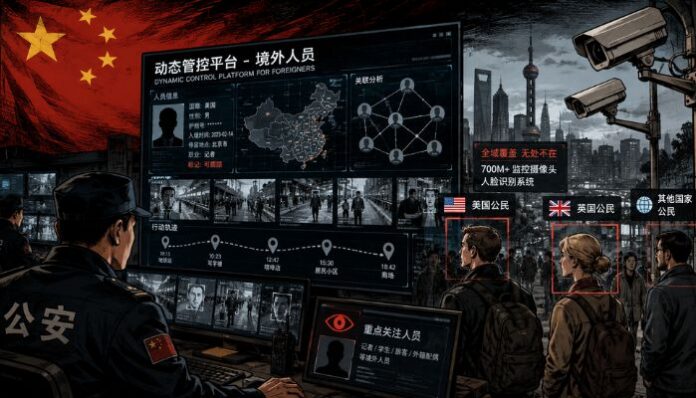
A leaked surveillance platform has revealed how China’s security apparatus can track foreigners, foreign students, foreign spouses of Chinese citizens, journalists and other “persons of interest” inside the country. According to a report by The Telegraph, the platform is called the “Dynamic Control Platform for Foreigners”. Reportedly, it allowed the Chinese government to instantly locate American, British and other foreign citizens in China, track their past movements, identify who they meet, and map their regular associates.
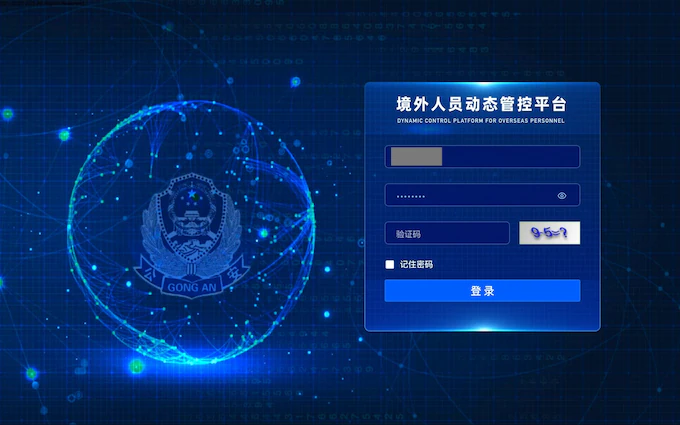
An independent cybersecurity researcher, NetAskari, was the first to discover the platform. The system reportedly carries government security insignia and appears to integrate data from different sources, including cameras, visa records, travel booking platforms, facial recognition systems, ID scans and other sources.
How the surveillance platform works
According to The Telegraph report, the platform includes tools that allow officials to search and filter people based on nationality, profession, travel history, social connections and camera sightings. A relational mapping tool shows how individuals are linked as colleagues, classmates, neighbours, citizens of the same country or people seen together.
Notably, users can use the application to search all foreigners, say from the USA, living in a specific district who are colleagues and have been pictured together. Records can also show how often a person was captured at particular street intersections, supermarket entrances or housing compound gates. Data accessed by The Telegraph shows a person being recorded nine times at a grocery store and 78 times at a specific intersection.
The platform also allows officials to filter for “foreign journalists”, “fugitives”, people from Hong Kong, Macau and Taiwan, travellers, and citizens of Five Eyes countries, namely Australia, Canada, New Zealand, the UK and the US. Some individual records, including that of The Telegraph’s correspondent, were marked as “trackable”.
Built on China’s vast surveillance network
The report noted that China already has over 700 million cameras installed for surveillance and has built expansive monitoring systems such as Skynet and Sharp Eyes. These systems aim to cover public areas. Facial recognition, real ID registration, digital payments, app-based travel records and ID scans at public places have all contributed to China’s ability to build detailed movement profiles.
During the COVID-19 pandemic, China reportedly further expanded its surveillance infrastructure and added tracking apps, contact-tracking systems, and, in some cases, cameras and motion sensors installed inside or near people’s homes.
Platform linked to Hebei security bureau
The programme appears to have been developed by the public security bureau of Hebei province, north of Beijing. Copyright markings suggest it may have been developed as early as 2021, while much of the tracking data appears to be from 2023. NetAskari said new functions were still being added as recently as April this year.
