

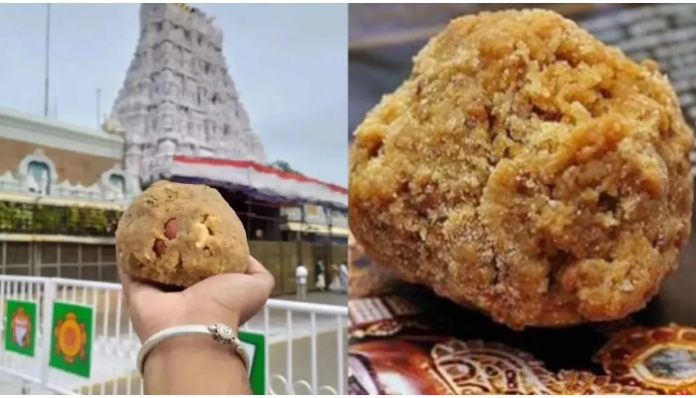
The Enforcement Directorate has started a formal investigation into Tirupati’s prominent Tirumala temple “laddu prasadam” adulteration case in accordance with the Prevention of Money Laundering Act. It has also launched a Enforcement Case Information Report. The issue was earlier examined by a Special Investigation Team led by the Central Bureau of Investigation which was established after the Supreme Court directives, and presented its findings to a Nellore court.
234.51 crore fraud already came to light during the probe in relation to the scam which occurred during the Jagan Mohan Reddy government in Andhra Pradesh. The trail amounts to approximately 12.5 crore solely in 2024 and people associated with the YSR Congress Party which was in power at the time enabled this criminal network that set-up the flow of illicit funds, reported News18.
The inquiry discovered that private dairies used hawala transactions as bribes to selected mediators who helped get approval to secure orders for ghee. Authorities have unearthed a money trail that led to specific bank accounts after they confiscated the cell phones of the perpetrators. It directly contributed to ineligible dairies obtaining contracts for ghee supply by using falsified documentation and experience certifications to support their applications. According to reports, the SIT also revealed that phoney inspection reports were created using the identities of outside dairy specialists.
Tirupati prasad scam explodes, will state act on the 'big fish'?
— News18 (@CNNnews18) February 10, 2026
Rs 12.5 crore Hawala trail exposed #TirupatiLaddu #AndhraPradesh #TheRightStand | @AnchorAnandN pic.twitter.com/WsFDkuK1J4
According to the officials, the ED is reviewing the chargesheet, documents and the SIT’s FIR (First Information Report). It is looking into the accused’s money laundering activities as well as their potential to generate illegal revenue through the adulteration of ghee. The officials noted that the agency believed the accused had been involved in hawala transactions and diversion.
The ED is trying to find out if payments were made to sway contracts, inspections along with clearances and whether these deals were covered up by shell corporations, benami accounts, false invoicing, middlemen or unofficial channels. The probe’s scope encompasses not only private dairy companies and their representatives but also TTD procurement process authorities and external dairy specialists who participated in certifications and inspections, reported Deccan Chronicle.
Financial and bank records as well as tender documents are under review to determine the flow of monies and identify beneficiaries. Chargesheets, remand reports, FIRs and information about suspected hawala operators are among the extensive collection of papers the ED has acquired from SIT. Several cities, including Delhi, Hyderabad, Chennai, Vijayawada, Tirupati, parts of Gujarat and Gwalior are connected to the financial network.
The shocking revelations in the SIT chargesheet
The supplementary chargesheet of the special investigation team (SIT) unveiled that the matter centered on hawala-based cash transactions and unlawful gratification paid by private dairy companies and intermediaries to Tirumala Tirupati Devasthanams (TTD) officials to influence ghee tenders and quality clearances.
According to reports, forensic analysis of cell phones, WhatsApp conversations and Excel spreadsheets uncovered recorded payments to the then general manager (procurement) of TTD and smaller amounts to other officials that were sent via cash couriers and hawala operators.
The SIT mentioned that TTD officials and directors of different dairies conspired fraudulently to provide tainted and “noxious” ghee for the making of holy prasadams. False paperwork, such as lab results, FSSAI returns, and experience certificates, were submitted by ineligible dairies to obtain bids by offering unrealistic cheap prices. It is suspected that public servants gave positive plant assessment and disregarded inconsistencies in exchange for bribes.
According to the chargesheet, vendors also imitated pure cow ghee by using lactic acid, monoglycerides, and refined oils such as palm, palm kernel and palmolein. It added that TTD officials purposefully withheld test data from the Central Food Technological Research Institute in Mysuru that confirmed adulteration (Beta Sitosterol-positive) for continuous supply.
An administrative evaluation of the SIT conclusions has been started by the state administration. A one-person committee has been established to review the findings and recommend disciplinary as well as remedial actions. According to Chief Minister N. Chandrababu Naidu, this will concentrate on finding mistakes and assigning accountability at the proper levels.
Who are the accused
A number of suspected bribe receivers are named in the chargesheet including ex-TTD chairman and YSR Congress Party’s popular leader YV Subbareddy’s PA at the time, Kaduru Chinnappanna who is charged with accepting 50 lakh in cash and pressuring a supplier to pay Rs 25 per kilogram. Similarly, the then GM of procurement, RSSVR Subrahmanyam, is accused of taking 3.5 lakh in cash, a silver coin and a Samsung Galaxy S-20 phone valued at 50,000.
Dairy specialist Maddi Vijayabhasker Reddy is charged with receiving a Kundan gold coin, 75 lakh through hawala and 7.5 lakh for inspections. According to the SIT, Sri Vyshnavi Dairy CEO Apurva Chavda earned 19.86 crore via hawala routes. Furthermore, presents and smaller payments were given to TTD employees alongside members of the probe panel.
The SIT stated that Pomil Jain and Vipin Jain of Bhole Baba Organic Dairy were primarily responsible for paying bribes with sums being transferred through commission agents. According to the chargesheet, the money trail featured “round-tripping” and a hawala network that used a token-based currency verification method to move money from Delhi hawala shops to agents in Vijayawada (Bharat Bhai Thakur), Chennai (Madaram Dewasi) and Hyderabad (Arjun Goswami).
The investigation outlined that 234.51 crore was misused and 59,71,781 kilogram of tainted ghee was delivered. Additionally, it highlighted that profits were diverted through the acquisition of commercial sites, the building of a lavish home for Pomil Jain and excessive compensation. The chargesheet on adulteration conveyed that the majority of the ghee was made from vegetable fat.
Moreover, the tests conducted later by the National Dairy Development Board’s Centre of Analysis and Learning in Livestock and Food and the National Dairy Research Institute in Karnal failed to identify certain animal fats like tallow or lard. 36 individuals have been listed by the SIT as accused in the case, including five dairy specialists and nine representatives of the Tirumala Tirupati Devasthanams. The TTD received the contaminated ghee from 2021 to 2024.
