

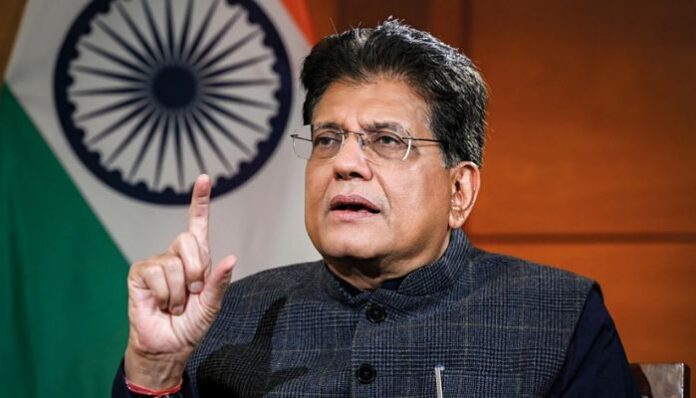
Union Commerce and Industry Minister Piyush Goyal began a four-day visit to Japan from 24th to 27th August 2026, which will cover Tokyo, Nagoya and Osaka, leading a delegation of more than 200 Indian business representatives. The visit is aimed at strengthening trade and investment ties between the two countries and exploring new partnerships in sectors such as semiconductors, artificial intelligence (AI), clean energy and manufacturing.
The delegation, described as India’s largest-ever business group to visit Japan, includes representatives from steel, automobiles, financial services, healthcare, start-ups, manufacturing and other key industries. During the four-day programme, Goyal and the delegation will take part in government-level meetings and discussions with major Japanese companies and business groups.
A key focus of the visit will be to bring more Japanese investment to India while also creating new opportunities for Indian businesses to work with Japanese companies.
Focus on semiconductors, AI and start-ups
In Tokyo, Goyal is scheduled to meet the top leadership of major Japanese conglomerates and industrial houses that have been closely associated with India’s growth over the years.
He will also participate in a round-table meeting with Keidanren, the Japan Business Federation, which represents more than 1,500 leading Japanese companies. The meeting is expected to provide an opportunity for Indian and Japanese business leaders to discuss investment, trade and future partnerships.
Separate sessions have also been planned on semiconductors and artificial intelligence, two sectors that are becoming increasingly important in India’s industrial and technology plans. Discussions will also cover start-ups and engagement with foreign institutional investors.
Goyal will hold bilateral talks with Japan’s Minister of Economy, Trade and Industry, Akazawa Ryosei. He is also expected to meet senior members of the Japanese government and Parliament and interact with the Indian community in Japan.
Roadshows in Nagoya and Osaka
After Tokyo, the Indian delegation will travel to Nagoya, one of Japan’s major industrial centres. Goyal will lead a business roadshow along with Chukeiren, or the Central Japan Economic Federation, and the Nagoya Chamber of Commerce and Industry.
The Nagoya programme will also include discussions with Aichi Prefecture leaders and major investors in the automobile and steel industries. These meetings are expected to focus on increasing industrial cooperation and investment between Indian and Japanese companies.
The final leg of the visit will take Goyal to Osaka, where an Investors and Business Roadshow will be organised. He will meet leading Japanese companies from the electronics, industrial and consumer sectors.
The Osaka meetings will focus on investment opportunities in India’s manufacturing sector, clean energy projects and the country’s expanding consumer market.
Japan has remained an important partner for India in technology, industrial development and investment. Japanese companies have played a major role in India’s automobile, steel, electronics, infrastructure and financial services sectors.
Jyoti Vij, Director General of FICCI, said the visit comes at a significant time in the relationship between the two countries. She pointed out that this year marks the 50th edition of the India-Japan Business Cooperation Committee and 75 years of diplomatic relations between India and Japan.
According to Vij, the visit offers both sides a chance to increase engagement between governments and businesses and move forward on the commitments and discussions held during the Japanese Prime Minister’s earlier visit to India.
With a delegation of more than 200 business representatives, the visit is expected to give fresh momentum to India-Japan trade and investment ties. It could also help both countries expand cooperation in advanced manufacturing and next-generation technologies, which are important for India’s Atmanirbhar Bharat and Viksit Bharat @2047 goals.
What was agreed during PM Modi’s earlier Japan visit?
Prime Minister Narendra Modi visited Japan last year for the 15th Annual India-Japan Summit at the invitation of Japanese Prime Minister Shigeru Ishiba.
During the summit, the two countries adopted the India-Japan Joint Vision for the Next Decade, covering areas such as economic partnership, security, mobility, green growth, technology, health, people-to-people ties and cooperation between Indian states and Japanese prefectures.
The two sides also signed a Joint Declaration on Security Cooperation and an Action Plan for Human Resource Exchange. Under the plan, India and Japan aim to facilitate the exchange of 500,000 people over the next five years, including 50,000 skilled and semi-skilled Indian workers travelling to Japan.
Among the other important agreements were the MoU on the Joint Crediting Mechanism to support decarbonising technologies and sustainable infrastructure, and the India-Japan Digital Partnership 2.0, covering cooperation in digital public infrastructure, AI, IoT and semiconductors. Japan also committed to mobilising private investment of JPY 10 trillion in India over the next decade.
