

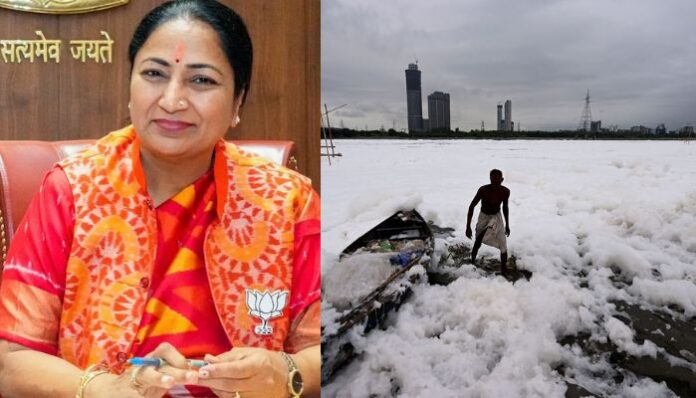
The Delhi government has decided to closely track how money is being spent by different departments on environmental work, in an effort to take a more coordinated approach to fighting pollution. According to a statement released by the Chief Minister’s Office on Sunday, 5th April, a total of 17 key departments have been given funds for various green initiatives, and their spending will now be monitored more carefully.
Chief Minister Rekha Gupta said, “We have earmarked ₹22,236 crore specifically for green initiatives in 2026-27. The responsibility for delivering on these goals has been systematically distributed, with 17 key departments receiving phased allocations to ensure coordinated action across sectors.”
Government's Rs 22,000-Crore Plan To Fix Delhi's Yamuna, Air Pollution https://t.co/uBo63Xl8Rq pic.twitter.com/4oFb1irW1q
— NDTV (@ndtv) April 5, 2026
She added that, “All departmental expenditures will now be mapped against green objectives, ensuring that spending aligns directly with environmental outcomes.”
Under this plan, several major departments have been given large budgets. In order to clean the Yamuna River and work on better systems for water treatment, the Delhi Jal Board has been assigned ₹6,485 crore. The transport department has been assigned ₹4,758 crore so as to add more buses in Delhi and make better transport services.
Meanwhile, the Public Works Department has been given ₹3,350 crore to tackle dust pollution and develop greener infrastructure across the city. The planning department has also been allocated ₹2,350 crore to design and manage these green projects.
The Chief Minister stressed that strong action is needed to tackle the increasing air pollution and temperature levels in Delhi. “The government has placed environmental protection at the core of its fiscal strategy through green budgeting. We are establishing a robust framework to combat pollution and tackle climate change,” she said. She also added, “Public spending and investments will be aligned to support sustainable development and protect biodiversity.”
