

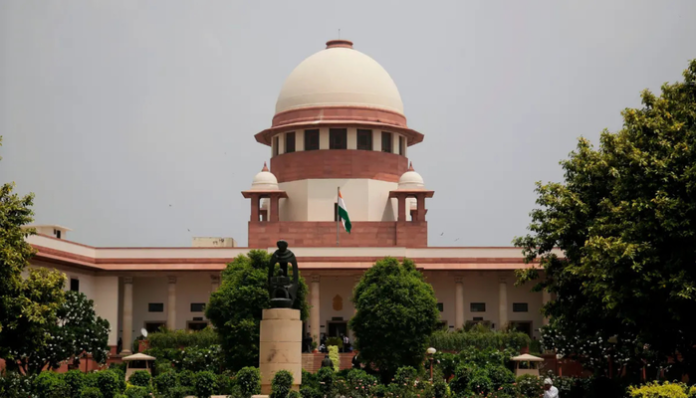
The Supreme Court on Thursday (20th November) delivered its advisory opinion on the presidential reference, which, inter alia, asked the court whether it can impose timelines on the President and the Governors with respect to the exercise of constitutional powers by them.
The Court cannot impose timelines, not envisaged in the Constitutional provision: SC
In a unanimous decision, a constitutional bench comprising the Chief Justice of India, BR Gavai, Justice Surya Kant, Justice Vikram Nath, Justice PS Narasimha and Justice AS Chandurkar held that the Supreme Court cannot impose any timelines on the exercise of the constitutional powers of the President and the Governors.
The apex court added that in the absence of a constitutionally prescribed time limit, it would not be appropriate for this court to judicially prescribe a timeline. The court also rejected the concept of “deemed assent”, holding that it is antithetical to the spirit of the Constitution and the doctrine of separation of powers and that it is virtually a takeover of the functions of the Governors.
Deemed assent is virtual takeover of the roles of the President and the Governors: SC
“The imposition of timelines is strictly contrary to the elasticity that the Constitution has preserved. The concept of Deemed assent in the context of Articles 200 and 201 presupposes that one Constitutional authority, namely the court, could play a substitutional role for another Constitutional functionary authority – the Governor or President. Such usurpation of gubernatorial powers by the governor or president is antithetical to the spirit of the Constitution and the doctrine of separation of powers. The concept of deemed assent of pending bills amounts to virtually a takeover of the role of another Constitutional authority,” the Supreme Court held.
“The exercise of constitutional powers and the orders of/by the President / Governor cannot be substituted by this Court in any manner under Article 142 of the Constitution of India. We clarify that the Constitution, specifically Article 142, does not allow the concept of “deemed assent” of Bills,” the Court clarified.
The Constitution Bench ruled that with the application of the same reasoning, the functions of the Governors and the President under Articles 200 and 201 cannot be challenged before the Court. It explained that judicial review comes into play only after a bill becomes a law. “It is unfathomable to suggest bills can be brought to court rather than being opined on under Article 143 as referred by the president under advisory jurisdiction. The President need not seek advice of this court every time when bills are referred to him,” the Court said. It added that the Court can only interfere in the case of unexplained delay. “Not everything will lead courts to issue automatic directions to act, and it has to be measured based on appropriate circumstances, and this court can issue limited directions in terms of constitutional accountability,” the Court held.
In May this year, President Droupadi Murmu, exercising the President’s power to consult the Supreme Court under Article 143(1) of the Constitution, referred a list of 14 questions to the Court seeking its advisory opinion on them. The Presidential reference was made after a two-judge bench of the Supreme Court delivered a controversial verdict, prescribing deadlines on the powers of the Governors and the President under Articles 200 and 201 of the Constitution for deciding on state bills.
