

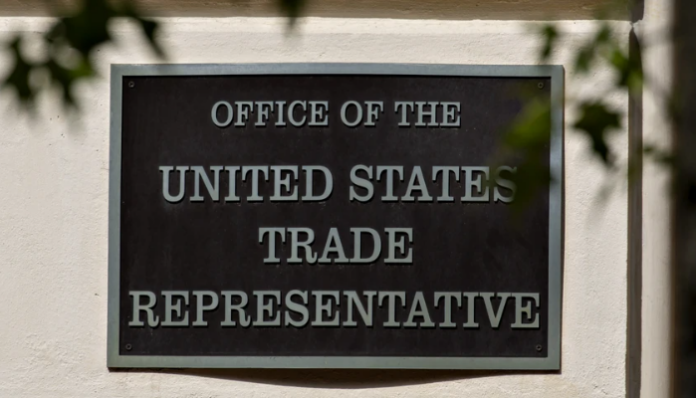
On 25th November (Wednesday), the United States proposed 25% tariffs on Indian imports, which could be reduced to 17% if New Delhi agrees to a trade agreement. The Office of the US Trade Representative (USTR) stated that 14 economies, including India, have accumulated “structural excess capacity” in manufacturing. The statement has been strongly refuted by the Ministry of Commerce.
India has been recommended to be exposed to the second-highest tariff rate on the list after Washington claimed to have concluded a Section 301 investigation into production and structural excess capacity in manufacturing sectors. The impact of the development on India will depend on the products covered and the trade deal.
The USTR statement read, “India’s unreasonable acts, policies, and practices include (1) industrial plans to expand manufacturing; (2) inadequate labour protections; (3) financial repression policies; (4) sustained market access barriers; and (5) failure to address global excess capacity and production, including through imports and foreign direct investment from non-market economies. These acts, policies, and practices burden or restrict U.S. commerce by (1) reducing commercial opportunities for U.S. producers and exporters in India and third-country markets; (2) harming the U.S. economy by contributing to lost production, exports, jobs, and investment in the U.S. manufacturing sector; and (3) increasing U.S. economic security risks, including through reliance on NME inputs. This is especially true in sectors like health (pharmaceuticals and medical devices), steel, solar, and information and communications technology (ICT).”
The document specifically mentions major programmes such as Make in India, Production Linked Incentives (PLI), Atmanirbhar Bharat (Self-Reliant India), and the India Brand Equity Foundation (IBEF).
“India engages in acts, policies, and practices that promote structural excess capacity and production, including: (1) implementing industrial plans to maintain and expand Indian manufacturing, setting overall targets for manufacturing and exports, such as Make in India, Production Linked Incentives (PLI), Atmanirbhar Bharat (Self-Reliant India), and the India Brand Equity Foundation (IBEF), including by offering financial incentives to eligible companies based on their incremental sales,” USTR contended.
On the other hand, the Indian government denied Washington’s accusation that it had structural excess manufacturing capacity while declaring its commitment to an early finalisation of the bilateral trade arrangement between the two sides.
New Delhi informed that it has “taken note of the Notice of Determination and Request for Comments issued by the United States Trade Representative (USTR) in the Section 301 Investigation concerning Acts, Policies, and Practices of 14 economies, including India, relating to Structural Excess Capacity and Production in Manufacturing Sectors. The Notice is currently under examination.”
According to the official release from the Ministry of Commerce and Industry, “India engaged constructively throughout this investigation. In response to the Notice of Initiation and in subsequent proceedings, the Department of Commerce stated that India does not have structural excess capacity in any sector.”
It highlighted that a bilateral trade accord is being negotiated between the United States and India and the latter has maintained that any issues pertaining to trade should be discussed within the parameters of these talks.
The statement further conveyed, “Government of India remains committed to working closely with the United States towards the early conclusion of the India-U.S. Bilateral Trade Agreement, as announced on 2nd February 2026 and in accordance with the Joint Statement issued on 7th February 2026.”
The USTR purportedly looked into 16 key economies, including China, the European Union, Singapore, Switzerland, Indonesia, Malaysia, Cambodia, Thailand, Korea, Vietnam, Taiwan, Bangladesh, Japan, Norway, Mexico, and India, before suggesting new tariffs on 14 of them except Mexico and Norway.
Last year, the US had imposed 50% tariffs on India, including a 25% penalty for purchasing Russian crude, which was lifted in February. This came before Washington itself signed a trade deal with Moscow. Afterwards, President Donald Trump also announced a waiver of some key sanctions that were due to be imposed on Russia and its oil trade partners.
