

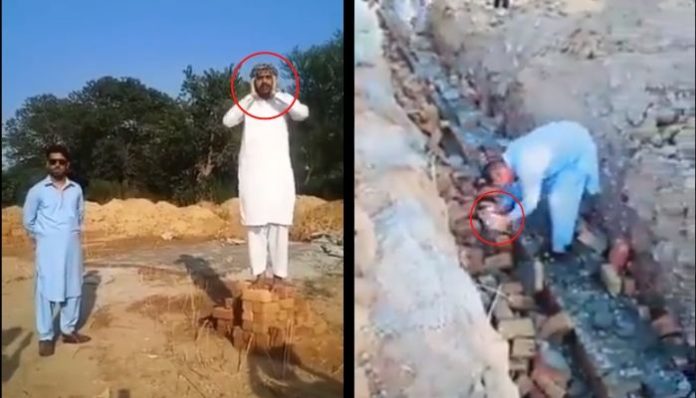
Days after the Muslim community and the cabal of Islamic clerics objected to the construction of a new Shri Krishna temple in Islamabad in Pakistan, a video of some radical Islamists reciting Azaan (Call for Islamic prayer) at the under-constructed site has now gone viral on social media. Through Azaan, the man, dressed in white, urged other Muslims to come to the Hindu sacred site and offer Namaz.
Sharing this disturbing video on Twitter, a Hindu activist from Sindh, Kapil Dev wrote, “Isn’t this ridiculous that you want to force other people to read Namaaz at a place which has been allotted by the government for the temple and tell them that there will be no temple here? This is our fault that our forefathers were loyal to their mother earth (Pakistan) during the partition of India and considered it as their homeland!”
کیا یہ بدمعاشی نہیں ہے کہ ایک جگہ جو حکومت نے مندر کے لیے قانونأ مختص کی ہے اس پر سینا زوری کرکے آذان پڑھ کے یہ بتانا چاہتے ہو کہ اب یہاں پر مندر نہیں بنے گا؟
— Kapil Dev (@KDSindhi) July 6, 2020
یہی قصور ہے نا ہمارا کہ ہمارے آباؤ اجداد نے تقسیم ہند کے دوران اپنی دھرتی ماں سے وفا کی اور پاکستان کو وطن مانا! pic.twitter.com/wGNVlxjfI6
Islamists desecrate temple boundary wall
In another video, a Muslim man can be seen using a brick to dismantle the boundary wall of the Shri Krishna temple. A person named Malik Shani Awan invoked the name of Allah while demolishing the boundary wall of the Temple that was to be constructed. For greater effect, he added music to the whole thing to make the video more entertaining. The lyrics of the song said something along the lines of “I have not let my children suffer… I am Pakistan.”
Hindu Panchayat stops temple construction after Islamic pressure and threats
On Saturday, the Islamabad Hindu panchayat informed that it would halt the construction of a new Sri Krishna temple in the city after a mob of radical extremists razed the boundary wall of the temple to the ground. Lal Chand Malhi, a Hindu lawmaker and a PTI (Pakistan Tehreek-e-Insaaf) politician, informed that Hindus in the area avoided visiting the site, following the act of desecration. He added that the wall was constructed using the resources of the panchayat and that the work had been temporarily stopped in light of ‘unpleasant incidents’. The decision was made by the Hindu panchayat Islamabad on Saturday, in an emergency meeting, following the blasphemous act.
The proposed Hindu temple was to be the first temple in the Pakistani capital city. The city development authority had allocated a plot of land to the Hindu community to build a temple recently, after years of requests and persuasion. However, since the beginning, radicals, even lawmakers in the Islamic country have been vocally opposing the temple, claiming that building a temple for the minority Hindus in the Islamic country will be against the idea of Islam.


