

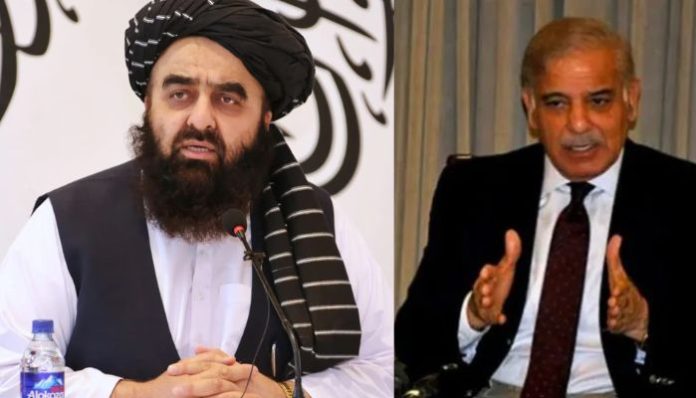
After weeks of stalemate, Afghanistan’s Taliban government and Pakistan have resumed peace negotiations in Istanbul, Turkey. The development comes amid growing tensions along the border and allegations of double-dealing by Islamabad.
The talks, which had earlier fallen apart, reportedly collapsed because Pakistan was unable to prevent the United States from carrying out drone strikes in Afghanistan using Pakistani airspace.
The Pakistani negotiating delegation, which was preparing to return home, has been re-engaged in the negotiation process in Istanbul.#TOLOnews_English https://t.co/ubdCsXoT0f
— TOLOnews English (@TOLONewsEnglish) October 30, 2025
According to a report by Afghanistan’s TOLO News on Wednesday (29th October), the Taliban delegation made it clear that they would only commit to stopping cross-border attacks into Pakistan if Islamabad stopped violating Afghan airspace and prevented US drones from flying into their country. However, Pakistan refused to agree to this condition.
During earlier rounds of talks, it was revealed that a “foreign country” was using Pakistani soil to launch drone attacks inside Afghanistan. TOLO News later confirmed that the country in question was the United States. “For the first time, Pakistan admitted during these negotiations that it has an agreement with the United States allowing drone strikes, and claimed it cannot break that agreement,” TOLO News reported on X.
Journalist Tameem Bahiss also wrote that Pakistan acknowledged signing a deal with a foreign country permitting drone operations from its airspace for surveillance and possible strikes inside Afghanistan.
Sources told TOLO News that while Pakistani negotiators initially appeared willing to accept some of the Taliban’s terms, they changed their position after receiving a phone call, believed to be from the country’s top military leadership, saying they had no control over US drones or operations against ISIS.
The report said mediators from Qatar and Turkey were taken aback by Pakistan’s sudden reversal and blamed it for the deadlock.
Pakistan blames India for failed talks
Instead of admitting the real reason behind the failed negotiations, Pakistan’s Defence Minister Khwaja Asif accused India of interfering. Speaking to Geo News, Asif claimed that India was controlling the Taliban’s leadership. “The people in Kabul pulling the strings and staging the puppet show are being controlled by Delhi. Whenever we got close to an agreement, intervention came from there,” he said.
However, what Asif did not mention was that the change in Pakistan’s stance came immediately after the phone call about the US drone issue. After the talks broke down, the Pakistani minister even issued a veiled threat to the Taliban, referencing the 2001 US-led battle of Tora Bora.
“Pakistan doesn’t need to use even a fraction of its full strength to push the Taliban back to the caves. If they wish, the scenes of Tora Bora could be repeated,” he said, according to Dawn.
US-Pakistan connection behind the scenes
Under Donald Trump‘s presidency, Pakistan strengthened its defence relations with the United States. Prime Minister Shehbaz Sharif and Army Chief Asim Munir even paid a random visit to the White House earlier this year, showcasing Islamabad’s ongoing strategic realignment with Washington.
Trump, who has called Pakistan a “useful partner” in the region, has repeatedly demanded the return of the Bagram airbase from the Taliban. He has also praised Shehbaz Sharif’s leadership and suggested that his efforts in maintaining peace with India deserve a Nobel Prize nomination.
Despite Trump’s claims of “stopping the Afghanistan-Pakistan war,” the border along the British-drawn Durand Line remains tense. The Taliban government refuses to recognise it, arguing that it divides the Pashtun homeland between the two countries.
Mounting tensions along the border
Clashes between Pakistan and Afghanistan’s Taliban administration erupted in early September following attacks by the Tehrik-i-Taliban Pakistan (TTP) that had killed several Pakistani soldiers. Pakistan retaliated with major air raids deep within Afghan territory, striking locations in Kabul and Kandahar. The operations, using drones and JF-17 fighter jets, left more than 200 dead, with dozens of civilians among them, according to the media reports.
Afghanistan condemned the attacks, reporting that women and children were among the victims. Having no air force, the Taliban accused Pakistan of breaching its sovereignty.
Pakistan is caught in its own trap
Ironically, Pakistan, once a major victim of US drone attacks during Barack Obama’s presidency, has now admitted to allowing the same operations from its territory. Kabul-based journalist Ali M. Latifi wrote on X, “Pakistan admitting that the US conducts drone strikes from its territory is quite telling. The country was once a massive victim of Obama’s drone wars.”
With its economy in the doldrums, Pakistan has been renting out its soldiers as sell swords and its territory as launchpads for countries and terrorists alike. It was revealed in the talks with the Taliban delegation in Turkey that Pakistan has a secret agreement with the US to allow the use of its territory for drone attacks on Afghanistan.
