

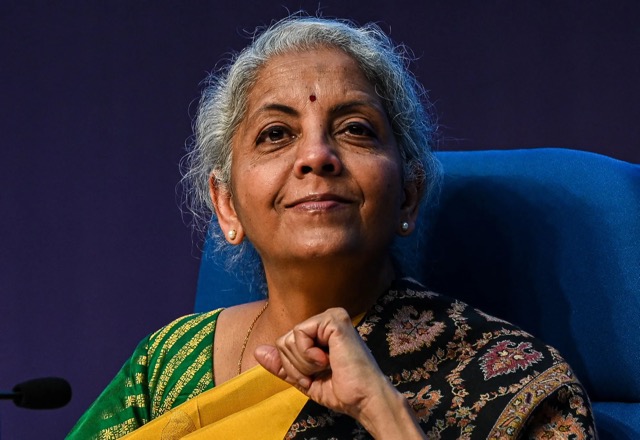
This year’s Union Budget is poised to mark a quiet but consequential departure from a convention that has held firm for nearly 75 years. For the first time, the spotlight is expected to shift decisively to Part B of the Budget speech, where Finance Minister Nirmala Sitharaman is likely to lay out a comprehensive vision for India’s economic future, according to sources.
Traditionally, the Union Budget’s narrative and policy thrust have been packed into Part A, with Part B largely reserved for tax proposals and technical policy announcements. This year, however, the script is set to change. Part B is expected to go beyond routine arithmetic and outline both India’s immediate economic priorities and its longer-term ambitions as the country moves deeper into the 21st century. The emphasis, sources suggest, will be on leveraging domestic strengths while positioning India more assertively on the global economic stage.
The shift has drawn the attention of economists and market watchers in India and abroad, many of whom are expecting a roadmap that extends well beyond incremental tax tweaks. The Budget, they believe, could offer clues to how the government plans to balance growth, stability, and global competitiveness in the coming years.
If delivered as anticipated, this will be Sitharaman’s ninth consecutive Budget, an achievement in itself. She has already left her mark on Budget traditions: in 2019, she replaced the colonial-era leather briefcase with a traditional red cloth–wrapped bahi-khata. As in the last four years, this year’s Budget will be presented in a fully paperless format, underscoring the government’s push towards digital governance.
From a fiscal standpoint, markets will be keenly focused on what comes next after the government achieves its consolidation target of bringing the fiscal deficit below 4.5 per cent of GDP in fiscal 2026. Investors will look for signals about the debt-to-GDP reduction path and whether a precise fiscal deficit target is set for fiscal 2027.
Capital expenditure will be another key area to watch. With ₹11.2 lakh crore already budgeted for the current year, the government is expected to stay the course, potentially raising the capex target by 10–15 per cent amid continued caution from private investors.
Finally, projections for nominal GDP growth, likely in the 10.5 to 11 per cent range, will offer insights into the inflation outlook, while allocations for flagship schemes such as G RAM G, along with health and education, will indicate where the government’s social and developmental priorities lie.
Taken together, this Budget could signal not just another financial year’s plan, but a broader statement of economic intent.
