

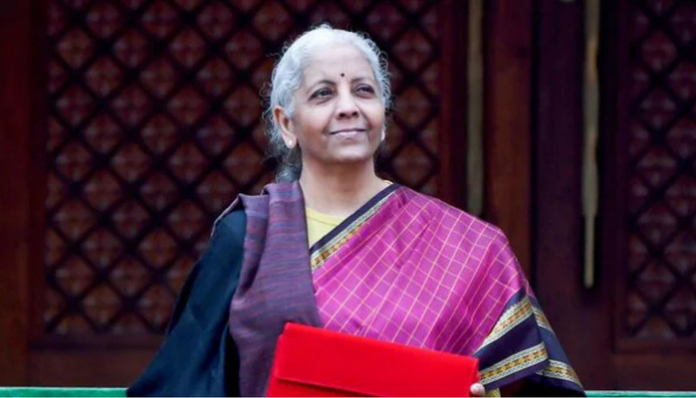
Union budget 2026-27, presented by Finance Minister Nirmala Sitharaman on Sunday (1st February), focuses on pushing women entrepreneurship. The Finance Minister said that the government intends to help women transform from credit-based livelihoods to entrepreneurship, the proposal for which was made following the success of the Lakhpati Didi scheme.
The budget envisages setting up self-help entrepreneurs as community-owned retail outlets for women. The move is expected to boost entrepreneurship at the grassroots level by enabling women-led self-help groups to run local retail networks, improve market access for women-made products, and create sustainable livelihood opportunities at the community level.
VIDEO | Union Budget 2026–27: Finance Minister Nirmala Sitharaman says,"… Building on the success of the Lakhpati Didi program, I propose to help women take the next step from credit-linked livelihoods to being owners of enterprises. Self-help entrepreneur will be set up as… pic.twitter.com/xVp7hB0Zb6
— Press Trust of India (@PTI_News) February 1, 2026
Building on last year’s sharp rise in gender-linked allocations and entrepreneurship-focused policy signals and the success of the Lakhpati Didi scheme, Sitharaman announced ‘She-Marts’. “Building on the success of the Lakhpati Didi scheme, I propose to help women take the next step from credit-linked livelihoods to being owners of Enterprises. Self Help Entrepreneur–SHE– Marts will be set up as community-owned retail outlets within the cluster development federations through enhanced and innovative financing instruments,” the Finance Minister said.
The Lakhpati Didi scheme is a central government initiative aimed at empowering women associated with self-help groups (SHGs) to become financially independent. The scheme provides interest-free loans up to ₹5 lakh to such women. There is also a provision for interest subsidy on loans received under the scheme. This is to reduce the burden of the beneficiaries under the scheme.
Under the budget 2026, the upgraded Lakpati Didi scheme will expand economic opportunities for women. The scheme will not help in achieving the two-fold task of providing training to women and opening more retail outlets across the country to sell their products. The scheme will help women connect to markets, as a result of which they will be able to create sustainable income sources. New financial opportunities will open for women in both rural and urban areas.
