

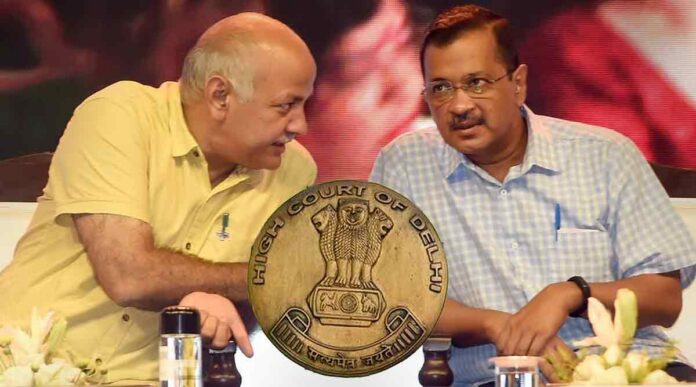
On Friday (28th February), a Delhi Court discharged all 23 accused in the Delhi excise policy case, including former Delhi CM Arvind Kejriwal and former deputy CM Manish Sisodia.
Dismissing the CBI-filed case, Special Judge (PC Act) Jitendra Singh said, “There was no overarching conspiracy or criminal intent in the excise policy.”
The court ruled that the prosecution’s case does not survive judicial scrutiny, stating that the CBI attempted to construct a narrative of conspiracy on the basis of mere conjecture. Thus, the court concluded that, prima facie, no case was made out against any of the 23 accused.
Reprimanding the CBI, the court said, “If such conduct is allowed, it would be a grave violation of the Constitutional principles. The conduct where an accused is granted pardon and then made an approver, his statements used to fill the gaps in the investigation/narrative and make additional people accused is wrong.”
In addition, the court also ordered the initiation of a departmental inquiry against the CBI officials who named a public servant, Kuldeep Singh, as accused number one in the case.
The court slammed CBI for building the case based only on approver statements. The Court said, “If such conduct is allowed, it would be a grave violation of the Constitutional principles. The conduct where an accused is granted pardon and then made an approver, his statements used to fill the gaps in the investigation/narrative and make additional people accused is wrong.”
Dicharged, not acquitted
Notably, the accused in the case have been discharged, not acquitted, as some media reports are saying. Although they sound similar, they are different legal terms. An accused is acquitted or convicted after the entire trial process is completed. On the other hand, when accused are discharged, it happens before the beginning of the trial.
A discharge occurs at a preliminary stage, before any charges are formally framed and well before a trial begins, whereas an acquittal only happens after a full trial has taken place, with evidence recorded, witnesses are cross-examined, and arguments from both sides are heard. In a discharge, the court examines solely the chargesheet, the police report, and the documents submitted by the prosecution, without any oral evidence being presented.
A discharge of a case does not mean someone is ruled guilty or not guilty; it simply means that the case had no merit for a trial. No witnesses were examined, and no trial occurred in this case.
Notably, discharge does not prevent the prosecution from restarting the case afresh by bringing more evidence and witnesses. The CBI has said that it will appeal the verdict in the High Court, alleging that the Delhi Court didn’t consider all aspects of the case.
Delhi Excise Policy Scam
In November 2021, the Delhi Government introduced a new liquor policy. In June 2022, the Delhi Pradesh Congress Committee filed a complaint against the new Delhi Excise policy. In July 2022, the Chief Secretary of Delhi flagged the anomalies in the policy. Delhi LG requested CBI to initiate a probe, and ED joined the investigation by registering a matter under PMLA. Since then, multiple arrests were made, including Delhi CM Arvind Kejriwal and his former deputy Manish Sisodia.
