

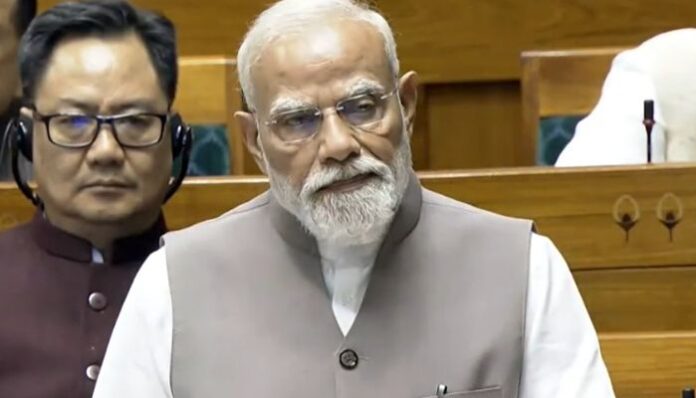
On 23rd March, Prime Minister Narendra Modi addressed the Lok Sabha on the ongoing West Asia conflict and its implications for India. He spoke about how the country’s sustained push towards electrification of the railway network has helped reduce oil consumption and import dependence. At a time when global energy supply chains are facing uncertainty due to the US-Iran conflict, PM Modi highlighted that structural reforms undertaken over the past decade have strengthened India’s energy security.
Speaking in the Lok Sabha. https://t.co/BIrR385m4O
— Narendra Modi (@narendramodi) March 23, 2026
PM Narendra Modi pointed to the large-scale electrification of the railway network as a key factor in lowering diesel usage. He stated that if such extensive electrification had not been carried out, India would have required nearly 1.8 billion litres of additional diesel every year. This, he noted, would have further increased India’s reliance on imported crude oil, especially during periods of geopolitical instability.
His remarks came against the backdrop of concerns over disruptions in oil and gas supplies from West Asia, a region that accounts for a significant share of India’s energy imports. By reducing dependence on diesel through electrified rail operations, India has been able to cushion the impact of global shocks to some extent.
PM Modi emphasised that electrification, along with other initiatives such as ethanol blending and expansion of renewable energy, forms part of a broader strategy to diversify energy sources and minimise vulnerabilities. He stated that such long term measures are now proving crucial in ensuring stable energy availability and protecting the economy from external disruptions arising out of conflicts like the one currently unfolding in West Asia due to the war between the United States and Iran.
