

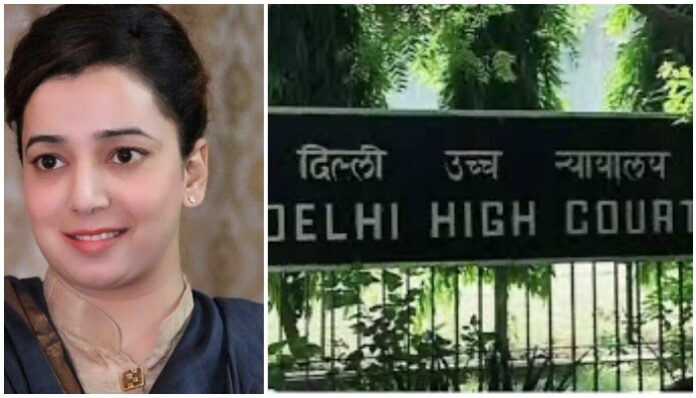
On Friday, April 24, the Delhi High Court dismissed the petition by the Delhi Police against the bail granted to former Congress councillor Ishrat Jahan in the Delhi anti-Hindu riots case of 2020. Ishrat Jahan, accused under the UAPA for her role in the 2020 riots in Northeast Delhi, was granted bail in 2022, after spending two years in jail.
Delhi Police had appealed against the trial court’s order, which was dismissed by the HC bench of Justices Navin Chawla and Ravinder Dudeja, citing that they are not inclined to interfere with the trial court’s order. The HC stated that Ishrat Jahan, a practising advocate, was granted bail 4 years ago and so far there have been no reports of her violating the bail conditions.
It is notable here that in 2022, Jahan was granted bail under the condition that she was not to leave the territory of Delhi without prior permission. But in 2024, the order was modified to allow her to travel around India without needing prior permission from the court.
The Special Cell of Delhi Police had challenged the bail order by trial court, adding that protected witnesses in the Delhi Riots case have stated that Ishrat Jahan had a definitive role in the violence, not just in hatching a conspiracy, but also in financing. The Delhi Police had stated that Ishrat Jahan is charged under Section 18, which involves ‘not merely a conspiracy to commit a terrorist act but “an attempt to commit or advocate the commission or inciting or directing or knowingly facilitating commission of a terrorist act.”
“It is also pertinent to note here that the said riots did not occur in the spur of the moment or due to a fit of communal anger but were pre-planned in multi-layered, multi-organisational fashion,” the appeal by Delhi Police read.
Ishrat Jahan also faced charges under the Prevention of Damage to Public Property Act, and the Arms Act of the IPC. The trial court had granted her bail stating that she was not a part of the WhatsApp groups inciting violence and was not found to be a member of any organisations that were involved in the violence.
